Mystery Adventure Design for D&D (How to Write a Mystery Players Can Actually Solve)
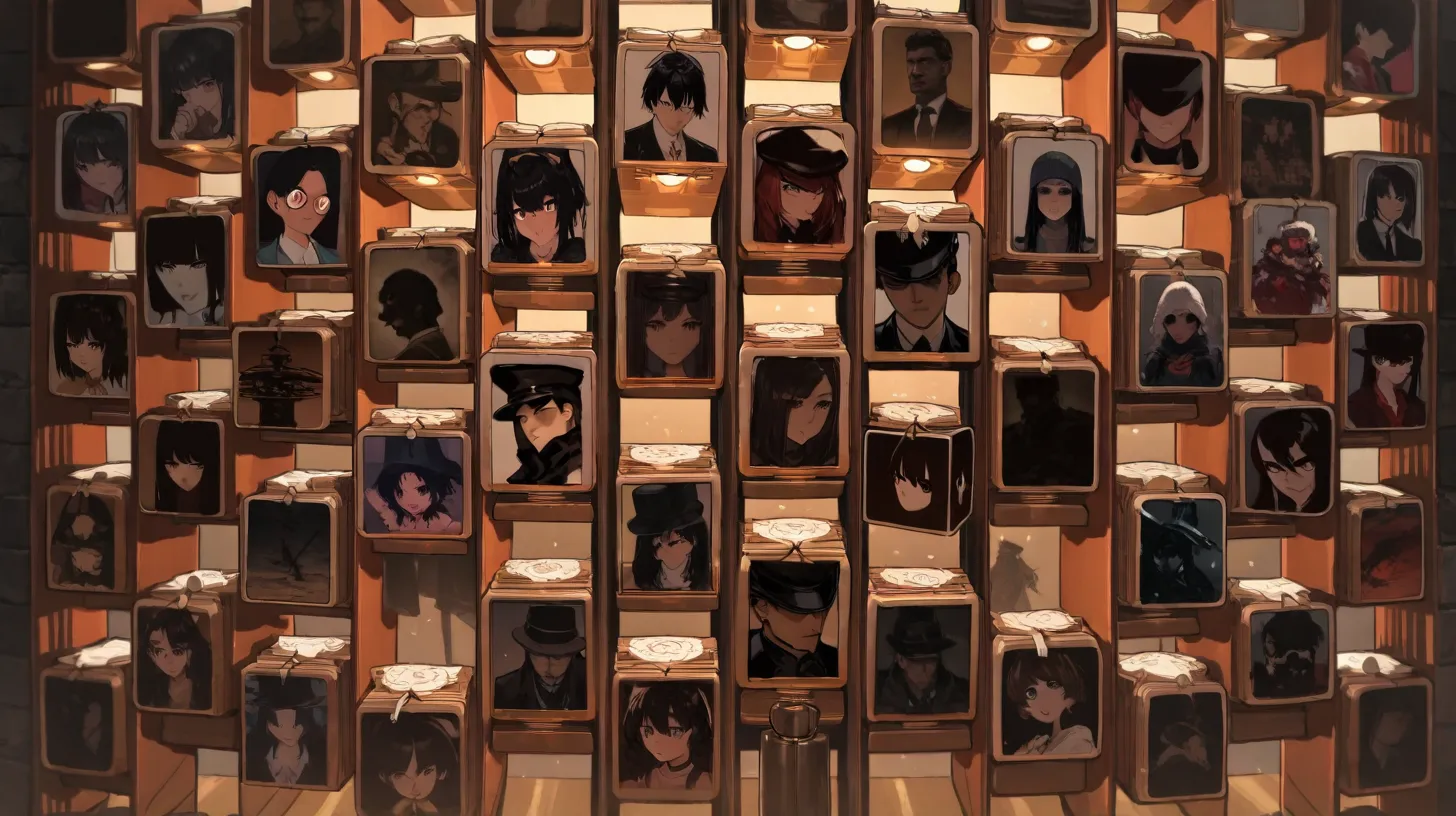
Mystery adventures are the hardest scenarios to run well and the most rewarding when they land. Done right, they produce the sessions players talk about for years — the murder investigation, the impossible theft, the missing prince. Done wrong, they become the sessions everyone silently agrees never to bring up again, where the party stared at clues they didn't understand for three hours and the DM panicked and eventually blurted out "the killer is the butler."
The difference isn't the mystery. It's the design. Novelists and screenwriters can control their pace of revelation precisely. A TTRPG mystery has to work even when players miss clues, follow red herrings for an hour, or ignore the obvious lead to investigate something you didn't plan for. That requires building the mystery as a system, not a puzzle with one solution.
Here's how experienced DMs actually structure mystery adventures.
The Fundamental Mistake: Designing for the Solution
Most DMs design mysteries by starting with the answer and working backward. "The vizier killed the king with a cursed dagger from the eastern tomb." They then place clues leading to that answer: the dagger, a witness who saw the vizier leave, a motive letter in his quarters.
Three clues, one solution. If the party finds all three, they solve it. If they find two out of three, they guess. If they find one, they're lost. If they find zero because they went to the tavern instead, the adventure breaks.
This design treats the mystery as a corridor with a door at the end. TTRPGs don't run on corridors. You need a design that tolerates the party investigating the "wrong" thing for two hours and still arriving at a satisfying answer.
The Three-Clue Rule
Every fact that's essential to solving the mystery must be discoverable in at least three different ways. Not optionally — mandatorily.
Why three? Because players miss clues constantly. They roll low. They don't think to ask. They dismiss what you thought was obvious. They chase red herrings. With three paths to the same fact, your mystery survives all of these.
Example fact: "The vizier was in the king's chambers that night."
- Path 1: A servant saw him (must be interviewed).
- Path 2: He dropped his signet ring behind a tapestry (must be found by a perception check).
- Path 3: The kitchen staff remembers him asking for wine shortly before the murder (must be questioned).
If the party misses the servant, they can still find the ring. If they never question the kitchen, the servant is there. If they miss two of three, they still get the fact. The mystery stays solvable.
Apply this to every essential fact. A mystery with 5 key facts × 3 paths each = 15 clues. That's a lot of clues, but most will go unused. You're designing for robustness, not minimalism.
Design the Suspects as a Web
Your mystery should have 4 to 6 suspects, not one. Each should be plausibly guilty — with motive, opportunity, and means — even though only one is. Each should have their own secrets, unrelated or related to the central crime.
For each suspect:
- What did they actually do that night? Not the murder — their actual whereabouts.
- What are they hiding? Every suspect hides something, guilty or not.
- What's their motive to be guilty? Make it at least plausible.
- What's their alibi? Does it hold under scrutiny?
This web creates the texture players love in mysteries. Every interview produces something — a lie, a hidden affair, a debt, an unrelated crime. The party learns things, even when they learn things unrelated to the murder. That's the engine of investigation.
When everyone has something to hide, the mystery stops being "who did it" and becomes "what is everyone hiding, and which hidden thing is the one that matters?" Much richer play.
Red Herrings That Actually Help
A red herring is a false lead. Most DMs include one or two. Most players get angry when they pursue one to its end and find nothing. That's because the red herrings were dead-ends, not useful dead-ends.
Design red herrings to reveal something other than the solution:
- An affair that explains why the suspect was avoiding questions — but they didn't kill anyone
- An unrelated theft that surfaces — the thief isn't the killer, but the party can now capture them
- A conspiracy that exists but is about something else — introducing a faction that will matter in future sessions
A red herring that leaves the party poorer in knowledge and time is bad design. A red herring that surfaces a side plot, introduces a rival faction, or deepens a character is great design. The party feels their investigation had weight, even when it didn't directly solve the murder.
The Shape of a Mystery Session
A mystery session (whether part of a longer adventure or standalone) typically runs in three phases:
Phase 1: Scene of the Crime (30–60 minutes)
The party arrives at the crime. They gather initial information — from the body, the room, the immediate witnesses. This phase establishes what happened, when, and to whom. Not who.
Design: drop 3 to 5 pieces of initial information here, most of them sensory or circumstantial. The murder weapon is missing. The windows are locked from inside. The victim has a mark on their palm. Each piece generates questions.
Phase 2: Investigation (2+ hours)
The party interviews suspects, explores locations, follows leads. This is where your web of suspects and the three-clue redundancy come into play. Expect wandering — the party will follow a hunch, double back, revisit NPCs.
Design: 4–6 NPCs to interview, 2–3 physical locations to investigate, a handful of ways clues can be discovered. Track what's been found and what hasn't; sometimes nudge the party if they're truly stuck (a witness remembers something new, a messenger arrives with a tip).
Phase 3: Confrontation (30–60 minutes)
The party has a theory. They confront the suspect — or trap them. This phase resolves the mystery, often with a final twist: the killer tries to escape, reveals a larger conspiracy, or turns out to have been acting under compulsion.
Design: a climactic scene that tests the party's conclusion. Are they right? What happens when they are? What if they're wrong? A mystery that resolves by the party making a case — presenting evidence, watching the suspect react — is more satisfying than one that resolves by killing the killer in combat.
The Villain's Logic
Your killer (or thief, or conspirator) didn't kill randomly. They had a specific motive, method, and plan. Write it out in full, even the parts players will never see.
- Motive: why this victim, why now?
- Method: exactly how was the crime committed, including the practical details?
- Cover: how are they trying to avoid detection?
- Mistake: what's the error they made — the thing that makes them catchable?
The mistake is the crux. Every good fictional killer made one — that's the detective's key. In your mystery, this is the fact that, if discovered, links the killer to the crime unambiguously. Maybe a witness actually did see something. Maybe they missed a detail. Maybe a fragment of their plan leaked.
Players love catching the mistake. The moment they realize "the letter was written after the victim supposedly died" is the best moment of the session. Design for it.
Pacing: Feed Information, Don't Hoard It
The slowest mysteries are the ones where the DM guards information, refusing to hand out clues unless a specific skill roll succeeds, a specific question is asked, a specific place is investigated. This produces dead air.
Instead, design with the assumption that the party will discover most clues. Your job isn't to hide information — it's to feed it. Reveal early, reveal often, and let the party struggle with what the information means, not whether they have it.
When the party gets stuck, give them something. An NPC arrives with news. A witness remembers more. A pattern becomes visible. This isn't handing out the solution — it's keeping the session moving. Players who are stuck for 30 minutes lose the thread. Better to push them forward than to make them earn every inch.
The Tools of Investigation
Mystery play uses a different set of mechanics from combat. Make sure you have them ready:
- Perception checks that reveal specific detail, not generic "you notice something"
- Insight that catches lies — but not what is being lied about
- Investigation that connects clues
- Persuasion and intimidation that unlock testimony
- Magic: Zone of Truth, Speak with Dead, Detect Thoughts — all of these accelerate mysteries. Plan for them. Decide in advance what the subject will admit, what they'll resist, and how magical investigation warps your design.
Magical investigation is the single most common reason mysteries collapse. If Speak with Dead works on the victim with no preconditions, the mystery is over in minute ten. Rule the spells carefully: the victim's soul has already moved on, the spell surfaces confusing memory fragments, the corpse has been ritually cleansed. Constrain magic so the investigation still takes work.
When the Party Gets It Wrong
Sometimes the party confronts the wrong suspect with conviction. This is a gift — embrace it.
Options:
- The wrong suspect is innocent of this crime but guilty of something else. The confrontation turns into a different reveal.
- The wrong suspect was framed. The party learns about the framing and the real killer.
- The party is right in the wrong way — their suspect was involved but didn't do the deed alone. New plot thread.
Never let wrong accusations be flat. Turn every theory the party commits to into a new beat, even when their theory's incorrect. The investigation continues; the party's mistake becomes the story.
A Design Checklist
Before running your mystery, verify:
- You know the killer's motive, method, cover, and mistake.
- Each essential fact has at least 3 paths to discovery.
- You have 4–6 suspects, each with their own secret and plausible motive.
- You have 2–3 red herrings that reveal something other than the solution.
- You've decided how magical investigation interacts with your mystery.
- You know what happens when the party confronts the right suspect — and the wrong one.
- You have a climactic scene planned for the resolution.
With this structure, your mystery survives contact with players. They'll still surprise you — they'll accuse the kitchen staff, ignore your witnesses, find meaning in things you didn't plant. That's fine. The structure is resilient enough to absorb it.
A good mystery session is the densest storytelling a TTRPG can produce. Suspects lying, evidence mounting, the party arguing in the corner of a tavern about who to trust — those are the moments every group talks about later. Design for them. Trust the players to investigate. Feed them the information they need. And when they solve it — or decide the case is unsolvable and make a choice anyway — that resolution will stick.
Looking for the next piece of the puzzle? Combine mystery design with our guide to player backstories — a mystery that touches a PC's past is the most personal version of this adventure type, and it lands harder than any generic whodunit ever could.
Keep reading
More from this topic

How to Write a D&D Adventure (A Practical Framework for Scenario Design)
A D&D adventure is not a novel and not a video game — it's a scaffold players rewrite in real time. Here's the framework that gives your scenarios shape without strangling player agency.
How to Write a One-Shot Adventure (That Actually Finishes in One Session)
Most "one-shots" are really three-shots because the DM wrote a campaign chapter and pretended it was a session. Here's how to design a genuine one-shot — tight, complete, and satisfying in four hours.

Three-Act Structure for D&D Campaigns (The Framework That Actually Works at the Table)
Three-act structure is the default story spine for novels and films, and most TTRPG advice tries to port it directly. That fails. Here's what actually works — the three-act model adapted for the realities of collaborative, emergent play.
Start building your world today
Maps, wikis, timelines, and AI tools — everything you need to bring your world to life, in one place.