Random Encounter Generator
DM toolkit
Random Encounter Generator
Generate balanced, ready-to-run encounters in seconds — click to copy
No encounters match those filters. Try a different terrain or difficulty.
Free · No signup · Click any result to copy
Generate ready-to-run random encounters for D&D, Call of Cthulhu, Warhammer, and any TTRPG — terrain, difficulty, and an optional twist.
Save the encounters worth running again into a real session-prep board.
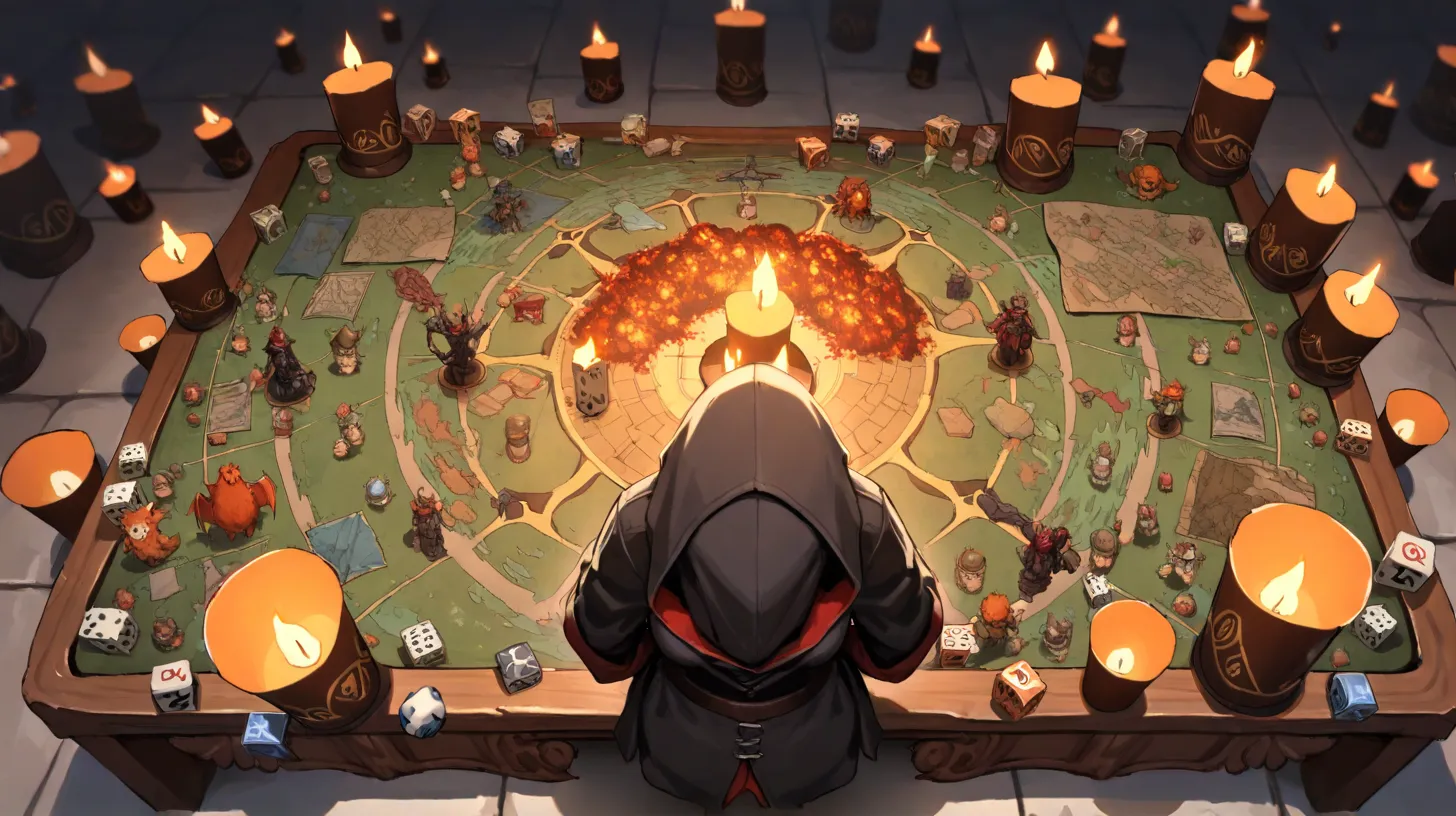
Need an encounter for tonight's session in 30 seconds? This generator builds ready-to-run random encounters with the enemy lineup, the situation, and an optional twist that turns "another fight" into a moment your players will remember.
Pick a system (D&D, Call of Cthulhu, Warhammer, or generic), filter by terrain (forest, dungeon, urban, swamp, mountain, coast, desert, underground), and pick a difficulty band (easy / medium / hard / deadly). Toggle "include twist" to add an unexpected complication to roughly 60% of encounters — a hostage, a rival faction joining mid-fight, terrain that shifts, an enemy who surrenders. Click any encounter to copy the full block of text to your DM notes.
Pair this with our Quest Hook Generator for the broader narrative and our Loot Generator for the rewards. For full prep guidance, see how to prep a D&D session in 30 minutes.
How to Use a Random Encounter
A generated encounter is a starting point, not a finished scene. The result tells you who, where, and what's happening — your job at the table is to fill in the texture. Three habits that take a stock encounter to a memorable one:
- Read the situation aloud, not the enemy list. Players experience encounters as scenes, not as roll calls. "You round the corner and a cookfire is burning low — three goblins look up, one already nocking an arrow" lands harder than "you encounter four goblins."
- Tie the twist to a PC's history. The hostage is from the village a PC grew up in. The surrendering enemy worked for an NPC the party knows. Generated twists are generic — make them specific by linking them to your campaign.
- Let the terrain do work. A "forest" encounter on a generator is just a label until you describe the canopy, the visibility, the pine-smell after rain, and the muddy ground that might turn an enemy charge into a slip.
Difficulty Bands Explained
| Difficulty | What It Means at the Table | When to Use |
|---|---|---|
| Easy | One round of tactical play. Spends some HP and maybe a slot. | Travel encounters, opener of a longer session, mood-setting. |
| Medium | 3–4 rounds of real play. Forces some decisions. | Standard combat, breaking up exploration, mid-arc tension. |
| Hard | 5–7 rounds. Healing and slot management matter. | Major scene, faction confrontation, end-of-act fights. |
| Deadly | The party might lose. Losing is a real outcome. | Boss fights, final confrontations, "this should not be a fair fight" moments. |
Tag adjustments aren't gospel — they're calibrated to a typical mid-tier party of four. Adjust enemy counts up or down by 1–2 if your group is unusually optimized, has fewer than four members, or relies on a single combat-heavy character.
Building an Encounter Table for Your Campaign
Generators are great for "right now"; for "this whole campaign," it pays to build a custom encounter table. Here's the structure most experienced DMs use:
- Pick six recurring threats — the factions, monster types, and named NPCs that this region produces.
- Assign each one to a likelihood band (very common, common, uncommon, rare).
- Write three difficulty variants per threat — small patrol, full warband, leader plus elite.
- Roll on it during travel and exploration. Generated encounters supplement; the custom table sets the campaign's identity.
Once your table is built, a single d20 roll between scenes can tell you whether something interesting happens — and what kind of interesting. For more on session pacing, see how to run a D&D session.
Encounter Types Beyond Combat
"Encounter" doesn't have to mean a fight. The generator includes setups that resolve through negotiation, deception, exploration, or simple decision — these are often the most-remembered moments of a campaign. Some patterns:
- The Refused Fight. Enemies surrender, beg, or ask the party to listen. Players who reflexively attack lose information; players who pause discover plot.
- The Riddle Guard. A creature offers passage in exchange for a question, a trade, or a moral choice. Failure isn't death — it's denial.
- The Three-Way Encounter. Two factions fighting, party arrives. The interesting part is the choice of which side — or whether to wait.
- The Mid-Fight Reveal. The encounter starts as combat. In round two, the enemy says a name only one PC knows. The shape of the fight changes.
From Encounter to Story
The encounters players talk about months later aren't the ones with the most damage — they're the ones with the most consequence. Two practices to give every generated encounter that weight:
- Track the survivors. Enemies who escape become recurring antagonists. The bandit who fled in session three is the witness who testifies in session twelve.
- Name the named. The "bandit captain" deserves a name, a face, a regret. Use our D&D name generator on the fly to mint one.
For deeper combat-design guidance, see our broader Campaign Management Hub. For the worldbuilding context that turns "a forest encounter" into "an encounter in your forest," start with the Worldbuilding Fundamentals guide.
A great encounter deserves more than one session.
Generated encounters disappear once the dice stop rolling. Anima keeps them — searchable by terrain, difficulty, and party level — so your best fights become a library you can pull from for years.
- Save encounters into a session-prep board you can copy across campaigns
- Link enemies to your monster wiki and locations to your world map
- Build encounter chains where the survivors of one fight return in another
Free to start · No credit card · Your generated content stays free to use anywhere
Keep going
More free tools
D&D Dice Roller
Free online dice roller for D&D and any TTRPG. Roll d4–d20 and d100, build multi-dice pools, add modifiers, roll with advantage or disadvantage, and type full expressions like 2d6+3 or 4d6kh3.
D&D Encounter Builder
Free 5e encounter builder — pick party level, size, and difficulty (Easy / Medium / Hard / Deadly). The tool calculates XP thresholds and assembles a CR-balanced encounter in seconds.
D&D Spell Generator
Free D&D 5e–style spell generator. Pick level (cantrip → 9) and school of magic — get a complete spell with casting time, range, components, duration, and effect.
D&D Trap Generator
Free D&D 5e trap generator. Pick severity (Setback, Dangerous, Deadly) and character level — get DMG-balanced traps with triggers, damage, save DCs, and disarm hints.