D&D Fighter: The Complete Class Guide (Subclasses, Builds & Tactics)
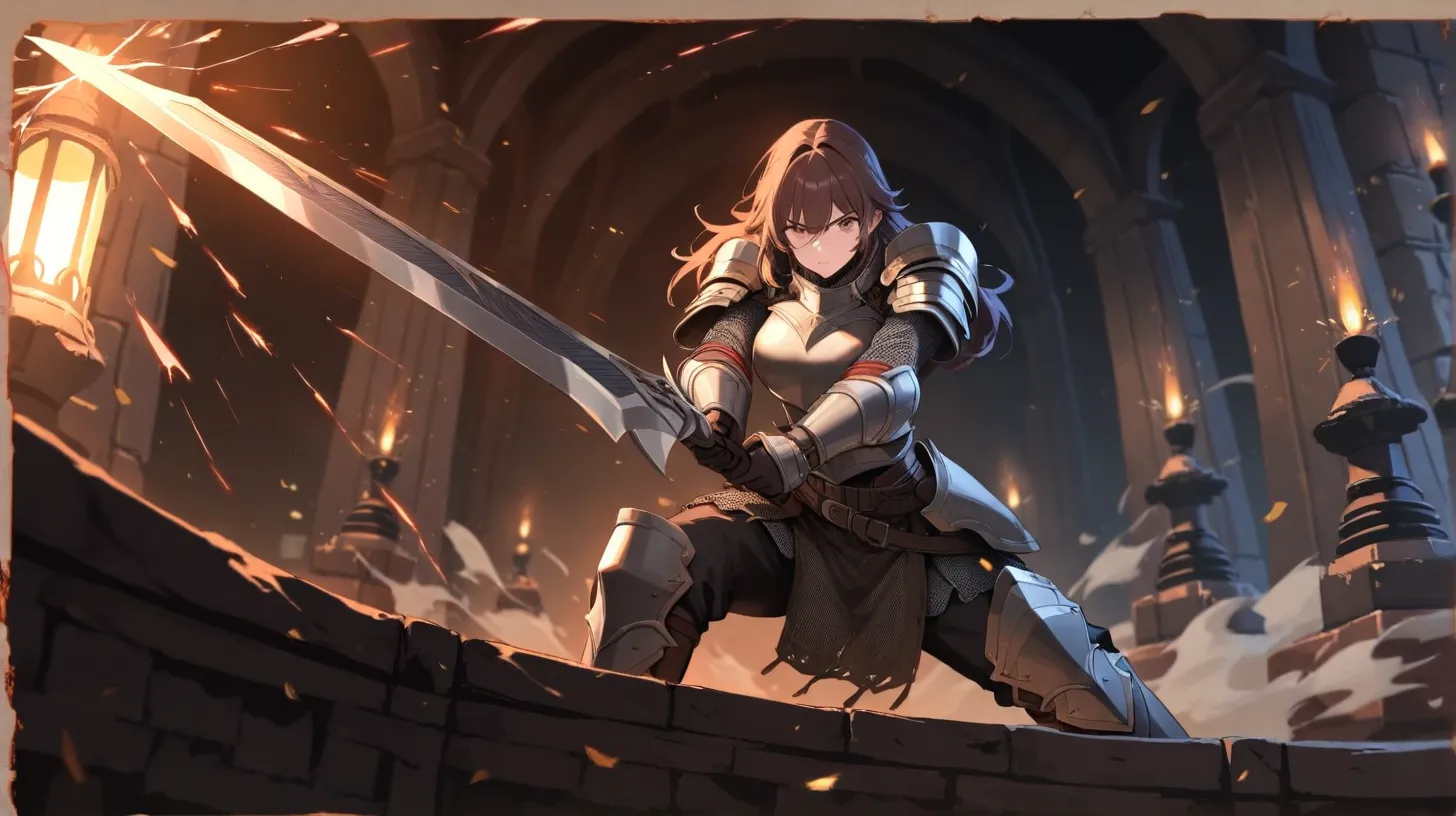
The fighter is the class people play when they want to know exactly what their character does on every turn. Other classes have spell slots, daily resources, complex decision trees. The fighter has weapons, action economy, and the most extra attacks in the game. It is, by design, the simplest class — and that simplicity is also its strength. A fighter played averagely is excellent. A fighter played carefully is one of the most dangerous PCs at the table.
The class is also the most commonly underrated. New players hear "no spells" and assume "weak." Experienced players see Action Surge, four extra attacks per round at endgame, and damage output that beats most casters in sustained encounters, and they pick fighter on purpose.
This guide covers fighter chassis, the subclasses worth playing, the builds that work (and the builds that just look cool), and the tactical decisions that turn a "I attack" turn into "I attack four times, the boss is dead, anyone need a hand?"
The Fighter Chassis
- Hit die: d10
- Primary ability: Strength or Dexterity (depending on build)
- Saving throw proficiencies: Strength, Constitution — Constitution is one of the best saves in the game
- Armor: All armor, shields
- Weapons: Simple and martial
- Class features: Fighting Style, Second Wind, Action Surge (one extra action), Extra Attack (×3 by level 20), 4 ASIs+1 (more than any other class), Indomitable (reroll failed saves)
The defining features are Action Surge (a second full action on demand), Extra Attacks (which scale to four total attacks at level 20 — more than any other class), and seven ASIs over 20 levels (everyone else gets five). Translation: fighters get the most feats, the most attacks per round, and the most burst damage on demand.
The Subclasses, Ranked
Tier 1: First-Pick Subclasses
- Battle Master. Maneuvers (Riposte, Trip, Disarm, Goading) give every turn a tactical decision. The most-mechanically-engaged fighter subclass. Tier 1 since Player's Handbook.
- Rune Knight (TCoE). Runes that grant resistance, advantage, save bonuses, plus Giant's Might (becomes Large, +1d6 damage). Massive scaling power.
- Echo Knight (EGtW). An echo (a clone you can swap places with, attack from, or pass through) effectively gives you free movement, free attacks, and an action-economy explosion.
Tier 2: Excellent Subclasses
- Eldritch Knight. Wizard cantrips and a few spells per day. Versatile but slot-limited.
- Samurai (XGtE). Fighting Spirit — temp HP and advantage on attacks. Excellent burst.
- Cavalier (XGtE). Mark for opportunity attacks; crowd control built into the chassis.
- Psi Warrior (TCoE). Psionic dice for damage, defense, and movement. Underrated.
Tier 3: Playable but Specific
- Champion. Improved crit range. Simple to a fault — fewer decisions than every other subclass. Best for players who want zero subclass overhead.
- Banneret / Purple Dragon Knight. Buff-leader, but auras are short range and the resources are slim.
- Arcane Archer. Limited daily uses; most arcane shots underperform.
For a first fighter, Battle Master if you want decisions every turn, Rune Knight for raw power, Champion if you want a "just attack" build with no subclass complexity.
Fighting Styles
You pick a fighting style at level 1. The strong ones:
- Great Weapon Fighting. Reroll 1s and 2s on damage dice with two-handed weapons. Pairs with Greatsword/Greataxe + GWM feat.
- Defense. +1 AC. Boring but always useful for sword-and-board.
- Dueling. +2 damage with one-handed weapon, no shield required. Best for sword-and-board.
- Archery. +2 to hit with ranged weapons. Required for any ranged build.
- Protection. Reaction to disadvantage attacks against allies in 5 feet. Tank-flavored, situational.
- Two-Weapon Fighting. Add ability mod to off-hand damage. Mediocre baseline.
- Superior Technique (TCoE). One Battle Master maneuver and a superiority die. Sneaky-strong if you don't want a full Battle Master.
For most builds: Great Weapon Fighting + Greatsword (with Polearm Master + Great Weapon Master eventually) for damage; Dueling + Shield + Longsword for survivability; Archery + Longbow + Sharpshooter for ranged.
Race & Stat Priority
Strength-fighter:
- Strength — 16+ at level 1, 20 by level 8.
- Constitution — 14+ for HP and concentration if Eldritch Knight.
- Dexterity — 14 for AC.
- Charisma/Wisdom — 12 for utility skills.
Dex-fighter (archer or finesse melee):
- Dexterity — 16+ at level 1, 20 by level 8.
- Constitution — 14+.
- Strength — 10+ for carrying capacity.
Strong race choices:
- Variant Human / Custom Lineage: Free feat — Polearm Master, Great Weapon Master, Sharpshooter, or Crossbow Expert.
- Goliath: +2 Str, Stone's Endurance for damage reduction, Powerful Build.
- Hill Dwarf: +2 Con, +1 Wis, extra HP. Tanky frontline.
- Half-Orc: +2 Str, Savage Attacks for crit dice, Relentless Endurance for "drop to 1 HP, not 0."
- Bugbear (MMM): Long-Limbed (10-ft reach on first round), Surprise Attack damage. The most underrated fighter race.
- Warforged: +1 AC, resistant to poison, immune to sleep. The pure-tank choice. (See our warforged race guide for build details.)
Feats That Define Builds
Fighters take more feats than any other class. The defining ones:
- Polearm Master. Bonus action attack with quarterstaff/glaive/halberd; opportunity attack on entering reach. The single best fighter feat.
- Great Weapon Master. Bonus action attack on crit/kill; -5 to hit for +10 damage. Pairs with Polearm Master for absurd output.
- Sharpshooter. -5/+10 for ranged; ignores cover, no long-range disadvantage. The Polearm Master of bows.
- Crossbow Expert. No disadvantage in melee; bonus action with hand crossbow.
- Sentinel. Stops enemies at 5 feet on opportunity attack hit. Frontline anchor.
- War Caster (Eldritch Knight). Concentration save advantage; opportunity attacks become spells.
The four "build pillars": Polearm Master + GWM (Strength melee), Sharpshooter (ranged), Crossbow Expert + Sharpshooter (hand crossbow), Polearm Master + Sentinel (lockdown).
Tactical Decisions That Multiply Damage
The fighter looks simple but has more turn-by-turn decisions than people realize:
- When to Action Surge. Crit on the boss → surge. Boss is at 50 HP and you're doing 30 per turn → surge to drop them. Don't surge in turn one of every fight.
- When to spend Superiority Dice (Battle Master). Riposte every reaction; Trip the boss when prone matters most; Goading on enemies with multiattack.
- When to use -5/+10 (GWM/Sharpshooter). If you have advantage or Bless, use it. If neither, calculate. Generally turn it on against enemies with AC ≤ 16.
- When to grapple/shove. Shoving prone gives advantage to melee allies for the rest of the round. Trade a single attack for advantage on three.
- Position for opportunity attacks. Polearm Master + Sentinel turns the fighter into a 10-foot wall. Choke points are gold.
Every turn has at least one decision worth thinking about. Fighters who play "I attack three times" leave 15-20% of their potential damage on the table.
Multiclassing
Fighters multiclass cleanly with most classes. The classic dips:
- 2 levels Fighter into anything. Action Surge + Second Wind + Fighting Style for two levels. Many builds (paladin, sorcerer-bladesinger, etc.) take this dip.
- Fighter X / Rogue 4-5. Sneak attack scales, Cunning Action; pairs with Battle Master maneuvers.
- Fighter 11 / Anything 9. Three-attack threshold + a 9-level chassis (often paladin or barbarian). Endgame burst.
- Fighter 6 / Cleric 14 (Twilight or War). Extra Attack + full caster. Niche but devastating.
For pure fighter players: stay pure to 11 (Extra Attack 2) or 20 (Extra Attack 3). The level 11+ fighter is one of the strongest sustained-DPR characters in the game.
Common Mistakes
- Burning Action Surge in turn one of every fight. Save it for the moment that decides the encounter.
- Forgetting Second Wind. A bonus action heal, once per short rest, scaling with level. Don't end fights with Second Wind unspent.
- Ignoring positioning. Polearm Master + Sentinel needs you in chokepoints, not chasing isolated minions.
- Refusing to grapple/shove. Trading one attack for advantage on three is almost always net positive.
- Underleveling Constitution. Fighters tank. 14 Con is the floor; 16 is normal.
Roleplay: The Hardest "Easy" Class
Mechanically, the fighter is the simplest class. Narratively, the fighter is the hardest to write — because there's no built-in hook (no patron, no oath, no spellbook, no faith) the way other classes have. The fighter just fights. The challenge is making "fights" mean something.
What gives a fighter narrative weight:
- Specific training. Not "I trained as a soldier" but "I served three years in the Iron Wolves under Captain Maru, then deserted after Whitestone." Specifics anchor the character.
- A signature weapon. Named, inherited, looted, taken from someone. The weapon is a character of its own.
- A code without a class. Fighters don't have an oath, but the best ones have a personal code — what they will and won't do, who they refuse to fight, what they always defend.
- Scars, literal or metaphorical. Battle history is the fighter's faith. What did they survive? Who didn't?
- An opposite-of-violence skill. Cooking, music, fishing, painting, animal handling. The thing they do when they're not killing someone. Without it, the character is a stat block.
Our character bible guide covers signature-weapon and scar work in depth — both standard fighter techniques. The fighter rewards careful character writing more than almost any other class because the chassis gives nothing away for free.
The Fighter's Endgame
By level 20, the fighter has four attacks per Attack action, two Action Surges per short rest (effectively eight more attacks across the day), Survivor (level 18, regen 5+Con every turn at half HP), and three Indomitable rerolls per long rest. Translation: highest sustained DPR in the game, highest burst window in the game (12 attacks in one turn with Action Surge), and saves that almost can't fail.
The fighter doesn't reshape encounters with magic. It reshapes them by ending them quickly. Bosses don't get to use legendary actions if they're dead. Multi-monster fights collapse when the most dangerous enemy dies in round one. The fighter's whole job is to make the encounter shorter than it should be.
Build for the build pillar that fits your concept. Stay close to allies and chokepoints. Track Action Surges and Second Winds. Smite-equivalent moments come from Action Surge + GWM + crit chains. The class is the simplest in 5e — and one of the most consistently devastating. For broader build context, see the character sheet guide; if you're DMing for a fighter, our run-a-session guide has tips on giving martial classes equal narrative weight.
Keep reading
More from this topic

D&D Cleric: The Complete Class Guide (Subclasses, Builds & Roleplay)
The cleric is the most underrated class at the table — a full-caster, a heavy-armor frontliner, and the only character who can talk to a god. Here's how to build one that's strong without being a heal-bot.

D&D Warlock: The Complete Class Guide (Patrons, Pacts & Builds)
The warlock is the most short-rest-friendly caster in 5e — two slots back per hour, an at-will damage cantrip that scales with feats, and three-class-features-in-one between Patron, Pact, and Invocations. Here's how to build one that actually rivals a wizard.

D&D Wizard: The Complete Class Guide (Schools, Spells & Builds)
The wizard is the deepest, most rewarding caster in 5e — and the easiest class to play badly. Here's how to build one that earns the "all-powerful arcanist" reputation instead of dying in the second fight.
Start building your world today
Maps, wikis, timelines, and AI tools — everything you need to bring your world to life, in one place.