How to Design a Fantasy City That Feels Alive (From Map to Lived-In Place)
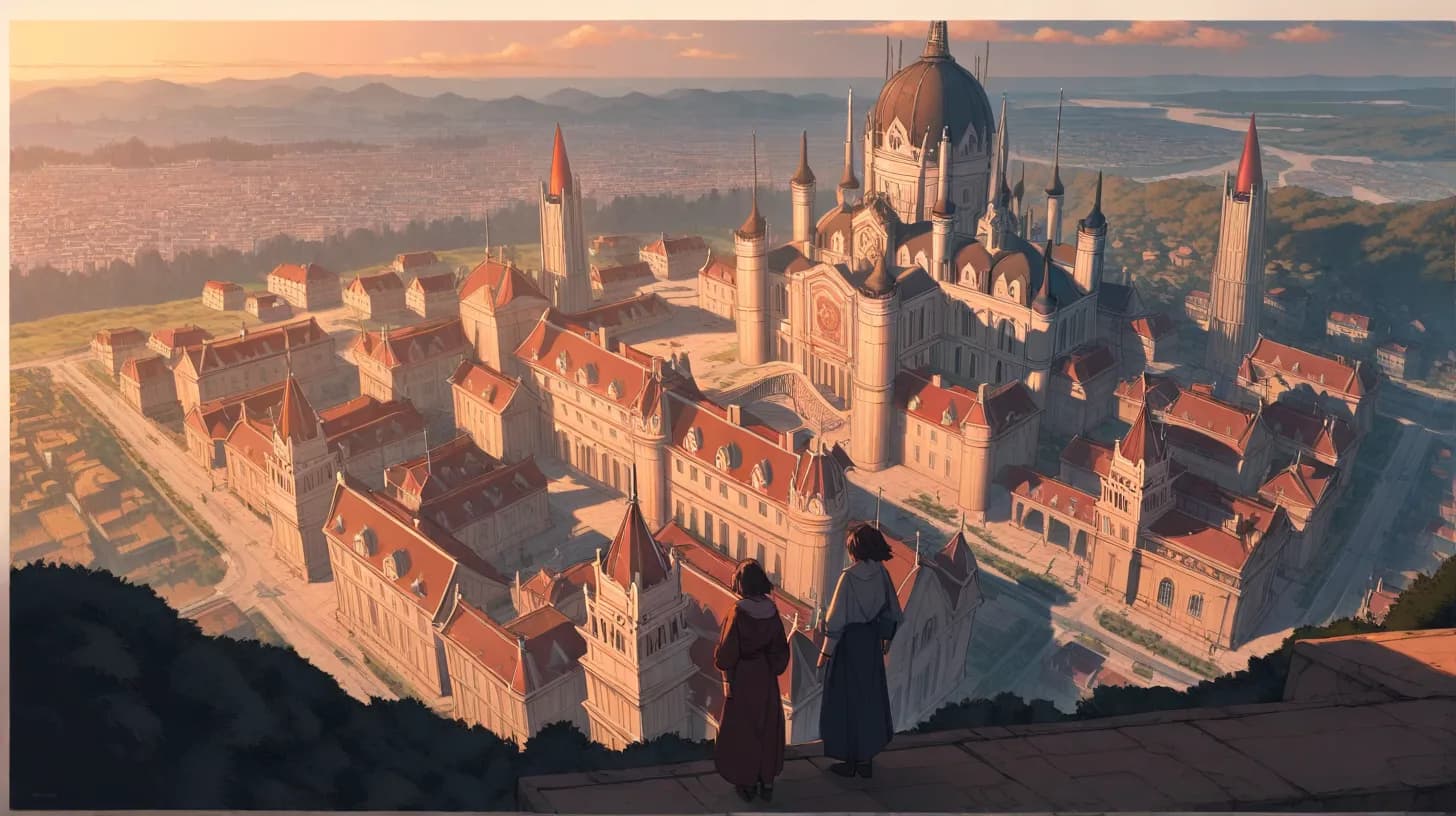
Ask most DMs to describe the last city their party visited. You'll get a name, maybe a ruler, and a tavern. That's because most fantasy cities aren't designed — they're named. The DM drops a dot on the map, calls it "Eldermoor," writes "seat of the merchant guilds" beside it, and improvises everything else at the table.
The result is a city the players never really see. They stop at the tavern, talk to a quest-giver, and leave. It could have been any settlement. It wasn't a place, it was a location.
A city that feels alive — the kind players remember, reference, and want to return to — takes more work. Not dozens of hours, but specific, focused work. This guide walks through the design layers that transform a dot on a map into a place with gravity.
Start with the Reason the City Exists
Cities don't appear randomly. They grow where geography gives them an advantage: a river crossing, a natural harbor, a mountain pass, a defensible hill, a resource deposit. Before you design anything else, decide why your city exists here.
This single decision drives everything that follows:
- River port: economy is trade, working class is dockworkers, wealth is merchants. Flooding is a recurring threat. The old part of town is near the water; the rich live uphill.
- Mountain pass: economy is tolls and caravan services. Winter half-closes the city. Strong defensive walls. Population is cosmopolitan because travelers pass through.
- Mining hub: economy is extraction, population is miners and support trades. The city is dirty. The rich own the mines; the poor work them. Labor tensions are perpetual.
- Royal seat: economy is administration, population is bureaucrats and retainers. The city lives off the crown. Every street has guards.
The geographic reason shapes the economy, the economy shapes the population, the population shapes the politics, and the politics shape the stories your party can tell there. Skip this step and everything downstream feels arbitrary.
If you need help placing cities logically on your map, our guide to realistic fantasy map design walks through where civilization actually grows.
Design Three to Five Districts, Not Twenty
Players can remember three districts. They cannot remember twenty. A city with too many named neighborhoods becomes a blur; a city with three distinct districts becomes a mental map.
A good district is defined by three things:
- Who lives there — social class, trade, ethnicity, magical affinity
- What it looks, sounds, and smells like — one vivid sensory detail
- Its reputation — what other districts say about it
Example: three-district city, "Aunport":
- The Fishhook — docks and working class. Smells of rope tar and fish guts. Other districts say it's "lawless" but really just has its own law.
- The Clock Ward — merchant and guild district. The air is full of chimes from the hundred clocks. Respectable, a little smug, closes at sundown.
- The Heights — old nobility and temples. Paved streets, white stone. Quiet. Suspicious of everyone below.
Three districts, three flavors, three ways a story can go. Add more only when the campaign needs them.
Populate the Districts with Landmarks
Each district needs two to four landmarks — specific locations with specific purposes. These are the anchors players return to.
- A specific tavern with a specific owner and specific regulars (not "the tavern")
- A temple or shrine
- A market or guild hall
- A lord's manor, a thief's den, or a mage's tower
- A place where something interesting happens — a dueling ground, a bathhouse, a library, a prison
For each landmark, one line of description and one NPC. That's it. The shape of the city emerges from the relationships between landmarks, not from drilling deep into any one of them.
Build the Political Triangle
Every interesting city has at least three factions in tension. Not one ruler with obedient subjects — three power centers with competing interests. This is what generates stories.
Common triangles:
- Civic / Religious / Criminal. The mayor, the church, and the thieves' guild. Each has power the others can't fully see.
- Old money / new money / the poor. Nobility, merchant class, and the labor underclass. Each resents the others.
- Ruler / Guilds / Magic. The lord's court, the mercantile guilds, and a mages' college. Secular vs. economic vs. arcane.
For each of the three factions, decide:
- What do they want?
- What's their long-term fear?
- Who's their public face?
- Who's their hidden power behind the scenes?
This is where your faction system pays off. Factions aren't just flavor — they're the engine that gives the city agency. When the party arrives, the factions are already doing things, and the party walks into an ongoing play.
Decide What the City Smells Like
Sensory detail is the difference between "you enter the city" and "the city is inside you." Pick three sensory anchors for the city as a whole, and use them relentlessly:
- Smell: salt and fish guts (port), smoke and coal (industrial), incense and cedar (temple city)
- Sound: gulls and rope slap, hammer on anvil, chanting and bells
- Texture: wet cobblestones, dust on everything, fog hanging low
When your party enters for the tenth time, a quick "the salt-and-tar smell of the Fishhook hits you as you step off the ship" tells them they're back. Skip this and cities become interchangeable.
Temperature and weather pattern matter too. Is this city always rainy? Bakingly hot in summer? Thick with fog in autumn? A single weather fact — "Eldermoor is always windy; the banners snap constantly" — transforms every scene.
Give the City a Secret
Every memorable fantasy city has a buried secret — something the residents don't talk about, or don't know, or desperately hide. This is what gives the city a story engine beyond its day-to-day.
- The city's wealth comes from a dark pact made two centuries ago, still renewed annually
- A whole underground city beneath the streets, inhabited by people the surface has forgotten
- The current ruler isn't the legitimate heir, and a handful of people know
- The temples are quietly losing their magic, and the priests are hiding it
- A monstrous presence lives in the sewers and is fed by the criminal guild to keep it quiet
The secret doesn't need to come out in the first session. It can be a slow drip of hints over many visits. That drip is what keeps players interested in returning — they can feel something is off, and they want to know what.
The People Who Live There
Beyond your important NPCs, the city needs background texture. A handful of named, recurring minor characters does more than a hundred generic townspeople:
- The old woman who sells bread near the gate and knows every rumor
- The town guard who's always drunk at the wrong times
- The child who waves at the party every time they return
- The innkeeper whose opinions shift each session based on what he's heard
These characters cost nothing to maintain and pay enormous returns. Players remember them. Players ask about them. Players care when something happens to them. A wiki with character entries lets you track even the minor NPCs without losing continuity across sessions.
Maps: Know What You Actually Need
Most DMs over-map. A beautiful hand-drawn city map is satisfying to make but useless if the players only ever visit three locations. Start with less:
- A district sketch. Three or five regions marked, with their rough positions. That's enough for "you need to cross from the docks to the temple."
- A landmark list. Which landmarks are in which district. Important for travel scenes.
- A detailed map of one specific location. The place where the session's big scene will happen — a noble's manor, a cult hideout, a specific tavern for a negotiation.
Battle maps and detailed building plans only exist for scenes that need them. Everything else is described, not drawn. A procedurally generated city map can give you a plausible street layout in minutes if you want one; Anima's map tools include city-scale procedural generation that handles this.
Connect the City to the Campaign
A well-designed city that has no connection to the campaign's larger story is wasted effort. Before you finish designing, ask:
- What does the campaign's main conflict look like from inside this city?
- Which faction here has a stake in the outcome?
- Who in this city has information the party needs?
- What does the villain want from this place?
Answer these and the city stops being a neutral stopover — it becomes a node in the campaign's web. Visits become meaningful, not incidental.
A Design Session in Summary
Full fantasy city design, end to end:
- Pick a geographic reason for the city (10 minutes)
- Design three to five districts with flavor and reputation (20 minutes)
- Populate each with two to four landmarks and NPCs (30 minutes)
- Build the political triangle — three factions, their wants and fears (20 minutes)
- Decide sensory anchors and weather (5 minutes)
- Write the city's secret (10 minutes)
- List three to five minor recurring NPCs (10 minutes)
- Sketch the rough map and one detailed location (15 minutes)
- Connect to the campaign's main plot (10 minutes)
Two hours. One living city. Your players will remember its smell ten sessions later.
The trap is thinking a city needs more — more districts, more NPCs, more depth. It doesn't. It needs the right layers in the right order. Geography, districts, politics, senses, secret, people, map, plot hook. That's all. Build those seven things and the city breathes. Build twenty districts and seventy NPCs and it smothers.
Cities are characters. Give yours a face, a voice, and a reason to exist. The rest comes from there.
Start building your world today
Maps, wikis, timelines, and AI tools — everything you need to bring your world to life, in one place.