How to Run a Session Zero (Checklist, Examples & Common Pitfalls)
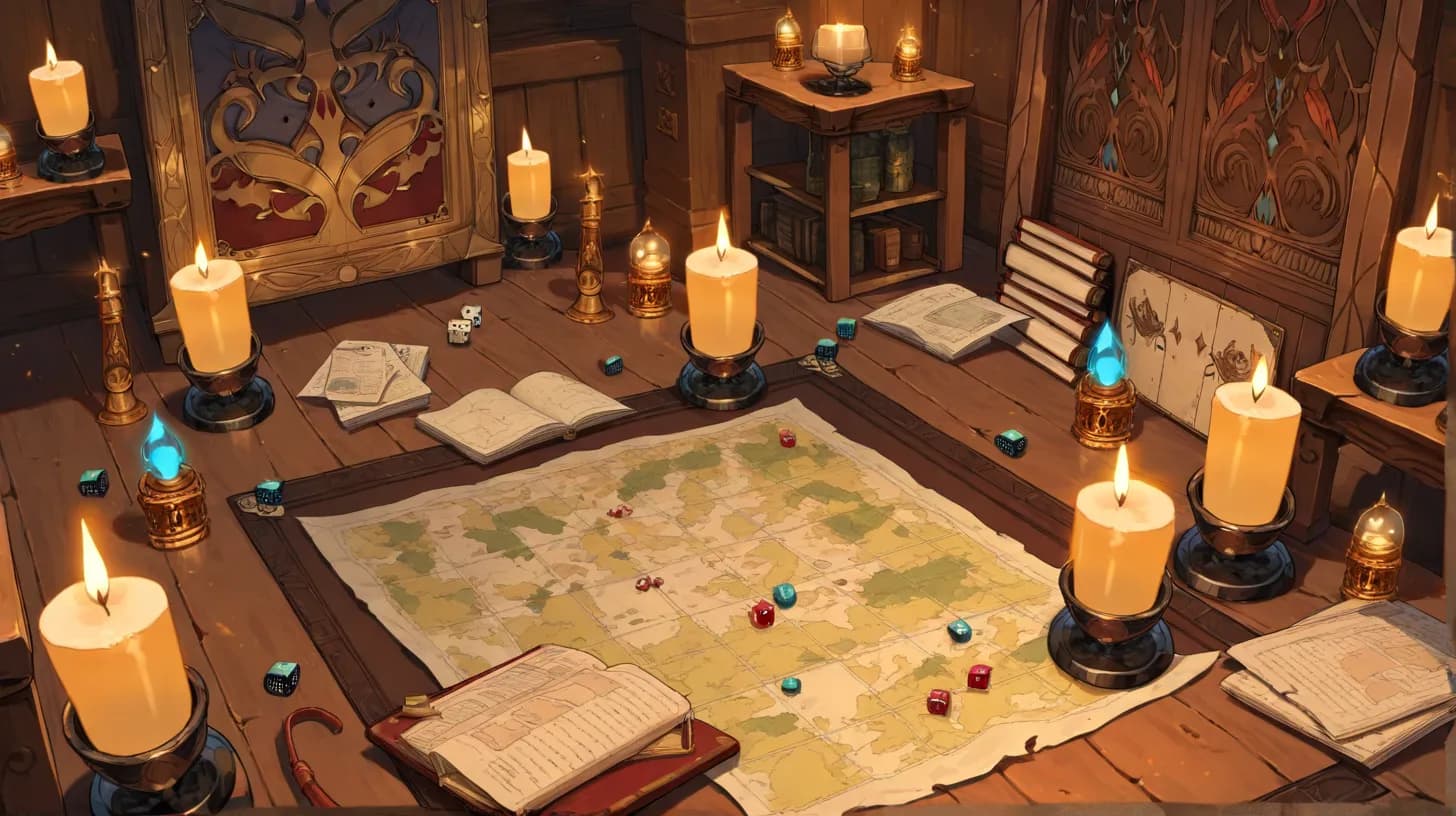
Most campaigns that collapse at session six were already broken at session one. Two players wanted political intrigue; three wanted a dungeon crawl. The GM assumed everyone was fine with character death; one player quietly wasn't. Somebody built a chaotic-evil murderhobo into a party of paladins. None of this got noticed because the group skipped session zero and jumped straight into "you meet in a tavern."
Session zero is the hour (or two, or three) where the group talks about the campaign before playing it. No dice. No initiative. Just alignment. Done well, it prevents 80% of the drama that kills campaigns. Done badly — or skipped — and you pay for it every session afterwards.
This guide is the complete playbook: what to cover, in what order, how to handle the awkward conversations, and the pitfalls that catch every first-time GM.
What Session Zero Actually Does
It's not worldbuilding. It's not character creation (mostly). It's not reading rules. Session zero exists to answer four questions together, out loud, before play begins:
- What kind of game are we playing?
- What tone and content are acceptable (and what's off-limits)?
- How will we handle logistics — scheduling, absences, phones, snacks?
- Who are these characters, and why are they together?
Every problem a session zero solves traces back to one of these four. If you hear yourself saying "I assumed everyone wanted X," that's a session zero failure. The point is to replace assumptions with agreements.
The Checklist
Here's what you actually cover, in order. This fits in 90–120 minutes for most groups.
1. The Pitch (10 minutes)
You talk first. As the GM, you're bringing something to the table — a setting, a tone, a promise. Say it out loud:
- The elevator pitch: "This is a gritty low-magic campaign in a city at war. Players are mercenaries. Expect moral ambiguity, political intrigue, and violence with consequences."
- The system: D&D 5e? Pathfinder? Something lighter like Dungeon World?
- The commitment: Weekly, biweekly, 10 sessions, open-ended?
- The limits: Things this campaign won't be — "this isn't a superhero game, PCs aren't chosen ones, the world doesn't hinge on you."
Players need to be able to opt in or out after this pitch. If someone wanted a lighthearted dungeon romp and you're running political noir, better to find out now.
2. Tone and Content (20 minutes)
This is the part most tables skip. It's also the part that prevents the most damage. Walk through the content your campaign will and won't touch:
- Violence level — cinematic, gritty, graphic?
- Character death — rare, possible, frequent?
- Romance and sex — fade to black, on-screen, off the table?
- Real-world trauma — warfare, slavery, addiction, abuse — which are on the menu?
- Horror elements — body horror, psychological, cosmic, none?
Use a safety tool. The X-card (anyone can tap to stop a scene, no explanation required), Lines and Veils (hard no's vs. fade-to-black), or the Script Change RPG toolbox all work. Pick one, explain it, use it.
One key trick: ask about lines and veils privately before session zero. Some players won't speak up in a group. A DM message three days before the session ("Here's the pitch — any content that's a hard pass for you? Nothing weird if so, just want to calibrate") surfaces more than any group conversation.
3. Expectations and Play Style (15 minutes)
This uncovers the mismatches that kill campaigns mid-way. Ask each player:
- What do you most want from this campaign — combat, roleplay, exploration, puzzles, character arcs?
- How do you feel about optimization? Are we building powerful characters, thematic characters, or whatever's fun?
- How do you want me to handle character backstory in play — heavily integrated, gently referenced, whatever you bring?
- What's a campaign or moment from past games that sticks with you? Why?
Write the answers down. You're building a spec for what the group values. If three players want combat-heavy and two want deep roleplay, you now know you need to design sessions that deliver both, not pick one.
4. Logistics (10 minutes)
Boring but essential:
- Schedule — day, time, start, stop
- Absence policy — do we play without a missing player? Does their character go into narrative limbo?
- Late policy — how late before we start without someone?
- Tech — virtual tabletop? Voice only? Video?
- Phones at the table — allowed, discouraged, banned?
- Snacks, drinks, food — host contribution model?
Write these down too. Post them to your campaign's pinned notes. Ambiguity here leads to resentment later.
5. Character Creation and Party Glue (30–45 minutes)
Now characters. But as a group, not in isolation. The mistake most GMs make is letting players design characters alone, at home, then bring them to session one as fait accompli. You get five loners who have no reason to stay in a party.
Instead, at session zero, each player pitches their concept in a sentence or two. The group then finds connections:
- "My ranger grew up in the border villages." "Oh, mine did too — were we friends?"
- "I'm a disgraced noble." "My thief might have stolen from your family."
- "I serve the temple of Helm." "I'm secretly the person you're supposed to investigate."
Aim for at least two pre-existing relationships per character. Not necessarily friendly — rivals, ex-lovers, sworn enemies, blood debts. Hostile bonds create as much story as friendly ones. The goal is that no PC walks into session one as a stranger to everyone else.
A wiki with character properties is perfect for this step — as relationships emerge during session zero, log them as relations between character entries so nobody forgets who owes whom what.
The Conversations You Have to Force
Some things won't come up unless you explicitly ask. These are the ones:
"Is anyone building something the rest of the party can't work with?" The chaotic-evil assassin, the lone-wolf loner, the character with a secret that screws the team. Ask directly. Most players will soften their concept if you flag the issue; the few who won't are giving you useful data.
"If your character dies, what do you want?" Replace them immediately? A dramatic death scene? Resurrection on the table? This conversation is awkward until you have it, at which point it becomes routine.
"How do you want me to handle it if you're quiet or distracted?" Some players want the spotlight gently turned on them. Others want to be left alone when they're off. Ask.
"What's your experience level?" Some players don't want to admit they haven't read the Player's Handbook. Others are pretending to be less experienced than they are so they don't steamroll newbies. Get this on the table.
The Five Biggest Pitfalls
Pitfall 1: Treating session zero as character creation. Character creation is one part of session zero, not the whole thing. If you spend two hours on character sheets and zero minutes on expectations, you've wasted the opportunity.
Pitfall 2: Skipping safety tools because "we're all friends here." Friends surprise each other. A friend who's been handling their PTSD quietly for a decade will not appreciate finding out mid-session that your campaign goes hard on military trauma. Safety tools aren't distrust — they're the mechanism that lets friends play intense games safely.
Pitfall 3: Not writing anything down. Session zero agreements are invisible unless you document them. A pinned post in Discord, a campaign bible in your wiki, a shared doc — pick one. "We agreed in session zero that…" carries weight only if there's a record.
Pitfall 4: Running session zero as a monologue. If you talked for 80% of the time, it wasn't session zero, it was a lecture. The whole point is what they tell you about what they want. Ask more questions than you answer.
Pitfall 5: Treating session zero as one-and-done. A good session zero checks in at sessions 3, 6, 10. "Is the campaign still delivering what you signed up for? Has anything shifted? Are there new lines or veils?" Expectations drift; check them.
A Shorter Version for Established Groups
If you've played with the same people for years, you don't need two hours. A 30-minute mini session zero covers:
- This campaign's specific pitch and tone
- Any new content warnings (because the old list doesn't cover everything)
- Party glue — how these characters know each other
- Any logistics changes from the last campaign
The rest can usually ride on the group's existing agreements. But don't skip it entirely. Every new campaign is its own contract.
What Happens After
Session zero ends. Now you need to capture what you learned. Write down:
- The campaign pitch in its final agreed form
- The lines, veils, and safety tool in use
- Each player's stated preferences
- The logistics agreements
- Each character's background and key relationships
This becomes your campaign's foundational document. Anima's campaign management tools let you store this alongside the world itself, so it's one click away during session prep. You'll reference it more than you expect — especially around session 4, when the first "wait, I thought we agreed…" conversation happens.
A good session zero is the cheapest insurance in TTRPG. One uncomfortable hour of alignment upfront, and you save yourself a campaign's worth of drift, conflict, and quiet resentment. Run it. Every time. Even with your best friends. Especially with your best friends.
Keep reading
More from this topic
Ultimate Guide: Campaign Management
Master campaign management for tabletop RPGs. Learn session planning, NPC tracking, quest management, and the best digital tools for running organized, memorable campaigns.
DnD Campaign Ideas: 50 Plot Hooks
How to Build a Campaign Setting From Scratch
A step-by-step guide to building an original campaign setting — from the first spark of an idea to a living world your players will never forget.
Start building your world today
Maps, wikis, timelines, and AI tools — everything you need to bring your world to life, in one place.