Shop Inventory Generator
Worldbuilding
D&D Shop Inventory Generator
Stock a full shop in any settlement — prices and rarity scale with location
| Item | Qty | Price |
|---|
Free · No signup · Click any result to copy
Free D&D shop inventory generator. Pick shop type (general, blacksmith, alchemist, magic, jeweler) and settlement (hamlet → metropolis) — prices and rarity scale with location.
Save the shop as a wiki location your party can return to.
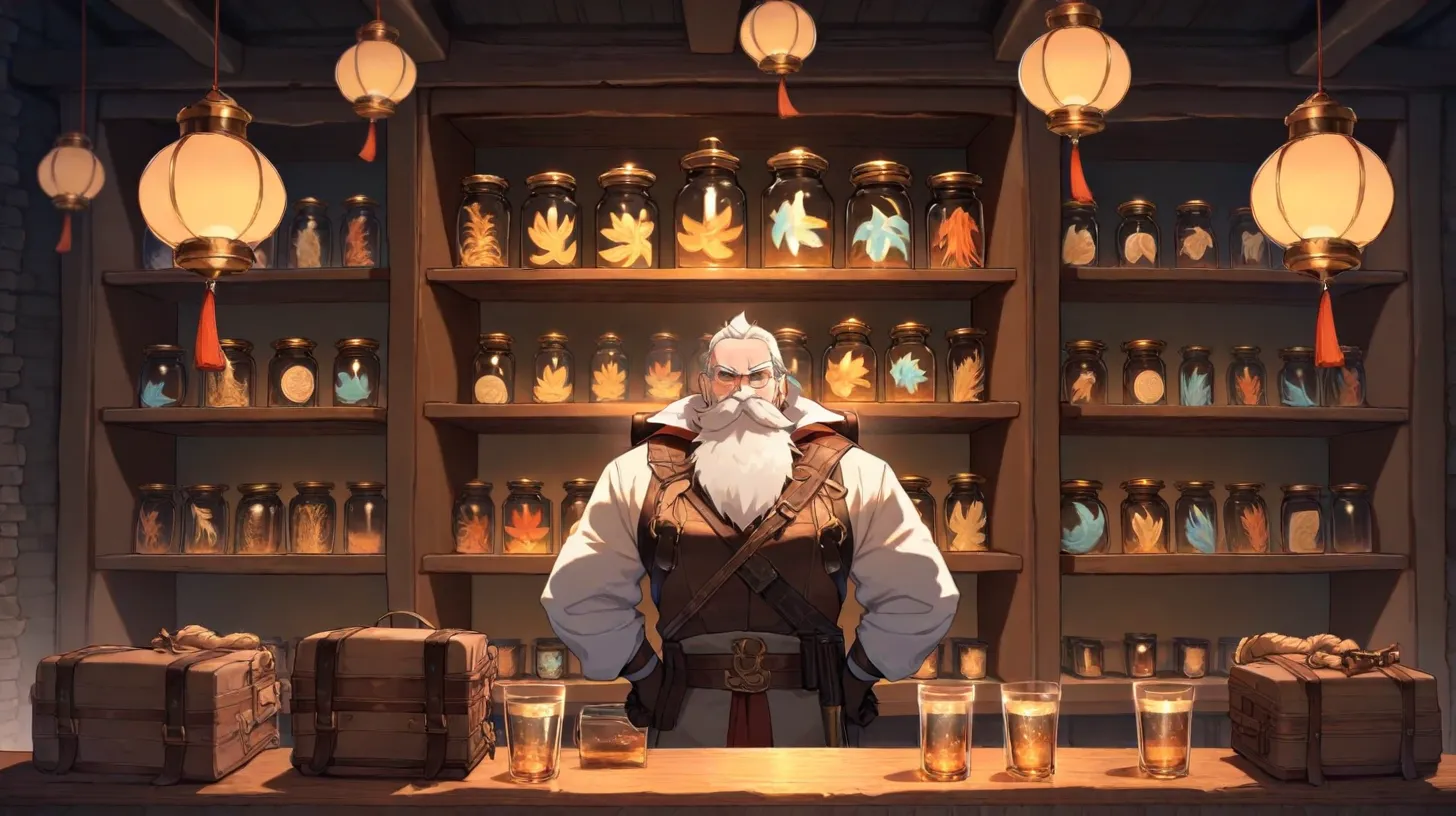
Players love shopping in D&D — but DM-side, "the merchant has whatever you want" gets old fast. This generator builds realistic shop inventories tied to the settlement's size: a hamlet sells common gear at +40% prices, a metropolis stocks rare magic items at –15%. Six shop types: general store, blacksmith, alchemist, magic shop, tavern supplies, and jeweler.
Pick a shop type and a settlement size (hamlet under 100, village 100–1k, town 1k–6k, city 6k–25k, metropolis 25k+) — the generator returns a stocklist with item names, quantities, and prices in cp/sp/gp. Rarities are filtered by settlement: a hamlet won't stock rare magic items, but a city will.
Pair shops with the Tavern Generator for adjacent locations and the Kingdom Name Generator for the wider region.
Why Shop Inventories Matter for Worldbuilding
A shop is a fingerprint of its settlement. The contents of a smithy in a hamlet (rusted nails, a single dagger, no shield) tells the party more about the region's economy than three NPCs explaining it. The generator scales four dimensions automatically:
| Settlement | Stock Count | Price Multiplier | Rarity Cap |
|---|---|---|---|
| Hamlet (<100) | 3–5 items | ×1.40 (scarcity premium) | Common only |
| Village (100–1k) | 5–8 items | ×1.20 | Common + rare uncommon |
| Town (1k–6k) | 8–12 items | ×1.00 (baseline) | Common, uncommon |
| City (6k–25k) | 12–18 items | ×0.95 (competition) | Common, uncommon, rare |
| Metropolis (25k+) | 16–24 items | ×0.85 (deep markets) | Common, uncommon, very rare |
The size and richness of a settlement's shops is one of the easiest ways to communicate the world's shape to players without exposition.
The Six Shop Types
Each shop has its own curated catalog, drawn from 5e PHB equipment, the DMG's magic item tables, and common-sense fantasy commerce:
- General Store. Adventuring kits, ropes, lanterns, basic tools. The most common shop in any settlement.
- Blacksmith. Weapons (mundane and silvered), armor (leather through plate), shields, tools. Quality and availability scale dramatically with settlement size.
- Alchemist. Potions, antitoxins, alchemist's fire, herbalism kits. Higher-rarity potions only appear in cities.
- Magic Shop. Spell scrolls, wondrous items, arcane focuses. Rare in small settlements — even a town might only have a "wise woman" stocking common items.
- Tavern Supplies. Food, drink, lodging. Useful for stocking taverns and inns.
- Jeweler. Gems, finished pieces, jeweler's tools. Mostly appears in towns and larger.
Pricing in 5e — What's Realistic
5e's economy is loosely calibrated to a "1 gp = a skilled worker's daily wage" baseline. Common items follow that scale (a 1 gp longsword shaft, a 1 sp loaf of bread). The generator preserves PHB prices as a baseline and adjusts by settlement.
Tips for using the prices at the table:
- Round to player-friendly numbers. 17 gp 4 sp 3 cp is a math problem. 18 gp is a purchase decision.
- Let haggling matter. An Insight or Persuasion check can shift price by ±20% — but only once per shop. Don't turn every purchase into a skill check tunnel.
- Stock matters more than price. The fact that a hamlet doesn't have a longsword is more interesting than the hamlet charging 18 gp for the longsword they have.
Making Shops Memorable
An inventory list is a starting point. The memorable shop comes from:
- A specific shopkeeper. Roll one quick NPC — use our NPC Generator. The shopkeeper's personality is what gets remembered.
- An item with a story. "And there's this one sword behind the counter — it belonged to my brother. I don't want to sell it. But for the right price…" That sword launches a quest.
- A rumor. Every shopkeeper hears things. A throwaway "I hear the duke's daughter went missing again" can become next session's hook.
For broader settlement-building context, see the Location & Setting Design cluster and the DM Toolkit for full prep workflows.
A shop is a building until you give it a shopkeeper.
The list of wares is the easy part. The shop is memorable when it has a proprietor with a quirk, a regular customer who knows too much, and a back-room rumor. Anima turns inventory into a real location.
- Save shops as wiki locations with shopkeepers, regular patrons, and inventory
- Link the shop to its district, its guild, and the rivalries that shape its prices
- Track what the party bought, sold, and broke across every visit
Free to start · No credit card · Your generated content stays free to use anywhere
Keep going
More free tools
D&D Dice Roller
Free online dice roller for D&D and any TTRPG. Roll d4–d20 and d100, build multi-dice pools, add modifiers, roll with advantage or disadvantage, and type full expressions like 2d6+3 or 4d6kh3.
D&D Encounter Builder
Free 5e encounter builder — pick party level, size, and difficulty (Easy / Medium / Hard / Deadly). The tool calculates XP thresholds and assembles a CR-balanced encounter in seconds.

D&D Spell Generator
Free D&D 5e–style spell generator. Pick level (cantrip → 9) and school of magic — get a complete spell with casting time, range, components, duration, and effect.
D&D Trap Generator
Free D&D 5e trap generator. Pick severity (Setback, Dangerous, Deadly) and character level — get DMG-balanced traps with triggers, damage, save DCs, and disarm hints.