Tavern Generator
Worldbuilding
Fantasy Tavern Generator
Build a full tavern with owner, menu, patrons, and rumors — scaled by settlement
Free · No signup · Click any result to copy
Free fantasy tavern generator. Pick a settlement size (hamlet → metropolis) — get a full tavern with name, owner, menu, patrons, rumors, and a DM secret.
Save the tavern as a real wiki location with its NPCs and rumors.
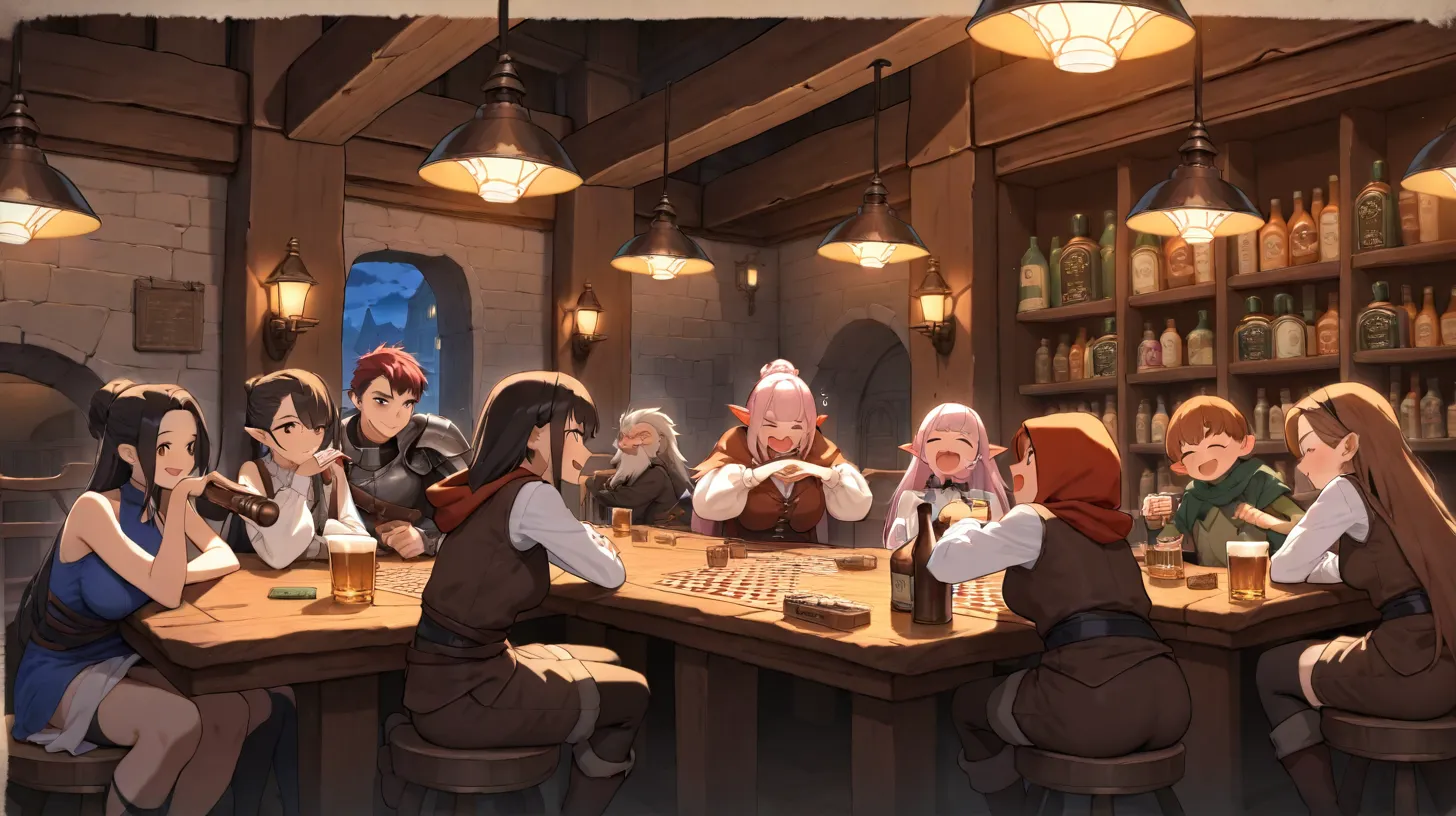
The party always ends up in a tavern. This generator builds the full thing in one click — not just a name, but the whole place: a quirky owner, a settlement-scaled menu with prices in copper/silver/gold, 2–5 patrons present tonight with what they're doing, 2–5 overheard rumors that could become quests, and a DM-only secret tying the location to the wider campaign.
Pick a settlement size (hamlet → metropolis) and click. Hamlet taverns are 3-menu-item farmhouse parlors; metropolis taverns are sprawling multi-room establishments with private gaming halls. Each result is ready to drop into a session in 30 seconds.
Different from our Tavern Name Generator (which produces just names) — this tool builds the whole inn. Pair them: spin a name you like with the Name Generator, then build the tavern around it here. Use our Shop Inventory Generator for the merchant next door and the Kingdom Name Generator for the surrounding region.
Why Taverns Are the Most-Run Location in D&D
Surveys of D&D session prep consistently show taverns as the most-prepared location type, and for good reason: they're the universal narrative entry-point. A tavern lets you start any scene, drop any rumor, introduce any NPC, and pace transitions between adventures. The problem is that "the bartender greets you" gets boring after session three.
A memorable tavern has five layers, all of which the generator builds:
| Layer | Function | How to Use |
|---|---|---|
| Name | Identity and tone | Read aloud first — sets the mood |
| Owner + quirk | Recurring NPC | The face players remember |
| Ambiance | Sensory description | One sentence that locates the scene |
| Menu | Economy + flavor | Prices that feel right for the settlement |
| Patrons + rumors | Adventure hooks | The doors out of the tavern |
How Settlement Size Changes a Tavern
The generator scales everything to settlement size — not just menu count and prices, but the entire feel:
- Hamlet tavern. A farmhouse parlor or wattle-and-daub shed. 3 menu items. 2 patrons everyone knows. Prices –10%. Rumors are local — the missing well, the strange tracks in the field.
- Village tavern. A proper half-timbered inn with a slate roof. 4 menu items. 3 patrons. Baseline prices. Rumors widen to the next valley over.
- Town tavern. A coaching inn with rooms upstairs. 5 menu items. 4 patrons including outsiders. Prices +10%. Rumors include faction politics.
- City tavern. Multi-storey, private booths, fire pit. 7 menu items. 5 patrons across all walks of life. Prices +30%. Rumors are political, religious, and dangerous.
- Metropolis tavern. A famous establishment with a doorman. 9 menu items. 5 patrons including nobles. Prices +60%. Rumors involve gods, lost cities, and the kingdom's succession.
The Owner — The NPC Players Actually Remember
The owner is the single most important NPC in any tavern scene. The generator gives them a quirk that's memorable in one line:
- pours every drink with a small bow
- never gives correct change unless asked twice
- speaks in proverbs the patrons stopped questioning years ago
- keeps a book of names that no one is allowed to read
The quirk is the hook. The party will ask about it. The conversation that follows is the scene. For more depth on memorable NPCs, see the Character Creation cluster.
Rumors as Quest Hooks
Each tavern generates 2–5 rumors. These are deliberately written to feel like overheard fragments — half-information, half-mystery:
...that a noble in the next district paid for a banquet last week and hasn't been seen since.
...that the duke's second son was seen in the slums two nights running.
...that a child speaks in a tongue no one can identify, only when asleep.
Treat each rumor as a quest seed. Some will go nowhere — that's realism, not failure. Some will become the next arc. Players who pick one to investigate tell you what kind of campaign they want.
The DM-Only Secret
Every generated tavern has one secret the players don't know yet: a smuggler's tunnel under the river, a retired adventurer who buried something in the cellar, a cook who deserted from the duke's army. The secret turns the tavern from "set dressing" to "potential plot location."
Don't reveal the secret unless players investigate. Place it in your DM notes, then forget about it. When players return three sessions later asking about the cellar, you'll be glad you wrote it down.
Running a Tavern Scene Without It Stalling
Tavern scenes derail more sessions than dungeons. Three habits to keep them moving:
- Open with the strongest sensory detail. One sentence — "Smoke-stained beams, a peat fire half-out, dogs sleeping under the tables." Don't describe everything. Let players ask.
- Drop a rumor in the first three minutes. Even a one-line mention. It seeds the scene with possibility.
- Set a soft time limit. "After about an hour, the door opens and a hooded figure enters." Doesn't force players to leave — but creates a natural beat to escalate.
For more on session pacing and prep, see how to run a D&D session and the DM Toolkit hub.
A tavern is just a location until it has regulars.
The generator gives you the bones. Anima lets you build the rest — recurring patrons, the proprietor's history, the rumors that turned into quests, the rooms upstairs the party always rents.
- Save taverns as wiki locations with menus, patrons, and rumor logs
- Link tavern NPCs to factions, quests, and the wider city around them
- Track which rumors led to which adventures across every session
Free to start · No credit card · Your generated content stays free to use anywhere
Keep going
More free tools
Fantasy City Name Generator
Generate evocative city, town, and village names for fantasy worldbuilding. From bustling trade hubs to remote hamlets.
Kingdom Name Generator
Generate majestic kingdom and nation names for fantasy worldbuilding. Filter by culture (Norse, Celtic, Arabian, and more) and polity type (Kingdom, Empire, Duchy, Republic, Tribal).
Tavern Name Generator
Generate creative tavern and inn names for D&D campaigns. The Rusty Anchor, The Golden Griffin, and 40+ more — click to copy.
D&D Dice Roller
Free online dice roller for D&D and any TTRPG. Roll d4–d20 and d100, build multi-dice pools, add modifiers, roll with advantage or disadvantage, and type full expressions like 2d6+3 or 4d6kh3.