How to Worldbuild: A Step-by-Step Guide
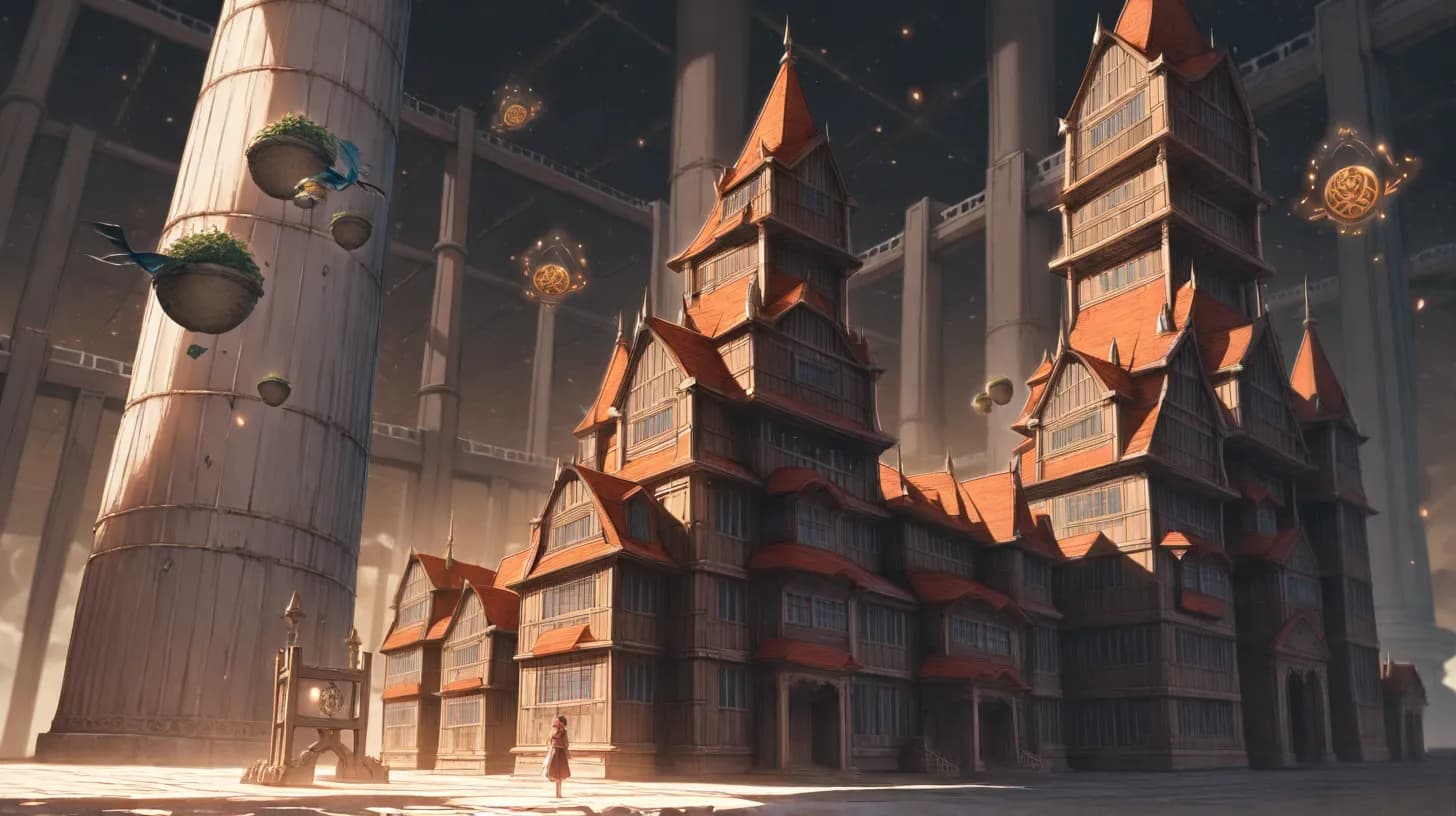
Learning how to worldbuild can feel overwhelming — there are hundreds of systems to design, from geography and magic to politics and daily cuisine. But worldbuilding doesn't have to be a massive undertaking done all at once. This step-by-step guide breaks the process into manageable phases, starting from a single concept and expanding outward until you have a living, breathing world ready for stories, campaigns, or games.
Step 1: Start with a Core Concept
Every great world begins with a "what if." Not a map. Not a timeline. A single compelling idea that makes your world different from every other fantasy setting.
Examples of strong core concepts:
- "What if magic was a finite resource that was running out?"
- "What if the gods died a thousand years ago and their corpses became the continents?"
- "What if every kingdom was on a different floating island, and falling off meant death?"
- "What if the world is post-apocalyptic, but the apocalypse was magical, not technological?"
Your core concept is your compass. Every decision you make should reinforce or explore this idea. If your concept is "magic is running out," then your politics, economics, and social structures should all reflect a world grappling with scarcity.
Step 2: Define the Immediate Setting
Don't build the whole world. Build where your story starts. A single city, a village, a fortress, a ship. Detail this location thoroughly:
- What does it look, smell, and sound like?
- Who lives here? How many people? What do they do?
- Who's in charge? Are they good at it?
- What's the biggest problem residents face right now?
- What's the nearest settlement, and what's the road between them like?
This approach — starting local and expanding outward — keeps you from burning out on continental politics before your first session or chapter. You can always zoom out later.
Step 3: Establish the Rules of Your World
Before you go further, lock down the fundamental rules that make your world work:
Magic Rules
- Does magic exist? How common is it?
- What can magic do? More importantly, what can it not do?
- What does magic cost the user?
- How does society view magic users?
Physical Rules
- Does your world follow Earth physics, or are there differences?
- How many suns, moons? What's the day/night cycle?
- Are there non-human species? What are their capabilities?
Social Rules
- What technology level exists?
- What's the dominant form of government?
- How do people communicate over long distances?
Step 4: Build Three Factions
Worlds feel alive when they contain opposing forces. Create at least three factions with competing goals. Three is the minimum because two factions create a binary conflict; three create triangulation, shifting alliances, and moral complexity.
| Element | Faction 1 | Faction 2 | Faction 3 |
|---|---|---|---|
| Name | [Name] | [Name] | [Name] |
| Goal | [What they want] | [What they want] | [What they want] |
| Method | [How they pursue it] | [How they pursue it] | [How they pursue it] |
| Strength | [Advantage] | [Advantage] | [Advantage] |
| Weakness | [Vulnerability] | [Vulnerability] | [Vulnerability] |
| View of Others | [What they think of 2 & 3] | [What they think of 1 & 3] | [What they think of 1 & 2] |
Step 5: Create a Minimal History
You don't need a 10,000-year timeline. You need three historical touchpoints:
- The Origin — How was this world (or civilization) created? This can be mythological and vague.
- The Turning Point — What single event most shaped the current world? A war, a cataclysm, a discovery, a revolution.
- The Recent Past — What happened in the last 20-50 years that affects the present situation?
Everything between these points can remain vague until you need it. History exists to serve the present story, not the other way around.
Step 6: Populate with Characters
A world without people is a museum. Create 5-10 key NPCs who represent different aspects of your world:
- A leader who embodies the political system
- A commoner who shows daily life
- A rebel who challenges the status quo
- A merchant who reveals the economy
- A scholar who knows (or misremembers) the history
Each NPC should have a want (what they're pursuing), a secret (what they're hiding), and a connection (their relationship to at least one other NPC). Use the NPC Generator to create starting points and flesh them out from there.
Step 7: Draw a Map (Even a Bad One)
Maps ground your world in physical space. They answer questions like "how far is the next city?" and "what's between here and there?" Your map doesn't need to be beautiful. It needs to be functional.
Start with these elements:
- The starting location
- 2-3 nearby settlements
- One major geographic feature (river, mountain, forest)
- The roads or paths connecting them
- One mysterious or dangerous area
Step 8: Test Your World
The best way to find gaps in your worldbuilding is to use it. Run a session. Write a scene. Walk a character through a typical day. You'll immediately discover what you know and what you've left undefined.
Questions that come up during testing are the most valuable worldbuilding prompts you'll ever get — they're the questions your audience will actually ask.
Step 9: Expand Outward
Once your core area is solid and tested, expand in the direction your story takes you. If the party heads north, build the northern region. If the plot involves foreign politics, develop the rival nation. Always build just ahead of where you need to be.
Step 10: Document and Organize
As your world grows, organization becomes critical. Choose a tool — Obsidian, Notion, a wiki, or even a well-organized folder of documents — and maintain it consistently. A world you can't navigate is a world you can't use.
Use a worldbuilding template to ensure each new addition follows a consistent format.
Continue Exploring
This article is part of our Worldbuilding Fundamentals guide, within the Worldbuilding Hub. Explore related articles:
- Ultimate Guide: Worldbuilding
- Fantasy World Name Generator: Complete Guide
- Fantasy World Building: Complete Resource
- 300+ Fantasy World Names by Genre
Need names for your world? Try our Kingdom Name Generator. Populate your world with characters from the NPC Generator, or kickstart adventures with the Quest Hook Generator.
Keep reading
More from this topic
Ultimate Guide: Worldbuilding
Learn worldbuilding from scratch. This comprehensive guide covers techniques, tools, and frameworks for building rich fantasy worlds for tabletop RPGs, fiction, and games.
Fantasy World Name Generator: Complete Guide
Fantasy World Building: A Complete Resource
Start building your world today
Maps, wikis, timelines, and AI tools — everything you need to bring your world to life, in one place.