Fantasy World Building: A Complete Resource
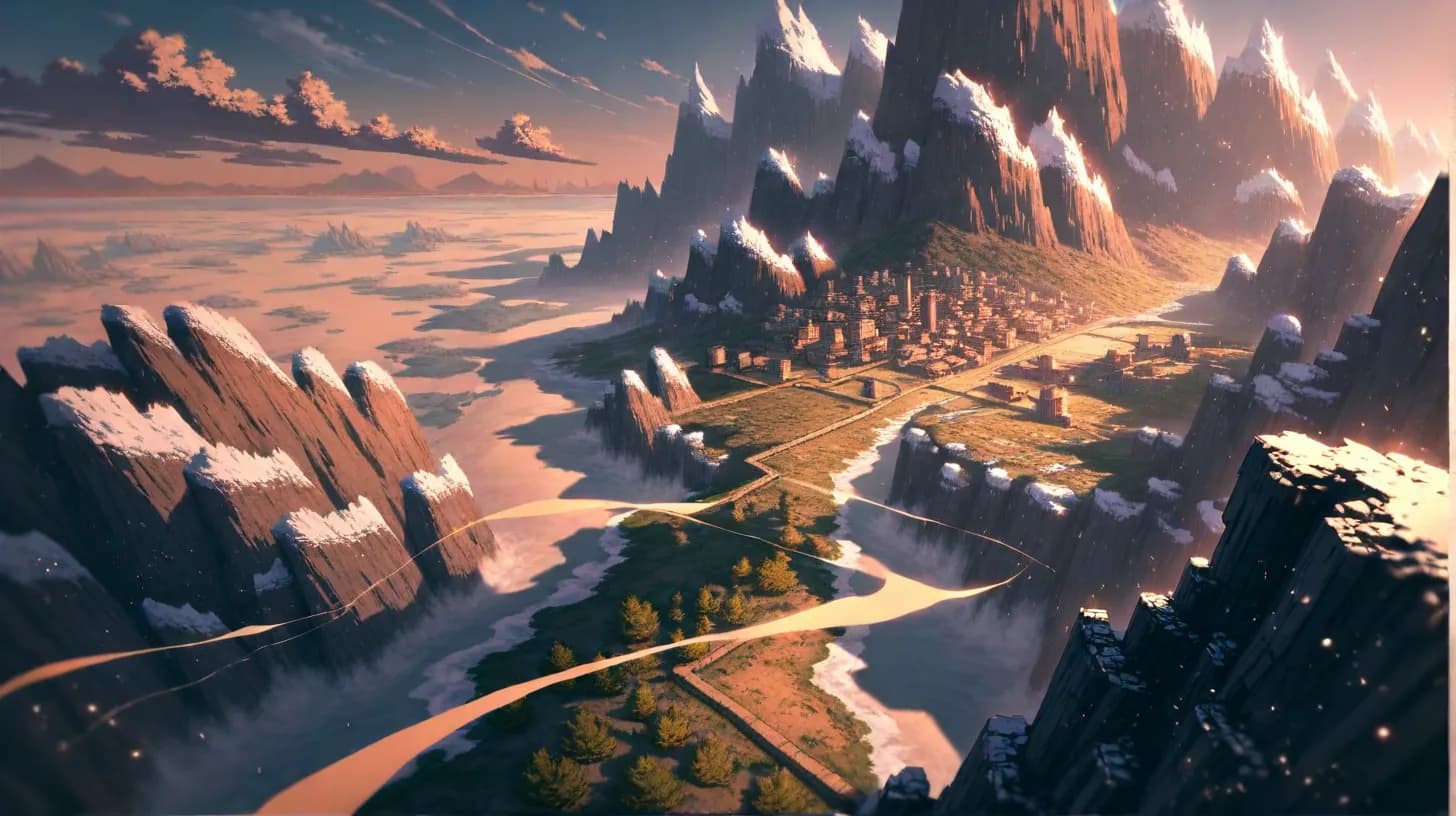
Fantasy world building is the art of creating a fictional setting that feels alive, consistent, and deep enough to sustain stories, campaigns, or games. This complete resource covers every major system you need to consider — from geography and ecology to magic systems and economic structures — organized so you can build systematically instead of getting lost in the weeds.
The Foundation: What Makes a World Feel Real
The difference between a world that feels real and one that feels like a backdrop is interconnection. In a real world, geography affects culture, culture affects politics, politics affects economics, and economics affects daily life. When you change one thing, ripples spread everywhere.
Your goal isn't to document everything. It's to understand the connections well enough that your world responds logically when players or characters push on it.
Geography and Physical World
Climate and Terrain
Start with a rough map — even a sketch on a napkin. Place your major terrain features: mountain ranges, rivers, coastlines, deserts, and forests. Then ask how they interact:
- Mountains create rain shadows — deserts form on the leeward side
- Rivers flow from high ground to sea, and civilizations cluster along them
- Forests require rainfall; grasslands indicate less moisture
- Coastlines drive trade; landlocked nations develop differently
Natural Resources
Where are the mineral deposits, fertile soil, timber, and fresh water? These determine where people settle, what they trade, and what they fight over. A kingdom sitting on the only iron deposits in the region has enormous power — and a target on its back.
| Resource | Impact on Civilization | Conflict Potential |
|---|---|---|
| Iron/Steel | Military advantage, tool production | High — wars fought over mines |
| Fertile Land | Population growth, food surplus | Medium — border disputes, expansion |
| Fresh Water | Settlement location, agriculture | High — existential need |
| Timber | Construction, shipbuilding, fuel | Medium — deforestation conflicts |
| Magical Materials | Arcane industry, enchanting | Very High — monopoly = power |
Cultures and Peoples
Cultural Development
Culture doesn't exist in a vacuum. It's shaped by environment, history, and contact with other cultures. A maritime nation values different things than a mountain kingdom. Questions to answer for each culture:
- What do they value most? (Honor, knowledge, wealth, freedom, family?)
- What's their relationship with magic? (Common tool, sacred gift, feared aberration?)
- How is social status determined? (Birth, merit, wealth, magical ability?)
- What are their art forms? (Music, sculpture, tattoo, oral storytelling?)
- What do they eat, and how does that shape daily life?
Languages and Communication
You don't need a full constructed language. You need naming conventions, a sense of how languages relate to each other, and maybe a dozen words that appear in place names and titles. This creates the illusion of linguistic depth without the work of a full conlang.
Magic Systems
Hard vs. Soft Magic
Brandon Sanderson's Laws of Magic provide a useful framework:
- Hard magic: Clear rules, defined costs, logical limitations. Good for problem-solving and strategy (Mistborn, Avatar: The Last Airbender)
- Soft magic: Mysterious, unexplained, awe-inspiring. Good for wonder and atmosphere (Lord of the Rings, Studio Ghibli)
- Hybrid: Some magic is well-understood; other magic is mysterious. This is how most TTRPG worlds work in practice.
Magic's Impact on Society
The most common worldbuilding mistake with magic is not thinking through its social implications. If healing magic exists, how does that affect medicine and mortality? If teleportation exists, how does that affect trade and warfare? If divination exists, how does that affect crime and law?
Political Systems
Government Types
Fantasy defaults to medieval monarchy, but your world can be far more interesting:
| System | Who Rules | Fantasy Twist |
|---|---|---|
| Magocracy | Spellcasters | Power = magical ability; non-mages are second-class |
| Theocracy | Religious leaders | The god is real and actively intervenes |
| Oligarchy | Wealthy elite | Guild-controlled city-states like Waterdeep |
| Democracy | Citizens vote | Magical verification of votes prevents fraud |
| Kritarchy | Judges | Law mages who can detect lies |
Power Dynamics
Every political system has tensions. Who has power, who wants power, and what they're willing to do to get or keep it — that's where your stories live. Map out at least three factions with competing interests in your primary region.
Economics and Trade
Money makes worlds go round. Decide early:
- What's the currency system? (Gold coins, trade bars, magical crystals, barter?)
- What are the major trade routes and what flows along them?
- What's scarce and what's abundant? Scarcity creates conflict.
- How does magic affect the economy? (A wizard who can create food disrupts agriculture.)
History and Lore
The Three-Era Approach
You don't need a 10,000-year timeline. You need three eras:
- The Mythic Past — Creation myths, legendary heroes, the origin of magic. This is the era of "they say" and "legends tell."
- The Defining Event — The war, cataclysm, or revolution that shaped the current world. This is your world's "before and after."
- The Current Era — The present situation, current conflicts, and where things are heading. This is where your stories happen.
Religion and Cosmology
In fantasy worlds, gods might be real — which fundamentally changes how religion works. Consider:
- Are the gods active or distant?
- Do they grant verifiable power to followers?
- How do competing religions coexist when miracles are observable?
- What happens after death, and do people know for certain?
Practical Worldbuilding Process
- Start with the story — Build what you need for the immediate narrative, then expand outward.
- Work from the local to the global — Detail the starting village before the continental politics.
- Ask "what does this change?" — Every decision should ripple outward.
- Leave blanks intentionally — Undefined areas are opportunities, not failures.
- Playtest your world — Run a session, write a scene, see what questions come up.
Continue Exploring
This article is part of our Worldbuilding Fundamentals guide, within the Worldbuilding Hub. Explore related articles:
- Ultimate Guide: Worldbuilding
- Fantasy World Name Generator: Complete Guide
- 300+ Fantasy World Names by Genre
- World Building Template (Free Download)
Need names for your world? Try our Kingdom Name Generator. Populate your world with characters from the NPC Generator, or kickstart adventures with the Quest Hook Generator.
More Worldbuilding Reading
Continue building out your world with these focused guides:
- The complete guide to worldbuilding for TTRPGs — the practical TTRPG-focused workflow.
- How to worldbuild — a step-by-step guide — the linear method most beginners need.
- 10 worldbuilding mistakes to avoid — the traps experienced creators have learned the hard way.
- Worldbuilding template — organize your world — a structure to capture the work as you go.
- Free fantasy world building template — a downloadable starter.
- Unique fantasy world names — 200 ideas — a name bank for new settings.
- Good fantasy world names — a naming guide — the principles behind names that stick.
- Fantasy vs sci-fi worldbuilding — the genre choices that shape every other decision.
- How to design a fantasy city — districts, scale, and the social texture that makes a city feel alive.
- Obsidian for worldbuilding — setup guide — the markdown wiki workflow many DMs use.
- XMind to track campaign events — mind-mapping for session-to-session continuity.
Keep reading
More from this topic
Ultimate Guide: Worldbuilding
Learn worldbuilding from scratch. This comprehensive guide covers techniques, tools, and frameworks for building rich fantasy worlds for tabletop RPGs, fiction, and games.
Fantasy World Name Generator: Complete Guide
Fantasy World Names: 220 Ideas by Genre (+ How to Invent Your Own)
Start building your world today
A linked wiki, a timeline and a live DM screen — free, in your browser, no account needed.