The Complete Guide to Worldbuilding for TTRPGs
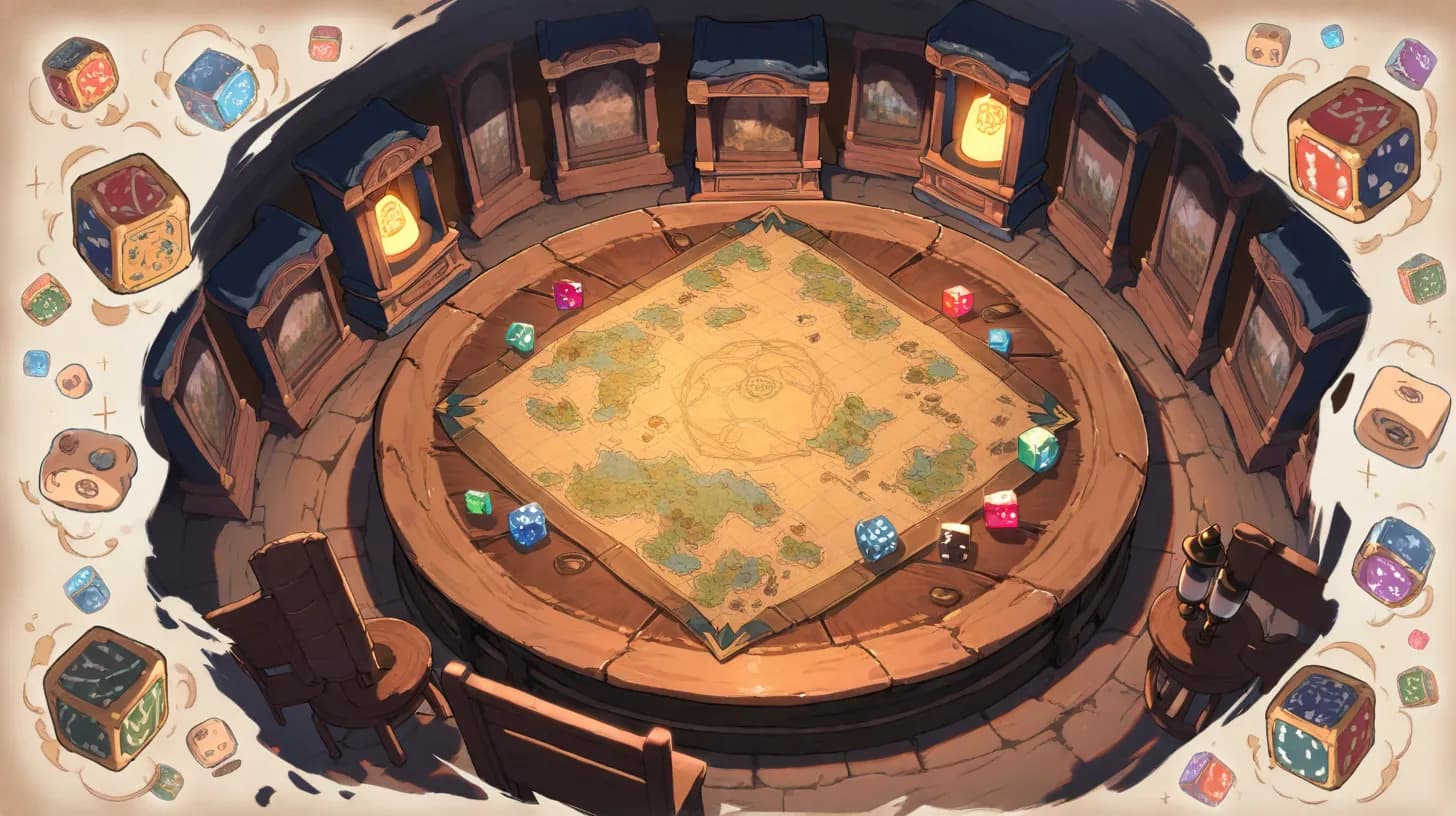
Worldbuilding for TTRPGs is fundamentally different from worldbuilding for novels or video games. Your world isn't a finished product — it's a living playground that players will push, pull, break, and reshape in ways you never anticipated. This complete guide covers TTRPG-specific worldbuilding techniques, from collaborative creation to improvisational frameworks, ensuring your world is both deep enough to feel real and flexible enough to survive contact with players.
How TTRPG Worldbuilding Differs
In a novel, the author controls everything. In a TTRPG, you control the world but not the protagonists. This changes everything about how you build:
| Aspect | Novel Worldbuilding | TTRPG Worldbuilding |
|---|---|---|
| Protagonist | You control them | Players control them — unpredictably |
| Plot | Pre-written, linear or branching | Emergent, reactive, often sideways |
| Detail Level | Written for one path through the world | Must cover anywhere players might go |
| Presentation | Carefully curated prose | Improvised descriptions at the table |
| Collaboration | Solo (usually) | Players co-create through play |
The TTRPG Worldbuilding Pyramid
Build your world in layers of decreasing detail:
Layer 1: The Starting Area (Maximum Detail)
The town, city, or region where the campaign begins. This should be detailed enough to run sessions from without preparation:
- Named NPCs with motivations, secrets, and connections
- Mapped locations (tavern, market, temple, etc.)
- Local problems and plot hooks
- Economic details (what's for sale, what things cost)
- Rumors and information the party can discover
Layer 2: The Region (Moderate Detail)
The broader area surrounding the start. You need enough to answer questions and foreshadow threats:
- Neighboring settlements (names, one-sentence descriptions)
- Major factions operating in the region
- Regional threats and ongoing conflicts
- Travel routes and what's between settlements
Layer 3: The Continent/World (Broad Strokes)
The big picture. Just enough to give context and hint at larger forces:
- Major nations and their relationships
- World history in bullet points
- Cosmology and divine forces
- The "big threat" or overarching conflict
Collaborative Worldbuilding Techniques
Session Zero World Creation
Instead of presenting a finished world, build it with your players during session zero. Techniques:
- Flag planting: Each player declares one fact about the world that relates to their character's backstory. "There's a school of necromancy in the capital that was recently banned." Now that's canon.
- Stars and wishes: Players state what they'd like to see in the world (themes, conflicts, types of encounters). You incorporate these into your design.
- Map collaboration: Draw the starting region together. Each player adds one geographic feature and explains why it matters to their character.
During-Play Worldbuilding
The best TTRPG worlds evolve during play:
- Say "yes, and..." — When a player asks "Is there a library in this city?" the answer should usually be yes, and you add it to your notes.
- Adopt player theories: If a player guesses a plot twist better than your planned one, use theirs. They'll feel brilliant and the story improves.
- Build from backstories: Every player backstory is a worldbuilding seed. A player from a "fallen kingdom" means you now have a fallen kingdom to detail.
The Fronts System
Borrowed from Dungeon World, "fronts" are the best framework for TTRPG worldbuilding. A front is an active threat that progresses whether or not the players engage with it.
Each front has:
- A danger: What's the threat? (The Lich King's army, the spreading corruption, the political conspiracy)
- A countdown: What happens if players do nothing? List 3-5 escalating steps, each worse than the last.
- Stakes questions: What's uncertain? "Will the border hold?" "Can the alliance survive?" These are the questions play will answer.
- Cast: Key NPCs involved in this front.
Example Front: The Arcane Drought
| Step | Event | Timeline |
|---|---|---|
| 1 | Minor spells become unreliable | Already happening |
| 2 | Magical infrastructure fails (wards, lights, communication) | 2 weeks |
| 3 | Mages begin hoarding remaining magic; black market emerges | 1 month |
| 4 | Magical creatures migrate or die; ecosystem collapses | 3 months |
| 5 | The Magocracy falls; whoever controls the last magic source rules | 6 months |
Improv-Ready Worldbuilding
Players will go places you haven't prepared. Instead of panicking, build improv tools:
Random Tables
Create d6 or d10 tables for common improv needs:
- NPC names and personalities (or use the NPC Generator)
- Tavern names and atmospheres
- Local problems and rumors
- Shop inventories and prices
- Encounter complications
The "Three Things" Rule
For any improvised location, prepare three things:
- A sensory detail (what players notice first)
- A problem (what's going on here that creates tension)
- A connection (how this place relates to something players already know)
Common TTRPG Worldbuilding Mistakes
Over-Preparing
If you've written 50 pages about a kingdom the players will spend one session in, you've over-prepared. Build broad, detail as needed.
Under-Preparing the Start
The flip side: the starting area needs to be rich enough to run multiple sessions without scrambling. Under-preparing the first session area is worse than over-preparing the rest.
Railroad Worldbuilding
If your world only has one path through it — one road, one quest, one sequence of events — players will feel railroaded. Build worlds with multiple hooks, multiple paths, and multiple ways to engage with the same problem.
Ignoring Player Investment
If players show interest in the random fisherman NPC you improvised, that fisherman is now important. Your world should flex toward what players care about, not what you've pre-written.
Tools for TTRPG Worldbuilding
- Obsidian — Best for interconnected notes, graph view shows your world's structure
- Anima — Built specifically for TTRPG worldbuilding with wiki, maps, and timelines
- Kingdom Name Generator — Generate setting names on the fly
- NPC Generator — Create NPCs instantly when players go off-script
- Quest Hook Generator — New plot hooks when you need them
Continue Exploring
This article is part of our Worldbuilding Fundamentals guide, within the Worldbuilding Hub. Explore related articles:
- Ultimate Guide: Worldbuilding
- Fantasy World Name Generator: Complete Guide
- Fantasy World Building: Complete Resource
- 300+ Fantasy World Names by Genre
Need names for your world? Try our Kingdom Name Generator. Populate your world with characters from the NPC Generator, or kickstart adventures with the Quest Hook Generator.
Keep reading
More from this topic
Ultimate Guide: Worldbuilding
Learn worldbuilding from scratch. This comprehensive guide covers techniques, tools, and frameworks for building rich fantasy worlds for tabletop RPGs, fiction, and games.
Fantasy World Name Generator: Complete Guide
Fantasy World Building: A Complete Resource
Start building your world today
Maps, wikis, timelines, and AI tools — everything you need to bring your world to life, in one place.