10 Worldbuilding Mistakes to Avoid
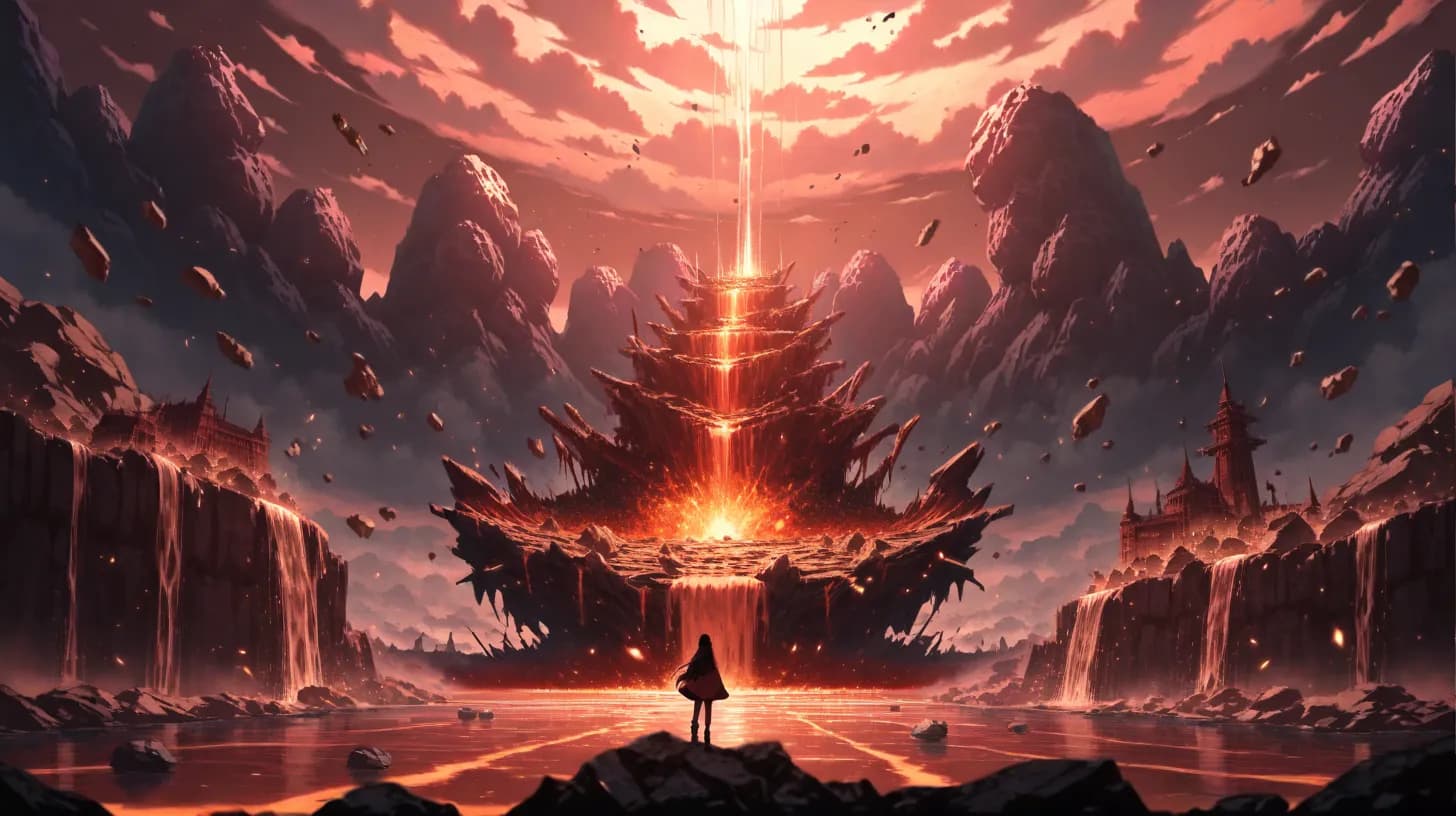
Worldbuilding mistakes don't just weaken your setting — they waste your time. Hours spent on the wrong things, systems that contradict each other, detail that nobody ever encounters. After reviewing hundreds of worldbuilding projects across TTRPGs, novels, and games, these are the 10 most common mistakes and, more importantly, how to fix them.
Mistake 1: Building Everything Before Using Anything
The Problem
You spend months detailing the complete history, geography, and politics of your world before running a single session, writing a single chapter, or letting a single player explore it. You have 200 pages of lore and zero pages of story.
Why It Happens
Worldbuilding is intrinsically rewarding. Creating feels productive. It's also safer than the vulnerability of putting your work in front of an audience. Building forever is a form of creative procrastination.
The Fix
Set a deadline. "I will use this world by [date], with whatever I have." Build what you need for the first session, chapter, or scene. Expand as you go. The step-by-step worldbuilding guide provides a structured approach to building just enough.
Mistake 2: Not Considering Second-Order Effects
The Problem
Your world has healing magic, but doctors still exist and operate exactly like medieval Earth doctors. Your world has teleportation, but trade routes and supply chains work as if everything travels by cart. You've added fantastic elements without thinking through their consequences.
Why It Happens
It's easy to add cool elements. It's hard to trace their implications across every system in your world. Most worldbuilders add magic and technology on top of a default medieval setting without adjusting the foundation.
The Fix
For every major element you add, ask: "What does this change about..." — warfare, economics, medicine, law, transportation, communication, and daily life. You don't need to answer all of these immediately, but you should be aware of the questions.
| Element | Questions to Ask |
|---|---|
| Healing magic | What's the mortality rate? How does this affect population growth? Is there a medical industry? Who can't afford healing? |
| Teleportation | How does this affect trade routes? Military strategy? Border control? Tourism? Crime? |
| Divination | How does this affect courts and law enforcement? Can crimes be solved instantly? What's admissible as evidence? |
| Resurrection | How does this affect grief, inheritance law, murder trials, and the concept of death itself? |
Mistake 3: Creating a World, Not a Setting
The Problem
You have maps, timelines, and political structures, but no story hooks, no conflicts to explore, and no reason for anyone to care. Your world is an encyclopedia, not an adventure.
The Fix
Every worldbuilding element should contain the seed of conflict. A kingdom isn't just a territory on a map — it's a political situation with factions competing for power. A magic system isn't just rules — it's a source of societal tension between those who have magic and those who don't.
After creating each element, add one sentence: "The conflict here is..."
Mistake 4: Naming Inconsistency
The Problem
Your elvish kingdom is called "Lórindel" but the next elvish city is "Grothak." Your human empire has cities named "Thornwall" and "Sakura Heights." Names from different cultural phonetic palettes are mixed randomly, breaking the illusion that these places belong to coherent cultures.
The Fix
Create a phonetic palette for each culture — a set of allowed sounds, syllable structures, and naming conventions. All names from that culture should sound like they belong together. See our naming guide for the full methodology.
Mistake 5: The Planet of Hats
The Problem
Every dwarf is gruff and loves mining. Every elf is graceful and loves nature. Every member of the desert kingdom is the same. You've reduced entire civilizations to one personality trait — a "hat" they all wear.
The Fix
For each culture, define:
- What the stereotype is (what outsiders think)
- What the reality is (more nuanced)
- What the internal disagreement is (the debate happening within the culture)
A dwarven society might value craftsmanship, but there could be a faction pushing for agricultural innovation, a movement of dwarven musicians challenging tradition, and a political divide between isolationists and those who want to trade with the surface.
Mistake 6: Infodumping Your Lore
The Problem
You've built a rich world and you want people to experience it — so you present it as pages of text, long monologues from NPCs, or chapter-length exposition. Your audience's eyes glaze over.
The Fix
Worldbuilding should be delivered through experience, not exposition:
- Show, don't tell. Don't explain the caste system. Show how a guard treats a low-caste NPC differently.
- Reveal through conflict. The party learns about the rivalry between guilds when they're caught in the middle of it.
- Let players discover. Hide lore in books, murals, and overheard conversations. Discovery feels rewarding; lectures feel like homework.
Mistake 7: No Economic Logic
The Problem
Your medieval village has a magic item shop. Your remote mountain fortress has a thriving market. There's no sense of what's scarce, what's abundant, or why trade exists.
The Fix
Every settlement needs an economic reason to exist:
- What does this place produce or provide?
- What does it need from outside?
- Who trades with whom, and what travels along those routes?
Mistake 8: History Without Consequences
The Problem
Your world has a detailed 5,000-year history, but none of it affects the present. The great war of 1,000 years ago has no ruins, no cultural memory, no grudges. History exists only in text files, not in the lived world.
The Fix
For every historical event you create, define one physical remnant (ruins, changed landscape, artifacts), one cultural remnant (traditions, prejudices, holidays), and one political remnant (laws, borders, alliances). If an event has no present-day consequences, it's trivia, not worldbuilding.
Mistake 9: Neglecting Daily Life
The Problem
You know who rules the kingdom and what the magic system is, but you can't answer: What does a farmer eat for breakfast? How does a merchant travel to the next town? What do children play? Your world has power structures but no texture.
The Fix
Spend 30 minutes writing "a day in the life" of three people: a commoner, a merchant, and a noble. What they eat, how they work, what they worry about, what brings them joy. This exercise generates more usable worldbuilding than a week of drawing maps.
Mistake 10: Not Playtesting
The Problem
You build in isolation and present a finished world to your audience. They immediately ask questions you never considered, find inconsistencies you missed, and ignore the parts you worked hardest on.
The Fix
Test early, test often:
- Run a one-shot session in your world before committing to a campaign
- Write a short story set in your world and see what questions it raises
- Present your world concept to a friend and listen to their questions — every question reveals a gap
- Use the 100 worldbuilding questions to stress-test your world's consistency
The Meta-Mistake: Perfectionism
Behind most of these mistakes is one root cause: the belief that a world needs to be perfect before it can be used. It doesn't. The best worlds are built through use — through the questions players ask, the scenes writers struggle with, and the inconsistencies that get discovered and resolved through play.
Build enough to start. Start. Build more as you go. That's the real secret of worldbuilding.
Continue Exploring
This article is part of our Worldbuilding Fundamentals guide, within the Worldbuilding Hub. Explore related articles:
- Ultimate Guide: Worldbuilding
- Fantasy World Name Generator: Complete Guide
- Fantasy World Building: Complete Resource
- 300+ Fantasy World Names by Genre
Need names for your world? Try our Kingdom Name Generator. Populate your world with characters from the NPC Generator, or kickstart adventures with the Quest Hook Generator.
Keep reading
More from this topic
Ultimate Guide: Worldbuilding
Learn worldbuilding from scratch. This comprehensive guide covers techniques, tools, and frameworks for building rich fantasy worlds for tabletop RPGs, fiction, and games.
Fantasy World Name Generator: Complete Guide
Fantasy World Building: A Complete Resource
Start building your world today
A linked wiki, a timeline and a live DM screen — free, in your browser, no account needed.