Worldbuilding for Beginners: Where to Start
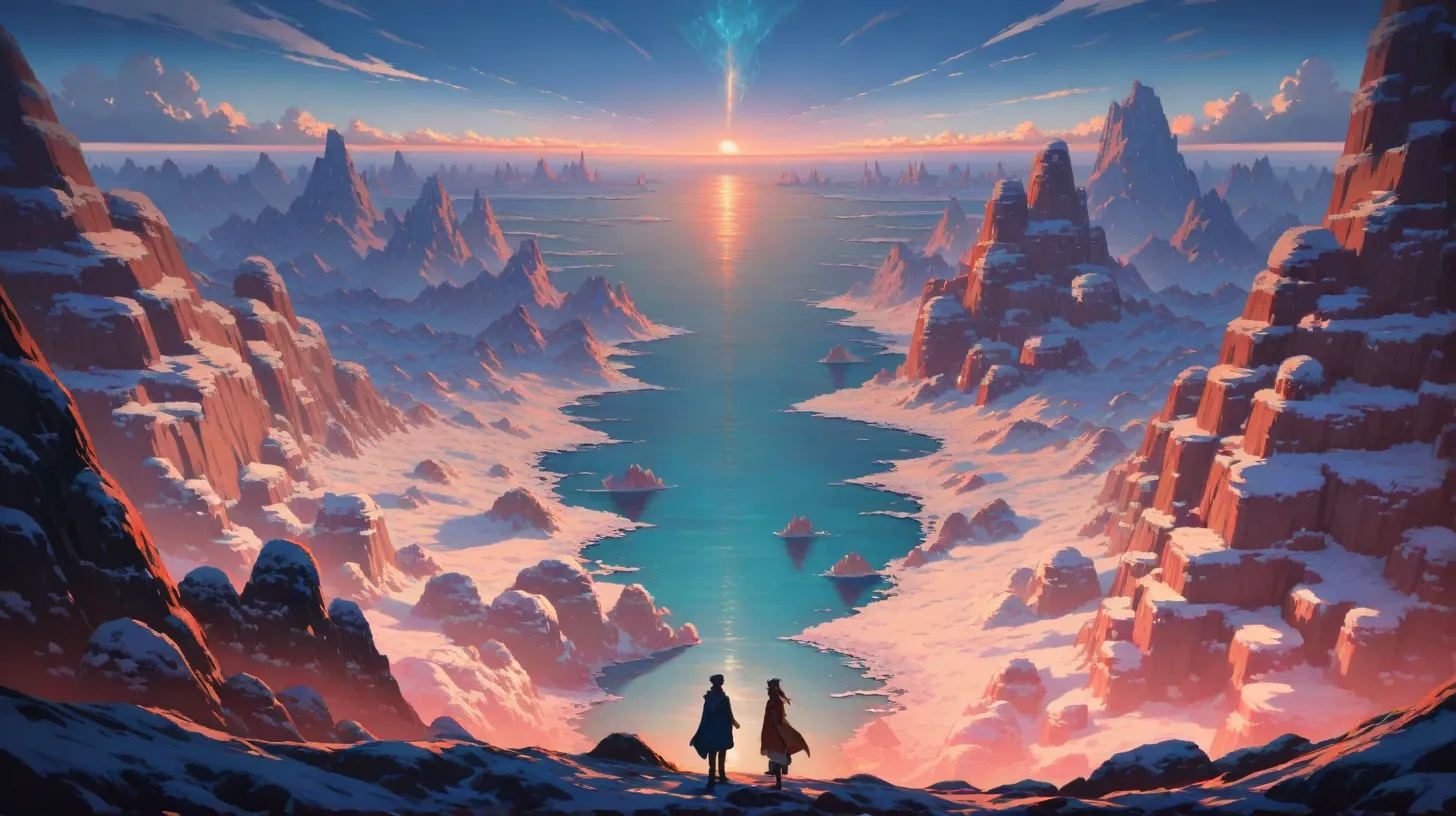
You want to build a world. Maybe it's for a D&D campaign, a novel, a video game, or just because you love the idea of creating an entire universe. But you're staring at a blank page and the scope feels paralyzing. Where do you even begin? This guide is for absolute beginners — no prior worldbuilding experience needed. We'll start with the simplest possible approach and build from there.
The One-Page World
Here's the secret experienced worldbuilders won't always tell you: you don't need a detailed world to start. You need one page. That's it. One page of notes and you can run a game, write a scene, or begin developing something larger.
Your one-page world needs exactly five things:
- A name — Even a working title. "The world" works until you find something better. If you want inspiration, try our Kingdom Name Generator.
- A hook — What makes this world different? One sentence. "Magic is dying." "The gods walk among mortals." "Five floating cities compete for control."
- A place — One location described in 3-4 sentences. This is where your story starts.
- A conflict — One problem that affects the starting location. "The mine has been overrun." "The duke is missing." "Something in the forest is killing livestock."
- Three NPCs — Three people with names, one-line descriptions, and one thing each wants.
That's a world. Everything else is expansion.
Choosing Your Approach: Top-Down vs. Bottom-Up
| Approach | How It Works | Best For | Risk |
|---|---|---|---|
| Top-Down | Start with the big picture (cosmology, continents, empires) and work down to details | Writers who need the full picture before starting; visual thinkers who want a map first | Spending months on lore nobody experiences |
| Bottom-Up | Start with one village or character, then expand outward as needed | DMs running campaigns; writers who discover their world through story | Inconsistencies when expanding later |
| Middle-Out | Start with a region — one kingdom or city-state — then build up and down | Most beginners; balances scope with usability | Can feel unfocused without a core concept |
Our recommendation for beginners: Bottom-Up. Build what you need, when you need it. You can always expand later, but you can never get back the hours spent detailing a continent nobody visits.
The Five Pillars for Beginners
1. Geography (Where Things Are)
You need a map, even a crude one. Hand-drawn on notebook paper is fine. Place these elements:
- Your starting settlement
- One body of water (river, lake, or coast)
- One dangerous wilderness area
- One road leading somewhere else
That's enough geography to start. You don't need continents. You need a neighborhood.
2. People (Who Lives Here)
Create 5-10 NPCs for your starting location. Each needs:
- A name (use the NPC Generator if you're stuck)
- A job or role (blacksmith, mayor, healer, merchant, troublemaker)
- One thing they want
- One secret they're keeping
Characters are the fastest way to make a world feel alive. A well-described NPC is worth ten pages of lore.
3. History (What Happened Before)
You need exactly one historical event — the thing that shaped the current situation. "Twenty years ago, the old king was overthrown." "A century past, the great forest burned." "Nobody remembers what happened before the Fog."
One defining event gives you a "before" and "after" that makes the present meaningful.
4. Magic or Technology (What's Possible)
Define what's possible in your world that isn't possible in ours. Magic? Advanced technology? Psionics? And more importantly, what are the limits?
For beginners, we recommend simple constraints:
- Magic exists but is [rare / costly / dangerous / regulated]
- It can do [these things] but cannot do [these things]
- People who use it are [respected / feared / hunted / licensed]
5. Conflict (What's Going Wrong)
A world without conflict is a painting — pretty, but static. You need at least two factions that want different things. This can be as simple as:
- The mayor wants to expand the town into the forest
- The druids want to protect the forest
- Something in the forest wants to expand into the town
Common Beginner Mistakes
Mistake 1: Starting with the Creation Myth
Your creation myth is the least important part of your world for actual play or storytelling. Nobody needs to know how the universe began before they can explore a dungeon. Build it later, if at all.
Mistake 2: Building Everything Before Using Anything
Worldbuilding is seductive — you can spend years building and never actually use your world. Set a deadline: "I will run a session / write a chapter by [date], using whatever I have at that point." Imperfect action beats perfect inaction.
Mistake 3: Copying Tolkien's Process
Tolkien built languages first, then derived cultures from them, then built a world around those cultures, then wrote stories in that world. He was a linguistics professor with decades to spare. You are not Tolkien. Start with the story.
Mistake 4: Making Everything Unique
Not every element needs to be original. If your elves are basically Tolkien's elves, that's fine. Spend your creative energy on the 2-3 things that make your world truly different, and let the rest be familiar enough that players/readers can orient themselves quickly.
Mistake 5: Working Alone When You Don't Have To
If you're building for a TTRPG, involve your players. Their character backstories and questions will build more world than a week of solo brainstorming. Collaboration multiplies creativity.
Your First Week of Worldbuilding
| Day | Task | Time |
|---|---|---|
| 1 | Write the one-page world (hook, place, conflict, 3 NPCs) | 30 min |
| 2 | Draw a rough map of the starting area | 20 min |
| 3 | Detail 5 more NPCs | 30 min |
| 4 | Write the one defining historical event | 20 min |
| 5 | Define magic rules (3 bullet points) | 15 min |
| 6 | Create two factions with opposing goals | 20 min |
| 7 | Write three rumors players might hear at the local tavern | 15 min |
Total investment: about 2.5 hours. At the end of this week, you have a functional world you can use.
Continue Exploring
This article is part of our Worldbuilding Fundamentals guide, within the Worldbuilding Hub. Explore related articles:
- Ultimate Guide: Worldbuilding
- Fantasy World Name Generator: Complete Guide
- Fantasy World Building: Complete Resource
- 300+ Fantasy World Names by Genre
Need names for your world? Try our Kingdom Name Generator. Populate your world with characters from the NPC Generator, or kickstart adventures with the Quest Hook Generator.
Keep reading
More from this topic
Ultimate Guide: Worldbuilding
Learn worldbuilding from scratch. This comprehensive guide covers techniques, tools, and frameworks for building rich fantasy worlds for tabletop RPGs, fiction, and games.
Fantasy World Name Generator: Complete Guide
Fantasy World Building: A Complete Resource
Start building your world today
Maps, wikis, timelines, and AI tools — everything you need to bring your world to life, in one place.