Half-Elf 5e: The Complete Race Guide (Subraces, Builds & Roleplay)
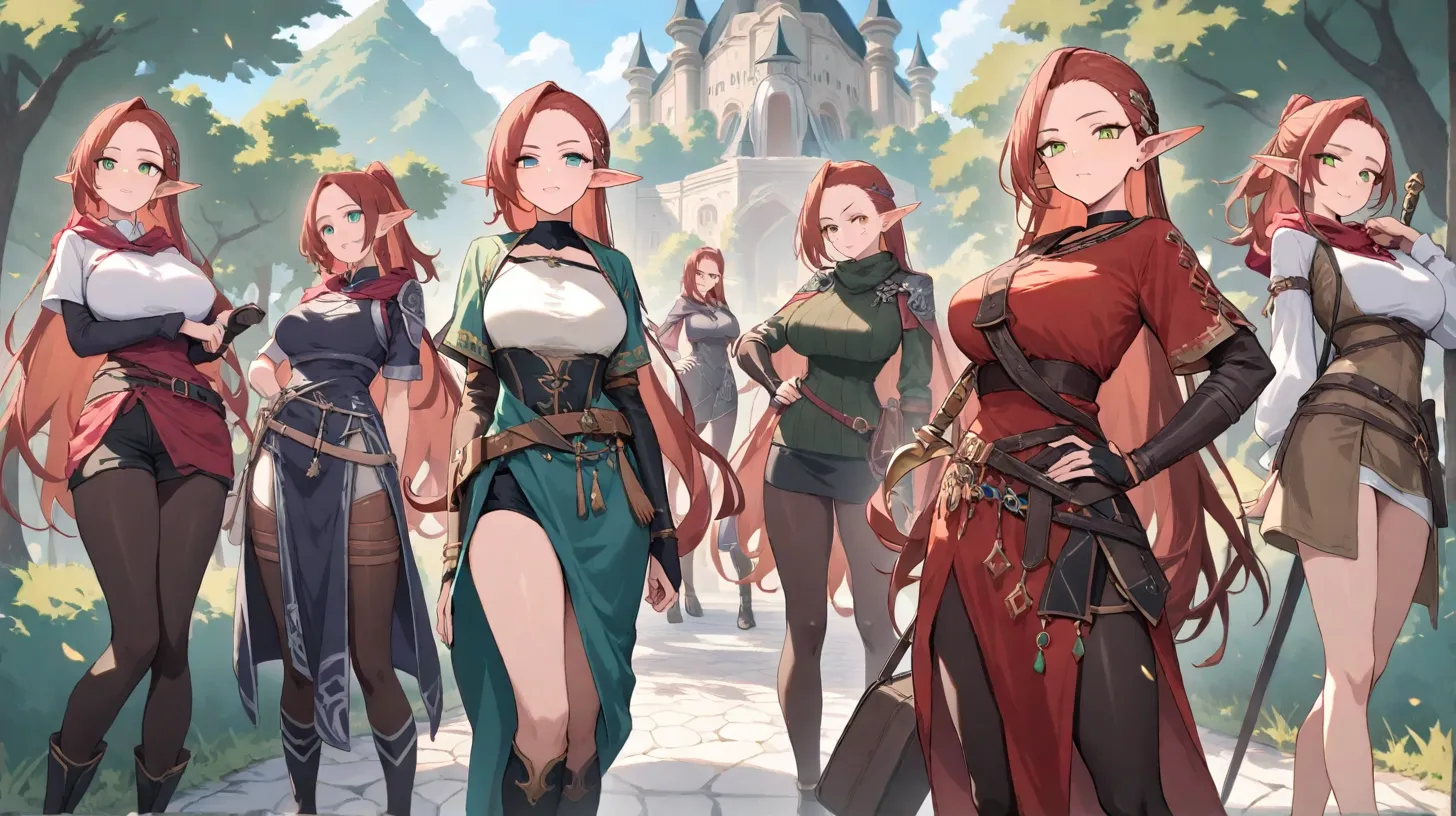
The half-elf is the single most flexible race in 5e — and one of the most under-appreciated. The chassis gives you +2 Charisma, +1 to two other ability scores of your choice, two free skill proficiencies, fey ancestry, and 60-foot darkvision. That's three ability score bonuses, custom-targeted, plus two skill proficiencies — more than any other Player's Handbook race in raw mechanical efficiency.
The half-elf is also the race with the deepest built-in roleplay hook: a lineage that doesn't quite belong anywhere. Most players default to the "torn between two worlds" framing — and this works, but it's also been done so many times that it can feel automatic. This guide walks through the full chassis, the official subraces, the best class fits, and roleplay archetypes that explore the half-elf's complicated cultural position without leaning on the cliché.
The Half-Elf at a Glance
Base half-elf features:
- Ability scores: +2 Charisma, +1 to two other abilities of your choice
- Age: mature in late teens, live ~180 years
- Size: Medium
- Speed: 30 feet
- Darkvision: 60 feet
- Fey Ancestry: advantage on saves vs. charm; immune to magical sleep
- Skill Versatility: proficiency in any two skills of your choice
- Languages: Common, Elvish, one extra of your choice
The headline feature is Skill Versatility. Two free skill proficiencies, with no mechanical restriction on which ones, is enormous. A half-elf rogue can grab Stealth, Acumen, Athletics, and Perception (assuming the rogue's two from rogue class) — covering most of the skill spectrum. A half-elf bard can pick up two off-list skills the bard doesn't have access to, becoming the most multi-talented character in the party.
Combined with the +2 Charisma bonus, the half-elf is the strongest face/social character race in 5e — better than even the variant human for most Charisma-based classes.
Subrace Variants (SCAG)
Sword Coast Adventurer's Guide added optional half-elf variants that swap the two skill proficiencies for a different feature. These are extremely strong if your DM allows them:
Tier 1: Variant Subraces
- Wood Elf Heritage. 35-foot speed and Mask of the Wild (hide in light obscurement). Massive movement and stealth bonus. Trades two skill proficiencies for both — usually worth it.
- High Elf Heritage. Free wizard cantrip. Best for caster builds.
- Drow Heritage. Dancing Lights cantrip and Faerie Fire 1/long rest. Niche but strong for Cha casters.
- Aquatic Elf Heritage. Swim speed equal to walking speed. Niche, but absurd in nautical campaigns.
Mark of Detection (Eberron)
An Eberron-specific dragonmark variant. Detect Magic and Mage Hand at level 1, scaling Detect spells. Very strong support utility.
For a first half-elf: standard half-elf for skill diversity, wood elf heritage variant for any Dex-based class, high elf heritage variant for casters.
Best Classes for Half-Elves
The +2 Charisma plus two flexible +1s mean half-elves shine in any Cha-positive class:
- Bard (any subclass). +Cha is everything; Skill Versatility stacks with bardic Jack of All Trades for absurd skill coverage. The strongest half-elf-class fit.
- Warlock (any patron). +Cha + skill versatility for face role + fey ancestry to shrug off charm; great chassis.
- Sorcerer (any origin). +Cha plus +Con/+Dex flexibility. Strong frame.
- Paladin (any oath). Half-elf is one of the best paladin races — +Cha for spells/aura, +Str (or +Dex) for combat, +Con for survivability.
- Cleric (Charisma-flavored domains). Twilight, Light, or Order; +Cha helps with cleric save proficiency synergy.
- Rogue (Arcane Trickster, Mastermind, Swashbuckler). Skill Versatility plus rogue Expertise = absurd skill coverage. Plus +Cha for Mastermind/Swashbuckler.
The half-elf is bad at being a barbarian, monk, ranger, or any class where Strength is primary and Charisma is dumped. The +2 Cha is functionally wasted on those classes.
Stat Priority & Build Notes
For Charisma-based casters (sorcerer, warlock, bard, paladin):
- Charisma — already +2; aim for 16-18 starting
- Constitution — flex +1; 14-16
- Dexterity — flex +1; 14-16
For half-elf rogues:
- Dexterity — flex +1; 16+ at level 1
- Charisma — already +2 (huge for Mastermind/Swashbuckler)
- Constitution — flex +1
The flexibility is the point. The half-elf is the only race where you can target three specific stats with bonuses, custom-fit to any class. Use it.
Common Mistakes
- Wasting Skill Versatility on two combat skills. Pick skills you don't get from class. Your bard already has Performance; your fighter doesn't. Pick the gaps.
- Picking the wrong free skill. Insight, Persuasion, Perception, and Stealth are usually the best picks. Animal Handling and Religion are situational.
- Forgetting fey ancestry. Charm immunity advantage is one of the strongest defensive features in the game. Roll with confidence in social encounters.
- Picking a Cha-dump class. If you're playing barbarian or monk, half-elf isn't your race. Pick a Strength or Wisdom-positive race instead.
- Defaulting to the "torn between worlds" backstory. See the roleplay section.
Lore: The Cultural Position
Half-elves don't have a homeland. They're scattered through human cities, elven enclaves, and the borderlands between them. Most published settings (Forgotten Realms, Eberron, Greyhawk) treat half-elves as a recognized minority population but not a culture in the way elves or dwarves are.
This is the source of the half-elf's narrative power: every half-elf is, in some sense, an immigrant or a refugee — even if they were born in the city they live in. Their parents almost always come from different cultures. They almost always grew up with two heritage languages. They almost always learned at some point that neither side fully claimed them.
How a half-elf relates to this varies wildly:
- The blended. Raised in a mixed community where half-elves are common. Has friends like them. Doesn't feel torn — feels normal.
- The elven-raised. Grew up in elven lands. Was treated as not-quite-elf. Learned Elvish before Common. Has elf manners and short-life-cycle anxieties.
- The human-raised. Grew up in a human city. Was treated as exotic, beautiful, different. Hides the elven side or flaunts it.
- The orphan. Doesn't know their elven parent. Has questions. Adventures might answer them.
- The chosen. Raised by neither parent. Took a third culture as their own — a halfling village, a religious order, a thieves' guild.
Names: half-elves usually have one name from each side, or a hybrid name that nods to both. Our D&D name generator handles half-elf options if you need a starting point.
Roleplay Beyond "Torn Between Worlds"
The flat half-elf is "doesn't fit in anywhere, longs for belonging." It's accurate but overdone. Better starts:
- The fully assimilated. Knows they're half-elf. Doesn't care. Lives a human or elven life. Asked about identity, shrugs and changes the subject. The "I'm not interesting; the rest of you are" half-elf.
- The proud. Sees half-elven heritage as the best of both. Has cultivated this identity deliberately. Has friends like them. Will correct anyone who treats half-elven as "lesser elf" or "weirder human."
- The cynic. Tired of being asked "where are you from?" Tired of being exoticized. Tired of explaining. Has a memorized speech they don't bother to deliver anymore.
- The loyal. Found a third place — a guild, a temple, a city quarter — and that's home now. The party's the latest version. Heritage doesn't matter; this matters.
- The investigator. Wants to know which elf parent gave them what features. Has been quietly tracking. The campaign's first arc might be this answer.
What's important: the half-elf doesn't have to be melancholy. The chassis is the most flexible in 5e — the character can be the most flexible too. Our character bible guide walks through identity construction; the half-elf is the race where this work pays off most.
The Half-Elf at the Table
Mechanically, the half-elf is the strongest Charisma-based race in 5e — three ability bonuses, two skill proficiencies, fey ancestry, and darkvision is the most efficient feature stack in the Player's Handbook. Pick a Cha-positive class, pick two skills the class doesn't give you, and pick a subrace variant if your DM allows them. Build the character around the cultural position — proud, cynical, assimilated, or investigating — and the chassis comes alive. For naming options, see our D&D name generator. For broader character work, our character bible and character sheet guide. To explore sibling races, browse the full races, species & lineages cluster.
Keep reading
More from this topic
Elf 5e: The Complete Race Guide (Subraces, Builds & Roleplay)
The elf is the most-played race in D&D for a reason — Dex bonuses, perception advantage, fey ancestry, and four hours of sleep make them the strongest baseline race in the game. Here's the full breakdown across all eight subraces.
Dragonborn 5e: The Complete Race Guide (Subraces, Builds & Roleplay)
The dragonborn is the most underplayed great race in 5e — a draconic warrior with built-in breath weapon, elemental resistance, and the most striking visual identity in the Player's Handbook. Here's how to build one that earns its dragon blood.
Dwarf 5e: The Complete Race Guide (Subraces, Builds & Roleplay)
The dwarf is the toughest baseline race in D&D — Constitution bonus, poison resistance, and a hit-die-stacking subrace that makes dwarven characters near-impossible to kill. Here's how to build one across all four subraces.
Start building your world today
Maps, wikis, timelines, and AI tools — everything you need to bring your world to life, in one place.