Warhammer Fantasy Roleplay: Beginner's Guide to WFRP 4e
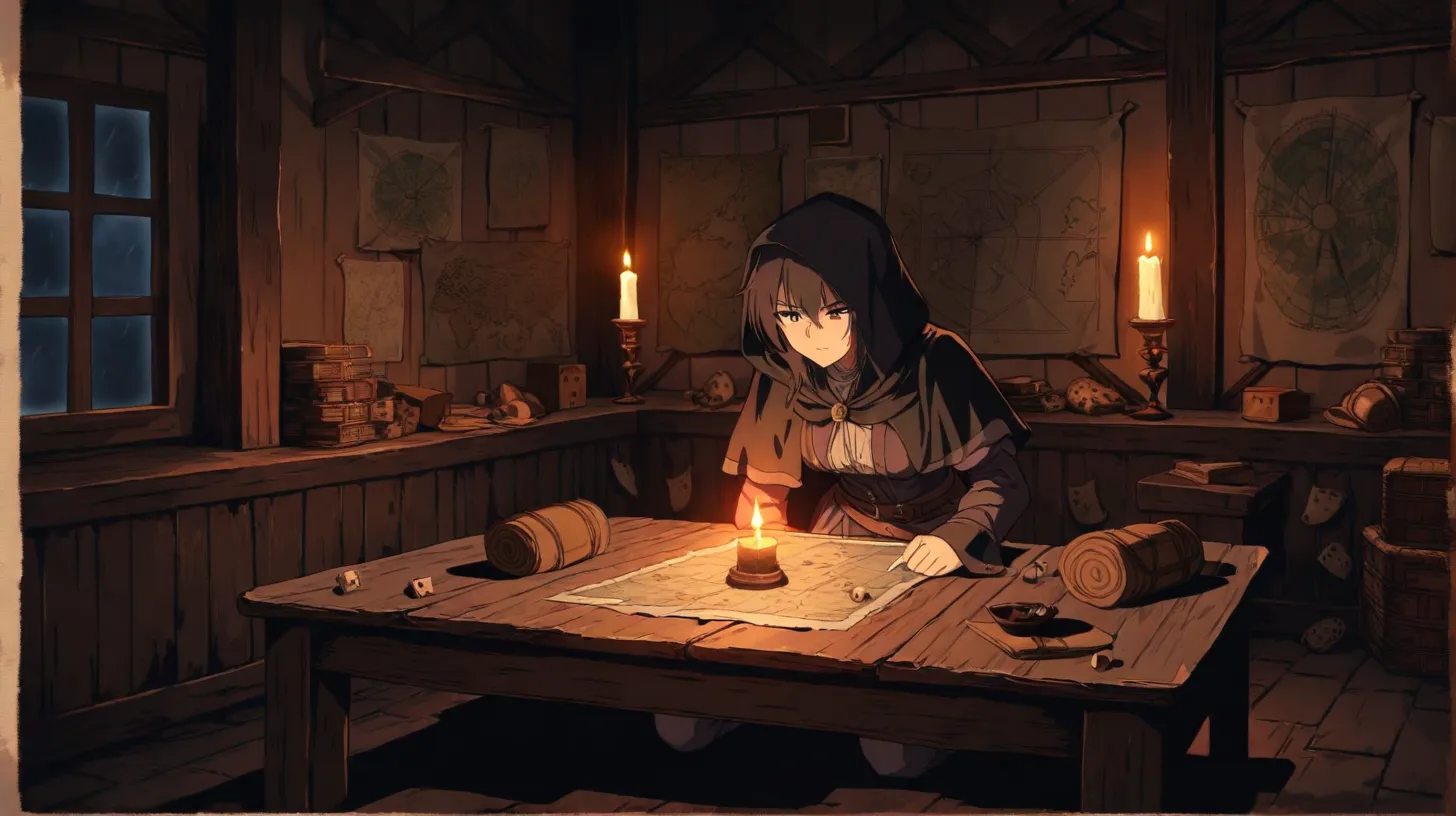
Warhammer Fantasy Roleplay (WFRP) is the RPG for people who think D&D is too heroic. Where D&D starts you as a capable adventurer destined for greatness, WFRP starts you as a rat catcher, a grave robber, or a peasant — and the world is actively trying to kill you. Your character doesn't begin as special. They become special by surviving.
Now in its 4th Edition (published by Cubicle 7), WFRP is set in the Old World — a grim, low-fantasy version of Renaissance Europe where Chaos corrupts from within, Skaven scheme beneath cities, and the Inquisition burns anyone who looks suspicious. It's dark, it's funny, it's brutal, and it's one of the greatest RPGs ever made.
What Makes WFRP Different from D&D?
If you're coming from D&D 5e, WFRP will feel like a different genre entirely. Here's how they compare:
| Aspect | D&D 5e | WFRP 4e |
|---|---|---|
| Tone | Heroic fantasy — you're the chosen ones | Grim & perilous — you're nobody, trying to survive |
| Starting power | Competent adventurer from level 1 | Literally a rat catcher or peasant |
| Character progression | Levels (1-20), always improving | Careers — lateral moves, not always "up" |
| Combat lethality | Forgiving — PCs are hard to kill | Extremely lethal — a sword swing can end you |
| Magic | Common, accessible, reliable | Rare, dangerous, corrupting — every spell risks mutation |
| Setting | High fantasy (Forgotten Realms, etc.) | Low fantasy Renaissance Europe with Chaos underneath |
| Investigation | Optional pillar | Core gameplay — many campaigns are mysteries |
| Social class | Irrelevant after session 1 | Defines your access, contacts, and how NPCs treat you |
| Dice | d20 + modifiers | d100 (percentile) — roll under your skill |
Core Mechanics: The d100 System
WFRP uses percentile dice (two d10s, one for tens, one for units). Your skills and characteristics are expressed as percentages. To succeed, you roll under your target number.
Example: Your Weapon Skill is 43. You roll 2d10 and get 37. Since 37 is under 43, you succeed. The difference between your roll and target (called Success Levels) determines how well you succeed: (43-37)/10 = +0 SL, rounded down. But since you succeeded, you get at least +1 SL.
Success Levels (SL)
Everything in WFRP is measured in Success Levels. They determine:
- How much damage you deal in combat (SL + weapon damage)
- Whether your opponent blocks your attack (opposed test — highest SL wins)
- How convincing your social checks are
- Whether your spell goes off cleanly or spirals into Chaos corruption
| Roll Result | Outcome |
|---|---|
| Roll ≤ target, units = tens | Critical Success — extra dramatic effect |
| Roll ≤ target | Success — SL = (target - roll) / 10 |
| Roll > target | Failure — negative SL = (target - roll) / 10 |
| Roll > target, units = tens | Fumble — something goes terribly wrong |
Character Creation
WFRP character creation is one of the best in any RPG because it's mostly random. You don't build a power fantasy — you discover a person, and then figure out how to survive as them.
Step 1: Species
Choose (or roll) your species:
| Species | Key Traits | Starting Bonus |
|---|---|---|
| Human | Versatile, most common, fits everywhere | 3 random talents, +20 to spend on any characteristics |
| Dwarf | Tough, stubborn, master craftsmen, hate elves | Hardy, Night Vision, resistant to Chaos |
| Halfling | Small, overlooked, surprisingly resilient, great cooks | Small (harder to hit), resistant to Chaos, Acute Sense (Taste) |
| High Elf | Ancient, arrogant, magically gifted, dying race | +2 SL on language tests, Night Vision, excellent Willpower |
| Wood Elf | Wild, territorial, bow masters, nature-bound | Excellent Ballistic Skill, Night Vision, Rover talent |
Step 2: Career (The Heart of WFRP)
This is what makes WFRP unique. Instead of choosing a "class," you're assigned a Career — your job in the world. And these aren't heroic archetypes. Your starting career might be:
- Rat Catcher — You catch rats. You have a small but vicious dog. This is the iconic WFRP starting career.
- Grave Robber — You dig up corpses and sell parts to doctors. Morally questionable. Surprisingly useful.
- Agitator — You spread anti-establishment propaganda. The Inquisition wants to have a word.
- Bailiff — You enforce the law in a world where the law is corrupt and the lawbreakers might be Chaos cultists.
- Herbalist — You know plants. In a world where medicine is one step above witchcraft, that's actually powerful.
- Soldier — The closest thing to a "Fighter" — but you're a common infantry grunt, not a knight.
Each career has four tiers. As you advance, your career evolves:
| Tier | Soldier Example | Rat Catcher Example |
|---|---|---|
| Tier 1 (Brass) | Soldier — basic infantry | Rat Catcher — literal rat catcher |
| Tier 2 (Silver) | Sergeant — leading a squad | Exterminator — professional pest control |
| Tier 3 (Gold) | Captain — commanding units | Monster Hunter — tracking serious threats |
| Tier 4 (Noble) | General — commanding armies | Witch Hunter — hunting Chaos corruption |
The rat catcher to Witch Hunter pipeline is one of the most beloved character arcs in RPG history. You start catching rats in sewers and end up hunting the servants of the Dark Gods. That's WFRP.
Step 3: Characteristics
WFRP has 10 primary characteristics, all expressed as percentages:
| Characteristic | Abbreviation | Governs |
|---|---|---|
| Weapon Skill | WS | Melee combat accuracy |
| Ballistic Skill | BS | Ranged combat accuracy |
| Strength | S | Physical damage bonus |
| Toughness | T | Damage reduction, disease resistance |
| Initiative | I | Speed, reaction time, turn order |
| Agility | Ag | Dodging, acrobatics, stealth |
| Dexterity | Dex | Fine manipulation, lockpicking, surgery |
| Intelligence | Int | Knowledge, investigation, perception |
| Willpower | WP | Resisting magic, Chaos, fear |
| Fellowship | Fel | Social interaction, leadership, charm |
Combat: Brutal and Quick
Combat in WFRP is fast and deadly. A single hit from a two-handed sword can take a character from full health to critically wounded. There is no "I have 45 hit points, I can take a few hits." You have roughly 10-15 Wounds. A good hit does 8-12 damage. Do the math.
Combat Round Structure
- Determine Initiative — I + Ag bonus, highest goes first
- Attacker rolls WS (melee) or BS (ranged) — opposed by defender's WS or Dodge
- Compare SLs — attacker must beat defender's SL to hit
- Calculate damage — SL + weapon damage + Strength Bonus - target's Toughness Bonus - Armour
- Apply Wounds — when Wounds hit 0, roll on the Critical Wound table
The Critical Wound Table
This is where WFRP earns its reputation. When you take a Critical Wound, you roll on a table that determines exactly what happens. Results range from "stunned for a round" to "your arm is severed" to "you die instantly." The Critical Wound tables are simultaneously the most feared and most entertaining part of the game.
Sample critical hits (for flavor):
- "A deep cut across the face. -1 Fellowship permanently. Gain 1 Corruption point from the shock."
- "Your hand is mangled beyond repair. Drop whatever you were holding. The hand is useless without magical healing."
- "A blow to the head. You're knocked unconscious for 1d10 rounds. When you wake, you can't remember the last hour."
Magic: Power at a Price
Magic in WFRP is not like D&D magic. Spellcasters are rare, feared, and actively hunted by Witch Hunters. Every spell carries the risk of miscasting, which can cause anything from a minor headache to tearing a hole in reality.
| Lore of Magic | Source | Theme |
|---|---|---|
| Lore of Fire | Bright Order | Destruction, passion, flame |
| Lore of Metal | Gold Order | Transmutation, armor, alchemy |
| Lore of Life | Jade Order | Healing, nature, growth |
| Lore of Death | Amethyst Order | Spirits, entropy, endings |
| Lore of Shadow | Grey Order | Illusion, stealth, deception |
| Lore of Light | Light Order | Banishment, truth, exorcism |
| Lore of Heavens | Celestial Order | Prophecy, lightning, astromancy |
| Lore of Beasts | Amber Order | Animals, shapeshifting, wilderness |
Every failed casting roll risks a miscast. Minor miscasts cause fatigue or nosebleeds. Major miscasts cause mutations, daemonic attention, or explosions. The message is clear: magic is power, but power always has a price.
The Corruption System
WFRP's most distinctive non-combat mechanic. Corruption tracks your character's exposure to Chaos — the dark force that threatens the entire world. You gain Corruption from:
- Exposure to warpstone or Chaos artifacts
- Witnessing daemonic entities
- Miscasting spells
- Making morally terrible choices
- Being in areas tainted by Chaos
When Corruption accumulates, you gain mutations — physical or psychological. These can be subtle (an eye changes color, you develop a craving for raw meat) or dramatic (a tentacle grows from your back, you hear voices). Too much Corruption and your character becomes an NPC — lost to Chaos.
Getting Started: What You Need
| Product | What It Is | Do You Need It? |
|---|---|---|
| WFRP 4e Core Rulebook | Complete rules, careers, setting, bestiary | Yes — essential for GMs, useful for players |
| WFRP Starter Set | Simplified rules, pre-made characters, adventure | Best entry point for new groups |
| Enemy Within Campaign | 5-part mega-campaign (considered one of the greatest RPG campaigns ever written) | Highly recommended after learning the basics |
| Percentile Dice | 2d10 (tens and units) | Yes — you'll need at least one set |
The Cubicle 7 website has the complete product line and free quickstart rules.
WFRP FAQ
Is WFRP harder to learn than D&D?
The d100 system is actually simpler than D&D's d20 + modifiers in many ways — roll under your skill percentage. The complexity comes from the career system and critical wounds, which have more tables to reference. Most groups find it intuitive after one session.
Can I play WFRP online?
Yes. Foundry VTT has an excellent official WFRP 4e system module with automated career tracking, critical wound tables, and magic miscast handling. Roll20 also supports WFRP with community sheets.
Is WFRP 4e compatible with older editions?
The lore is compatible across all editions. Mechanically, 4e is closest to 2e — converting 2e adventures to 4e is straightforward. 1e and 3e are more different mechanically but share the same setting.
What's the best WFRP adventure for beginners?
The Starter Set adventure ("Making the Rounds") is designed for first-time groups. After that, "The Enemy Within: Enemy in Shadows" is the gold standard — a mystery-investigation campaign set on a riverboat journey through the Empire.
Can I use Warhammer miniatures for WFRP?
Absolutely — many groups use Warhammer Fantasy Battle or Age of Sigmar miniatures for their WFRP characters and NPCs. The game doesn't require miniatures, but they add to the atmosphere.
Continue Exploring
This article is part of our TTRPG Systems & Rules guide, within the DnD & TTRPG Resources Hub. Explore more Warhammer content:
Generate NPCs for your WFRP campaign with our NPC Generator (supports Warhammer!) or brainstorm plot hooks with the Quest Hook Generator. Ready to track your entire campaign world? Create your free Anima account.
Start building your world today
A linked wiki, a timeline and a live DM screen — free, in your browser, no account needed.