Potion Generator
D&D 5e
D&D 5e Potion Generator
Brew unique potions by rarity — appearance, taste, effect, and side effects
Free · No signup · Click any result to copy
Free D&D 5e potion generator. Pick rarity (common → legendary) — get a unique potion with name, color, taste, mechanical effect, and an optional whimsical side effect.
Track every potion your party hoards across every session.
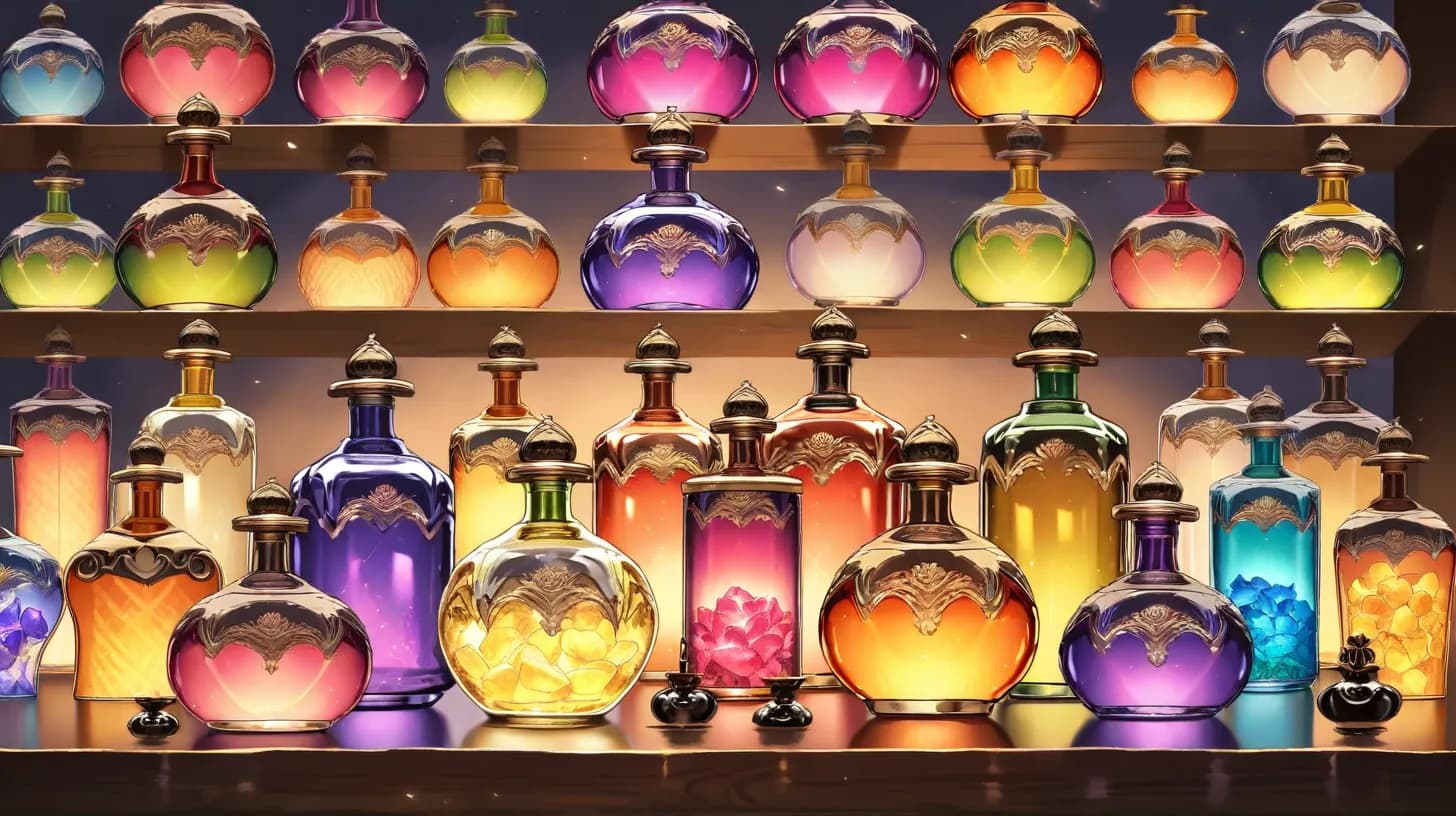
Healing potions and standard 5e issue get boring after a few sessions. This generator brews unique potions with real flavor: a glowing crimson liquid in a bone tube that tastes of summer rain and forgotten promises, with both a mechanical effect and an optional whimsical side effect. Five rarities, each scaled to a campaign tier.
Pick a rarity from common (minor utility) to legendary (campaign-defining wishes and resurrections). Toggle "side effects" for whimsical complications — hair-color changes, hiccups, brief telepathy. Click "Copy potion" to drop it into a hoard, alchemist's shop, or NPC loadout.
Pair potions with the Shop Inventory Generator for the alchemist's shop, the Treasure Hoard Generator for a full hoard, and the Magic Item Generator for cross-rarity items.
5e Potion Rarity — What Each Tier Means
Potions in 5e follow the same rarity scale as other magic items, calibrated to party level. The generator follows the official rarity → power band:
| Rarity | Typical Effect | Suggested Tier | Cost (approx) |
|---|---|---|---|
| Common | Minor utility (healing 2d4+2, language for 1 hr) | Levels 1+ | ~50 gp |
| Uncommon | Greater healing, resistance, hill giant strength | Levels 1–4 | ~150 gp |
| Rare | Invisibility, flying, superior healing | Levels 5–10 | ~500 gp |
| Very Rare | True sight, supreme healing, spell reflection | Levels 11–16 | ~5,000 gp |
| Legendary | Wishes, resurrection, longevity | Levels 17+ | ~50,000 gp |
What Makes a Potion Memorable
A potion that's just "Potion of Healing — heals 2d4+2" is forgettable. A potion that's "a thick syrupy violet liquid in a porcelain cup that tastes of saltwater and distant shores" before it heals the drinker for 2d4+2 — that lives in player memory.
The generator produces five evocative dimensions per potion:
- Color. 16 options from crimson to iridescent.
- Texture. Glowing, shimmering, oily, effervescent, crackling, syrupy, misting, bubbling, still.
- Vessel. Glass vial, crystal flask, clay urn, leather pouch, silver decanter, bone tube, stone gourd.
- Taste. 12 evocative tastes that hint at the potion's nature.
- Effect. The mechanical benefit, drawn from the rarity's effect pool.
Together, they give the DM enough texture to describe the potion at the table without rolling on three separate tables.
Side Effects — When and Why to Use Them
The optional side effect toggle adds a ~60% chance of a whimsical complication on top of the main effect. These are not mechanical penalties — they're narrative complications:
- The drinker's hair changes color permanently.
- For 1 hour, the drinker speaks in rhyme.
- A patch of skin glows faintly for 1d4 days.
- The drinker leaves no footprints for 24 hours.
- The drinker briefly speaks an ancient language for 1 minute.
Side effects work best in three situations: when the party is finding a hoard of identical potions (variety matters), when the alchemist is shady or amateur (errors are realistic), or when you want a chaos-magic vibe. For a "trustworthy potion shop in a city," turn side effects off.
Building an Alchemist's Shop Around These Potions
A single potion is loot. A shop full of potions is a location. To turn the generator's outputs into a memorable alchemist's shop:
- Generate 5–8 potions across rarities. Common to rare for a town shop; uncommon to legendary for a city shop.
- Generate the alchemist NPC. Use our NPC Generator. The shopkeeper's personality shapes which side effects players accept.
- Place the shop in a settlement. Use the Shop Inventory Generator to round out the rest of the alchemist's stock (antitoxin, alchemist's fire, herbalism kits).
- Add one secret. The alchemist has a back room. There's a potion they won't sell. The shop is a front for something. The shop becomes a thread.
Beyond Drinking — Other Uses for Potions
Potions are rarely used at their most interesting in 5e. Some patterns to break the "drink for HP" default:
- Throw as splash. A potion of healing thrown at an unconscious ally heals half as much without an action cost. Make this an explicit rule and your players start carrying spares.
- Combine. Two potions in one round — by RAW, a risky table-roll. Use a custom mixing chart: 1d6 result with mostly bad outcomes and one excellent one.
- Identify carefully. Don't tell the party what they found until someone uses a 1-minute Identify ritual or drinks a sip. The mystery is half the fun.
For more on running magic items at the table, see the Magic Systems & Spells cluster.
A potion is one-shot until you build the alchemist.
Who brewed this potion? In what shop? With which forbidden ingredient? Anima lets you turn every potion into a thread that leads to an NPC, a location, or a secret the party wants to uncover.
- Save potions as items with their brewer, location, and price history
- Link potions to alchemist NPCs, hidden labs, and the herbs they need
- Track inventory across every party member — who has the last invisibility potion?
Free to start · No credit card · Your generated content stays free to use anywhere
Keep going
More free tools
D&D Dice Roller
Free online dice roller for D&D and any TTRPG. Roll d4–d20 and d100, build multi-dice pools, add modifiers, roll with advantage or disadvantage, and type full expressions like 2d6+3 or 4d6kh3.
D&D Encounter Builder
Free 5e encounter builder — pick party level, size, and difficulty (Easy / Medium / Hard / Deadly). The tool calculates XP thresholds and assembles a CR-balanced encounter in seconds.

D&D Spell Generator
Free D&D 5e–style spell generator. Pick level (cantrip → 9) and school of magic — get a complete spell with casting time, range, components, duration, and effect.
D&D Trap Generator
Free D&D 5e trap generator. Pick severity (Setback, Dangerous, Deadly) and character level — get DMG-balanced traps with triggers, damage, save DCs, and disarm hints.