Dungeon Generator
DM toolkit
Dungeon Generator
Procedural dungeons with rooms, encounters, traps, and loot — pick size and theme
Free · No signup · Click any result to copy
Free dungeon generator for D&D and TTRPGs. Pick size (small, medium, large) and theme (ruins, crypt, cave, temple, fortress, sewer) — get a procedural dungeon with rooms, encounters, traps, and loot.
Turn the dungeon into a real interactive map you can run from.
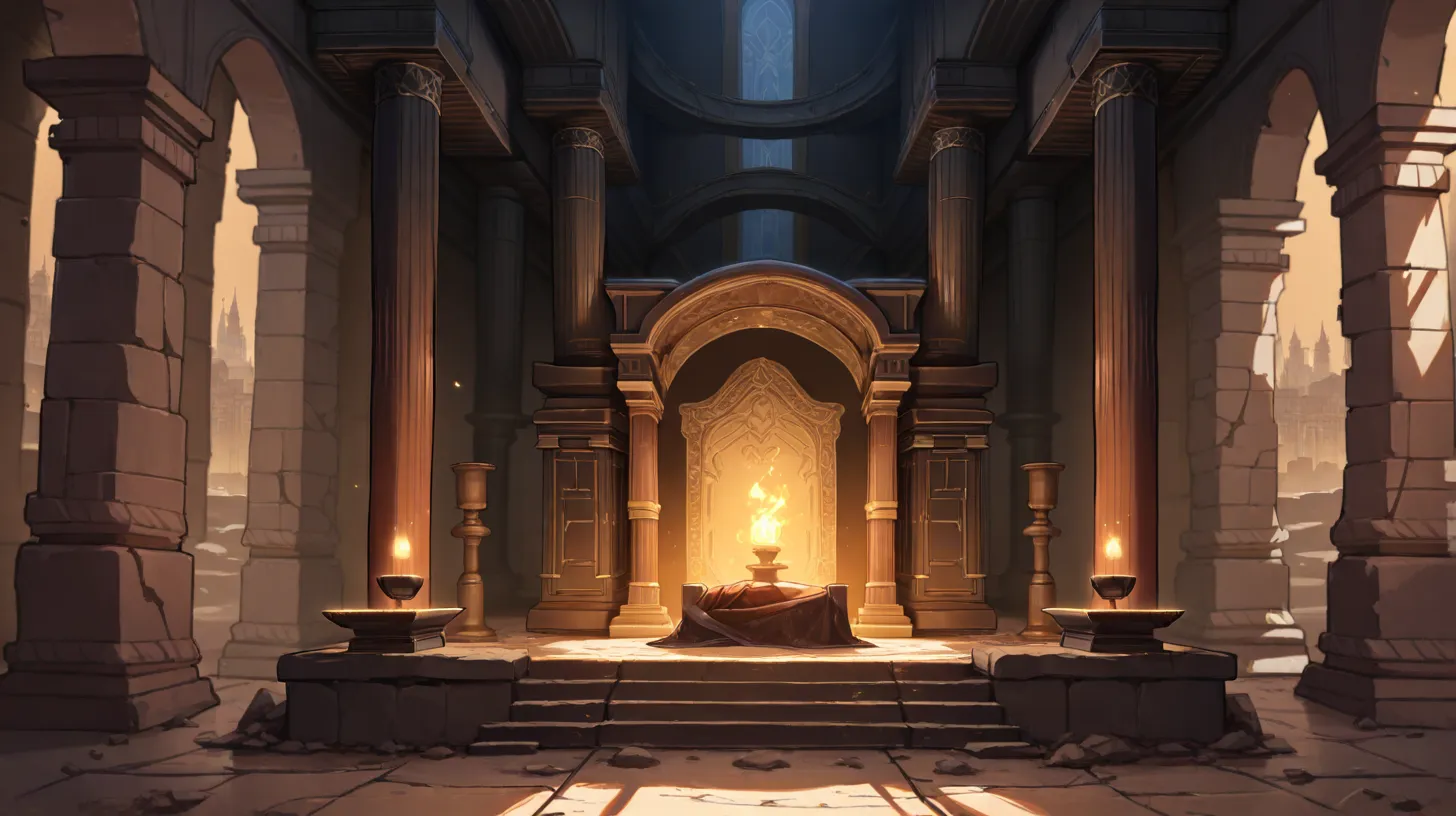
The hardest part of running a one-shot dungeon isn't designing the boss — it's coming up with eight rooms that don't feel like a corridor with combat encounters. This generator builds full procedural dungeons in one click: 3–14 rooms across six themes (ancient ruins, crypt, cave system, forgotten temple, abandoned fortress, sewers), each with a purpose, contents (encounter, trap, feature, or loot), and an optional secret.
Pick a size (small / medium / large), pick a theme, and the generator returns an entrance description, a sequence of rooms with full contents, and a final chamber. Click "Copy dungeon" to drop it into your DM prep. For balanced combat math inside each room, pair with our Encounter Builder; for the rewards, use the Treasure Hoard Generator.
What Makes a Dungeon More Than a Hallway of Fights
The classic mistake: a "dungeon" that's actually a series of combat encounters with doors between them. The generator includes four content types per room to avoid that trap:
- Encounter rooms (~40%). Combat is the spine of a dungeon, but it shouldn't be every room. Use the encounter hooks as starting points and balance with our Encounter Builder.
- Trap rooms (~20%). Mechanical or magical, scaled to the party. See the Trap Generator for full trap design.
- Feature rooms (~15%). Atmospheric only — no combat, no roll. A body in the corner, a cold draft, a fresh footprint. These rooms set tone and make the dungeon feel inhabited.
- Empty rooms (~25%). Yes — empty. A dungeon without breathing room exhausts players. Empty rooms with a single feature are where the party recovers, plans, and talks.
About half of rooms also have loot worth picking up (small finds, not full hoards), and ~18% hide a secret — a passage, a journal, a hidden door — for groups that search.
Choosing Theme — How Theme Changes Play
The six themes each push the dungeon in a different direction:
| Theme | Tone | Best For |
|---|---|---|
| Ancient Ruins | Overgrown, mysterious, weather-worn | Lost civilizations, exploration arcs |
| Crypt | Solemn, undead, dread | Low-level horror, necromancy arcs |
| Cave System | Natural, claustrophobic, primal | Beast encounters, underdark transitions |
| Forgotten Temple | Sacred, oppressive, cultist-heavy | Religious conflict, cosmic horror |
| Abandoned Fortress | Martial, militant, structured | Faction conflict, siege aftermath |
| Sewers | Foul, urban, mundane-evil | City-arc dungeons, low-level adventures |
Switching theme between sessions keeps long campaigns feeling fresh. A "sewers" dungeon in session 12 hits differently than the "ancient ruins" of session 4.
Reading the Output — How to Run a Generated Dungeon
The generator gives you the scaffolding. You give it the connective tissue. A workflow that takes about 15 minutes from generation to play-ready:
- Read each room aloud. Imagine the party entering. Adjust descriptions to fit your tone.
- Sketch a map. Decide which rooms connect to which. The generator gives you a sequence; you decide the topology. A loop is more interesting than a straight line.
- Adjust encounters to CR. The encounter hooks are flavor; pop into the Encounter Builder for balanced numbers.
- Add one connective thread. A note in room 2 that mentions a name from room 7. A trap in room 3 that's clearly the work of the same hand that built the trap in room 9. Players love finding patterns.
- Decide the final chamber's antagonist. The generator gives you the room; you pick whether it's empty, occupied, or actively setting up the next dungeon's plot.
Dungeon Pacing — Avoiding the Grind
A 10-room dungeon at the table takes 4–6 hours of play. To avoid wearing out your party:
- Vary content types. Never put three combat rooms in a row. The generator handles this for you, but verify after generation.
- Place safe rooms. Empty rooms with no encounter give the party a chance to short-rest, plan, and roleplay. They're structurally critical.
- Build to a peak. The final chamber should be the dungeon's hardest moment, but the room before it should give players a chance to prepare — a moment of dread, not surprise.
For more on running dungeons at the table, see how to run a D&D session and the cartography cluster for visual prep.
A generated dungeon becomes a real place once players explore it.
The generator gives you the rooms. Anima gives you the canvas — turn the dungeon into an interactive map your party can fog-of-war their way through, with pins, secrets, and a wiki for every NPC inside.
- Drop the dungeon onto an interactive map with room pins and reveal-as-explored fog
- Link encounters, traps, and loot to wiki entries the party can revisit later
- Save the dungeon as a reusable template for one-shots or future campaigns
Free to start · No credit card · Your generated content stays free to use anywhere
Keep going
More free tools
D&D Dice Roller
Free online dice roller for D&D and any TTRPG. Roll d4–d20 and d100, build multi-dice pools, add modifiers, roll with advantage or disadvantage, and type full expressions like 2d6+3 or 4d6kh3.
D&D Encounter Builder
Free 5e encounter builder — pick party level, size, and difficulty (Easy / Medium / Hard / Deadly). The tool calculates XP thresholds and assembles a CR-balanced encounter in seconds.

D&D Spell Generator
Free D&D 5e–style spell generator. Pick level (cantrip → 9) and school of magic — get a complete spell with casting time, range, components, duration, and effect.
D&D Trap Generator
Free D&D 5e trap generator. Pick severity (Setback, Dangerous, Deadly) and character level — get DMG-balanced traps with triggers, damage, save DCs, and disarm hints.