Aeldari (Eldar) in Warhammer 40K: Craftworlds, Aspect Warriors & Lore Guide
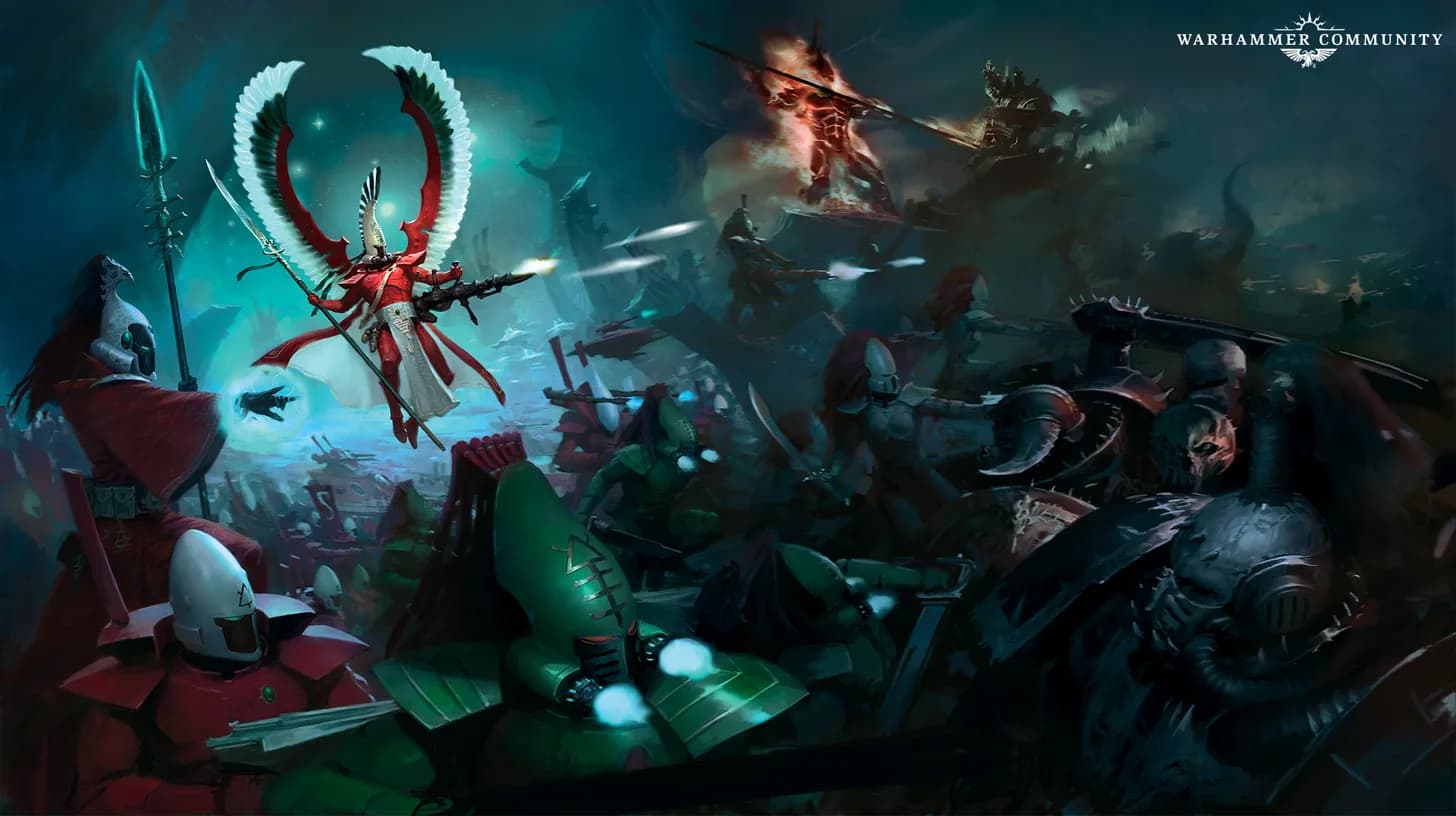
In the deep dark between the stars, there are races that rise and races that fall, and there are those that do both at once — burning still with the light of a glory long extinguished. Among all the powers that contend for the dying galaxy of the 41st Millennium, none embody this slow agony more completely than the Aeldari. Where the other great Warhammer 40,000 factions are ascendant, expanding, or newly stirring, the Aeldari are a people in retreat, scattered survivors of a civilisation that once held the galaxy in the palm of its hand and then let it slip through grasping, decadent fingers.
To understand the Aeldari is to understand tragedy on a cosmic scale. They were not conquered. They were not outmatched by a greater foe. They destroyed themselves, and in doing so they birthed something that now hunts every one of their souls beyond the moment of death. What remains of them is beautiful, brilliant, arrogant, and doomed — a race that can see the threads of fate stretching across the centuries and yet cannot weave for itself a future. They linger, mourning a paradise of their own making and their own undoing, and they will fight with cold, exquisite ruthlessness to delay an ending they have already, in their hearts, accepted.
Aeldari at a Glance
| Aspect | Detail |
|---|---|
| Origin | Uplifted and shaped by the Old Ones; rose to dominance after the War in Heaven |
| Status | A dying race; scattered survivors of a fallen empire |
| Major Branches | Craftworld Aeldari, Exodites, Drukhari, Harlequins, Ynnari |
| Homes | Craftworlds (vast wandering world-ships), maiden worlds, the webway, the Dark City of Commorragh |
| Defining Trait | Immense psychic power, long life, and emotions of dangerous intensity |
| Greatest Threat | Slaanesh, "She Who Thirsts," who devours Aeldari souls |
| Patron Gods | Asuryan, Isha, Khaine, Cegorach, and the waking Ynnead — most slain in the Fall |
| Defining Tragedy | The Fall: their own excess birthed a Chaos God and shattered their empire |
The Empire That Owned the Stars
There was a time, tens of thousands of years before the rise of Mankind, when the Aeldari were the unrivalled masters of the galaxy. With the ancient Old Ones gone and the necrontyr precursors of the Necrons entombed in their slumbering tomb-worlds after the cataclysmic War in Heaven, the Aeldari inherited a quiet cosmos. They spread across countless worlds, building an interstellar dominion of breathtaking sophistication, threaded together by the webway — a labyrinthine network of tunnels through the Immaterium that let them step between distant stars without ever braving the perils of raw warp travel.
They were a people of staggering gifts. Naturally psychic, long-lived beyond human comprehension, and possessed of a technology so advanced it bordered on living art, the Aeldari wanted for nothing. And therein lay the seed of their ruin. A race that need not labour, need not strive, need not fear — such a race turns inward. With every material want satisfied and every external enemy subdued, the Aeldari had only their own appetites left to explore. Slowly, across thousands of years, the great civilisation that had inherited the galaxy began to rot from within, mistaking sensation for meaning and excess for wisdom.
The Fall
The decline was not sudden. It took millennia, and the Aeldari, who could read the future in scattered runes, somehow failed — or refused — to read their own. As the empire drifted into idle hedonism, pleasure cults flourished. What began as the indulgences of a bored aristocracy curdled into something monstrous: societies devoted wholly to ever more extreme sensation, to cruelty and ecstasy without limit, to the worship of feeling itself. Only a minority of Aeldari ever joined these cults, but their psychic species was so interconnected that the corruption bled into the whole.
Every emotion, every act of indulgence and depravity, left an imprint in the Warp — that mirror-realm of the soul where the Chaos Gods are born from mortal feeling. Across the long centuries of the Aeldari's decadence, all that excess pooled and thickened and stirred. And then, in a psychic cataclysm around the dawn of the 31st Millennium, it woke. From the collective sin of an entire race was born Slaanesh, the Dark Prince of pleasure and pain, the Chaos God the Aeldari name only obliquely as She Who Thirsts.
Slaanesh's birth-scream tore reality apart. In a single psychic detonation the soul of the new god ripped the spirits from billions of Aeldari, draining their home worlds in an instant and slaying most of the Aeldari pantheon in the process. The wound it left in the fabric of the galaxy became the Eye of Terror, the vast warp-storm where the material and immaterial bleed into one another to this day. In the space of a heartbeat, the greatest civilisation the galaxy had ever known was reduced to a handful of scattered survivors, and a new horror was set loose that would hunger for their kind forever. To understand the Aeldari's terror is to understand their child and nemesis, the Dark Prince Slaanesh.
The Scattered Kindreds
Not all Aeldari perished in the Fall. Some had read the warning signs and fled before the end, and from these survivors emerged the divided peoples the galaxy knows today.
The Craftworld Aeldari
The focus of this guide, the Craftworlders are those who escaped aboard the craftworlds — colossal world-ships, each a self-contained continent of crystal and wraithbone drifting through the void. Originally built as trade vessels and arks, these vessels carried whole communities of the more sober-minded Aeldari away from the doomed core worlds before the cataclysm struck. The Craftworld Aeldari are the keepers of their race's memory and conscience, living lives of rigid discipline precisely because they remember exactly where indulgence leads.
The Exodites, Drukhari, and Harlequins
The Exodites fled even earlier, abandoning the dying empire to settle frontier "maiden worlds," where they live close to the land and shun the high technology that doomed their kin. The Drukhari, or Dark Eldar, are a darker tale entirely: those who lingered in the hidden depths of the webway, never abandoning the appetites that birthed Slaanesh, surviving now by stealing the suffering of others to stave off the slow consumption of their own souls. They are the Craftworlders' shadow-selves, and their story is told in full in the Drukhari lore guide. The enigmatic Harlequins walk between all kindreds as the servants of the trickster god Cegorach, dancing the saga of the Fall and guarding the deepest secrets of the webway. And in recent times a new movement has risen across all these branches: the Ynnari, who follow the waking god of the dead and believe that the salvation of their race lies not in retreat but in confronting Slaanesh at last.
Eldar Factions: The Five Aeldari Kindreds
"Eldar" and "Aeldari" name one species split into five peoples by how they answered the Fall. Confusing them is the most common mistake in 40k lore discussions, so here they are side by side.
| Kindred | Where they live | How they survive the soul-thirst | Attitude to the others | On the tabletop |
|---|---|---|---|---|
| Craftworld Aeldari | Craftworlds — continent-sized wraithbone ships | Rigid discipline (the Path); spirit stones capture the soul at death | Custodians of the race; wary of all | Codex: Aeldari — Aspect Warriors, Guardians, wraith constructs, jetbikes |
| Drukhari (Dark Eldar) | Commorragh, a city hidden in the webway | Feeding on the pain of others; no spirit stones | Contempt for Craftworlders; raiders of everyone | Codex: Drukhari — Kabals, Wych Cults, Haemonculus Covens. Full guide |
| Harlequins | The Black Library and the webway; no fixed home | Cegorach, the Laughing God, shields their souls | Neutral to all kindreds; they perform for everyone | Part of Codex: Aeldari — Troupes, Solitaires, Starweavers |
| Exodites | Maiden worlds — frontier planets, low technology | World spirits: their souls join the planet's own psychic network | Left before the Fall; distant from Craftworld politics | No army list; lore only (dragon-riding knights) |
| Ynnari | Wherever their prophet Yvraine goes | Ynnead, the god of the dead, waking | Recruit from every kindred; distrusted by traditionalists | Detachment in Codex: Aeldari — Yvraine, the Visarch, the Yncarne |
Soul-Thirst and the Spirit Stones
For the Aeldari, death is not the end of fear — it is the beginning of the gravest danger of all. Because Slaanesh was born from their kind, every Aeldari soul shines like a beacon to the Dark Prince, and an unprotected Aeldari spirit that drifts free at death is dragged screaming into Slaanesh's domain to be devoured for eternity. This is the soul-thirst, the dread that shapes every aspect of Craftworld existence.
Against this horror the Craftworlders developed the spirit stone, or soulstone — a psycho-reactive gem worn by every Aeldari, which captures the soul at the instant of death and holds it safe. These precious stones are then returned to the craftworld and woven into its Infinity Circuit, a vast lattice of wraithbone running through the very structure of the world-ship. There the souls of the dead endure together in a kind of collective afterlife, the ancestors of the craftworld watching over the living. In times of dire need, those slumbering spirits can be called back to war: the towering Wraithguard and Wraithlord constructs of wraithbone are animated and piloted by the souls of the dead, the fallen rising once more to defend the dwindling kin they left behind. There is no clearer image of the Aeldari condition than a warrior who must beg his own ancestors to fight one last battle.
The Path
The Aeldari soul is a thing of terrible intensity. Where a human might feel sorrow, an Aeldari is drowned by it; where a human enjoys, an Aeldari can be utterly consumed. This is the very nature that doomed them in the Fall, and so the Craftworlders bind themselves to a strict spiritual discipline called the Path. Rather than risk losing themselves to the chaos of unchecked feeling, an Aeldari devotes their entire being to a single discipline at a time, mastering it wholly before moving on to another.
There is the Path of the Warrior, walked by the Aspect Warriors — the swift Dire Avengers, the keening Howling Banshees, the lethal Striking Scorpions, and many more, each Aspect a "shard" of the war god Khaine, each led by an Exarch who has surrendered their individual self to become war incarnate. There is the Path of the Seer, where the most psychically gifted learn to read fate as Warlocks and, in time, Farseers. There are the Paths of the Artist, the Mariner, the Mourner, the Maker, and countless others, a lifetime of mastery stacked upon mastery. Yet the Path holds its own quiet danger. Some Aeldari cannot let go of a discipline once embraced and become trapped upon it forever — the Exarchs and the Farseers are, in truth, prisoners of their own perfection, unable to walk any road but the one they have chosen.
The Broken Pantheon
The Aeldari once worshipped a great family of gods, and most of them died in the Fall, consumed or shattered by the birth of Slaanesh. Asuryan, king of the gods and the Phoenix King, is gone. Isha, the gentle goddess of life and mercy, was taken — in some tellings imprisoned by the trickster Cegorach or by the Plague God, weeping for her children still.
Khaine, the Bloody-Handed god of war, did not die cleanly. He was shattered into fragments, splinters of his being scattered among the craftworlds. In times of greatest peril these shards can be roused, and the molten iron form of the Avatar of Khaine rises to lead the Aeldari to battle — a wounded god given murderous flesh. Cegorach, the Laughing God, alone escaped Slaanesh's hunger, fleeing into the webway where he and his Harlequins endure to this day. And slowly, fed by the ceaseless deaths of the Aeldari race, a new god stirs in the Infinity Circuits: Ynnead, the god of the dead, who the desperate believe will one day wake fully and destroy Slaanesh forever — though only, the dark whisper goes, when the last Aeldari has died.
The Great Craftworlds
Each craftworld is a world and a culture unto itself, shaped by its history and its place in the galaxy.
- Ulthwé — The Damned, who drift at the very edge of the Eye of Terror, keeping eternal vigil over the daemonic tide. Constant proximity to Chaos has bred in them an unmatched mastery of foresight, and their seers guide the fate of their kin with grim, far-seeing resolve.
- Biel-Tan — The most militant and proud of the craftworlds, who dream of restoring the old Aeldari empire. Their armies, the Swordwind, deploy as elite formations of Aspect Warriors, striking with the precision of a drawn blade.
- Saim-Hann — The Wild Riders, a culture of clans and honour who wage war from screaming jetbikes and skimmers, valuing speed, daring, and the glory of the swift kill.
- Iyanden — Once among the mightiest, now a craftworld of ghosts, devastated by catastrophe and so depleted of the living that it leans upon its dead, fielding more wraith constructs than any other. Iyanden fights on with the spirits of fallen generations, beautiful and terribly diminished.
- Alaitoc — The most isolationist, famed for the Rangers and Outcasts who wander far from the Path, roaming the galaxy as scouts and exiles before returning, hardened, to their distant home.
Craftworld comparison
| Craftworld | Epithet | Known for | Colours | Rune | Notable figures |
|---|---|---|---|---|---|
| Ulthwé | The Damned | Foresight, Seer Councils, Black Guardians; drifts on the edge of the Eye of Terror | Black, bone | Eye of Isha | Eldrad Ulthran |
| Biel-Tan | The Swordwind | Aspect Warriors, militarism, dreams of restoring the old empire; shattered and rebuilt after the Gathering Storm | Green, white, ivory | Reborn (the Heart) | Autarchs of the Swordwind |
| Saim-Hann | The Wild Riders | Jetbike clans, Windrider hosts, honour duels | Red, white, black | Cosmic Serpent | Clan Fireheart |
| Iyanden | The Ghost Kingdom | Wraith constructs; devastated by Hive Fleet Kraken and rebuilt with its own dead | Yellow, blue | Shrine of Asuryan | Prince Yriel, Iyanna Arienal |
| Alaitoc | The Starstriders | Rangers and Outcasts, isolation, long-range warfare | Blue, yellow | Doom of Eldanesh | Illic Nightspear |
| Iybraesil | The Reclaimers | Matriarchal; reclaiming crone-world relics from the Eye of Terror | Turquoise, blue | — | Howling Banshee shrines |
| Lugganath | The Blackened Sun | Corsair-friendly; hopes to abandon the material galaxy for the webway | Orange, black | Corsair rune | — |
| Altansar | The Broken Chain | Lost in the Eye of Terror for 10,000 years; led out by the Phoenix Lord Maugan Ra | Bronze, black | Broken chain | Maugan Ra |
Aspect Warriors and the Phoenix Lords
The Path of the Warrior is not one path but many. An Aeldari who walks it joins an Aspect Shrine, each devoted to a single facet of Khaine, the god of war, and each teaching one way of killing. The Aspect's mask lets the warrior become that facet completely and, when the mask comes off, walk away from it. Those who cannot take the mask off are the Exarchs — trapped forever on the Path, the shrine's keepers and its deadliest fighters.
Every Aspect was founded by a Phoenix Lord, an immortal whose armour holds the souls of every warrior who has ever worn it. They return whenever the Aeldari need them, and each embodies one Aspect absolutely.
| Aspect | Facet of Khaine | Fights with | Phoenix Lord |
|---|---|---|---|
| Dire Avengers | The Avenger; disciplined fury | Shuriken catapults, shimmershields; the most numerous Aspect | Asurmen, the Hand of Asuryan |
| Howling Banshees | The Banshee; terror and speed | Power swords, banshee masks that paralyse | Jain Zar, the Storm of Silence |
| Striking Scorpions | The Scorpion; the ambush | Chainswords, mandiblasters, stealth | Karandras, the Shadow Hunter |
| Fire Dragons | The Dragon; destruction | Fusion guns, melta bombs; tank-killers | Fuegan, the Burning Lance |
| Dark Reapers | The Reaper; death from afar | Reaper launchers; long-range devastation | Maugan Ra, the Harvester of Souls |
| Swooping Hawks | The Hawk; the sky | Wings, lasblasters, grenade packs | Baharroth, the Cry of the Wind |
| Warp Spiders | The Spider; the unseen strike | Warp jump generators, death spinners | Lhykhis (never seen) |
| Shining Spears | The Spear; the charge | Jetbikes and laser lances | Drastanta, the Tempest of Starlight |
| Crimson Hunters | The Hunter; the duel in the sky | Fighter craft | Amareth (lost) |
Behind the Aspects stand the Guardians — citizen militia drawn from every other Path when the craftworld goes to war — and the wraith constructs: Wraithguard, Wraithlords and Wraithknights, wraithbone bodies animated by souls drawn from the Infinity Circuit. Iyanden fields more of the dead than the living. Above all of them, when the craftworld's need is greatest, the Avatar of Khaine wakes: a burning iron god-fragment, roused by the sacrifice of a single Aeldari who becomes its host.
Farseers and the Threads of Fate
Of all the Aeldari's powers, none is more chilling than the foresight of the Farseers. By casting and reading the runes, a Farseer can perceive the branching possibilities of the future, the countless threads of fate spreading out from every choice. The dwindling Aeldari use this gift not to win glorious victories but to survive: they intervene at precise moments across the galaxy, nudging events down paths that preserve their kind, even when those interventions seem to mortals like cruelty or madness.
This is the source of their cold, pragmatic relationship with the younger races. A Farseer will gladly engineer the deaths of countless human soldiers if doing so spares a single Aeldari life, because to a race that cannot easily replace its dead, every Aeldari soul is irreplaceable and every human life is, by comparison, fleeting and abundant. They will ally with the Imperium one day and slaughter its armies the next, guided by calculations no human could follow. The Space Marines and the wider Imperium of Man regard the Aeldari with deep, justified suspicion — manipulated and betrayed too often to ever trust the alien seers, yet rarely able to outthink them. There is no malice in it, only the desperate arithmetic of a people counting down to extinction.
The Aeldari on the Tabletop
If you came here from an army-builder rather than a lore page: the Craftworld Aeldari army is fast, fragile and specialised. Nothing in it is a generalist. Aspect Warriors each do one job perfectly and die if asked to do another; Guardians hold objectives; wraith constructs absorb the damage everything else can't. The army rewards players who plan two turns ahead and punishes those who don't, which is, thematically, exactly right.
- Codex: Aeldari covers Craftworlds, Harlequins and the Ynnari in one book; Codex: Drukhari is separate.
- Signature units: Dire Avengers, Howling Banshees, Fire Dragons, Windriders (jetbikes), Wraithguard, Wraithlords, Wraithknights, Falcon and Wave Serpent grav-tanks, the Avatar of Khaine.
- Named characters: Eldrad Ulthran (Ulthwé's Farseer, the oldest living Aeldari), Prince Yriel (Iyanden), Illic Nightspear (Alaitoc), Yvraine (Ynnari), and the Phoenix Lords.
- Playstyle: alpha strikes, mobility, psychic support from Farseers and Warlocks. Low model count, high skill ceiling.
For how the Aeldari sit against the other xenos and the Imperium, see the complete 40k factions guide; for their oldest enemies, the Necrons, and for what they made by accident, Slaanesh.
Frequently Asked Questions
What is the difference between "Aeldari" and "Eldar"?
They are the same race. "Eldar" was the original name used for decades; "Aeldari" is the modern, rebranded term introduced in more recent lore and is now the preferred in-universe and official name. If you encounter older material referring to "Craftworld Eldar" or "Dark Eldar," these correspond directly to today's Aeldari and Drukhari.
Why did the Aeldari create Slaanesh?
Not deliberately. Slaanesh was born from the accumulated psychic excess of the Aeldari empire's long descent into hedonism and depravity. Because the Aeldari are intensely psychic, every emotion and indulgence echoed in the Warp, and over millennia that energy coalesced into a new Chaos God. Their downfall was self-inflicted but unintended — a civilisation that destroyed itself simply by refusing to restrain its own appetites.
What is a soulstone?
A soulstone, or spirit stone, is a psycho-reactive gem every Craftworld Aeldari wears, designed to capture the soul at the moment of death so that Slaanesh cannot devour it. The captured spirits are woven into the craftworld's Infinity Circuit, where the dead endure collectively and can even be called back to pilot wraithbone war constructs.
Are Craftworld Eldar and Dark Eldar the same race?
Yes — biologically they are one people, split by philosophy and history. The Craftworld Aeldari fled the Fall and embraced rigid discipline to resist their own nature. The Drukhari stayed in the webway and continued to indulge the very appetites that birthed Slaanesh, surviving now by feeding on the pain of others. They are kindred and bitter opposites at once.
Will the Aeldari survive?
Their fate hangs in the balance. As a dying race they grow fewer with every passing century, but hope flickers in the rise of the Ynnari and the slow waking of Ynnead, the god of the dead who may one day destroy Slaanesh and free the Aeldari soul from the thirst. Whether that salvation comes before the last of them falls is a question even the Farseers cannot answer.
How should I portray the Aeldari in a roleplaying campaign?
Lean into the melancholy and the arrogance. The Aeldari are ancient, refined, and grieving, convinced of their own superiority yet haunted by guilt and loss. They are master manipulators who rarely explain themselves, allies who may betray you for reasons you'll never grasp. For naming Aeldari characters with the right lilting, vowel-rich elegance, an elven-style fantasy name generator makes a useful starting point.
What are the main Eldar craftworlds?
Five are central to the lore: Ulthwé (foresight, near the Eye of Terror), Biel-Tan (militarist, Aspect Warriors), Saim-Hann (jetbike clans), Iyanden (wraith constructs, devastated by the Tyranids) and Alaitoc (Rangers, isolation). Iybraesil, Lugganath and Altansar are the best-known minor craftworlds.
What are Aspect Warriors?
Elite Aeldari warriors who each dedicate themselves to one facet of Khaine, the war god — Dire Avengers, Howling Banshees, Striking Scorpions, Fire Dragons, Dark Reapers, Swooping Hawks, Warp Spiders, Shining Spears and Crimson Hunters. Each Aspect was founded by a Phoenix Lord and teaches one way of war.
Who is the strongest Aeldari character?
Eldrad Ulthran of Ulthwé is the most powerful living psyker of the race and has shaped galactic events for ten thousand years. Among the Phoenix Lords, Asurmen is the first and most revered; on the battlefield the Avatar of Khaine outmatches any single Aeldari.
Are the Aeldari good or evil?
Neither, in human terms. Craftworld Aeldari will sacrifice millions of humans to save a handful of their own without hesitation, because to them the survival of their dying race outweighs everything else. They are not cruel for its own sake — that is the Drukhari — but they are utterly indifferent to anyone who is not Aeldari.
Continue Exploring
- Warhammer 40,000 Factions: The Complete Guide — see where the Aeldari sit among the galaxy's great powers.
- The Drukhari (Dark Eldar) — the Aeldari's predatory dark kindred.
- Slaanesh, the Dark Prince — the god the Aeldari birthed and now flee.
- The Chaos Gods — the powers of the Warp and the ruin they wreak.
- The Necrons — the precursors the Aeldari's makers once fought in the War in Heaven.
- The Space Marines — the human champions the Aeldari so coldly manipulate.
- For deeper canon, the Lexicanum archive collects the wider Aeldari lore in exhaustive detail.
The story of the Aeldari is a reminder that the grandest civilisations can fall not to conquest but to their own hearts — and that even a dying race can be magnificent in its long defiance. If their tragedy stirs something in you, why not build a doomed and beautiful people of your own? Create a free Anima account and start crafting the worlds, histories, and fading empires of your next campaign — every tale of rise and ruin begins with a single thread of fate.
Keep reading
More from this topic
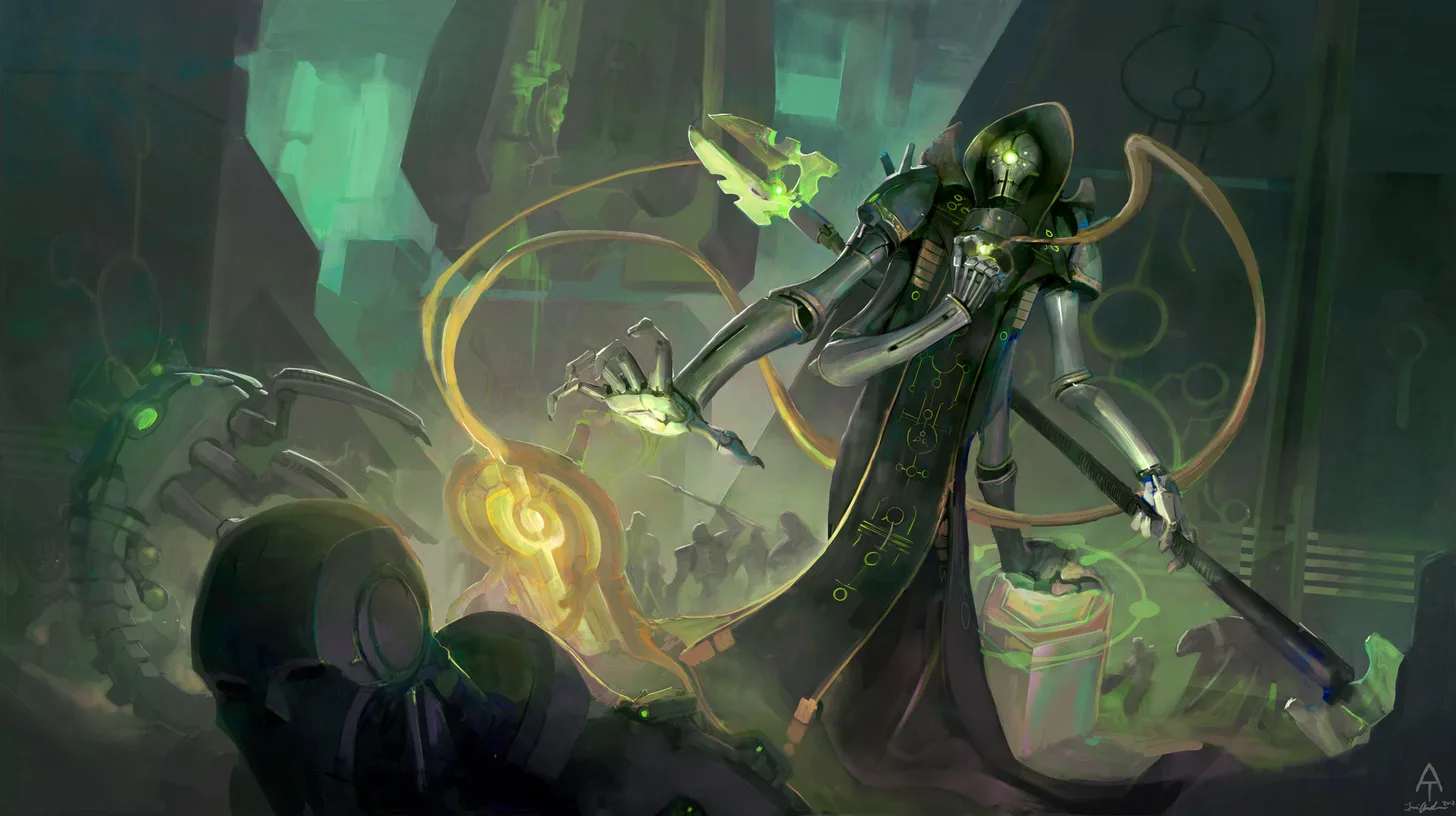
Necrons: Warhammer 40K Lore Guide
The complete lore of the Necrons — the doomed Necrontyr, the C’tan star-gods, biotransference, the War in Heaven, and the deathless dynasties now waking to reclaim the galaxy.
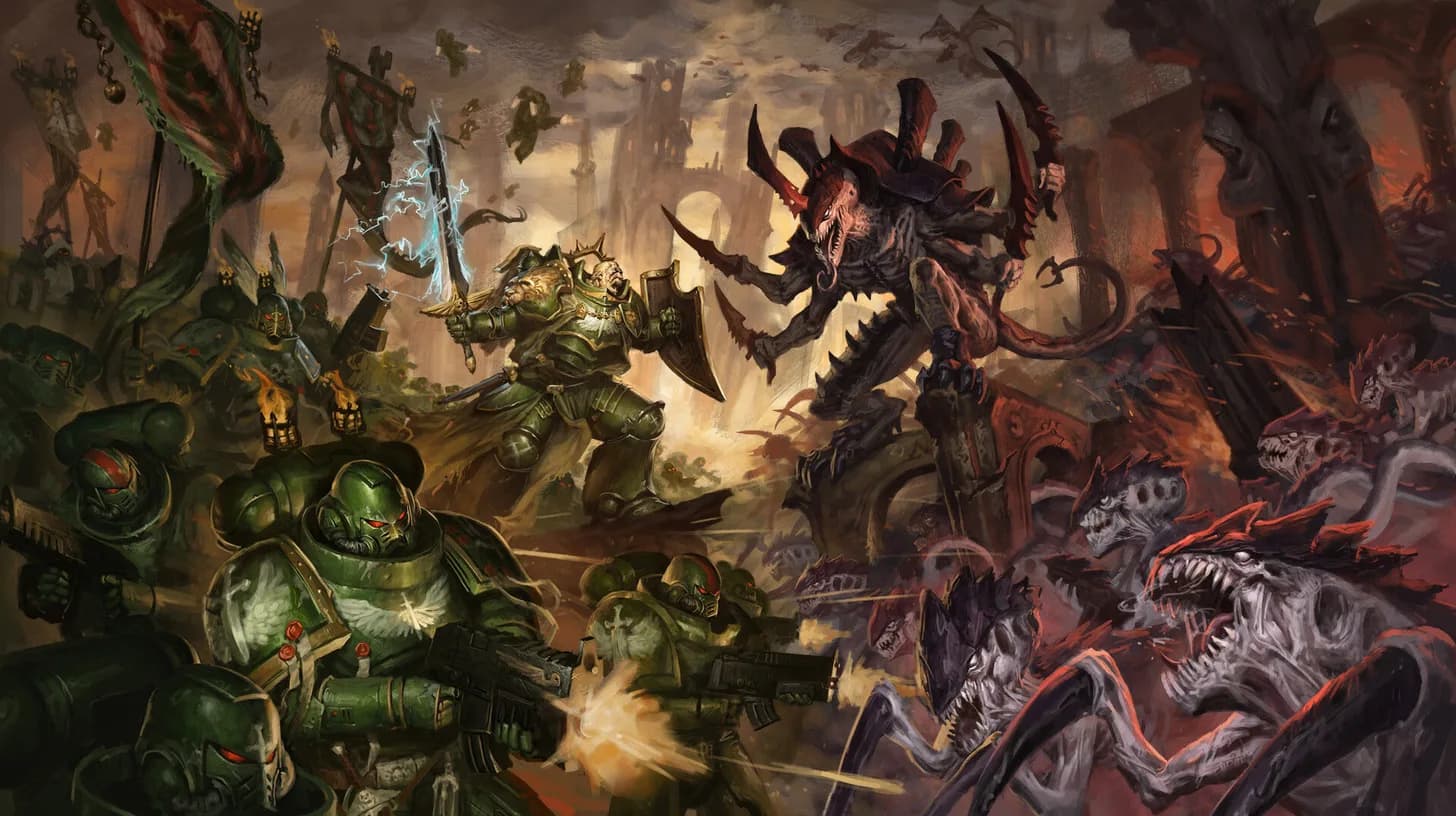
Tyranids: Warhammer 40K Lore Guide
The complete lore of the Tyranids — the Great Devourer, the Hive Mind, the Shadow in the Warp, the great Hive Fleets, Genestealer Cults, and the hunger that crossed the void between galaxies.
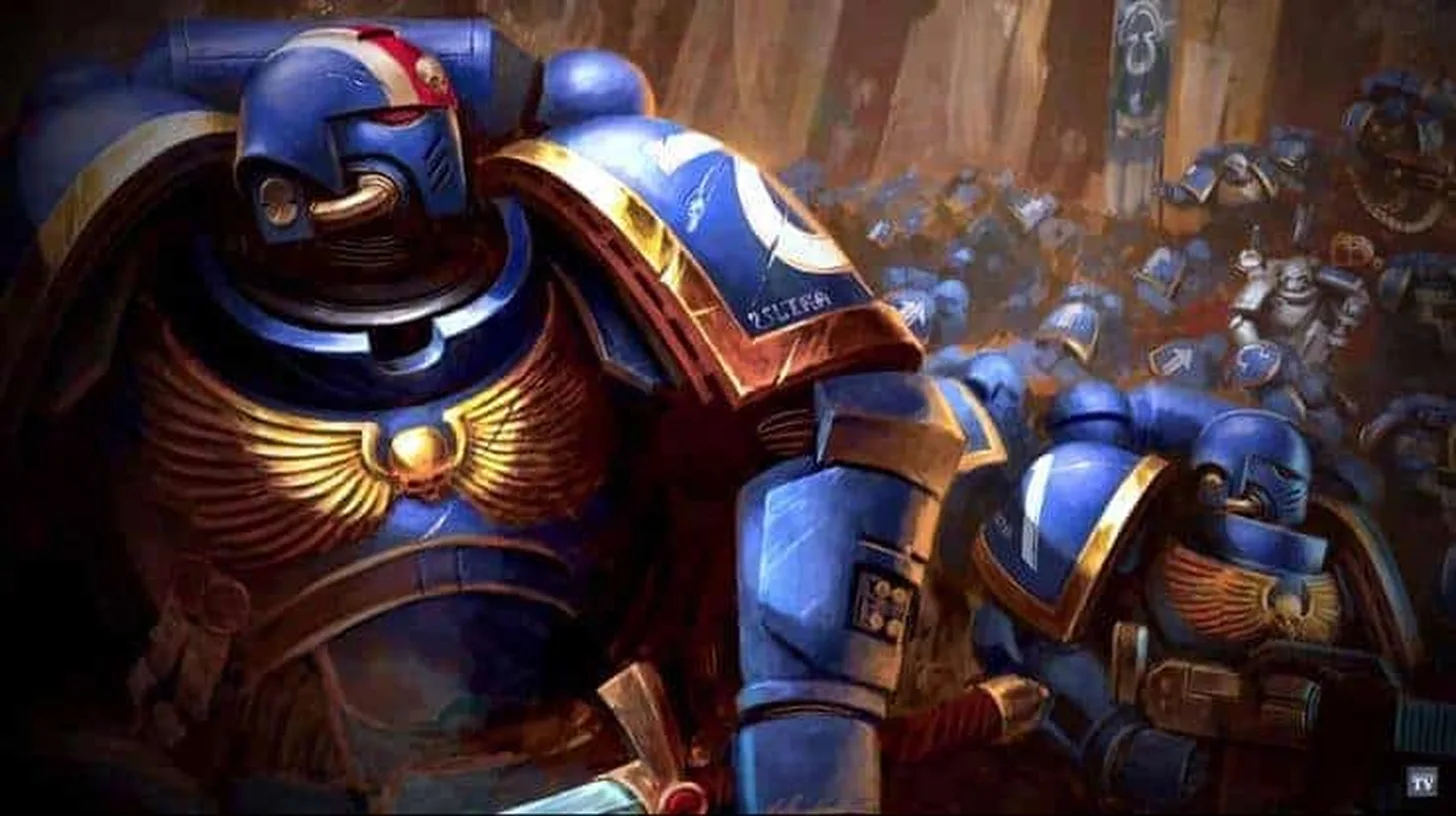
Space Marines (Adeptus Astartes): Warhammer 40K Lore Guide
The complete lore of the Space Marines — the Primarchs, gene-seed, the Horus Heresy, the Codex Astartes and the Chapters, the Primaris and Guilliman’s return, and the cost of the Angels of Death.
Start building your world today
Maps, wikis, timelines, and AI tools — everything you need to bring your world to life, in one place.