Space Marines (Adeptus Astartes): Warhammer 40K Lore Guide
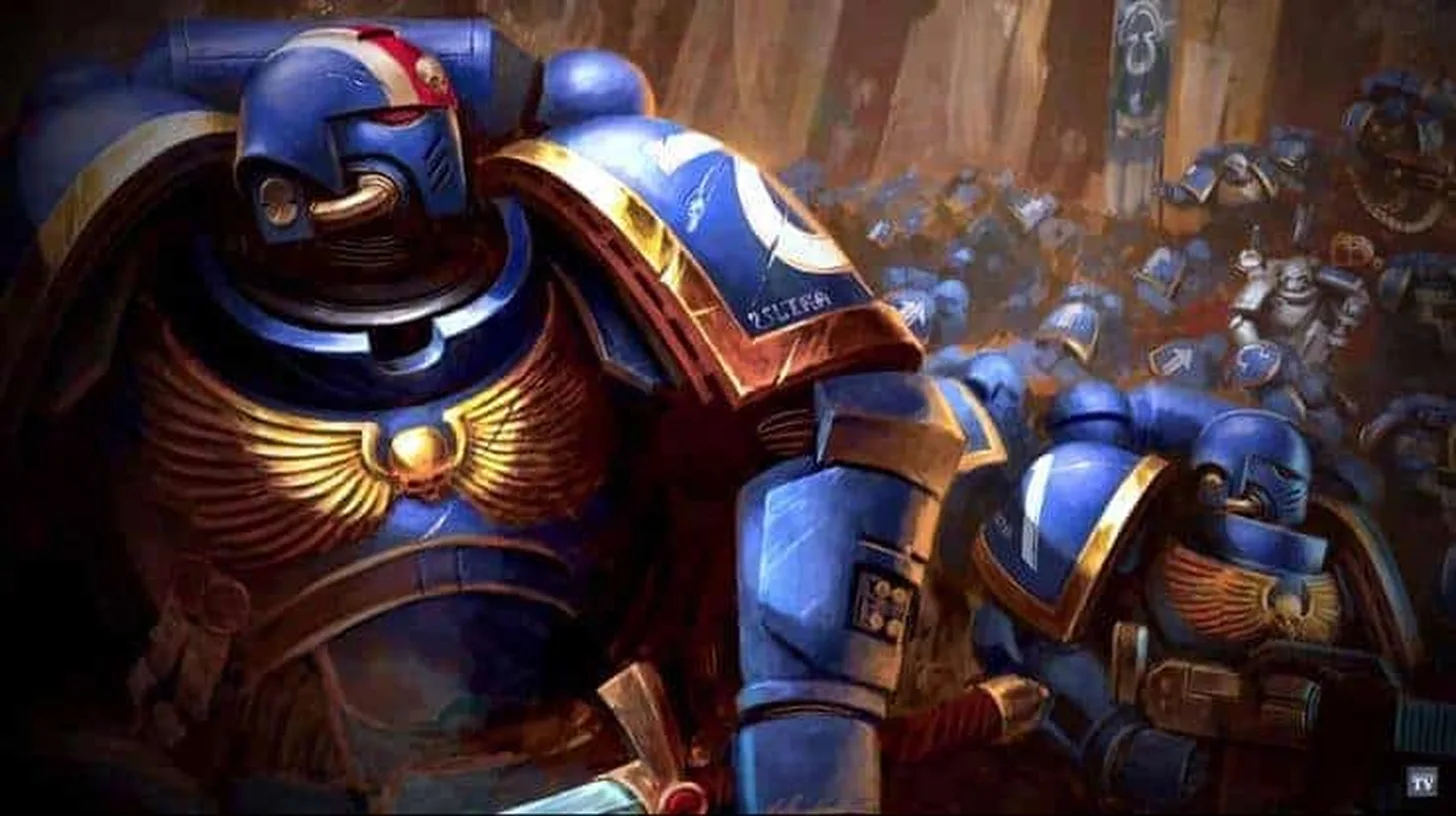
Of all the warring powers that bleed across the dying galaxy of the 41st Millennium, none is more instantly recognisable than the towering, armoured figure of the Space Marine. They are the iconic face of Warhammer 40,000 — the poster-children of a setting defined by endless war — and yet they are also among its most tragic creations. To understand the great roster of 40K factions is to begin here, with the genetically forged supersoldiers the Imperium calls the Adeptus Astartes, and which their enemies, across ten thousand years, have learned to fear as the Angels of Death.
A Space Marine is not a man in a suit of armour. He is something other: a transhuman warrior remade in body and mind, a weapon given the shape of a giant, sworn to the corpse-god who rules Mankind from a golden cadaver throne. Where the common soldier of the Imperium dies in his billions, the Astartes endures — almost impossible to kill, almost impossible to break, and almost impossible to fully comprehend as still human. They are humanity's finest defenders and its most sobering achievement, and every chapter of their story is written in blood, duty, and sacrifice.
Space Marines at a Glance
| Aspect | Detail |
|---|---|
| Also Known As | Adeptus Astartes, Angels of Death, the Emperor's finest, "firstborn" / Primaris |
| Nature | Genetically engineered, surgically and chemically enhanced transhuman warriors |
| Created By | The Emperor of Mankind, from the gene-seed of the twenty Primarchs |
| Organisation | Originally vast Legions; reorganised into ~1,000-strong Chapters |
| Founding Document | The Codex Astartes, authored by Roboute Guilliman |
| Notable Chapters | Ultramarines, Blood Angels, Dark Angels, Space Wolves, Imperial Fists, Salamanders, Raven Guard, White Scars, Iron Hands, Black Templars |
| Signature Wargear | Ceramite power armour, the bolter, the chainsword |
| Defining Trait | Superhuman strength and resilience, near-fearlessness, and the loss of ordinary humanity |
| Greatest Tragedy | The Horus Heresy — half their number turned traitor |
What a Space Marine Is
The Astartes are the apex of the Imperium's genetic and surgical arts. A Space Marine stands head and shoulders above any baseline human — typically over two metres tall even before he dons his armour, broad as a doorway, and dense with engineered muscle and bone. He is stronger than a dozen men, faster than his bulk should allow, and tougher than seems possible for flesh. His body manufactures redundant organs, regenerates wounds that would kill a mortal outright, and can shrug off toxins, hard vacuum, and grievous trauma that would fell entire squads of ordinary soldiers.
Beyond the body lies the mind. Hypno-indoctrination and a lifetime of conditioning render a battle-brother all but immune to fear; he will hold a line that no sane creature would hold, and advance into fire that would scatter armies. Encased in ceramite power armour that amplifies his already prodigious strength and seals him against the horrors of the void, a single Marine is a one-man strike force. A squad can topple a city. This is what the Emperor intended: an instrument of conquest so terrible that the galaxy itself might be brought to heel. The cost of that instrument — the humanity surrendered to forge it — is a theme that haunts every honest telling of their tale.
The Primarchs
The origin of the Astartes lies with the Emperor of Mankind and his greatest secret project. In the hidden gene-laboratories beneath the Himalayan mountains, the Emperor created twenty superhuman sons — the Primarchs — beings of staggering power, intellect, and presence, each a demigod in his own right and each intended to lead Mankind's reconquest of the stars. But before they could be unleashed, the four great Chaos Gods reached into the laboratory and stole the infant Primarchs away, scattering them in stasis-capsules across the length and breadth of the galaxy.
The Emperor was not wholly thwarted. From the genetic legacy of each Primarch he cultured the first Space Marine Legions — vast armies of warriors, each bearing the gene-print of an absent father. With these Legions he launched the Great Crusade, sweeping out from Terra to reclaim the worlds of a sundered humanity. One by one, as the Crusade reached the far-flung corners of the galaxy, the Emperor was reunited with his lost sons, and each Primarch took command of the Legion grown from his own flesh. It was, for a brief and shining span, the closest the species would ever come to a golden age.
Gene-seed and the Making of a Marine
Every Space Marine is, in a real sense, a son of his Primarch, because the heart of the transformation is gene-seed — a set of engineered organs grown from the original Primarch genetic template. Aspirants are most often drawn from the harshest worlds the Imperium can offer: feral death-worlds where life is a daily war, and towering hive cities whose underbellies breed survivors hard as iron. Only the strongest, most aggressive, and most resilient youths survive the trials of selection.
The chosen are implanted, over years, with these cultured organs. They reshape the recruit utterly — granting the strength and resilience that define the breed, the capacity to heal terrible wounds, even exotic gifts such as the ability to spit corrosive acid. Among the most storied implants are the Larraman's organ, which clots catastrophic blood loss in moments; the Sus-an membrane, which can place a dying Marine into suspended animation to await rescue; and the Betcher's gland, source of that acidic venom. Most vital of all is the Black Carapace, a subdermal interface laid beneath the skin that allows a battle-brother to wear his power armour as if it were his own body, his nervous system wedded to the machine.
The path is long. A raw recruit becomes an aspirant, then a neophyte or Scout — already enhanced, but still proving himself in war — before at last earning the rank of full battle-brother and the right to wear the heaviest armour. Many do not survive the implantation; rejection, mutation, or death claims a great share of those who try. Those who endure are reborn as something that can never again be merely a man.
The Horus Heresy
The golden age ended in betrayal. The Emperor named one Primarch above all others as Warmaster — Horus, the most beloved and most capable of his sons, given command of the Great Crusade itself. It was Horus who fell furthest. Worked upon by the Chaos Gods and their whispering servants, the Warmaster was corrupted, turned against the father he had loved, and drew roughly half the Space Marine Legions into open rebellion. The galaxy-spanning civil war that followed — the Horus Heresy — remains the central tragedy of the entire setting, brother slaughtering brother across a thousand worlds.
The Heresy climaxed in the Siege of Terra, as the traitor host assaulted the Emperor's own palace. In the final reckoning aboard Horus's flagship, the Emperor slew his fallen son — but at ruinous cost, his body broken beyond repair. To preserve his fading life and the psychic beacon that guides Mankind's ships through the warp, the dying Emperor was interred upon the Golden Throne, where he endures to this day as more relic than living man. The defeated traitor Legions fled into the great warp-storm called the Eye of Terror, there to fester for ten millennia and emerge again as the hated Chaos Space Marines — the loyalists' eternal dark mirror.
The Codex Astartes and the Chapters
The Heresy taught a bitter lesson: that no commander should ever again hold so much power that he could threaten the Imperium itself. In its aftermath, Roboute Guilliman, Primarch of the loyal Ultramarines, authored the Codex Astartes — the doctrinal masterwork that reshaped the Adeptus Astartes forever. The colossal Legions, some numbering in the tens of thousands, were broken apart into small, self-contained Chapters of around a thousand warriors each, scattered across the galaxy and answerable to no single warlord.
A Chapter is a brotherhood unto itself, led by a Chapter Master and organised into companies, each of companies into squads. Alongside the line warriors stand the specialist brethren who give a Chapter its soul. Librarians are sanctioned psykers who wield the dangerous power of the warp. Chaplains are the keepers of faith and spirit, exhorting their brothers to zealous fury. Apothecaries tend the wounded and, more sacredly still, recover the priceless gene-seed from the bodies of the slain, so that the fallen may live on in future generations. Techmarines commune with the machine-spirits of armour and engine. And the most honoured dead of all are not buried but interred within the armoured sarcophagi of Dreadnoughts — ancient heroes who march to war for centuries beyond their mortal span, half-machine and half-tomb.
Iconic Loyalist Chapters
Though the Codex binds them in common doctrine, the Chapters are gloriously distinct, each shaped by its Primarch's character and its homeworld's culture. The Ultramarines are the exemplars of Guilliman's teaching, paragons of discipline and the model against which all others are measured. The Blood Angels are noble and beautiful, gifted artists and warriors who carry a terrible curse: the Red Thirst, a craving for blood, and the Black Rage, in which a brother relives the death-agonies of their Primarch and is lost to madness.
The Dark Angels are wreathed in secrecy, ceaselessly hunting the Fallen — traitor brethren from their own ranks — while concealing that shame from the wider Imperium. The Space Wolves are wild and saga-bound, their warriors more akin to the heroes of myth than to regimented soldiers. The dogged Imperial Fists are masters of siege and defence; the Salamanders, dark-skinned and fiery-eyed, are renowned for their compassion toward ordinary humans and their mastery of the forge. The Raven Guard strike from shadow, the White Scars wage lightning war from speeding bikes, and the grim Iron Hands distrust the weakness of the flesh, replacing it with bionics. Most zealous of all are the Black Templars, a crusading host of unmatched faith who scour the galaxy in endless holy war. If the breadth of these traditions inspires you to forge a brotherhood of your own, a name generator can help you christen a fresh chapter and its heroes.
The Primaris Marines and Guilliman's Return
For ten thousand years the Astartes held the line, but in the closing days of the 41st Millennium the galaxy itself began to tear apart. The vast warp-rift known as the Great Rift, or Cicatrix Maledictum, split the Imperium in two, plunging whole sectors into nightmare. In its darkest hour, salvation came from two directions at once. The Archmagos Belisarius Cawl, labouring in secret across ten millennia at Guilliman's own ancient command, unveiled the Primaris Marines — a new generation of Astartes, larger, stronger, and more refined than any before, built upon additional gene-seed organs the original Marines never possessed.
And from the dead came life: Roboute Guilliman himself, the last loyal Primarch, was woken from his ten-thousand-year wound to take up command once more. As Lord Commander of the Imperium he led the Indomitus Crusade, marching the new Primaris brethren to a hundred warzones to stem the tide and stabilise a fracturing realm. The arrival of the Primaris reshaped the Chapters; older "firstborn" Marines and their towering successors now fight side by side, a living link between the Imperium's deep past and its uncertain future.
Armour, the Bolter, and the Cost of War
The image of the Astartes is built from a few unmistakable elements: the heavy plates of ceramite power armour, each suit a venerated relic in its own right; the bolter, that brutal weapon firing self-propelled, mass-reactive shells that detonate within their targets; and the roaring teeth of the chainsword. Together they form an iconography as recognisable as any in modern myth-making.
Yet beneath the armour lies the true subject of the Space Marine story, which is not victory but cost. These are beings remade into weapons, their childhoods erased, their fear cut away, their humanity traded for the strength to hold back the dark. The great themes of the Astartes — unbending duty, ready self-sacrifice, and at the extremes a frightening zealotry — are inseparable from a quieter grief: the recognition that to defend Mankind, the Imperium must first unmake men. The Angels of Death protect a humanity they can scarcely remember being part of.
Enemies of the Astartes
The Space Marines stand against every horror the galaxy can muster. They battle the soulless, undying Necrons, ancient machine-legions waking from aeons of slumber. They face the all-devouring Tyranids — it was the Ultramarines who broke Hive Fleet Behemoth at terrible cost. They meet the savage, ever-multiplying Orks in the press of close battle, and the cunning, ancient Aeldari who wage their subtle wars of survival. And above all they fight the legions of Chaos and their own renegade kin, the Chaos Space Marines — for in the grim darkness of the far future, there truly is only war.
Space Marines FAQ
How is a Space Marine created?
A carefully chosen aspirant, usually recruited from a brutal feral or hive world, is implanted over a period of years with gene-seed organs cultured from a Primarch's genetic template. These organs rebuild him into a transhuman: stronger, tougher, near-fearless, and capable of healing grievous wounds. The recruit rises from aspirant to neophyte (Scout) before finally becoming a full battle-brother. Many die during the process; only the worthiest endure.
How tall are Space Marines?
A "firstborn" Marine typically stands a little over two metres tall out of armour, and considerably taller and bulkier once encased in power armour. The newer Primaris Marines are larger still, noticeably towering over their firstborn brothers thanks to additional gene-seed enhancements.
What is the difference between Primaris and "firstborn" Marines?
Firstborn Marines are the traditional Astartes who have defended the Imperium for ten thousand years. Primaris Marines, developed in secret by Belisarius Cawl and unveiled during Guilliman's return, are a refined generation built with extra gene-seed organs — larger, stronger, and more resilient. Both serve in the same Chapters today, fighting side by side.
Are Space Marines human?
Yes and no. They begin as human recruits and are derived from human genetics, but the transformation makes them transhuman — biologically distinct, vastly enhanced, and shaped in mind to feel little fear. Much of the pathos of their lore lies precisely in that ambiguity: they defend humanity while having largely lost their own.
What are Chaos Space Marines?
They are the traitor Astartes who followed the Warmaster Horus into rebellion during the Horus Heresy. After their defeat at the Siege of Terra, they fled into the Eye of Terror, where ten thousand years of corruption transformed them into the devoted servants of the Chaos Gods — the loyal Marines' immortal and hate-filled enemies.
How many Space Marines are there?
Strikingly few, given their renown. Each Chapter numbers only around a thousand warriors, and there are roughly a thousand Chapters across the entire Imperium. Set against the galaxy's countless trillions of souls and the endless tide of its foes, the Astartes are a precious, finite resource — which is exactly why their every loss is mourned and their gene-seed so jealously recovered.
Continue Exploring
- The complete guide to Warhammer 40,000 factions — see where the Astartes fit in the wider galaxy.
- The Chaos Gods — the powers that corrupted Horus and birthed the traitor Legions.
- The Necrons — the undying machine-dynasties.
- The Tyranids — the all-consuming Great Devourer.
- The Orks — the galaxy's endless green tide.
- The Aeldari — the dying elder race of the stars.
- Name generator — christen your own chapter, heroes, and homeworlds.
- For deeper canon detail, the community archive at Lexicanum is an invaluable reference.
The Angels of Death are proof that the most compelling factions are the ones built on contradiction — invincible yet tragic, heroic yet inhuman. If their saga has stirred your imagination, why not forge a legend of your own? Create a free Anima account to build your worlds, chronicle your heroes, and run campaigns where your own Angels of Death hold the line against the dark.
Keep reading
More from this topic
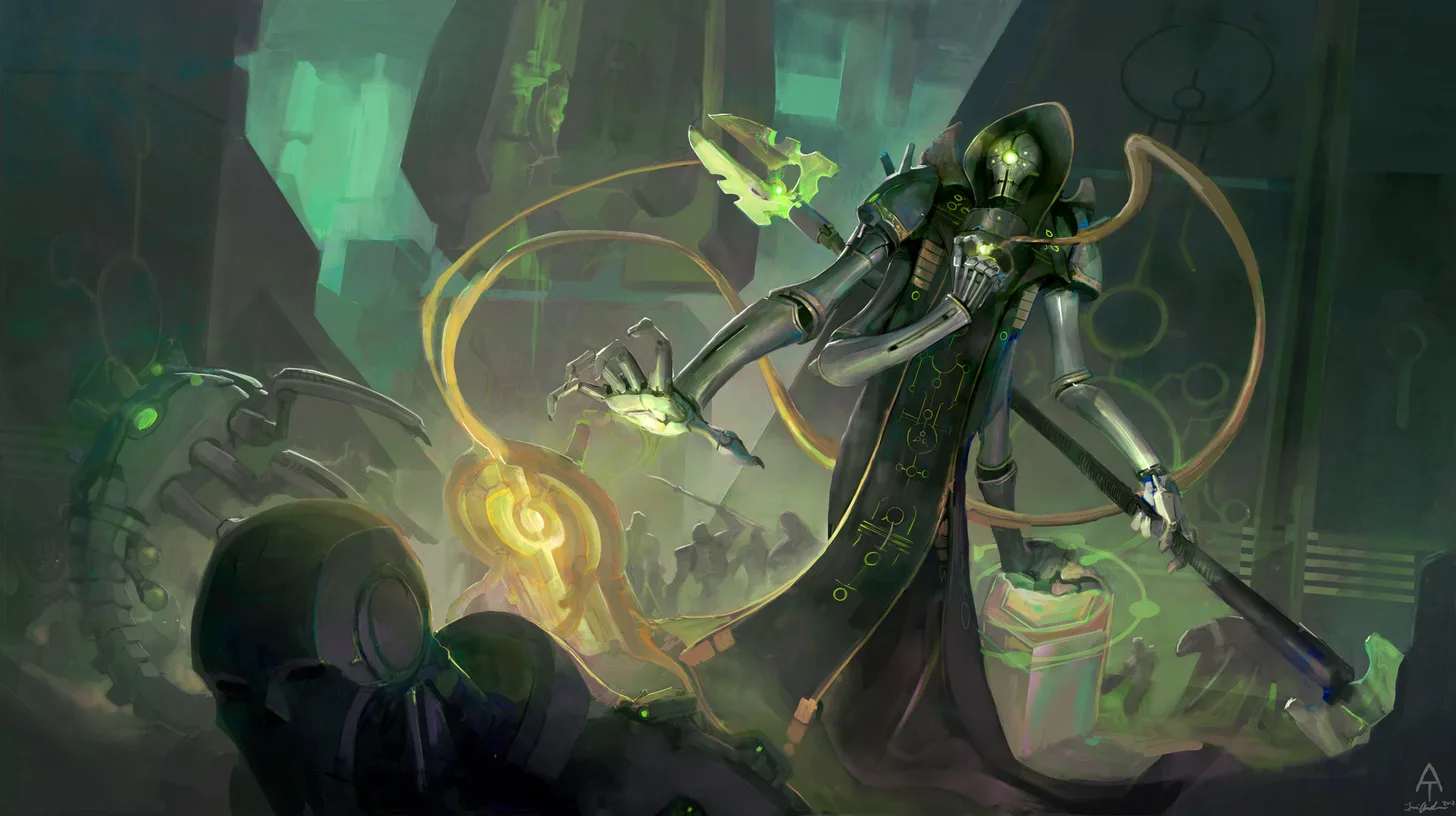
Necrons: Warhammer 40K Lore Guide
The complete lore of the Necrons — the doomed Necrontyr, the C’tan star-gods, biotransference, the War in Heaven, and the deathless dynasties now waking to reclaim the galaxy.
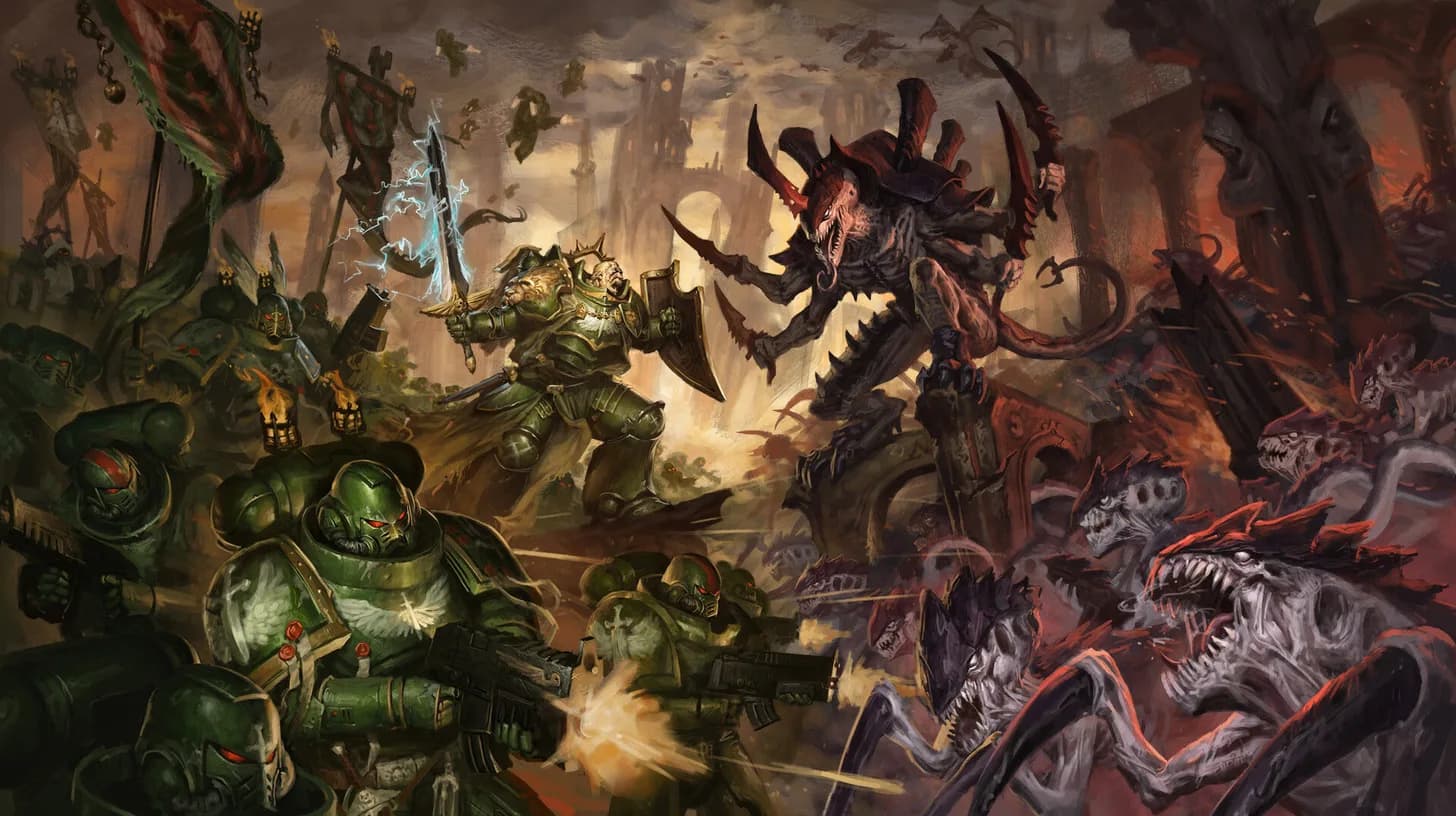
Tyranids: Warhammer 40K Lore Guide
The complete lore of the Tyranids — the Great Devourer, the Hive Mind, the Shadow in the Warp, the great Hive Fleets, Genestealer Cults, and the hunger that crossed the void between galaxies.
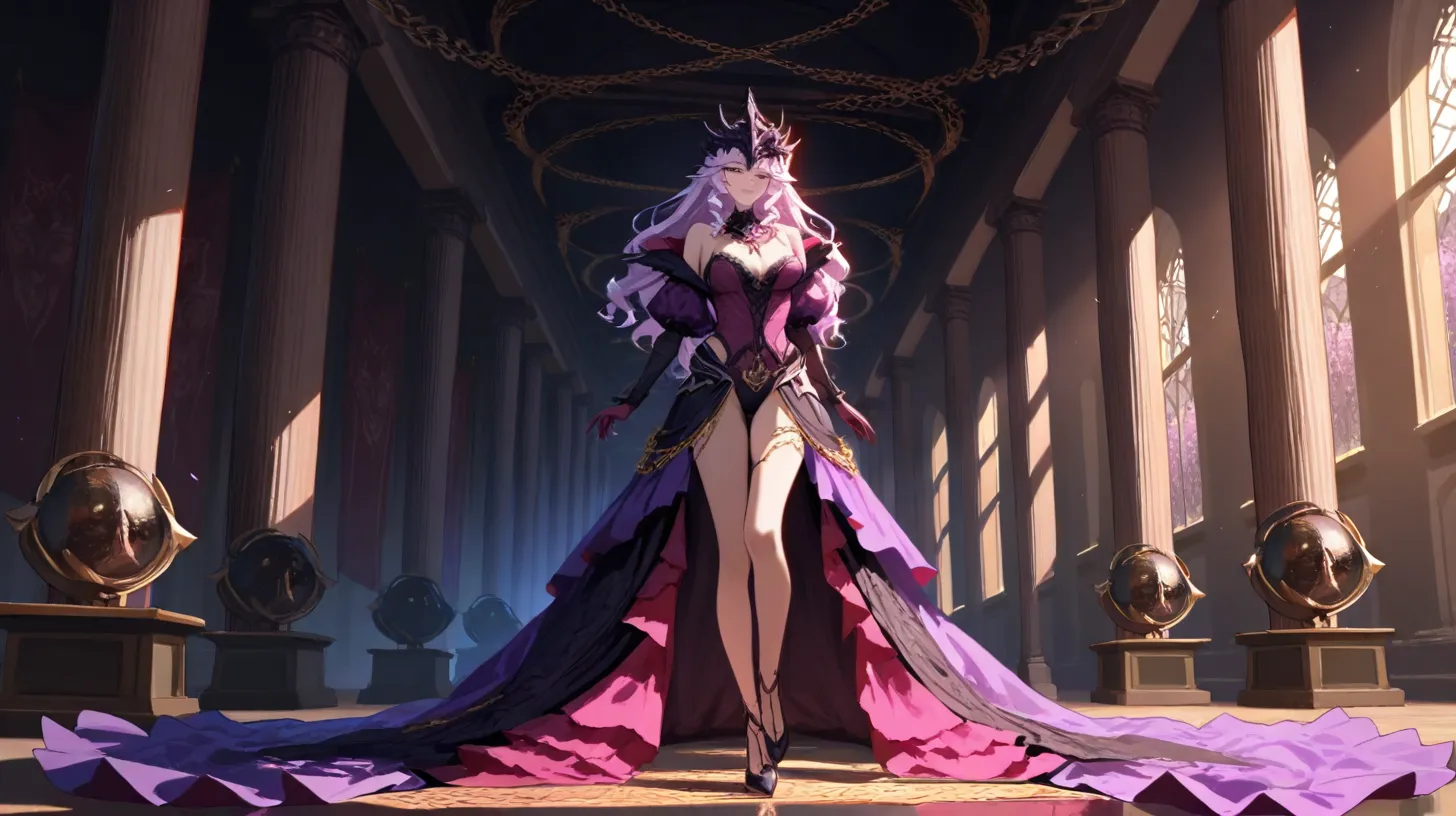
Slaanesh: The Dark Prince — Complete Warhammer Guide
Everything about Slaanesh, the Chaos God of excess, pleasure, pain, and perfection. Lore, daemons, Emperor's Children, the Palace of Pleasure, and why the Prince of Chaos is the most insidious of the Dark Gods.
Start building your world today
Maps, wikis, timelines, and AI tools — everything you need to bring your world to life, in one place.