Orks: Warhammer 40K Lore Guide
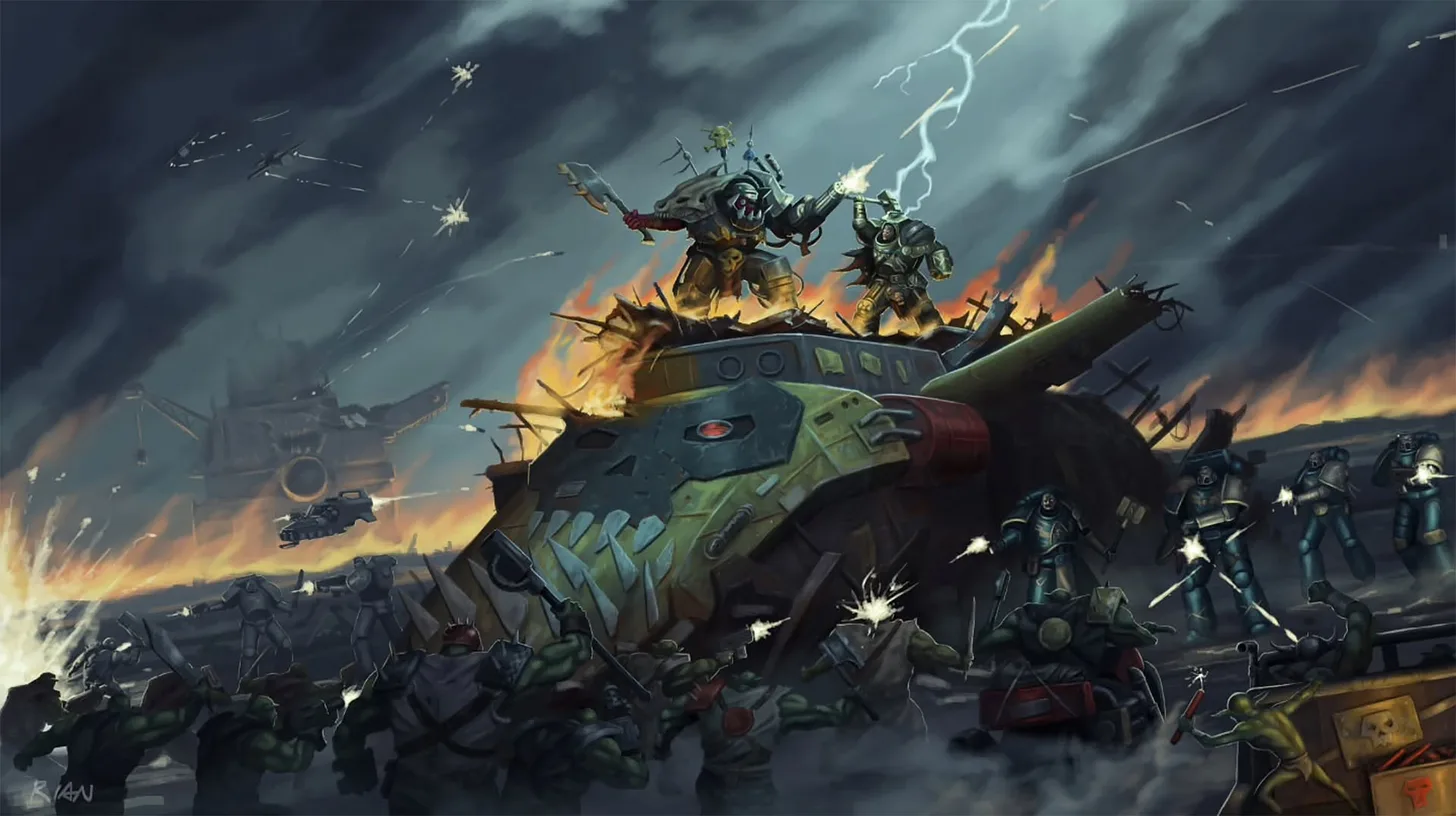
The galaxy of Warhammer 40,000 is a place of grim despair, cold logic, and ancient horror — and then there are the Orks, who are having the time of their lives. While other races scheme, mourn, and calculate the slow heat-death of their civilisations, the Orks rampage across the stars in a riot of green muscle, scavenged scrap, and ear-splitting laughter, fighting for the simple and unshakeable joy of a good scrap. They are crude, loud, dangerous, and weirdly endearing — the galaxy's ultimate underdogs who somehow keep winning. If you are still finding your feet among the great powers of the setting, our complete guide to the Warhammer 40K factions maps out how the Orks fit alongside the Imperium, the Aeldari, the Necrons, and the rest of the galactic menagerie.
But to dismiss the Orks as mere comic relief is a fatal mistake — and the bones of countless armies that underestimated them prove it. Beneath the dark humour lies one of the most numerous, resilient, and genuinely terrifying species ever to wage war. They are a bioengineered weapon older than almost everything else in the galaxy, a self-perpetuating apocalypse that cannot be reasoned with, cannot be starved out, and very nearly cannot be killed. This guide digs into the strange biology, ancient origins, reality-bending psychology, and roaring culture of the greenskins — the lore, not the rules. So grab a choppa, paint it red (it goes faster, as we'll explain), and let's get stuck in.
Orks at a Glance
| Aspect | Detail |
|---|---|
| Origin | Engineered as the Krork by the Old Ones during the War in Heaven, to fight the Necrons and C'tan |
| Biology | Fungoid — a self-seeding fungus that grows from spores; no gender, no parents, born ready to fight |
| Society | Brutal meritocracy; the biggest and toughest rules. Mob rule, tribal Klanz, endless warbands |
| Gods | Gork and Mork — twin gods of brutal kunnin' and kunnin' brutality |
| Defining Trait | The WAAAGH! — a collective psychic field that bends reality to match Orkish belief |
| Currency | Teef — Ork teeth, which constantly regrow, so the economy never runs dry |
| Greatest Threat To | Everyone. Especially everyone if they ever unite |
| Lifestyle | War, for war's sake, forever |
A Fungus That Fights: Ork Biology
Here is the first thing that breaks most newcomers' brains: Orks are not animals in any conventional sense. They are a fungoid species — a sentient, militarised fungus. There are no Ork mothers, no Ork children in the way we'd recognise, and no Ork genders. Instead, every Ork constantly sheds microscopic spores throughout its life, and releases a vast cloud of them when it dies. Those spores settle into the soil, germinate, and grow new life from the ground up.
And it isn't just Orks that sprout. The spores seed an entire interlocking ecosystem — the Orkoid life cycle. From the same fungal stock grow the Gretchin (the put-upon little "grots"), the Snotlings (tiny, simple, and expendable), and the all-purpose squigs — round, toothy fungus-beasts that serve as food, mounts, weapons, hounds, and just about anything else an Ork can imagine. A single warband crash-landing on a fresh world can, over a few generations of spore-fall, seed that entire planet with a green tide. You don't conquer an Ork infestation so much as garden it back, endlessly.
Perhaps strangest of all, Orks are born knowing. They emerge from the ground already able to walk, speak the Ork tongue, and — crucially — fight. This genetic memory is hard-wired knowledge passed down through the spores themselves: how to swing a choppa, how to follow the biggest boss, how to shout "WAAAGH!" with conviction. An Ork never needs schooling in violence. It is, quite literally, what they grow up to be.
Born of the War in Heaven: The Krork
The Orks are not a natural accident — they are an ancient weapon. Sixty million years ago, the galaxy burned in the War in Heaven, a cataclysmic conflict between the godlike Old Ones and the soulless Necrons and their star-devouring C'tan masters. Losing the war, the Old Ones engineered a series of warrior-species to fight on their behalf, seeding life with the purpose of resistance.
The greatest of these living weapons were the Krork — towering, psychically potent, brutally effective ancestors of the modern Ork. Where the Old Ones also cultivated the elegant precursors of the Aeldari for subtlety and psychic finesse, the Krork were the blunt instrument: bred to march into the teeth of the deathless legions and simply not stop. When the Old Ones fell and the galaxy slid into millions of years of darkness, the Krork endured — devolving, simplifying, scattering, but never dying out. The Orks of the 41st Millennium are the diminished, feral descendants of that perfect war-engine, still carrying out their original directive long after the war that made them was forgotten. They were built to fight forever. They have obliged.
The WAAAGH!: Belief Made Real
If you take only one thing from this guide, make it the WAAAGH! — because nothing else explains how the Orks actually work. Orks are latently psychic as an entire species. Individually, that power is faint. But collectively, the massed psychic presence of thousands or millions of Orks generates a unifying gestalt field of raw belief: the WAAAGH!.
This field subtly bends reality to match what Orks expect. The famous example is the truest: red vehicles really do go faster, because every Ork knows that red 'uns go fasta, and their shared conviction makes it so. A gun cobbled together from scrap and bottle-caps fires because its owner is utterly certain it will — and so reality quietly obliges. A glyph daubed in paint can carry genuine protective power. Ork "technology" that should never function does, and stops working the moment a curious outsider (who doesn't believe) tries to use it.
The strength of the field scales with the size of the WAAAGH!. A small warband enjoys minor luck; a galaxy-shaking crusade of millions can warp probability, weather, and machinery across whole battlefronts. This is also why Orks are so relentlessly confident — on some level their psychology is self-fulfilling. They win because they believe they'll win, and that belief is, measurably, a force of nature.
Gork and Mork: Gods of Proper Violence
The Orks worship two gods, and they are exactly the gods you'd expect a species of war-fungus to dream up. Gork and Mork are brothers, ever-feuding, ever-fighting, and they embody the entire Orkish theology of doing violence well. The distinction, endlessly debated by the boyz, is sacred: Gork is brutal but kunnin', and Mork is kunnin' but brutal. (Yes, the difference matters. No, no two Orks can agree on which is which.)
Between them, the twin gods sanctify the only two virtues an Ork truly respects: overwhelming force, and the low cunning to apply it at the right moment. To fight with mindless savagery is good; to fight with a clever ambush and then mindless savagery is divine. These gods are not abstractions, either — fed by the same psychic ocean as the WAAAGH! itself, Gork and Mork are arguably as real as any power in the warp, occasionally manifesting through colossal walking idols built by the Meks to stomp the enemy in person.
Bigger Means Boss: Ork Society
Ork society runs on the simplest hierarchy imaginable, and it is enforced by biology. The more an Ork fights — and the more status it accrues — the larger and stronger it physically grows. Size is not just a sign of authority; it is authority. A bigger Ork is, self-evidently, a better Ork, and the boyz instinctively defer to the largest greenskin in the room.
The rank-and-file are the Boyz — eager, raucous, endlessly numerous. Above them tower the Nobz, bigger and meaner, who keep the boyz in line through sheer presence and the occasional clout round the ear. At the summit sits the Warboss: the biggest, toughest, most violent Ork in the whole horde, who rules for precisely as long as no one bigger comes along to take his place. There are no elections among Orks, only outcomes. This is "mob rule" in the most literal sense — and it works, because everyone is having far too much fun fighting to question it. An Ork's idea of a perfect society is a very large number of Orks, all looking for a scrap, with the biggest one in charge.
The Klanz: Tribes of the Green Tide
Ork culture splits into six great Klanz (clans) — broad cultural traditions rather than rigid factions, each with its own flavour of mayhem.
The Six Klanz
- Goffs — the biggest, blackest-clad, and most brutal. They scorn fancy gubbinz and settle everything with a swing of the choppa. Pure, head-on melee violence.
- Bad Moons — the richest Klan, because their teef grow back fastest. Flashy, gaudy, and obsessed with showing off the latest and biggest dakka money can buy.
- Evil Sunz — the speed freaks. They live to go fast, painting everything red and bolting engines onto anything that'll hold still long enough.
- Deathskulls — incorrigible looters and scavengers, painted blue for luck. If it isn't nailed down (and even if it is), a Deathskull will have it.
- Snakebites — the traditionalists. They distrust newfangled tech, ride squigs and beasts, and reckon a real Ork wins with muscle and grit, not gadgets.
- Blood Axes — the most "human"-like and the most distrusted by other Orks. They use actual tactics, study the enemy, wear camouflage, and even hire themselves out as mercenaries. Deeply suspicious behaviour, by Ork standards.
Oddboyz, Grots, and the Teef Economy
Not every Ork is just a bigger fist. A minority are born with specialist genetic knowledge — the Oddboyz — and they keep the whole green machine running.
The Specialists
- Mekboyz (Meks) — Ork "engineers" who build vehicles, guns, and walking war-machines out of scrap. Their creations defy physics largely because the WAAAGH! says they can.
- Painboyz (Doks) — Ork "surgeons," whose enthusiasm for cutting greatly exceeds their concern for the patient. Bolt-on bionics, swapped limbs, and the occasional accidentally-fitted squig are all in a day's work.
- Weirdboyz — the rare Ork psykers who act as living lightning-rods for the WAAAGH! energy crackling around any large mob. They channel it into devastating blasts — and sometimes, when the pressure gets too great, they detonate spectacularly. Most other Orks keep a respectful distance.
- Runtherds — the bosses who wrangle the Gretchin, herding the little grots into battle as expendable cannon-fodder and labour.
The Gretchin ("grots") are the Orkoid underclass — small, cowardly, surprisingly clever, and ruthlessly bullied by their larger cousins. They do the cooking, the cleaning, the carrying, and the dying-first. The squigs, meanwhile, fill every other ecological niche: there are eating squigs, attack squigs, hair-squigs, and squigs whose purpose nobody can quite remember.
And then there's the money. Ork currency is teef — literally their own teeth. It's a brilliantly Orky system: an Ork's teeth constantly regrow throughout its life, so the supply never dries up, and a rich Ork is one who's still got a full grin (or has knocked enough out of others). The economy can never collapse, because everyone is, quite literally, minting fresh coin in their own jaws. If you're naming your own warband or its loot-hungry characters for a campaign, a fantasy name generator can spark a few suitably brutal monikers.
War Is the Whole Point: Themes and Threat
Every other faction in the setting fights for something — survival, conquest, vengeance, an ideology. The Orks fight because fighting is the best thing in the universe. War is not their means to an end; it is the end. A galaxy at peace would be, to an Ork, a tragedy of unimaginable boredom. This is what makes them so unsettling: you cannot deter, bribe, or demoralise an enemy who is already getting exactly what it wants.
Combine that joyful nihilism with their fungal immortality and you arrive at a genuinely apocalyptic truth: the Orks are very likely the most numerous species in the galaxy, and arguably the hardest to ever truly eradicate. They are kept in check only by their own disunity — a thousand warbands squabbling among themselves burn most of their energy fighting each other.
The nightmare scenario is unification. On the rare occasions a single Warlord has grown mighty enough to bind the Klanz into one titanic crusade — the historical great WAAAGHs, above all the legendary warlord known as The Beast, whose ancient invasion nearly broke the Imperium entirely — the green tide has come within a breath of overrunning everything. It is worth contrasting their nature with the other great threats: where the Tyranids consume out of mindless biological hunger and the Necrons conquer out of cold, ancient ambition, the Orks simply want to keep the party going forever. Of the three, the Orks may be the only ones genuinely enjoying themselves — which is, perhaps, the most frightening thing of all. Small wonder the Space Marines have spent ten thousand years failing to stamp them out.
Orks FAQ
Are Orks really fungus?
Yes, genuinely. Orks are a fungoid species that reproduces by releasing spores rather than by birth. Those spores grow into new Orks — and into the entire Orkoid ecosystem of grots, snotlings, and squigs — straight out of the ground. They have no gender and no parents, and they're born already knowing how to walk, talk, and fight.
How does the WAAAGH! work?
Orks are weakly psychic as individuals, but in large numbers their belief pools into a shared gestalt field called the WAAAGH!. This field subtly reshapes reality to fit what Orks collectively expect — making their dodgy tech function, their crude weapons fire, and their glyphs carry real power. The bigger the horde, the stronger the effect.
Why do red Orks (and their vehicles) go faster?
Because every Ork is utterly certain that red things go faster — and under the influence of the WAAAGH! field, that shared belief literally makes it true. It's the cleanest example of Ork reality-bending: a vehicle painted red genuinely outpaces an identical one in a different colour, simply because the Orks know it should.
What is teef currency?
Teef are Ork teeth, used as money. Because an Ork's teeth constantly regrow throughout its life, the currency self-renews and the economy never runs out of cash. A wealthy Ork is one with a mouth full of teef — or one good at relieving others of theirs.
Are Orks the strongest faction in 40K?
By raw numbers and sheer survivability, they may well be the most dangerous threat in the galaxy — possibly the most numerous species of all. What saves everyone else is Ork disunity. If they ever truly united under a single great Warlord, as nearly happened during the WAAAGH! of The Beast, they could plausibly overrun the entire galaxy.
Where did the Orks come from?
They were engineered as the Krork — living weapons created by the Old Ones during the War in Heaven to battle the Necrons and the C'tan. When that ancient war ended and the galaxy fell dark, the Krork devolved into the feral but indestructible Orks of today, still carrying out their built-in purpose: endless war.
Continue Exploring
- Warhammer 40K Factions: The Complete Guide — see how the Orks fit into the wider galaxy.
- The Necrons — the ancient foe the Krork were first built to fight.
- The Aeldari — fellow heirs of the War in Heaven era.
- The Tyranids — the galaxy's other unstoppable swarm, driven by hunger rather than joy.
- The Space Marines — the Orks' favourite scrap.
- Fantasy Name Generator — for naming your own warband, Warboss, and grots.
- For an exhaustive lore deep-dive, the community-run Lexicanum archive is a treasure trove of greenskin history.
The Orks remind us that the best villains aren't always cold and calculating — sometimes they're the ones laughing loudest as the galaxy burns. Whether you want to drop a green tide into your next campaign, build a spore-seeded death world, or chronicle the rise of your own Warboss, you can bring it all to life with Anima. Create your free Anima account to start building your world, map your battlefronts, and let the WAAAGH! grow. Now get out there — there's fightin' to be done.
Keep reading
More from this topic
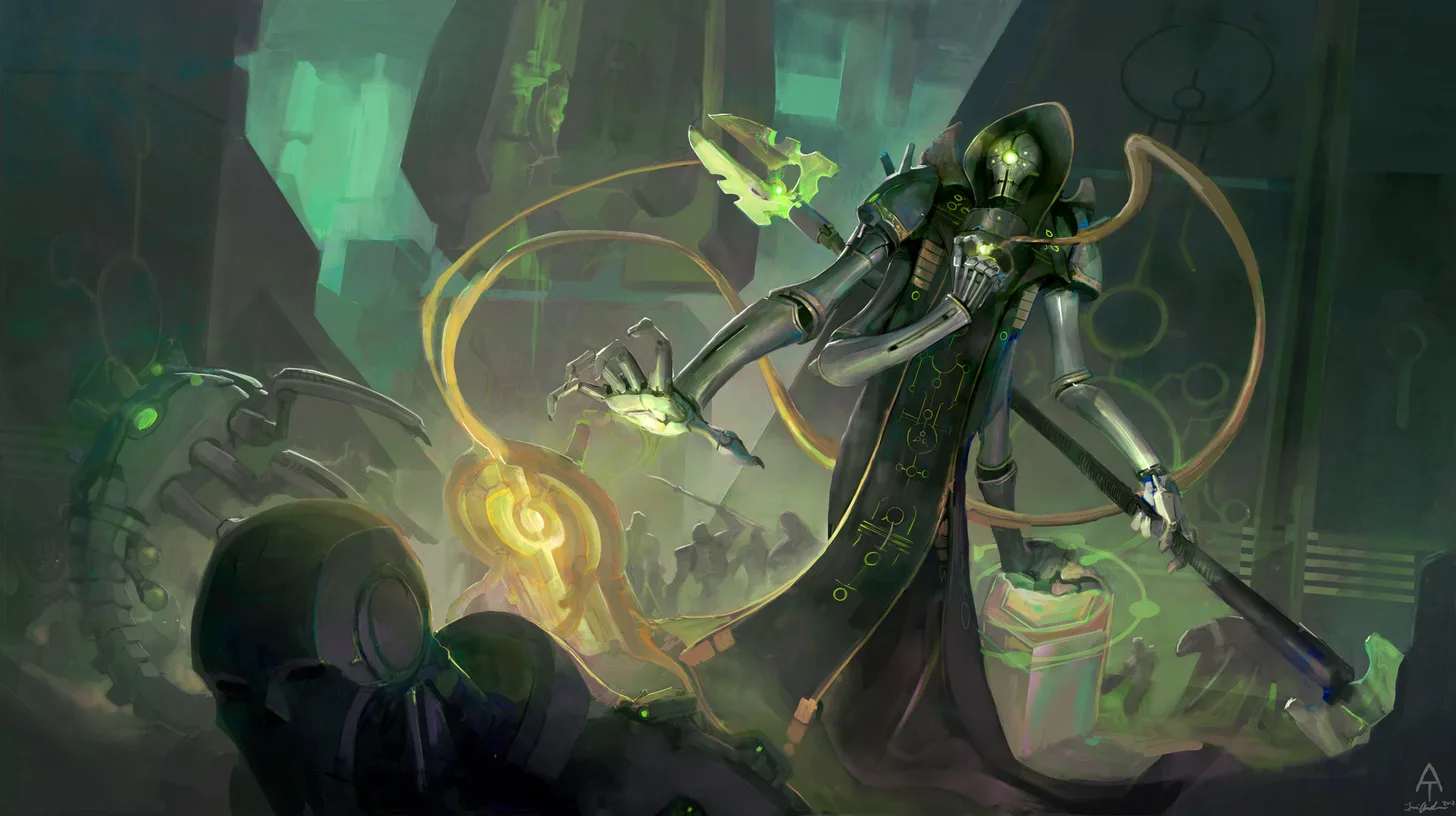
Necrons: Warhammer 40K Lore Guide
The complete lore of the Necrons — the doomed Necrontyr, the C’tan star-gods, biotransference, the War in Heaven, and the deathless dynasties now waking to reclaim the galaxy.
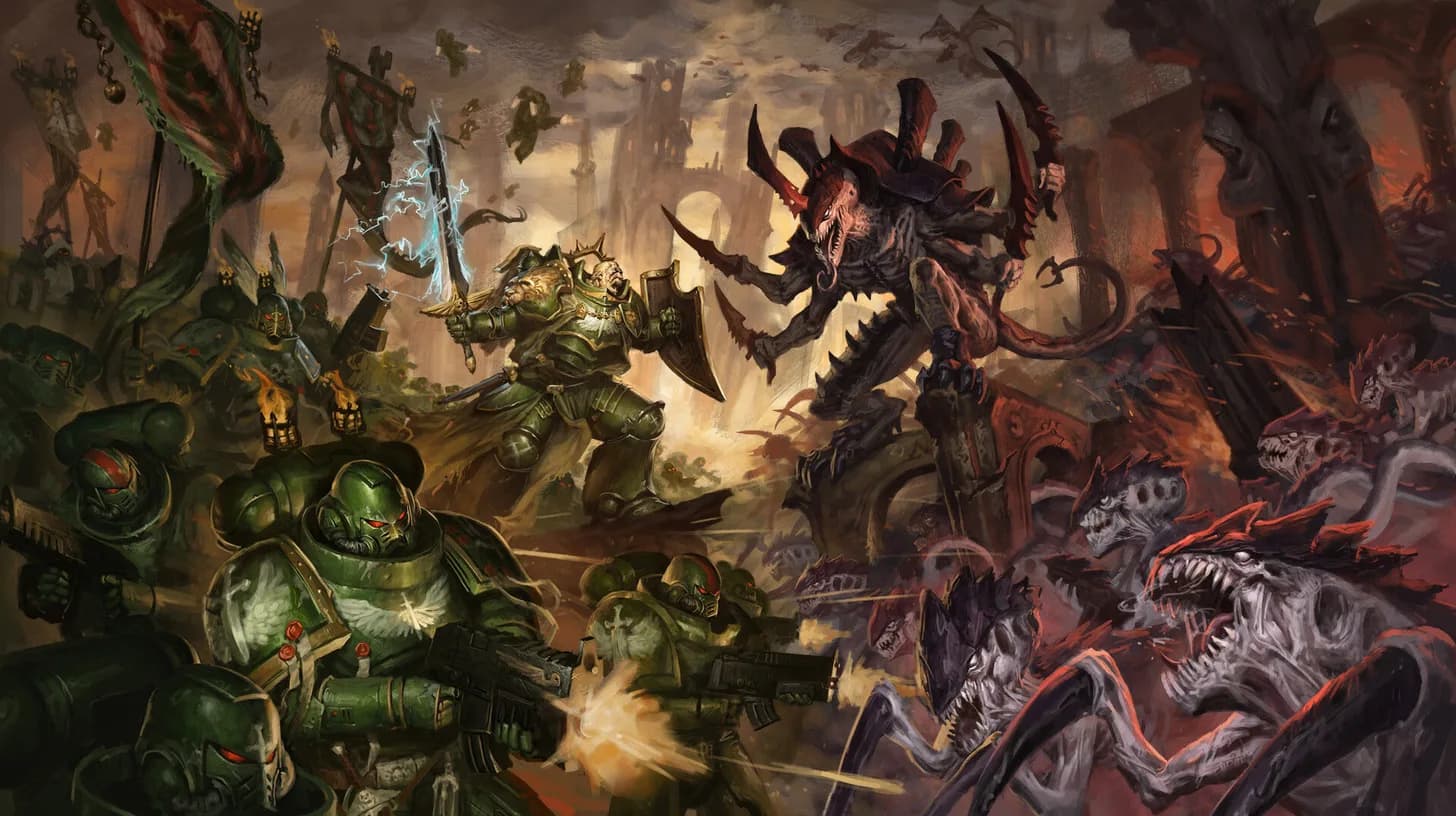
Tyranids: Warhammer 40K Lore Guide
The complete lore of the Tyranids — the Great Devourer, the Hive Mind, the Shadow in the Warp, the great Hive Fleets, Genestealer Cults, and the hunger that crossed the void between galaxies.
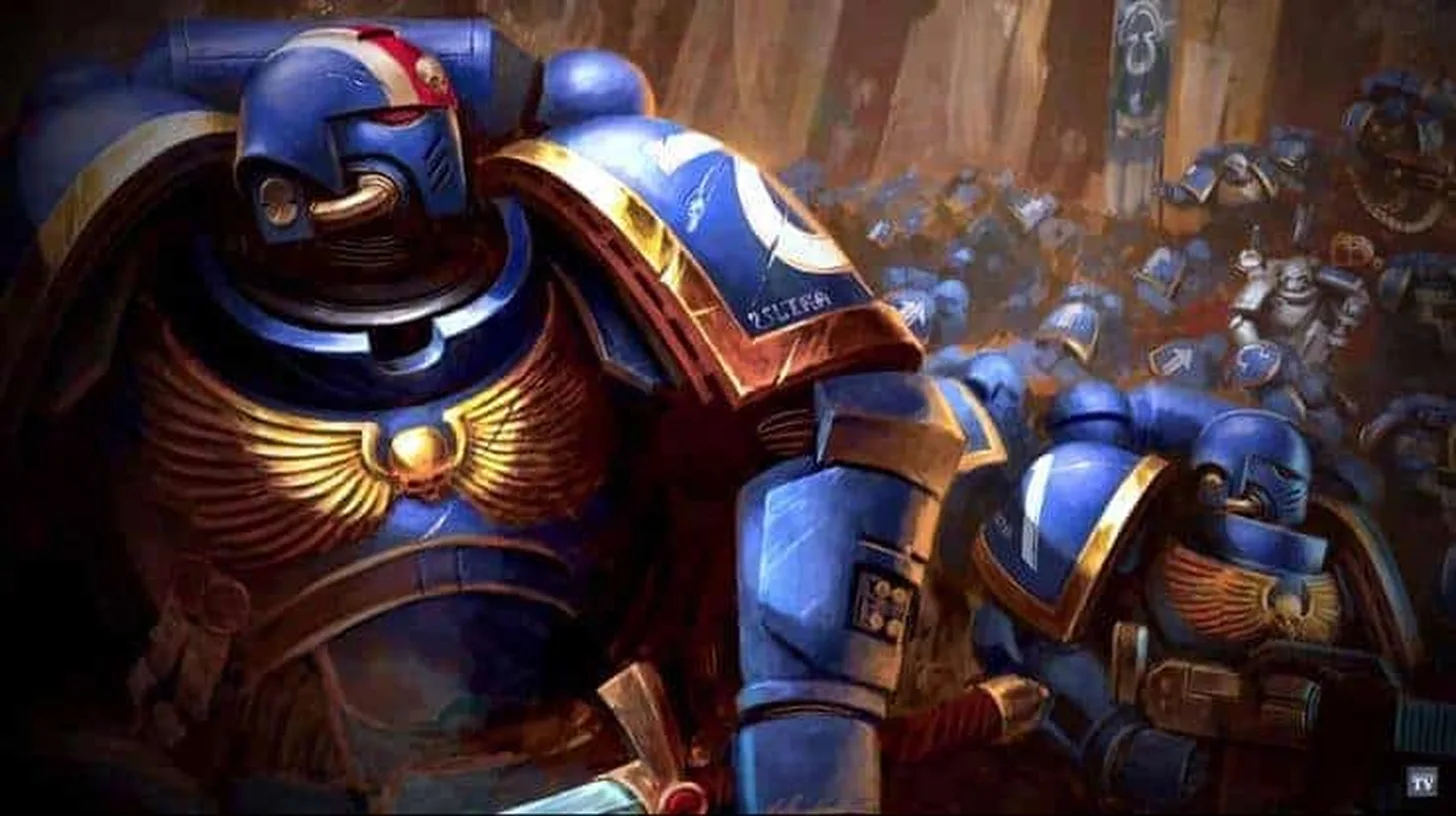
Space Marines (Adeptus Astartes): Warhammer 40K Lore Guide
The complete lore of the Space Marines — the Primarchs, gene-seed, the Horus Heresy, the Codex Astartes and the Chapters, the Primaris and Guilliman’s return, and the cost of the Angels of Death.
Start building your world today
Maps, wikis, timelines, and AI tools — everything you need to bring your world to life, in one place.