D&D Druid: The Complete Class Guide (Circles, Wild Shape & Spells)
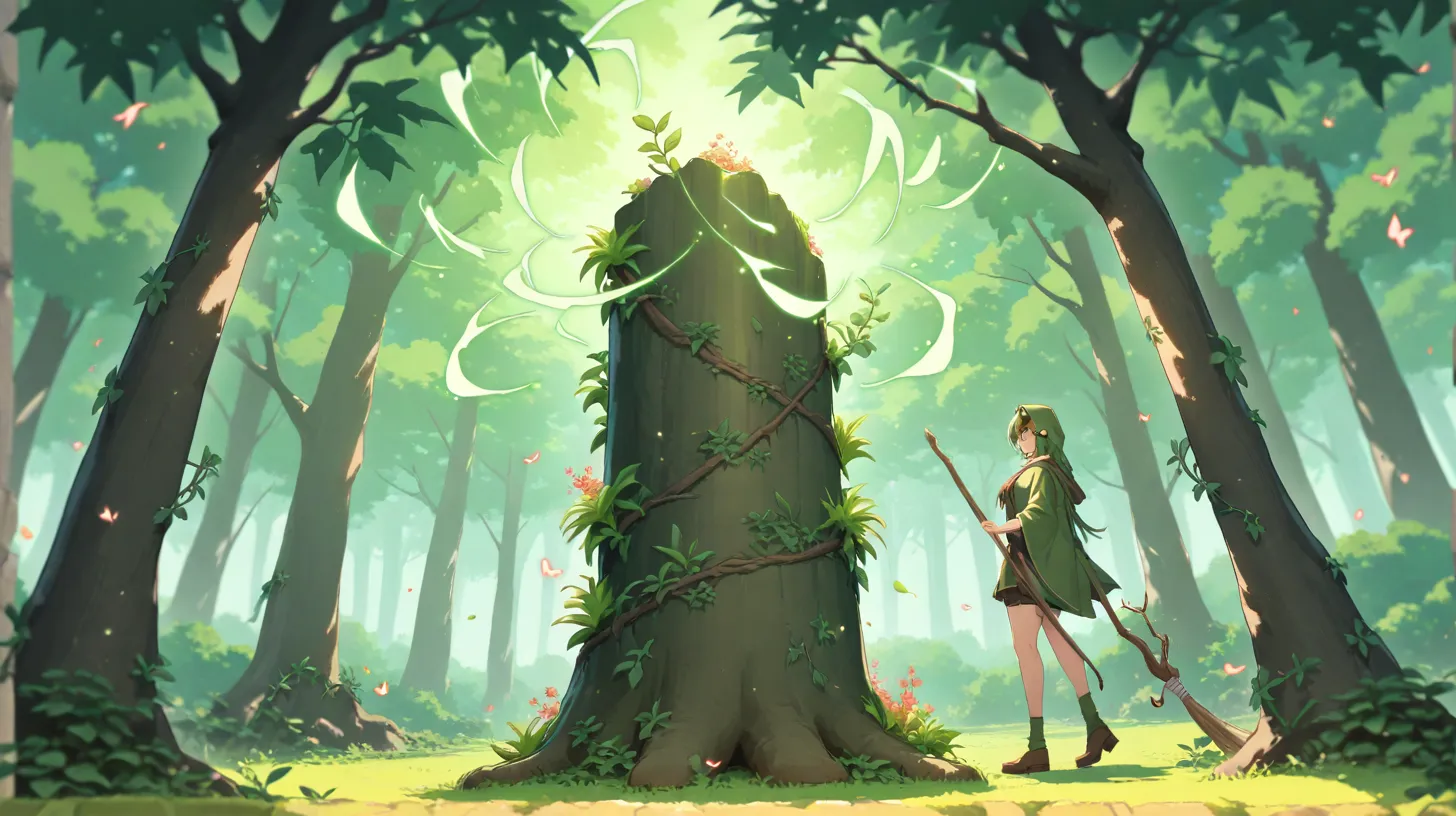
The D&D druid is two classes wearing one set of leather armor. The first is a full spellcaster with the best battlefield-control list in the game — walls of thorns, exploding spike-fields, moonbeams that follow enemies across the room. The second is a shapeshifter who can turn into a bear, a spider, a giant eagle, and eventually an earth elemental. Most players pick one half at level 2 and forget the other half exists until level 10, when they realize they've been playing a weaker character than the one on their sheet.
That split is the whole story of the class. Moon druids lean into Wild Shape so hard they barely cast until Tier 3. Land and Shepherd druids treat Wild Shape as a novelty and play a slightly odd nature wizard. Both work. But the druid who knows when to be the bear and when to be the caster is one of the most dangerous characters a party can field.
This guide covers the circles that matter, how Wild Shape actually works (and why it's a free hit-point pool even for non-Moon druids), the control spells that define the class, and the habits that separate a druid who reshapes every fight from one who spends three rounds as a bear doing 2d4 damage.
The Druid at a Glance
Mechanically:
- Hit die: d8 — average for a caster, and inflated massively by Wild Shape
- Primary ability: Wisdom
- Saving throw proficiencies: Intelligence, Wisdom — Wisdom is the one that matters; it covers most charm, fear and mind-control effects
- Armor: Light and medium armor, shields — but druids will not wear metal. Hide armor, studded leather, wooden shields.
- Weapons: Clubs, daggers, darts, javelins, maces, quarterstaffs, scimitars, sickles, slings, spears
- Spellcasting: Prepared caster with access to the entire druid list every morning, full nine-level progression, ritual casting
- Wild Shape (level 2): Transform into a beast twice per short rest. Max CR 1/4 with no flying or swimming speed at level 2; CR 1/2 and swimming at level 4; CR 1 and flying at level 8. Your beast form has its own hit points — when they hit zero, you revert with your normal HP intact.
- Timeless Body (level 18): You age at one-tenth the normal rate
- Beast Spells (level 18): Cast spells while in Wild Shape (no material components)
- Archdruid (level 20): Unlimited Wild Shape, ignore verbal and somatic components
Two things make the druid chassis unusual. First, you never "learn" spells: the entire druid list is available, and you pick a fresh set each day — a swamp day with Water Walk and Protection from Poison, a city day with Charm Person and Pass Without Trace. Second, Wild Shape is a resource completely separate from spell slots. A druid who uses both every day gets more out of the class than any single-resource caster can.
The Circles, Ranked
You choose a Druid Circle at level 2. Unlike the wizard's schools, the circle choice defines a huge share of how the druid plays — Moon and Land are practically different classes.
Tier 1: First-Pick Circles
- Moon (PHB). The shapeshifter. Wild Shape as a bonus action, CR 1 forms at level 2, and from level 6 a max CR of one-third your druid level. Elementals at level 10. Moon druids are the tankiest characters in the game from levels 2 to 5 — a brown bear with 34 hit points in front of a level-2 party is absurd.
- Shepherd (XGtE). The summoner. Spirit Totem is a mobile aura of temporary hit points, advantage or free healing; Mighty Summoner turns Conjure Animals into a small army of beefed-up wolves. Bear Totem plus Conjure Animals decides fights.
- Stars (TCoE). The all-rounder. Starry Form gives you a bonus-action ranged attack, free healing, or concentration protection, and Cosmic Omen at level 6 is a mini-Portent. Consistent, low-maintenance, strong at every level.
Tier 2: Excellent Circles
- Wildfire (TCoE). A summoned wildfire spirit you command as a bonus action, plus Fireball, Scorching Ray and Plant Growth on your prepared list. The best damage-focused druid, with clever teleportation tricks through the spirit's Fiery Teleportation.
- Land (PHB). Natural Recovery gives you spell slots back on a short rest, exactly like a wizard's Arcane Recovery. Your circle terrain adds spells — Coast gives Mirror Image and Misty Step; Underdark gives Web, Stinking Cloud and Cloudkill. The pure-caster druid, and quietly one of the strongest in the right terrain.
Tier 3: Playable but Specific
- Spores (TCoE/GGtR). A melee-caster hybrid with a temp-HP pool from Symbiotic Entity. Fun, fragile, and competing for concentration with everything else you want to cast.
- Dreams (XGtE). Balm of the Summer Court is excellent bonus-action healing. The rest of the kit is teleport-and-camping utility that many campaigns never exercise.
For a first druid, Moon if you want to be on the front line, Stars if you want a caster who doesn't need to micromanage summons, and Shepherd if your table doesn't mind you rolling eight wolf attacks per turn. A new druid picking Moon should still learn the spell list — the circle stops carrying you around level 6, and the spells take over.
Wild Shape: How It Actually Works
Wild Shape is the most misunderstood feature in the class. Briefly: you keep your mental scores, saving throw and skill proficiencies; you take the beast's physical scores, hit points, attacks and senses; you can't cast or speak. When the beast form hits zero, you pop back out with your original HP — and any leftover damage carries over.
The CR ladder for non-Moon druids:
- Level 2: CR 1/4, no flying or swimming — giant wolf spider, wolf, giant badger, panther
- Level 4: CR 1/2, swimming allowed — reef shark, crocodile, warhorse, giant goat
- Level 8: CR 1, flying allowed — giant eagle, giant spider, brown bear, dire wolf, giant hyena
Moon druids get CR 1 at level 2, CR 2 at level 6 (polar bear, giant constrictor snake), CR 3 at level 9 (giant scorpion, killer whale), and at level 10 the four elementals — earth elemental is the standout, with 126 hit points, resistance to non-magical weapons, and the ability to walk through stone.
The best forms per tier, in practice:
- Giant spider (CR 1): Web restraint, climbing, blindsight. The most tactically flexible form in the game.
- Brown bear (CR 1): 34 HP, multiattack, the classic Moon opener.
- Dire wolf (CR 1): Pack Tactics and a knockdown bite. Ideal alongside melee allies.
- Giant scorpion (CR 3): Three attacks, a grappling claw, poison. The best Moon form at levels 9–11.
- Giant eagle (CR 1): A flying scout with 80-foot movement, from level 8. Not for fighting — for everything else.
The trick that non-Moon players miss: Wild Shape is a free hit-point pool. A level-8 Stars druid with 50 HP who becomes a brown bear before a fight has 34 extra hit points to burn before their real HP is touched. It costs an action, so it's a pre-combat move — but two uses per short rest means roughly 70 free hit points a day for any druid who bothers. That's the difference between "squishy caster" and "the character who never goes down."
The Control Caster
The druid spell list doesn't win on damage. It wins on area denial: spells that decide where enemies can stand, whether they can move, and how many of them reach your party. The pillars, by level:
- 1st level: Entangle (restrain a 20-foot square on a failed Strength save), Faerie Fire (advantage for the whole party against everything in the area), Goodberry (ten free healing berries per slot), Absorb Elements, Healing Word
- 2nd level: Spike Growth (2d4 damage per 5 feet moved through it, no save — the best 2nd-level spell in the game), Moonbeam (a mobile pillar of radiant damage), Pass Without Trace (+10 to Stealth for everyone), Heat Metal against armored enemies
- 3rd level: Plant Growth (quarter movement speed in a 100-foot radius, no concentration, no save), Conjure Animals, Call Lightning (concentration damage that keeps paying for ten minutes), Dispel Magic
- 4th level: Polymorph (turn an ally into a giant ape, or an enemy into a snail), Conjure Woodland Beings, Guardian of Nature, Freedom of Movement
- 5th level: Wall of Thorns, Conjure Elemental, Maelstrom, Reincarnate, Transmute Rock
- 6th–9th: Heal, Wall of Thorns upcast, Sunbeam, Fire Storm, Regenerate, Animal Shapes, Foresight, Shapechange, Storm of Vengeance
Notice how many of those say concentration. Druids are the class most punished by broken concentration, because almost every spell that makes them great requires it. Which means: War Caster or Resilient (Constitution) is your first feat, every time. And pick one concentration spell per fight — Spike Growth or Moonbeam, not both. Druids who cast a control spell, then immediately cast a second one and drop the first, are throwing away their best turn.
The counterpart: druid cantrips are weak. Produce Flame and Thorn Whip are fine, Shillelagh makes your quarterstaff Wisdom-based, and that's about it. With nothing to concentrate on, you'll usually do more by Wild Shaping than by cantripping.
Race & Stat Priority
Stat priority for almost any druid:
- Wisdom — spell save DC, spell attacks, Perception. 16 minimum at level 1, 20 by level 8.
- Constitution — concentration saves and the HP that your Wild Shape reverts you into. 14 minimum, higher for Moon.
- Dexterity — AC in hide armor and initiative. 14 is plenty.
- Intelligence / Strength / Charisma — dump as your concept allows. Wild Shape replaces your physical stats anyway.
The metal-armor debate deserves a paragraph. Druids will not wear metal armor — it's a taboo, not a mechanical restriction, but most tables treat it as a hard rule. Play it as written and you're in hide (AC 12 + Dex, max 2) or studded leather. If your DM allows non-metal medium armor — dragon-scale, chitin, ironwood — it's a huge upgrade. Ask before you build around it.
Strong race choices:
- Wood Elf: +1 Wis, +2 Dex, 35-foot speed, Mask of the Wild. The archetypal druid for a reason.
- Hill Dwarf: +1 Wis, +2 Con, extra HP per level, poison resistance. A tougher druid, and the extra HP survives Wild Shape reverts.
- Firbolg: +2 Wis, +1 Str, Hidden Step, Speech of Beast and Leaf. Written for the class.
- Tortle: A natural AC of 17 that Wild Shape doesn't override. The armored druid without the metal debate.
- Variant Human / Custom Lineage: Free feat at level 1 — take War Caster or Resilient (Con) and never look back.
Multiclassing
Druids almost never benefit from multiclassing. Every druid level adds a spell level, a Wild Shape CR bracket, or a circle feature. The dips that work:
- 1 level Cleric (Nature or Life): Heavy armor proficiency — but that's metal, so it's really about the Life domain's healing bonus or the Nature domain's extra cantrip. See the cleric guide if you're weighing the two Wisdom casters against each other.
- 1–2 levels Monk: Unarmored Defense (Wis-based AC) solves the armor problem entirely for a Moon druid who doesn't want hide armor. Costs a spell level.
- 1–2 levels Ranger: A fighting style and Favored Enemy for the melee druid concept. Thematic; rarely optimal.
If you're new to druids, stay pure. The class's power spikes at 2, 6, 10 and 18 depend on your druid level, and delaying any of them costs more than any dip gives back.
Common Mistakes
- Playing a Moon druid as a bear at level 8. By then, your spells outdamage the bear and outcontrol it. Bear form is a level 2–5 answer. From level 6, Wild Shape is for elementals, scouting and hit-point sponging — and your action is for casting.
- Forgetting the free HP. Non-Moon druids who never Wild Shape are leaving 60–100 hit points on the table every day.
- Stacking concentration spells. One at a time. Cast the one that decides the fight, then support it with non-concentration spells and cantrips.
- Preparing the same list every day. You have the entire druid list available every morning. Read the day's likely encounters — prepare for them. A wilderness day and a dungeon day should look nothing alike.
- Ignoring Goodberry. A 1st-level slot becomes ten hit points of out-of-combat healing, spread across the whole party, and stabilizes downed allies for a single action. Cast it with leftover slots before every long rest.
- Using Conjure Animals without a plan. Eight wolves is eight attack rolls and a slower table. Know the stat block before you cast, and keep the count reasonable.
Roleplay: The Druid's Why
Druids are the class with the loudest worldview. Every druid has a relationship with the natural world — and with the civilization that keeps encroaching on it. Why does yours leave the grove?
- The Warden. Something is wrong with the land — a blight, an undead taint, a mine gouging the hillside — and the circle sent you to fix it. Or you appointed yourself.
- The Exile. Your circle cast you out. Maybe you broke a taboo. Maybe you sided with a village the circle wanted to burn. Your magic still works; the belonging is gone.
- The Wild One. Raised by wolves, or close to it. Cities are baffling, coins are shiny rocks, and the party's bard is your reluctant translator.
- The Convert. You were something else first — a soldier, a scholar, a priest — and the wild took you in when nothing else would. You still remember how the other world works.
- The Balance-Keeper. Neither good nor evil interests you; cycles do. Fire and regrowth, predator and prey. You'll help the party as long as they're the fire, not the blight.
The "why" decides what your druid does when the party burns down a forest to smoke out a bandit camp. Give the character a name that fits the culture with the D&D name generator, then write down the three things the character will never do — that's your druid's spine. For the long-form version, the character bible guide walks through it.
The Druid's Endgame
A level-18+ druid is one of the most self-sufficient characters in the game. Beast Spells means you can be an earth elemental and still cast Heal and Wall of Thorns from inside the form. Shapechange lets you become a dragon or a storm giant with the creature's hit points as a buffer and your own spellcasting intact. And at level 20, Archdruid means unlimited Wild Shape: every fight, every scouting mission, every fall from a cliff, you have a form for it.
The druid's late game isn't about a single overwhelming spell; it's about having the right shape for every problem. A chasm is a giant eagle. A siege is Storm of Vengeance. A dying ally is Regenerate. A dead one is Reincarnate.
Cast the control spell first. Be the bear only when it's the right call. Use both halves of the class every day. For build fundamentals, see the character sheet guide; for the full class text, the official druid class page lays out every feature and circle. And if you're torn between the druid and the other prepared full caster, the wizard guide makes the case for the other side.
Keep reading
More from this topic

D&D Cleric: The Complete Class Guide (Subclasses, Builds & Roleplay)
The cleric is the most underrated class at the table — a full-caster, a heavy-armor frontliner, and the only character who can talk to a god. Here's how to build one that's strong without being a heal-bot.

D&D Warlock: The Complete Class Guide (Patrons, Pacts & Builds)
The warlock is the most short-rest-friendly caster in 5e — two slots back per hour, an at-will damage cantrip that scales with feats, and three-class-features-in-one between Patron, Pact, and Invocations. Here's how to build one that actually rivals a wizard.

D&D Wizard: The Complete Class Guide (Schools, Spells & Builds)
The wizard is the deepest, most rewarding caster in 5e — and the easiest class to play badly. Here's how to build one that earns the "all-powerful arcanist" reputation instead of dying in the second fight.
Start building your world today
Maps, wikis, timelines, and AI tools — everything you need to bring your world to life, in one place.