Chaos Daemons: Warhammer 40K Lore Guide
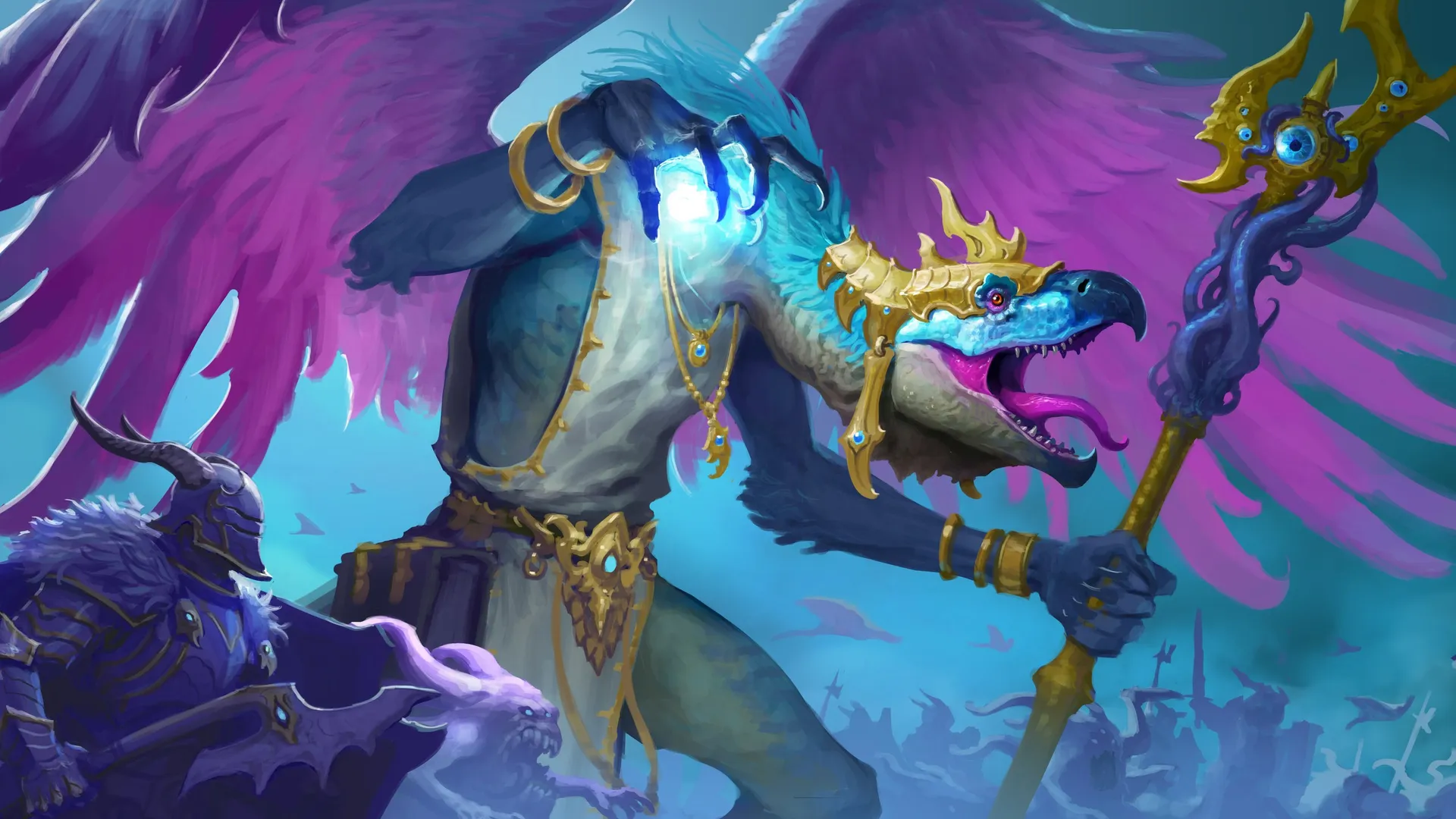
In Warhammer 40,000, hell is real, and it is right next door. Beneath the fragile surface of reality churns the Warp, a parallel dimension of raw psychic energy shaped by the emotions of every living thing. Rage, despair, hope, lust and fear do not vanish when they are felt; they pool in the Warp, and over millennia they have taken form. The greatest of these forms are the four Chaos Gods. The rest are their daemons: living shards of divine will, given claws, teeth and an endless hunger for the material world.
When the walls between realities weaken, the daemons pour through. Skies turn to blood, the ground boils, and legions of shrieking, laughing, bellowing horrors overrun entire planets. Of all the Warhammer 40K factions, the Chaos Daemons are the most purely supernatural: not mortals who serve the Dark Gods, but the gods' own servants made flesh.
This guide explains what daemons are, how they enter reality, the four daemonic legions of Khorne, Nurgle, Tzeentch and Slaanesh, their Greater Daemons and named heroes, Be'lakor and the Daemon Princes, and how the army plays on the tabletop.
Chaos Daemons at a Glance
| Aspect | Detail |
|---|---|
| Also Known As | Daemons of Chaos, Neverborn, the Legions of the Warp |
| Nature | Beings of pure Warp energy, each a fragment of a Chaos God's essence |
| Home | The Realm of Chaos, deep within the Warp |
| Masters | Khorne, Nurgle, Tzeentch and Slaanesh |
| Greater Daemons | Bloodthirsters, Great Unclean Ones, Lords of Change, Keepers of Secrets |
| Lesser Daemons | Bloodletters, Plaguebearers, Pink Horrors, Daemonettes and many more |
| Weakness | Cannot remain in reality without a strong Warp presence; vulnerable to blessed weapons and psychic wards |
| Can They Die? | Not truly: a slain daemon is banished back to the Warp, often for a thousand years |
What Is a Daemon?
A daemon is not a creature in the biological sense. It has no organs, no evolution and no life cycle. It is a thought of a god, given independent will and a body made of Warp-stuff. Every Bloodletter is a sliver of Khorne's rage; every Plaguebearer a fragment of Nurgle's attention. That is why daemons look and behave so consistently: they are less individuals than expressions of a single divine idea, although the greatest of them develop distinct personalities, names and ambitions.
Daemons cannot be killed in the way mortals understand death. When a daemon's physical form is destroyed in the material world, its essence is simply hurled back into the Warp. Imperial scholars report that a banished daemon is typically unable to return for a thousand years, but for an immortal being that is a delay, not a defeat. Only the most powerful weapons, rituals and psykers can destroy a daemon utterly.
The Imperium treats daemons as its most forbidden secret. Most citizens are taught that they do not exist; witnesses to a daemonic incursion are often silenced. Behind the scenes, the Ordo Malleus of the Inquisition and the Grey Knights fight an endless secret war against them. For the four powers who create and command them, see our guide to the Chaos Gods.
The Realm of Chaos and the Great Game
At the heart of the Warp lies the Realm of Chaos, where each god has carved out its own domain: the brass citadel of Khorne atop a mountain of skulls, Nurgle's rotting garden, Tzeentch's impossible Crystal Labyrinth, and Slaanesh's palace of temptations. The daemons dwell there when not at war, and they are rarely at peace.
The four gods are rivals as much as allies. Their eternal competition, sometimes called the Great Game, means that daemon legions fight each other in the Warp as often as they invade reality. Khorne despises Slaanesh; Nurgle and Tzeentch are bitter opposites, one embodying stagnation and the other change. In the material world they will sometimes unite against a common foe, but alliances last only as long as they serve each god's ambitions.
Daemons of Khorne
Khorne, the Blood God, embodies rage, murder and martial honor, and his daemons are pure aggression. Bloodletters are his infantry: red-skinned, horned killers carrying hellblades that can cut through power armor. Flesh Hounds hunt down anyone who tries to hide behind sorcery, which Khorne despises. Bloodcrushers are Bloodletters riding Juggernauts, brass-and-flesh daemon beasts that trample anything in their path. Above them all tower the Bloodthirsters, the winged Greater Daemons of Khorne, armed with axes and whips and fueled by an unending lust for battle.
Named Bloodthirsters include Skarbrand the Exiled, cast out by Khorne himself and now so consumed by fury that he is a living storm of violence, and An'ggrath the Unbound, a colossal Bloodthirster whose very arrival can shatter armies. Khorne's lore, including his servants among mortals, is covered in our Khorne guide.
Daemons of Nurgle
Nurgle, the Plague God, embodies disease, decay and the despair of mortality, but also the strange comfort of endless renewal. His daemons are, unsettlingly, cheerful. Plaguebearers, one-eyed and horned, chant as they count the diseases of the galaxy, a task that can never be finished. Nurglings are tiny, mischievous mites that swarm around their larger kin. Beasts of Nurgle are enormous, slug-like creatures with the affection of a puppy and a touch that kills. Plague Drones ride giant Rot Flies into battle.
The Great Unclean Ones, Nurgle's Greater Daemons, are bloated, jovial giants overflowing with corruption and generosity. The most famous are Ku'gath Plaguefather, obsessed with brewing the perfect plague, and Rotigus, who brings rains of filth. To learn more about the god of decay, read our Nurgle guide.
Daemons of Tzeentch
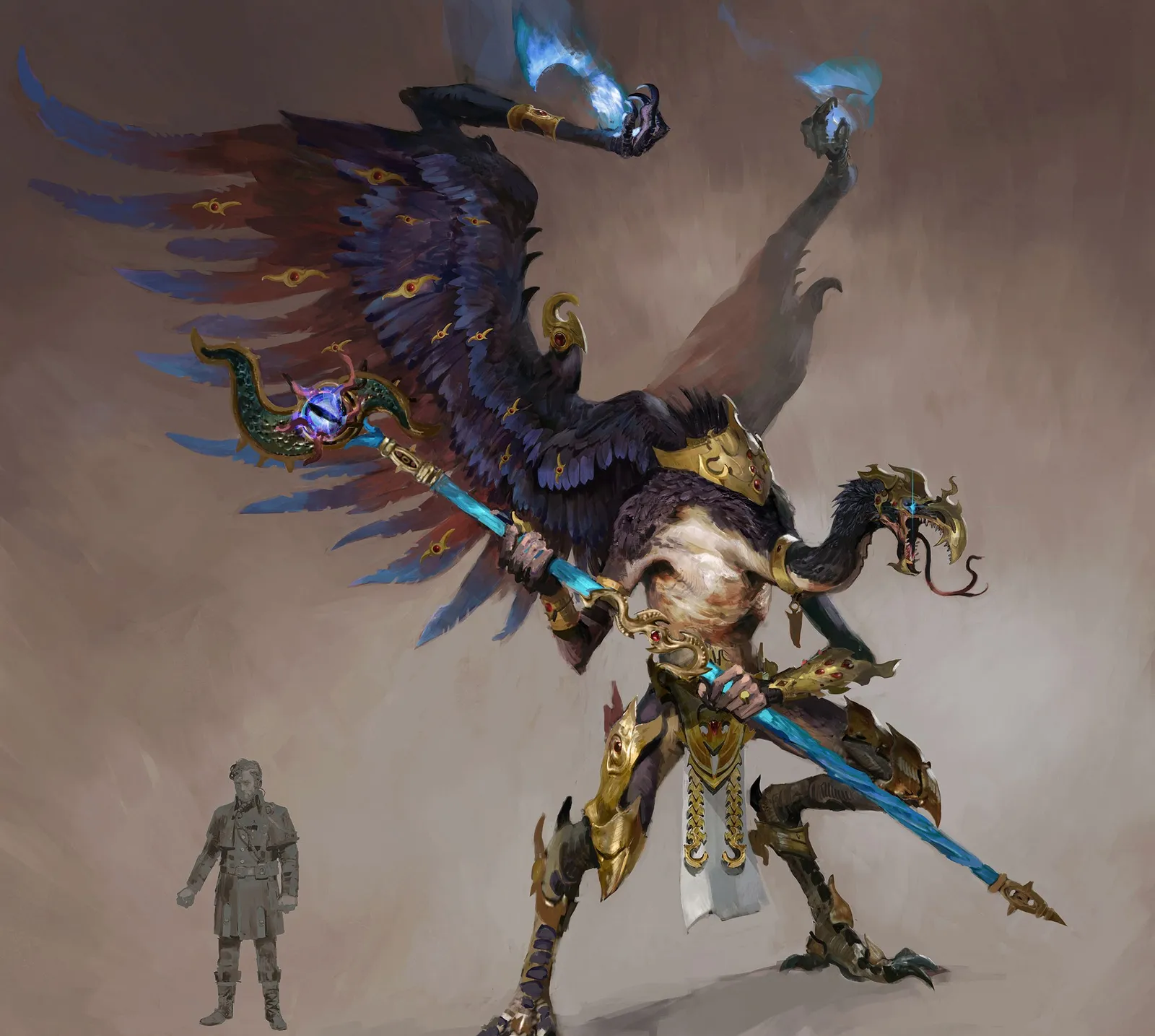
Tzeentch, the Architect of Fate, embodies change, ambition, sorcery and scheming. His daemons are bright, chaotic and full of magic. Pink Horrors giggle as they cast warpfire; when one is destroyed, it splits into two sullen Blue Horrors, which in turn split into tiny, furious Brimstone Horrors. Flamers spit multicolored fire that changes whatever it touches. Screamers swim through the air like ray-shaped sharks, slashing at aircraft and tanks.
The Lords of Change are Tzeentch's Greater Daemons: towering, bird-headed sorcerers whose every word is a lie that serves a deeper truth. The most famous is Kairos Fateweaver, the two-headed oracle; one head sees the past and the other the future. Tzeentch's servants also include the Changeling, a shape-shifting trickster, and the Blue Scribes, a pair of daemons who copy every spell they find. Our Tzeentch guide covers the Changer of Ways in depth.
Daemons of Slaanesh
Slaanesh, the Dark Prince, is the youngest of the four, born from the decadence of the ancient Aeldari empire. Slaanesh embodies excess, pride and the pursuit of sensation, and its daemons are terribly beautiful and terribly fast. Daemonettes are lithe, crab-clawed hunters who move with an unnatural grace. Seekers ride swift, long-tongued Steeds of Slaanesh, while Fiends are scorpion-tailed beasts whose musk dulls the mind.
The Keepers of Secrets, the Greater Daemons of Slaanesh, are multi-armed giants who combine seductive charm with devastating speed. Notable among them is Shalaxi Helbane, the Monarch of the Hunt, a peerless huntress of mighty champions. Slaanesh's obsession with the Aeldari, and with consuming their souls, is told in our Slaanesh guide.
Daemon Princes and Be'lakor, the Dark Master
Not all daemons were born in the Warp. A mortal champion who earns enough favor can be elevated to daemonhood and reborn as a Daemon Prince: an immortal being of the Warp who still retains its memories and ambitions. Several of the traitor Primarchs, including Angron of the World Eaters, have walked this path.
The first and most infamous Daemon Prince is Be'lakor, the Dark Master. Once a mortal, he was raised to daemonhood with the favor of all four gods, but in the most widely told version of his legend (shared with the Warhammer fantasy setting), his ambition was so great that the gods cursed him: he would forever herald the rise of other champions rather than rule himself. In the 41st and 42nd millennia, Be'lakor is a shadowy schemer who gathers armies of the betrayed and the damned in pursuit of his own power, defying the very gods who made him.
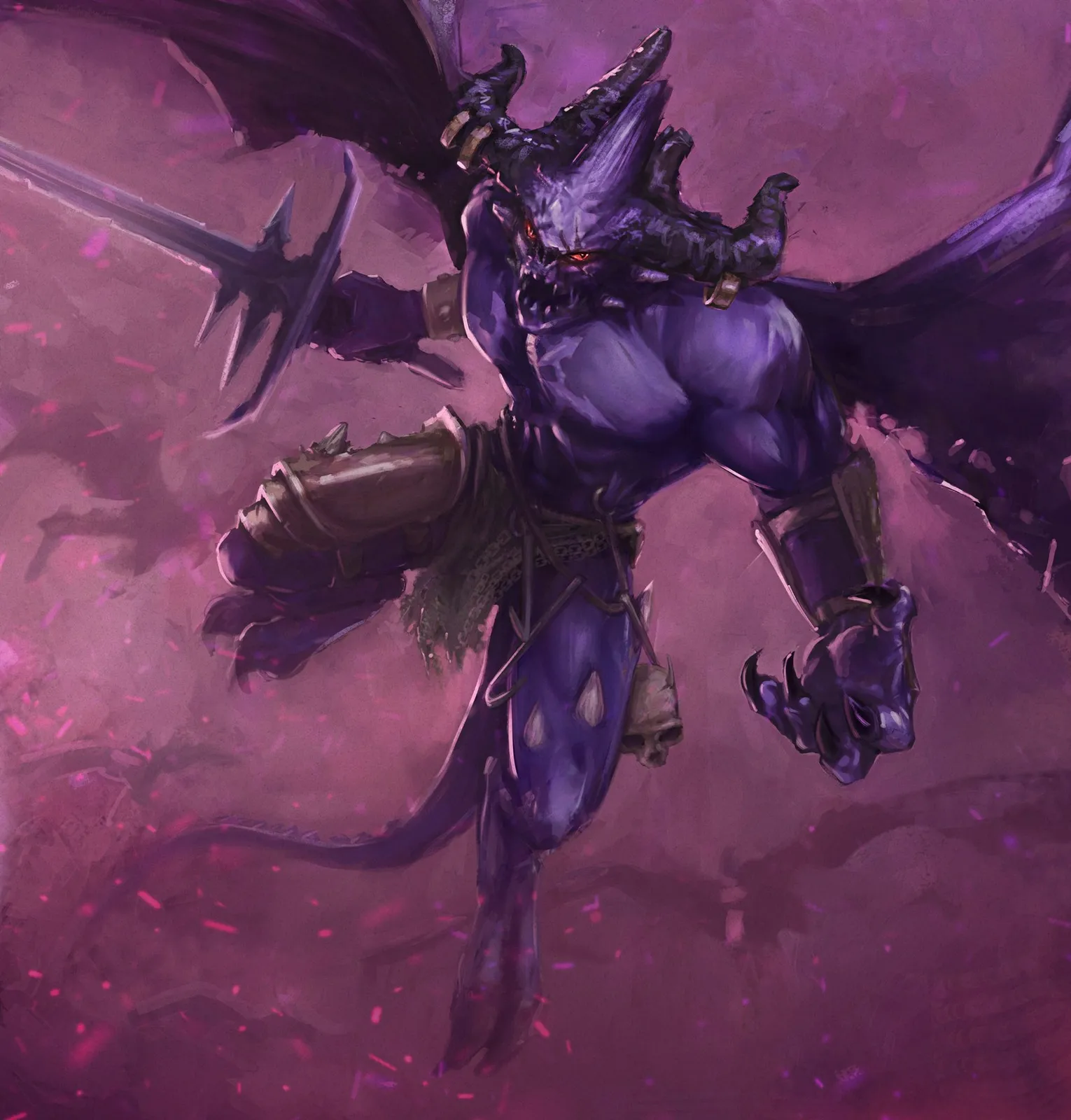
Daemonic armies also field Soul Grinders, colossal daemon engines that combine a daemon's essence with a cannon-armed metal body, and Heralds, lesser daemons favored by their gods who lead daemonic hosts in battle.
Daemonic Incursions: How Daemons Enter Reality
Daemons cannot simply walk into the material world. They need a breach: a place where the Warp and reality overlap. The largest are permanent rifts like the Eye of Terror and the Maelstrom, where daemon worlds exist half in and half out of reality. Smaller incursions can be triggered by Warp storms, by dark rituals performed by cultists, by an unshielded psyker whose mind becomes a doorway, or by the sheer weight of suffering on a world at war.
The Great Rift transformed this threat. The vast tear in reality that opened after the fall of Cadia flooded half the galaxy with Warp energy, and in the current era daemonic incursions are far more frequent than at any point since the Horus Heresy. Entire sectors have become daemon worlds, and the line between the mortal and the immaterial has never been thinner.
Daemons often fight alongside mortal servants. Chaos Space Marines summon them through sorcery and sacrifice, while Possessed warriors host them in their own bodies. Against them, the Imperium deploys its most specialized weapons: the daemon-hunting Grey Knights, the Ordo Malleus inquisitors among the Imperial Agents, and the faith-fueled Sisters of Battle. Even so, the Imperium's answer to a large incursion is sometimes simply to destroy the planet.
How Chaos Daemons Play on the Tabletop
On the tabletop, Chaos Daemons are an army of monsters that appear from the Warp. Their identity revolves around the four gods: you can build a force devoted to a single god, with a clear and focused play style, or mix all four to cover each other's weaknesses. Khorne's daemons are fast and brutal in melee, Nurgle's are slow and nearly impossible to remove, Tzeentch's bring sorcery and ranged fire, and Slaanesh's are lightning-quick and precise.
The army's signature traits are flexible deployment, as daemons tear their way into battle wherever reality is weak, and spectacular Greater Daemons that act as centerpiece models. Daemons are strongest when supported by their own kind and near the presence of their gods; away from that support, they can be fragile. The range also gives painters four armies' worth of aesthetics in one, from Khorne's brass and crimson to the pastel and pink tones of Slaanesh.
Chaos Daemons FAQ
Are daemons real in Warhammer 40K?
Yes. Unlike many fantasy settings, daemons in Warhammer 40,000 are a concrete, physical threat. They are born from the emotions of mortals pooling in the Warp and can manifest in reality whenever the barrier between the two is weakened.
Can Chaos Daemons be killed?
Not permanently, in most cases. Destroying a daemon's body in the material world banishes it back to the Warp, where it is typically unable to return for a thousand years. Only rare weapons, rituals and immensely powerful psykers can destroy a daemon's essence for good.
What is the difference between Chaos Daemons and Chaos Space Marines?
Chaos Space Marines are mortal (if transhuman) warriors who worship or bargain with the Chaos Gods. Chaos Daemons are the gods' direct creations, beings of pure Warp energy. The two often fight together, and a Chaos Space Marine who earns enough favor may even become a Daemon Prince.
What are the four types of Greater Daemons?
Each god has its own: the Bloodthirster of Khorne, the Great Unclean One of Nurgle, the Lord of Change of Tzeentch and the Keeper of Secrets of Slaanesh. They are the generals of daemonic legions and among the most powerful beings that regularly appear in the setting.
Who is Be'lakor?
Be'lakor is the first Daemon Prince, once a mortal favored by all four gods. Punished for his ambition, he is cursed to herald the rise of other champions rather than rule himself, and he works in the shadows of the 41st and 42nd millennia to break that curse.
Do daemons fight each other?
Constantly. The four gods are rivals locked in an eternal struggle for dominance, and their daemon legions clash in the Warp as often as they invade reality. In the material world they sometimes unite, but such alliances never last.
Continue Exploring
- Warhammer 40K Factions: Complete Guide to All 29 Armies — every army, its lore and how it plays
- Chaos Space Marines — the Traitor Legions who summon daemons and fight beside them.
- Chaos Knights — fallen Knight houses whose war machines whisper with daemonic voices.
- Grey Knights — the secret Chapter created to hunt and banish daemons.
- Warhammer Chaos Gods — Khorne, Nurgle, Tzeentch and Slaanesh, the powers behind every daemon.
For the rest of the setting, browse every guide in the Warhammer 40K lore hub. To track a daemonic incursion in your own campaign, Anima is free and runs in your browser with no account: a wiki, a timeline, and campaigns with a live DM screen.
Keep reading
More from this topic
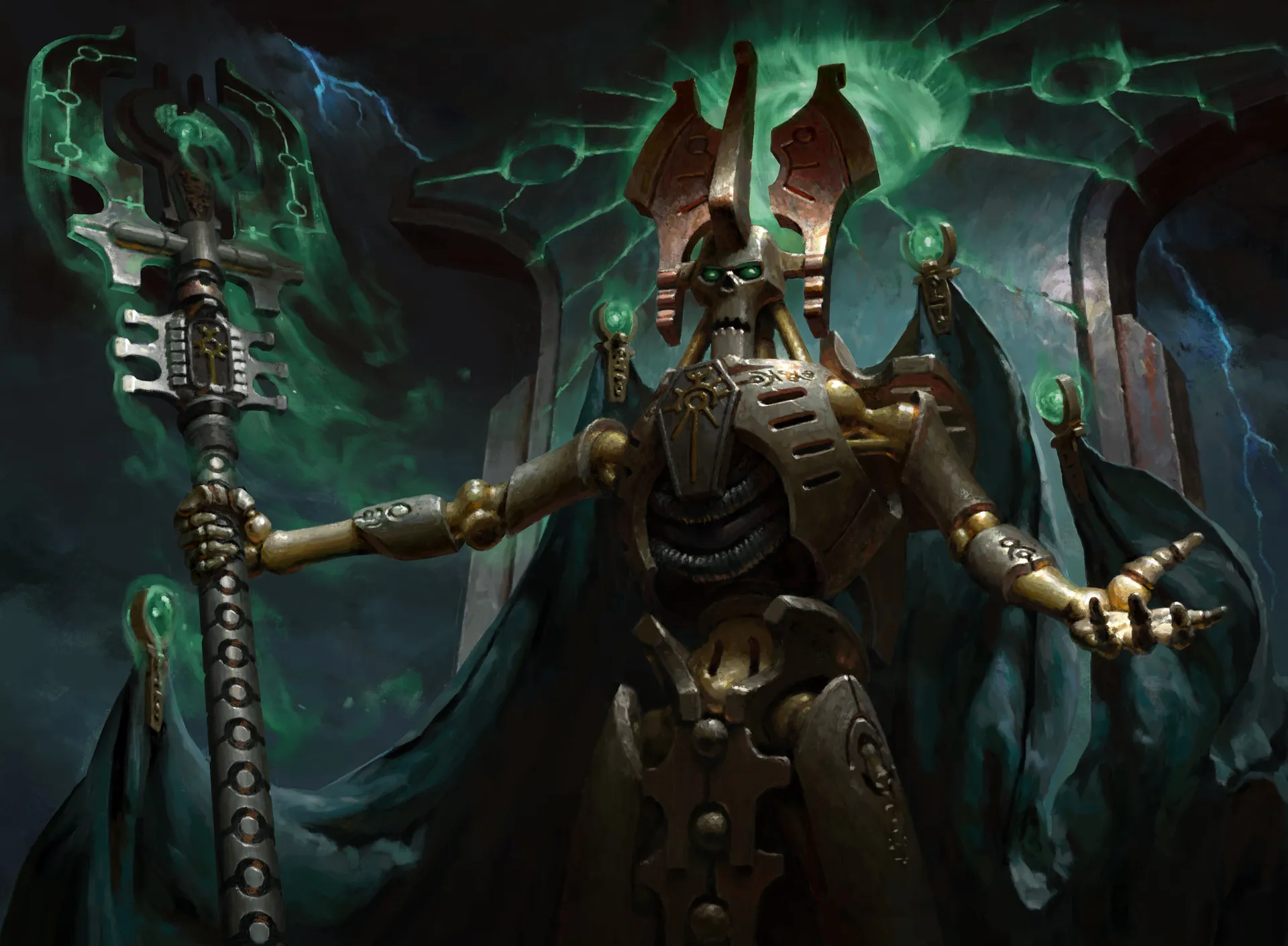
Necrons: Warhammer 40K Lore Guide
The complete lore of the Necrons — the doomed Necrontyr, the C’tan star-gods, biotransference, the War in Heaven, and the deathless dynasties now waking to reclaim the galaxy.
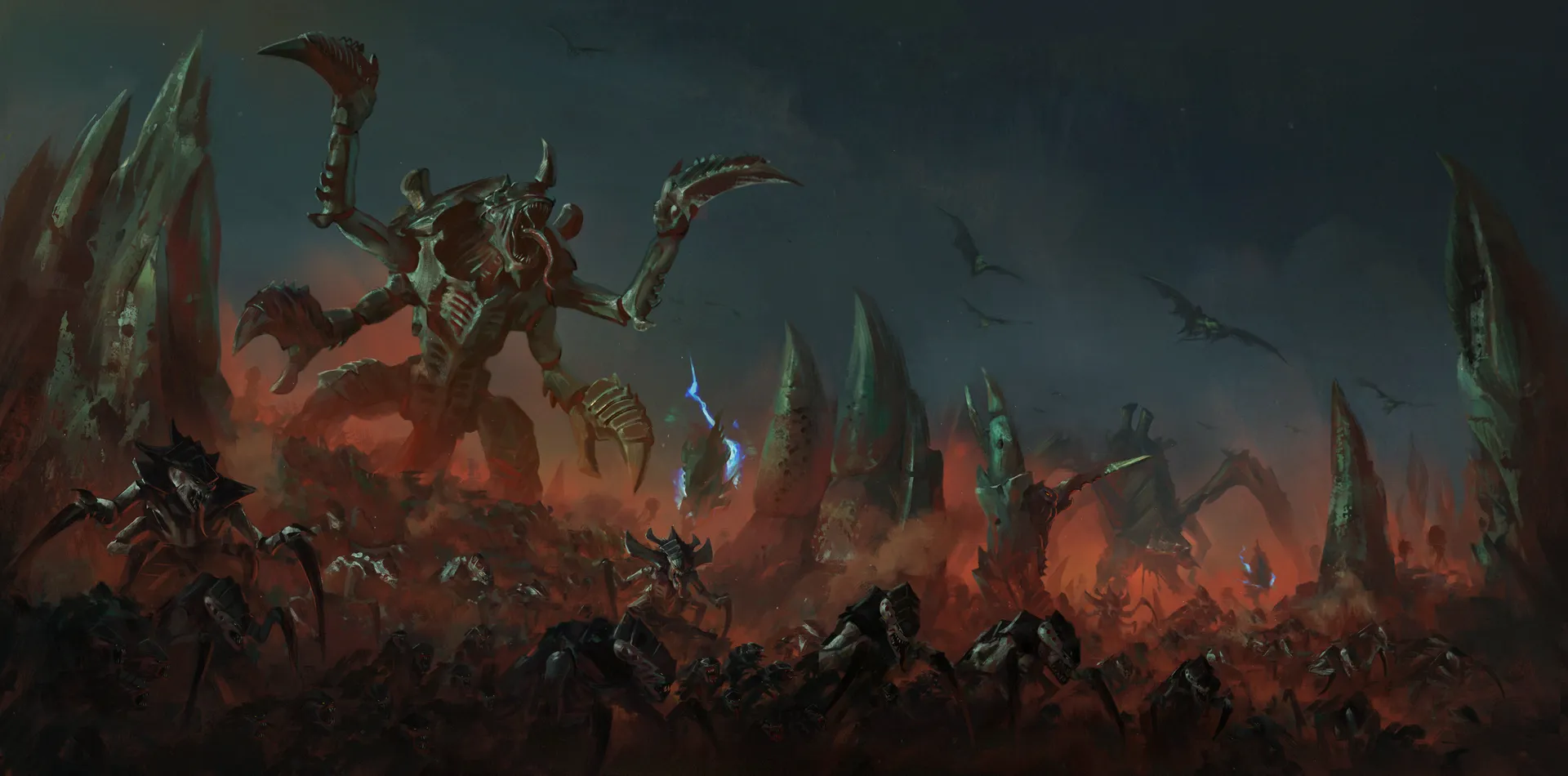
Tyranids: Warhammer 40K Lore Guide
The complete lore of the Tyranids — the Great Devourer, the Hive Mind, the Shadow in the Warp, the great Hive Fleets, Genestealer Cults, and the hunger that crossed the void between galaxies.
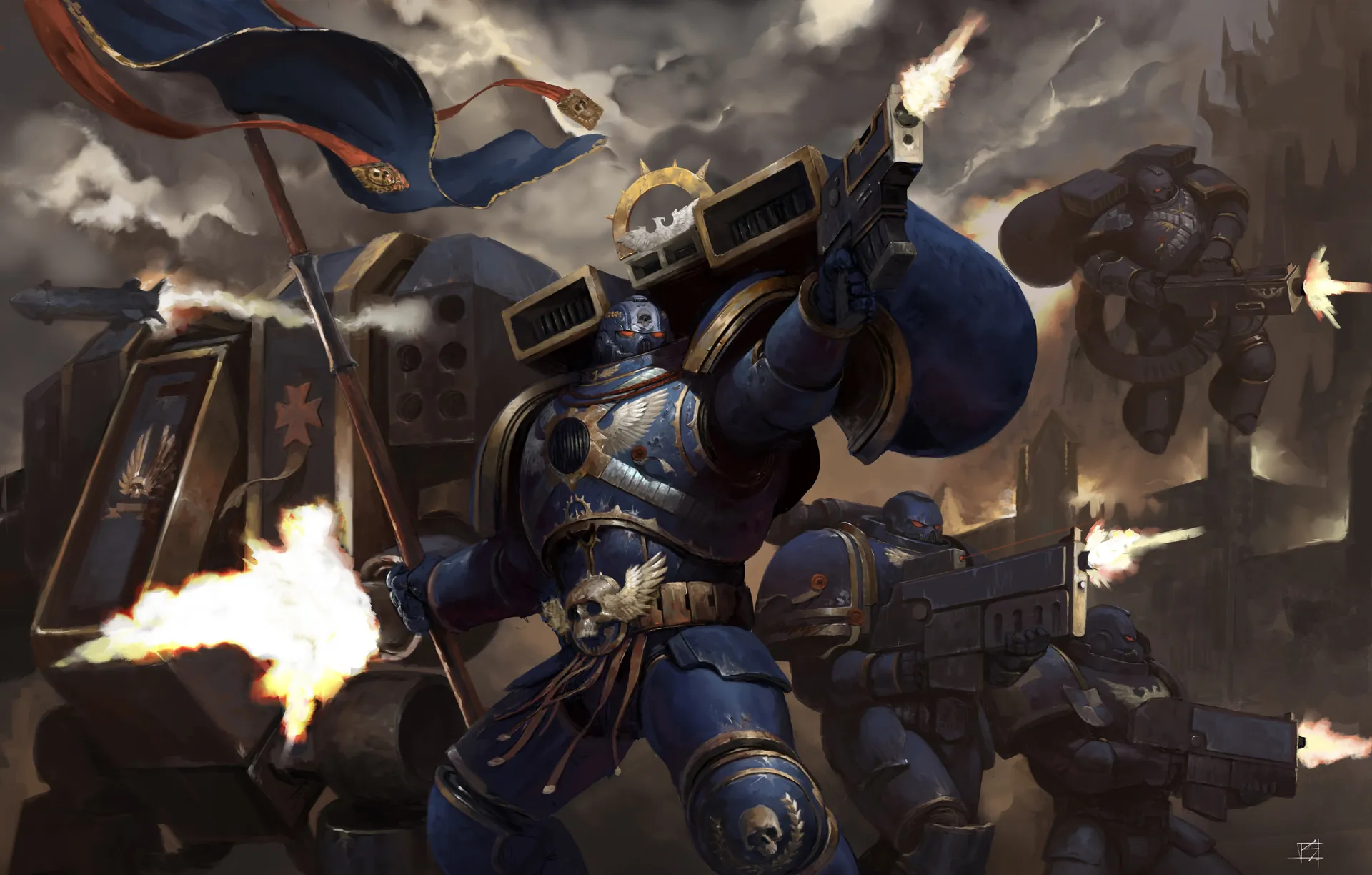
Space Marines (Adeptus Astartes): Warhammer 40K Lore Guide
The complete lore of the Space Marines — the Primarchs, gene-seed, the Horus Heresy, the Codex Astartes and the Chapters, the Primaris and Guilliman’s return, and the cost of the Angels of Death.
Start building your world today
A linked wiki, a timeline and a live DM screen — free, in your browser, no account needed.