Imperial Agents (the Inquisition & Assassins): Warhammer 40K Lore Guide
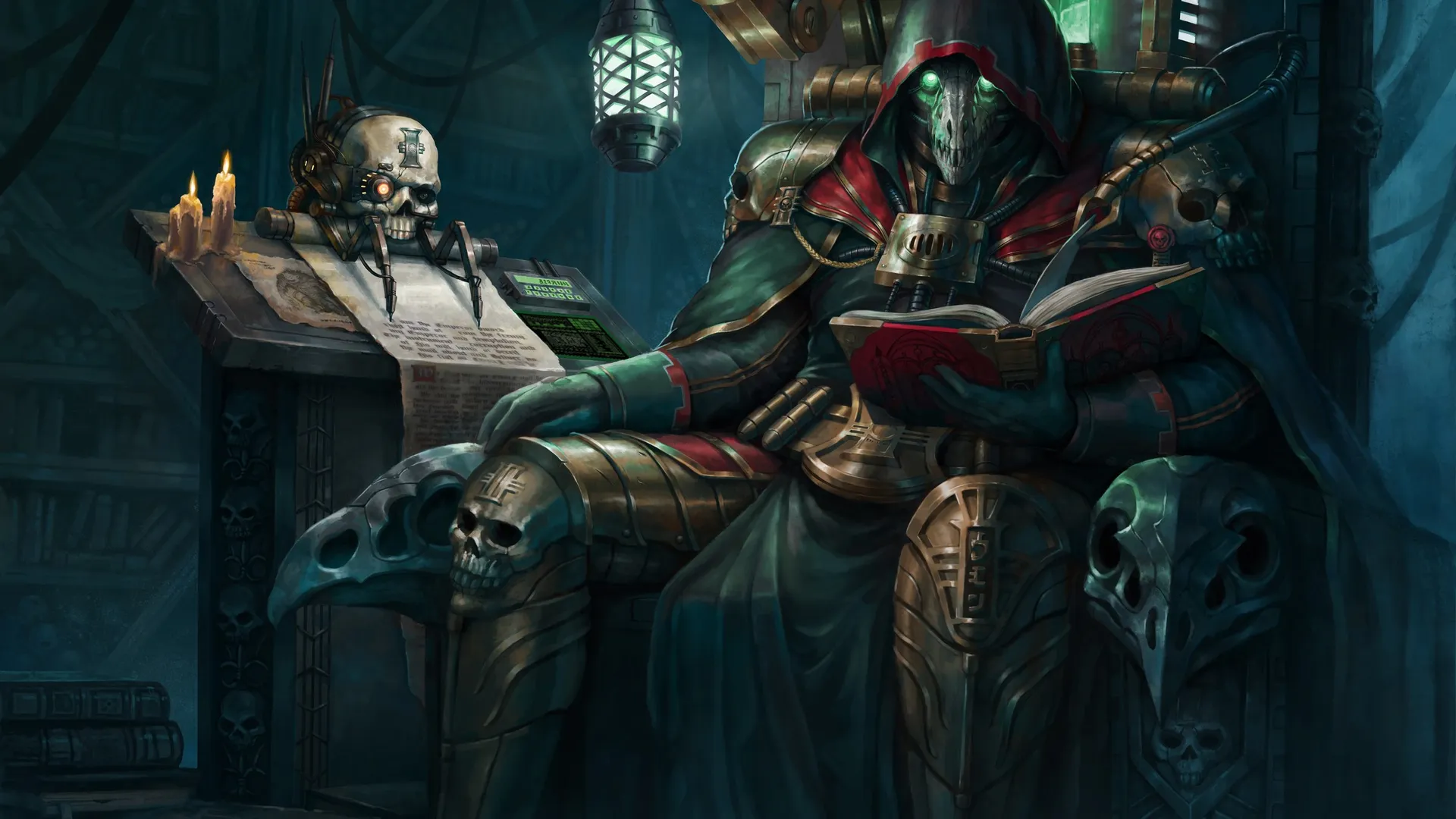
Not every war in the Imperium is fought with tank columns and Space Marine strike forces. Some are fought in the shadows: an interrogation in a hive-city cellar, a sniper's single shot across three kilometers, a warrant of trade signed by the Emperor himself, an enforcer kicking down the door of a rebel governor. These are the Imperial Agents, the Imperium's specialists. They range from the dreaded Inquisition and its Ordos to the assassins of the Officio Assassinorum, the Adeptus Arbites who enforce Imperial law, the Rogue Traders who roam beyond its borders, and the boarding crews of the Imperial Navy.
Among the Warhammer 40K factions, Imperial Agents are less a single army than a toolbox of the setting's most narrative-rich characters. They are the faction behind most Warhammer 40,000 roleplaying games, many of Black Library's best novels and some of the darkest moral questions in the setting. This guide covers each of these organizations, their famous figures and their methods, and how they work on the tabletop.
Imperial Agents at a Glance
| Aspect | Detail |
|---|---|
| Main organizations | The Inquisition, the Officio Assassinorum, the Adeptus Arbites, Rogue Traders, Imperial Navy breachers |
| Inquisition's Ordos | Ordo Malleus (daemons), Ordo Hereticus (heresy and witches), Ordo Xenos (aliens) |
| Chambers Militant | Grey Knights (Malleus), Adepta Sororitas (Hereticus), Deathwatch (Xenos) |
| Assassin Temples | Vindicare, Callidus, Eversor and Culexus, among others |
| Authority | Inquisitors answer to no one but the Emperor and can commandeer almost any Imperial asset |
| Famous figures | Gregor Eisenhorn, Gideon Ravenor, Katarinya Greyfax, Lord Inquisitor Coteaz |
| Defining trait | Secrecy, absolute authority and the willingness to do anything for the Imperium's survival |
The Holy Orders of the Emperor's Inquisition
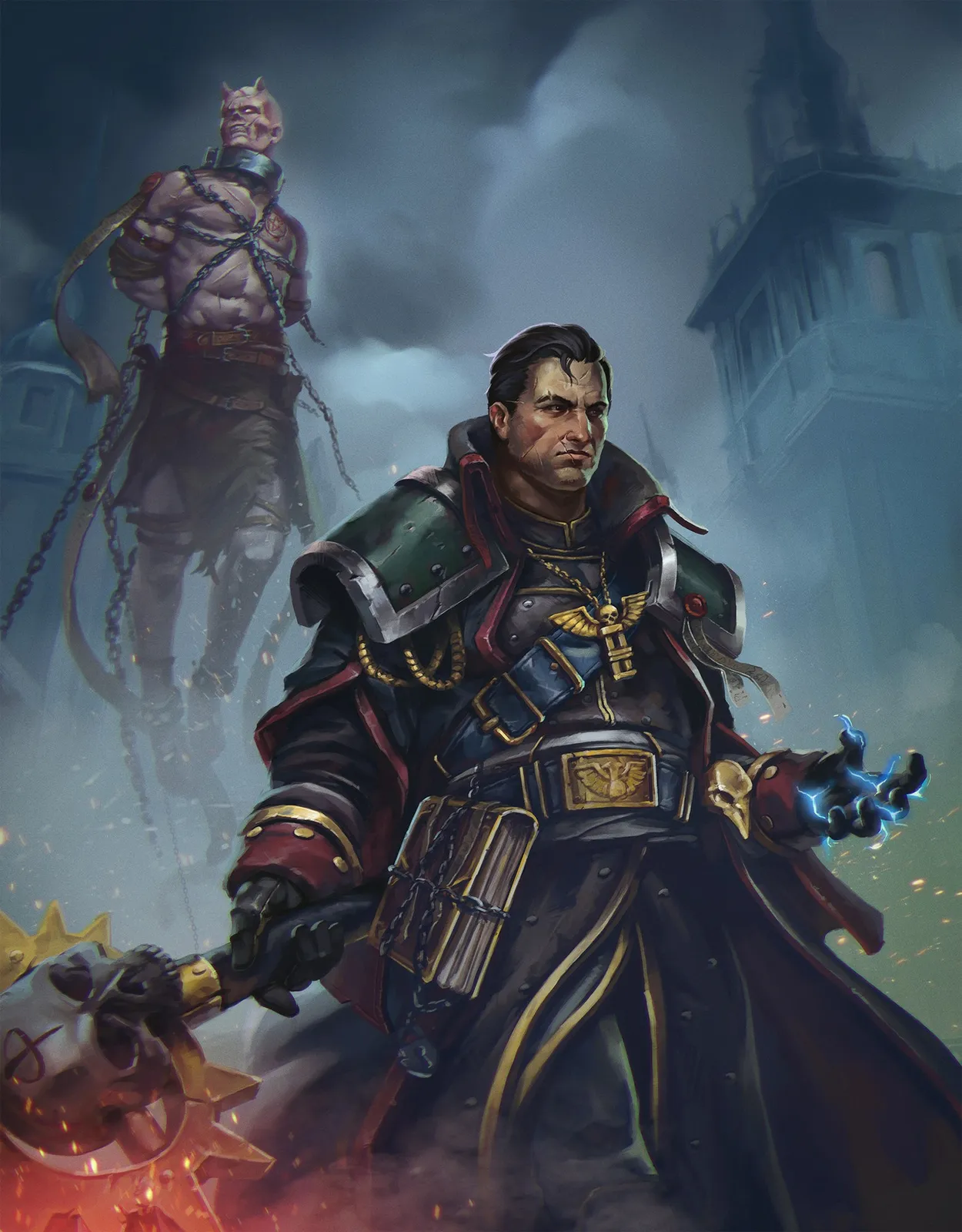
The Inquisition is the most feared institution in the Imperium. Its origins lie in the aftermath of the Horus Heresy, and Black Library fiction ties its roots to the agents gathered by Malcador the Sigillite. Its purpose is to protect humanity from every threat — external, internal, material and supernatural — and its Inquisitors carry nearly unlimited authority to do so.
An Inquisitor carries the Inquisitorial rosette, a symbol of office that allows its bearer to command planetary governors, requisition Guard regiments, summon Space Marine Chapters and, in the most extreme cases, order Exterminatus, the destruction of all life on a world. Inquisitors have no superiors in the conventional sense. They answer, in theory, only to the Emperor, and in practice to their own consciences and to the scrutiny of their peers. They may operate alone or gather in Conclaves, and a council of senior Inquisitors may judge one of their own.
Each Inquisitor builds a personal retinue: acolytes and interrogators training to become Inquisitors themselves, specialists, bodyguards and stranger allies. Retinues can include Death Cult assassins, crusaders, mystics, savants, servo-skulls, Jokaero weaponsmiths and, for the most radical Inquisitors, bound daemonhosts.
The Three Great Ordos
The Inquisition is divided into Ordos, each focused on a category of threat. The three greatest are the Ordos Majoris, and each has a "chamber militant": an armed force it can call upon.
Ordo Malleus — the Daemon Hunters
The Ordo Malleus hunts daemons and the Warp-born threats they bring. It is the most secretive of the Ordos, because the Imperium's official position is that daemons are a matter for priests and theologians, and most citizens are never told the truth. Its chamber militant is the Grey Knights, a secret Chapter of psyker Space Marines created specifically to fight the daemons of Chaos. Its most famous modern figure is Lord Inquisitor Coteaz, a master of informants and intrigue.
Ordo Hereticus — the Witch Hunters
The Ordo Hereticus watches humanity itself: heretics, cultists, mutants, rogue psykers and corruption within the Imperial institutions, including the Ecclesiarchy. Its chamber militant is the Orders Militant of the Adepta Sororitas. In the current era, Inquisitor Katarinya Greyfax is its best-known agent, a zealous witch hunter who played a key part in the events around Cadia's fall and Roboute Guilliman's return.
Ordo Xenos — the Alien Hunters
The Ordo Xenos studies and combats alien species, from Tyranid hive fleets to Aeldari schemes and Necron awakenings. Its chamber militant is the Deathwatch, elite xenos hunters drawn from many Space Marine Chapters. The Ordo Xenos also takes a close interest in the Genestealer Cults, which hide inside human society.
Beyond the three great Ordos, the lore describes numerous minor Ordos dedicated to narrower concerns. Their names and missions vary from source to source.
Puritans and Radicals
The Inquisition is not united in philosophy. Inquisitors sort broadly into Puritans, who believe the Imperium's enemies must be destroyed by orthodox means, and Radicals, who are willing to use any tool, including forbidden xenos technology or Chaos itself, to protect humanity.
- Amalathians (Puritan) seek to preserve the stability and status quo of the Imperium.
- Monodominants (Puritan) believe humanity must purge every alien, mutant and psyker.
- Xanthites (Radical) believe the power of Chaos can be studied and turned against it.
- Recongregators (Radical) want to reform a stagnant Imperium, even by toppling those in power.
- Istvaanians (Radical) believe that conflict drives humanity to grow stronger, and may even provoke wars to that end.
These factions turn the Inquisition into a source of intrigue as much as a weapon. Puritans hunt Radicals, Radicals scheme against Puritans, and an Inquisitor can be a hero, a villain or both. The most famous example is Gregor Eisenhorn, the hero of Dan Abnett's Black Library novels. He begins as a dutiful Puritan and, through decades of hard choices, ends up working with the daemonhost Cherubael. His pupil, Gideon Ravenor, is a crippled but immensely powerful psyker who works from inside an armored life-support chair.
The Officio Assassinorum
When a problem can be solved with one death, the Imperium calls the Officio Assassinorum. Its leader, the Grand Master of Assassins, traditionally sits among the High Lords of Terra, and the Officio is divided into Temples, each with its own methods. The four best known are:
- Vindicare — master snipers armed with the Exitus rifle, able to kill a target at extreme range with a single shot.
- Callidus — infiltrators who use the drug polymorphine to reshape their bodies and assume any identity, before striking with a neural shredder and a phase sword.
- Eversor — combat-drugged berserkers sent to slaughter everyone in a target's vicinity. Their bodies are rigged to explode on death.
- Culexus — soulless "pariahs" whose very presence unnerves and disrupts psykers, used to hunt witches and psychic threats.
Other temples exist, such as Venenum (poisoners) and Vanus (information warfare). Assassins usually work alone, but for the gravest threats the Officio may deploy an Execution Force combining several temples. Because an assassin can kill a planetary governor, a traitor general or a Chaos lord, their use is tightly controlled. Deploying one generally requires the approval of the High Lords.
The Adeptus Arbites
The Adeptus Arbites are the Imperium's enforcers of Imperial law, the Lex Imperialis. They are not local police: everyday crime is the business of planetary authorities. The Arbites ensure that worlds pay their tithes, that governors remain loyal and that the laws of the Imperium itself are upheld. They operate from heavily fortified precinct-fortresses on worlds across the Imperium, and their officers wear carapace armor and carry shotguns, shock mauls and riot shields, often accompanied by cyber-mastiffs.
When a planet slides into rebellion, the Arbites are often the first Imperial force to fight. When the Inquisition needs to arrest a governor, they are frequently the ones who make the arrest. Their grim, judicial style has made them popular in the Kill Team skirmish game and in roleplaying campaigns.
Rogue Traders and the Imperial Navy
Rogue Traders hold Warrants of Trade, documents that grant them the right to explore, trade and conquer beyond the Imperium's borders. Some warrants date back to the Great Crusade. Rogue Trader dynasties are among the most powerful individuals in the Imperium, commanding fleets, private armies and wealth beyond measure, and they often deal with xenos in ways no orthodox servant could. The faction carries a special place in Warhammer history: the first edition of Warhammer 40,000 (1987) was titled Rogue Trader. More recently Owlcat's Warhammer 40,000: Rogue Trader video game brought the role back into the spotlight. On the tabletop, the Rogue Trader Elucia Vhane and her crew represent this world.
The Imperial Navy carries every Imperial army between the stars. Its breachers are the armsmen and boarding teams who fight in the corridors of starships and space hulks, wearing heavy void armor, carrying shotguns and boarding shields, and supported by gheistskull drones. They introduced the Navy's ground-level war to the Kill Team game.
The Sisters of Silence
Though they usually fight alongside the Adeptus Custodes, the Sisters of Silence belong to the same world of Imperial specialists. They are pariahs, women born without a presence in the Warp, who take a vow of silence and communicate through a battle-sign language. Their duties include hunting rogue psykers and escorting the Black Ships that gather the Imperium's psykers for Terra. Their null aura makes them terrifying to psykers and daemons. In the Horus Heresy era they fought alongside the Custodes as the Talons of the Emperor, and the two orders remain closely linked.
Imperial Agents in Roleplaying Games
No part of Warhammer 40,000 has been explored more often at the gaming table than the Imperium's agents. Dark Heresy, first published in 2008, casts players as acolytes in an Inquisitor's service: low-ranking investigators who chase cults, heretics and forbidden secrets through hive cities, often without knowing the full picture. Its sister games Rogue Trader and Deathwatch put players aboard a Rogue Trader's flagship or in the armor of a Deathwatch kill team. Later games such as Wrath & Glory and Imperium Maledictum continued the tradition.
The appeal is easy to see. An Inquisitor's retinue is a ready-made adventuring party: a mix of specialists with a powerful patron, a mission and a license to go almost anywhere. Investigations, betrayals, Puritan and Radical politics, and the constant risk that the acolytes themselves are expendable make for campaigns that feel unmistakably like the 41st Millennium. The same is true of a Rogue Trader expedition, which combines exploration, diplomacy with xenos and the politics of a noble dynasty.
How Imperial Agents Play on the Tabletop
On the tabletop, Imperial Agents is a toolbox of specialists. Most players add a few agents to another Imperium army — an Inquisitor to lead Sisters of Battle, a Vindicare to snipe an enemy warlord, an Arbites squad to hold an objective. The faction can also be played on its own, building a force around an Ordo and drawing on the chambers militant, Guardsmen and specialists the Inquisition can commandeer.
As a standalone army it is more a collection of characters than a unified force, and it rewards players who enjoy narrative play and odd combinations. Its biggest strength is flavor: an Inquisitor leading a ragtag retinue, an Execution Force hunting a single target, or a Rogue Trader expedition can become a campaign in its own right. If you want to run that kind of investigation as a game master, our guide to mystery adventure design covers how to build clues players can actually follow.
Imperial Agents FAQ
What are the three Ordos of the Inquisition?
The three great Ordos are the Ordo Malleus, which hunts daemons; the Ordo Hereticus, which hunts heretics, mutants and witches; and the Ordo Xenos, which hunts aliens. Each has a chamber militant: the Grey Knights, the Adepta Sororitas and the Deathwatch respectively.
Can an Inquisitor command Space Marines?
An Inquisitor's authority lets them call on almost any Imperial force, including Space Marine Chapters. In practice, Space Marines are proud and semi-autonomous, and Chapter Masters do not always comply willingly. The Grey Knights and Deathwatch, as chambers militant, are the Astartes most closely tied to the Inquisition.
Who are the most famous Inquisitors?
The best known are Gregor Eisenhorn and Gideon Ravenor from Dan Abnett's novels, Lord Inquisitor Coteaz of the Ordo Malleus, and Katarinya Greyfax of the Ordo Hereticus. Older editions also featured Inquisitor Lord Fyodor Karamazov of the Ordo Hereticus, a witch hunter who strides into battle on an armored throne.
What are the Assassin Temples?
The Officio Assassinorum is divided into temples, each specializing in a method of killing. The four best known on the tabletop are Vindicare (snipers), Callidus (shapeshifting infiltrators), Eversor (drug-fueled berserkers) and Culexus (psyker-hunting pariahs). The lore also mentions others, including Venenum and Vanus.
What is Exterminatus?
Exterminatus is the destruction of all life on a planet, typically by virus bombs, cyclonic torpedoes or other weapons of mass destruction. It is the Imperium's last resort against a world lost to daemons, xenos or heresy, and an Inquisitor is one of the few authorities who can order it.
Can I play an Imperial Agents army?
Yes. Imperial Agents can be fielded as a standalone army or, more commonly, as allies added to other Imperium armies. They are especially popular with narrative players and with fans of Inquisitor-led roleplaying games such as Dark Heresy.
Continue Exploring
- Warhammer 40K Factions: Complete Guide to All 29 Armies — every army, its lore and how it plays
- The Grey Knights — the daemon-hunting chamber militant of the Ordo Malleus.
- The Deathwatch — the xenos-hunting chamber militant of the Ordo Xenos.
- The Adepta Sororitas — the Sisters of Battle who answer the Ordo Hereticus.
- The Adeptus Custodes — the Emperor's guard, who fight beside the Sisters of Silence.
For every other army and setting deep-dive, browse the Warhammer 40K lore hub. To run your own Inquisitorial investigation and track its suspects, clues and acolytes, Anima is free and runs in your browser with no account: a wiki, a timeline, and campaigns with a live DM screen.
Keep reading
More from this topic
Necrons: Warhammer 40K Lore Guide
The complete lore of the Necrons — the doomed Necrontyr, the C’tan star-gods, biotransference, the War in Heaven, and the deathless dynasties now waking to reclaim the galaxy.
Tyranids: Warhammer 40K Lore Guide
The complete lore of the Tyranids — the Great Devourer, the Hive Mind, the Shadow in the Warp, the great Hive Fleets, Genestealer Cults, and the hunger that crossed the void between galaxies.
Space Marines (Adeptus Astartes): Warhammer 40K Lore Guide
The complete lore of the Space Marines — the Primarchs, gene-seed, the Horus Heresy, the Codex Astartes and the Chapters, the Primaris and Guilliman’s return, and the cost of the Angels of Death.
Start building your world today
A linked wiki, a timeline and a live DM screen — free, in your browser, no account needed.