Chaos Knights: Warhammer 40K Lore Guide
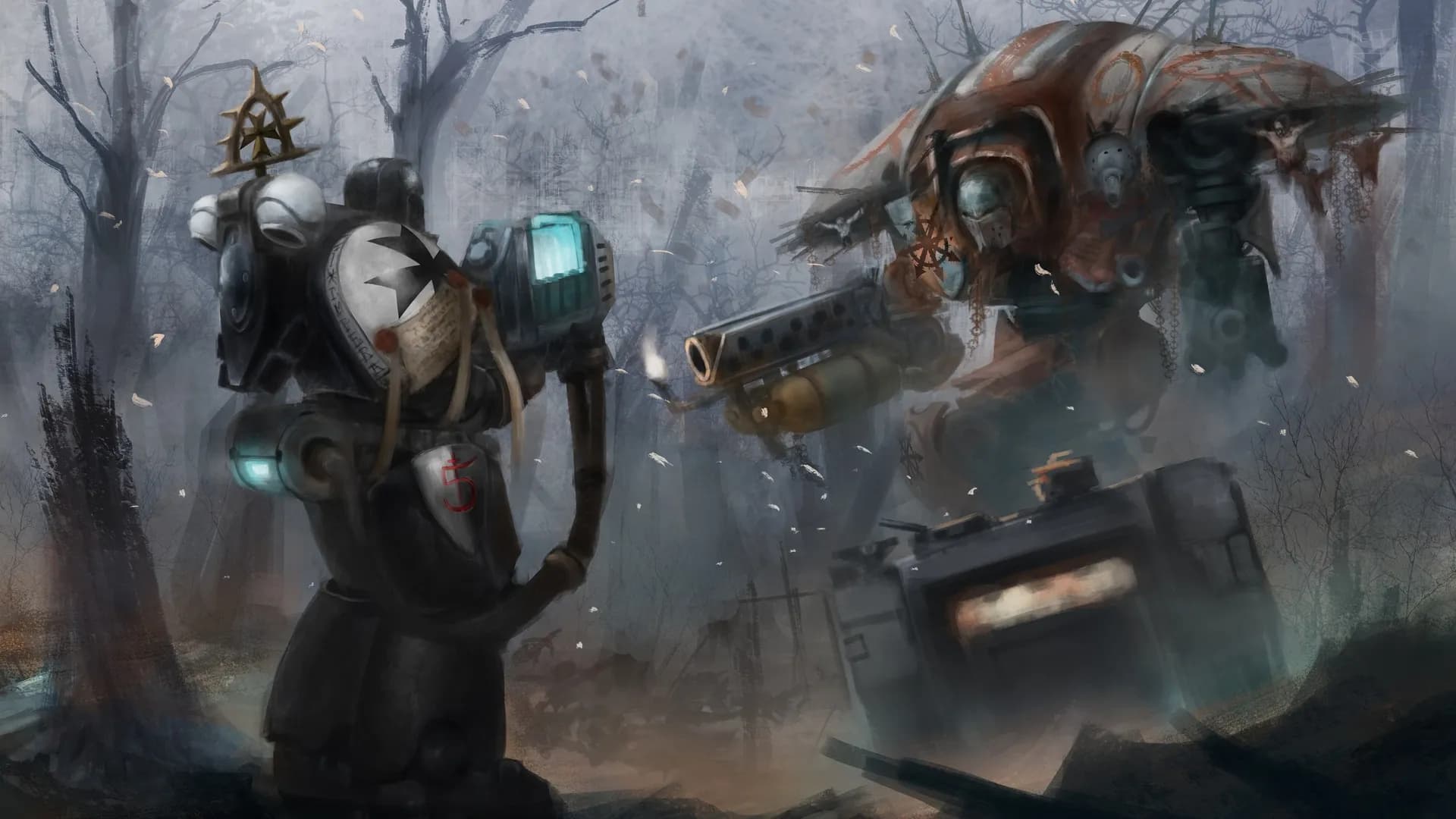
A Knight is a walking fortress: a towering war machine taller than a hab-block, armed with cannons that can level a city street and blades that can split a battle tank in two. For most of the Imperium's history, such machines have been the pride of noble houses sworn to defend humanity. But nobility can rot. Some Knight houses betrayed the Emperor during the Horus Heresy. Others fell in the ten thousand years since, one ambitious lord or one whispering voice at a time. Their armor is now hung with chains and trophies, their weapons are wreathed in Warp fire, and their pilots have become tyrants who rule through terror.
These are the Chaos Knights. They march beside the Traitor Legions, crush rebellions in the name of their dark masters and stalk the ruins of worlds they once protected. Among the Warhammer 40K factions, they are the villainous twin of the Imperial Knights: the same ancient engines, the same feudal traditions, twisted into instruments of fear.
This guide covers how Knight houses fall, the difference between Dreadblades and traitor households, the War Dogs and the great Knights that lead them, their bond with the Dark Gods and the Traitor Legions, and how the army plays on the tabletop.
Chaos Knights at a Glance
| Aspect | Detail |
|---|---|
| Also Known As | Traitor Knights, Knights of the Dark Gods |
| Origin | Imperial Knight houses and lone Knights who betrayed the Imperium, from the Horus Heresy to the present day |
| Organization | Traitorous households led by Tyrants, and lone fallen Knights called Dreadblades |
| Main War Machines | War Dogs, Knight Despoilers, Rampagers, Desecrators, Abominants and the massive Knight Tyrant |
| Allegiance | The Chaos Gods, from cynical tyranny to full daemonic pacts |
| Allies | Chaos Space Marines, the Dark Mechanicum, traitor Titan Legions and daemons |
| Defining Trait | Terror: they rule and fight through dread |
| Greatest Enemy | The loyal Imperial Knight houses they once called kin |
The Knight Worlds and the Throne Mechanicum
To understand how a Knight falls, you have to understand what it is. Knights date back to the Dark Age of Technology, when human colonists settling hostile worlds used these walking machines to protect their settlements. Over the millennia, the pilots became a hereditary aristocracy, and the Knight Worlds became feudal societies ruled by noble houses. When the Imperium rediscovered them during the Great Crusade, most houses swore fealty either to the Emperor or to the Adeptus Mechanicus of Mars.
The heart of every Knight is the Throne Mechanicum, a command throne that links the pilot's mind directly to the machine. During a Ritual of Becoming, a young noble is bonded to the throne and absorbs echoes of everyone who piloted that Knight before: their memories, their instincts and their personalities. This is what gives Knights their ferocious skill and their deep sense of honor. It is also exactly what makes them vulnerable. A Throne Mechanicum carries centuries of voices, and if those voices are corrupted, or if something else learns to speak through them, the pilot can be led into darkness one whisper at a time. The loyal side of this tradition is covered in our Imperial Knights guide.
The First Betrayal: Knights in the Horus Heresy
When Horus Lupercal rebelled against the Emperor, the Knight houses were forced to choose sides. Many stayed loyal. Others did not. Some were bound by oaths to Forge Worlds that sided with the Dark Mechanicum; some resented Imperial authority; some were offered power by the Warmaster himself. The most infamous example is House Devine of the Knight World of Molech, which betrayed its world to Horus and opened the gates for his invasion.
When the Heresy ended in defeat, the traitor houses fled with the Traitor Legions into the Eye of Terror. There, cut off from the Imperium and steeped in the energies of the Warp, their machines and their pilots changed. Armor plates twisted into spikes and fanged maws, Thrones Mechanicum began to speak with new and inhuman voices, and the pilots discovered that their souls were now bargaining chips in the games of the Dark Gods.
Dreadblades and Traitor Households
Chaos Knights come in two broad forms. Dreadblades are individual Knights who have fallen alone. Some are Freeblades, wandering Knights who lost their house; some are exiles cast out for crimes; some are nobles who simply heard the voices in their Throne Mechanicum and listened. A Dreadblade often wanders the galaxy as a mercenary or a warlord, carving out a personal fiefdom of terrified vassals.
The second form is the traitorous household, where an entire Knight house has fallen together. Such households are led by a Tyrant, a pilot who rules over the house's lesser Knights and its human subjects through fear. The lore describes two main traditions:
- Iconoclast households are driven above all by ambition and cruelty. Their Knights still lean more on mortal tyranny than on daemonic power: they enslave populations, mount the corpses of enemies on their carapaces and rule their worlds as petty despots.
- Infernal households have embraced the Warp entirely. Their Knights are bound to daemons, their pilots have made pacts with the Chaos Gods, and their machines are as much living daemon engines as war machines.
The fall of a Knight house is a theme the setting returns to constantly. Every era of war produces new traitors, and since the opening of the Great Rift the pace has accelerated: worlds cut off from the Imperium, surrounded by Warp storms and abandoned by their liege lords, are fertile ground for despair and betrayal.
Life on a Fallen Knight World
A traitorous household does not simply go to war; it rules. On a fallen Knight World, the old feudal bonds survive in a darker form. The Tyrant and the household's nobles sit at the top, the bondsmen who pilot the War Dogs serve beneath them, and the population below toils as serfs, slaves and sacrificial offerings. Ancient rituals of fealty continue, but oaths are now sworn in blood, and the halls of the household's stronghold are decorated with the banners and armor of defeated enemies.
Because Knights need constant maintenance, many fallen houses bargain with the Dark Mechanicum or enslave captured tech-priests to keep their machines running. Others raid loyal worlds for parts, pilots and new vassals. A Chaos Knight household can therefore be a slow-burning threat to an entire sector: a nest of tyrants that sends raiding parties across the void, recruits renegades and waits for the moment to join a greater invasion.
The Voices in the Throne
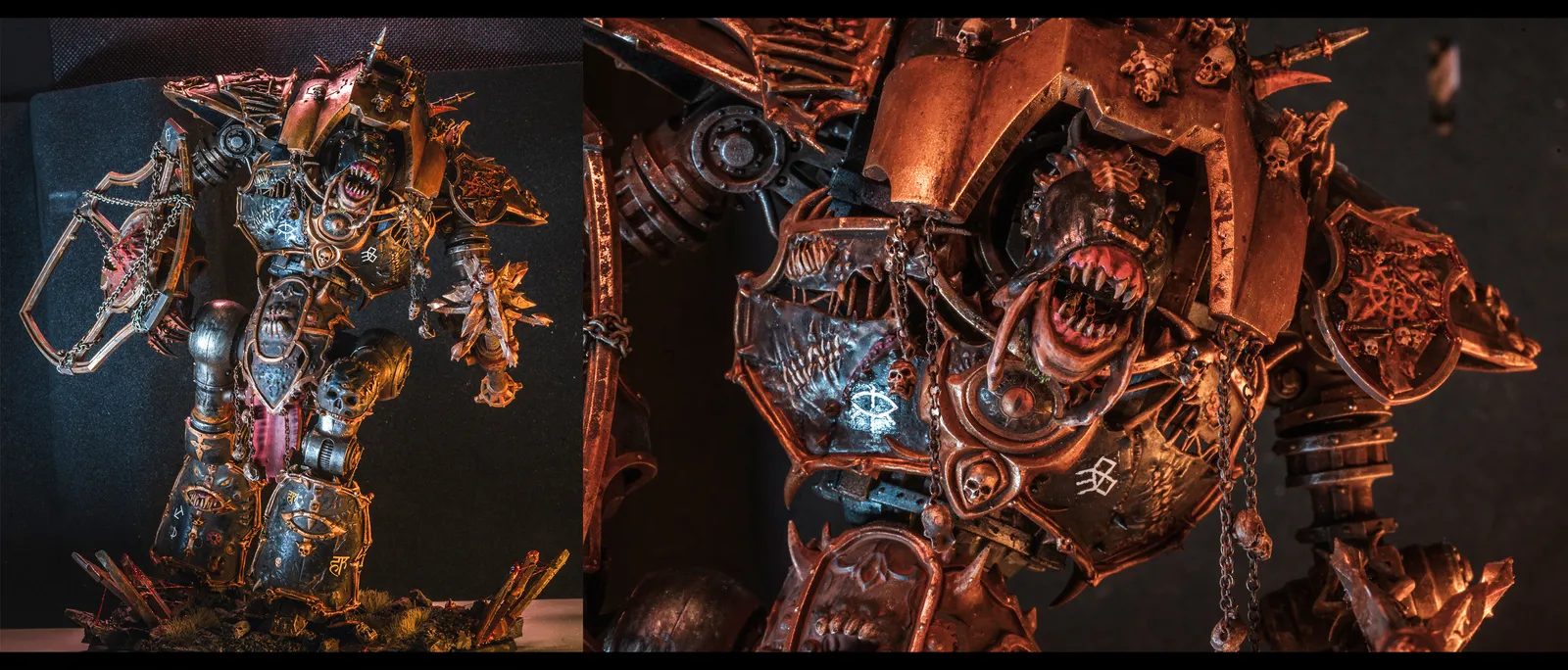
The defining horror of the Chaos Knights is not the machine; it is the throne. A loyal pilot draws wisdom and courage from the echoes of their ancestors. A Chaos Knight pilot hears something else: ancestral voices twisted into paranoid whispers, the screams of everyone they have killed, or the honeyed promises of a daemon that has found a way inside the machine's spirit. Many Chaos Knight pilots are barely sane, and some have become so fused with their Knight that it is no longer clear where the noble ends and the machine begins.
This is also what makes Chaos Knights so terrifying to fight. Their machines radiate an aura of dread, as if the voices inside were spilling into the minds of everyone nearby. Soldiers break and flee before the Knights even fire a shot, and entire cities surrender simply at the sight of them on the horizon. For Chaos Knights, fear is not a side effect of war; it is the weapon.
Allegiance to the Dark Gods
Like other servants of Chaos, a Chaos Knight may serve all four gods together or devote themselves to just one. A Knight of Khorne becomes a relentless engine of slaughter, its carapace hung with skulls; a Knight of Nurgle rots and festers but refuses to fall; a Knight of Tzeentch crackles with sorcery and shifting colors; a Knight of Slaanesh pursues the perfect kill with obsessive pride. Many fall first to ambition and only later realize which power they actually serve. For the four gods themselves, read our guide to the Chaos Gods.
The most extreme cases cross the line between machine and daemon. In Infernal households, Knights may house bound daemons within their reactors and thrones, and their machines can twist into shapes no Mechanicus engineer ever designed. In battle they fight alongside the gods' own servants, the Chaos Daemons, which only adds to their horror.
War Dogs and the Great Knights
A Chaos Knight force is built around a hierarchy of machines, from fast hunters to towering lords:
- War Dogs: the smallest Chaos Knights, roughly equivalent to the Imperial Armigers. They are piloted by bondsmen, vassals bound to serve a greater Knight, and they hunt in packs like their name suggests. Variants such as the Karnivore, Stalker, Brigand, Executioner and Huntsman are each armed for a different role, from close-quarters savagery to hunting armor at range.
- Knight Despoiler: the versatile backbone of the army, a full-size Knight that can be armed for shooting, close combat or both.
- Knight Rampager: a brutal melee Knight that charges into the enemy line with chain-blades and crushing fists.
- Knight Desecrator: another full-size pattern that fights alongside Despoilers and Rampagers, a gun-heavy engine of destruction.
- Knight Abominant: a Knight whose pilot and systems have been warped by the powers of the Warp, channeling sorcery on the battlefield.
- Knight Tyrant: the largest Chaos Knight, a Dominus-class engine carrying enough firepower to destroy a warband on its own.
Allies of the Long War
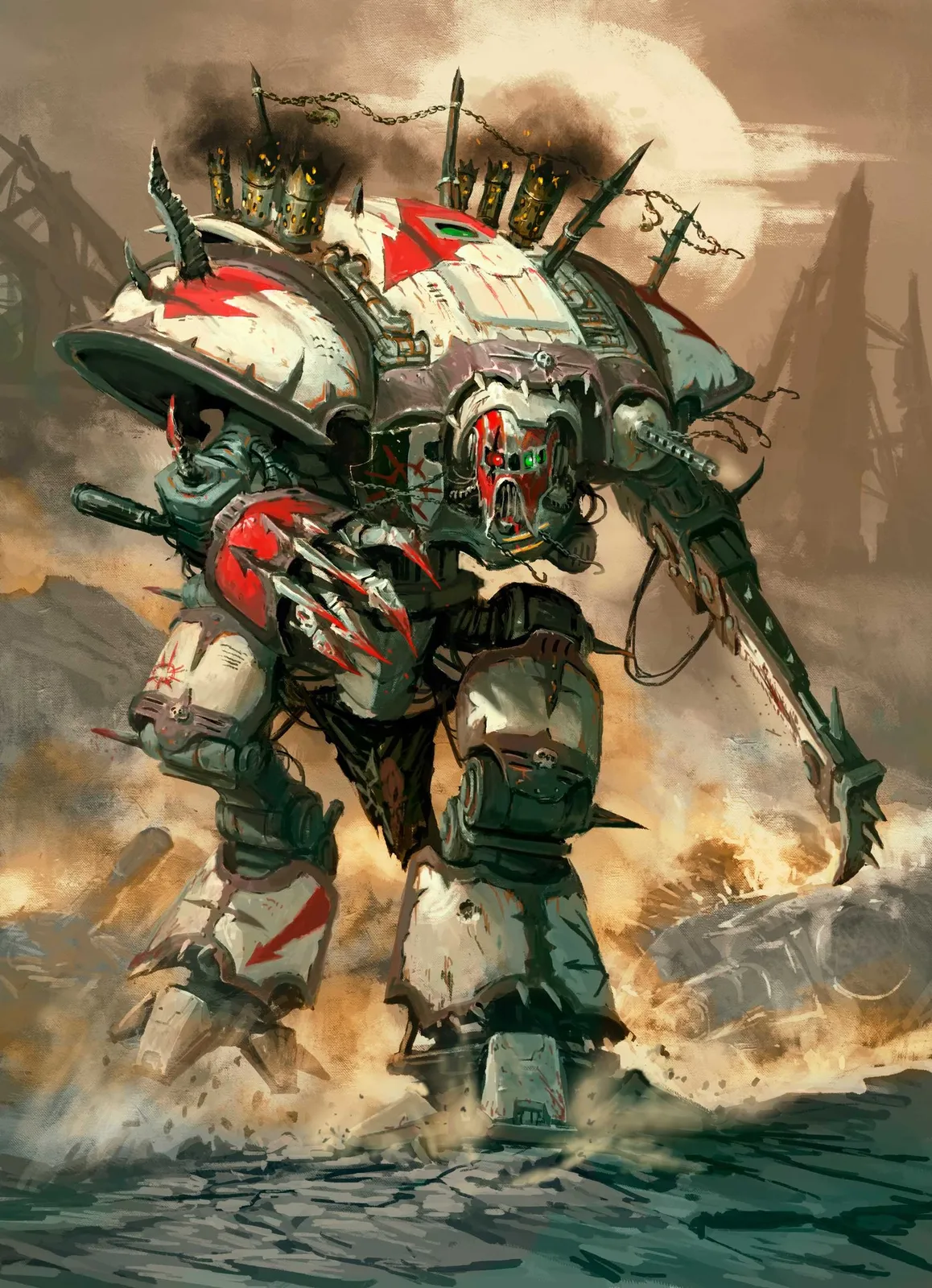
Chaos Knights rarely fight alone. Their natural allies are the Chaos Space Marines, especially the Iron Warriors and the Black Legion, who prize Knights as siege breakers and line breakers. The Dark Mechanicum, the fallen tech-priests of the traitor Forge Worlds, keeps the machines running and adds new daemonic weapons. Traitor Titan Legions, the gods-engines that dwarf even the largest Knights, march with them in the greatest wars; their loyal counterparts are covered in our Adeptus Titanicus guide.
Their greatest enemies are the loyal houses they abandoned. Few battles in Warhammer 40,000 carry as much bitterness as a clash between Imperial and Chaos Knights, where nobles who share bloodlines, heraldry and centuries of history meet as mortal enemies. The Adeptus Mechanicus also hunts them relentlessly, seeking to recover or destroy the sacred machines that have been defiled.
How Chaos Knights Play on the Tabletop
On the tabletop, Chaos Knights are one of the smallest armies in the game: a handful of huge walkers, often supported by packs of War Dogs. Every model is a centerpiece, and every loss is felt. The army's identity is built around dread: rather than simply blasting the enemy apart, Chaos Knights erode the opponent's morale and ability to fight back as they advance.
The army suits players who love big models and the villains' side of the setting, and it has a very small collection to finish compared to infantry-heavy forces. The trade-off is a tiny model count that can struggle to hold many objectives at once, so War Dogs and smart positioning matter. Chaos Knights also pair naturally with Chaos Space Marines and other Chaos armies, which makes them a popular expansion for existing Chaos players.
Chaos Knights FAQ
What are Chaos Knights in Warhammer 40K?
Chaos Knights are Imperial Knights that have betrayed the Imperium and turned to Chaos. They are piloted by fallen nobles and range from ambitious tyrants who rule through fear to Knights fully bound to daemons.
How does an Imperial Knight become a Chaos Knight?
Through betrayal and corruption. Some houses fell during the Horus Heresy, siding with Horus. Others fell much later through ambition, isolation or the corrupting whispers of their Throne Mechanicum, the device that links a pilot to their Knight and to the echoes of past pilots.
What is a Dreadblade?
A Dreadblade is a lone Chaos Knight who fell individually rather than with their whole house. Many are former Freeblades or exiles who now roam the galaxy as warlords and mercenaries.
What are War Dogs?
War Dogs are the smallest Chaos Knights, the corrupted counterpart of Imperial Armigers. They are piloted by bondsmen sworn to serve a greater Knight and hunt in packs ahead of the main force.
Are Chaos Knights daemon engines?
Not all of them. Many are still machines piloted by corrupted humans. In Infernal households, however, daemons are bound into the Knights themselves, blurring the line between war machine and daemon engine.
Do Chaos Knights fight with Chaos Space Marines?
Yes, very often. In the lore, Chaos Knights frequently join Chaos Space Marine warbands and Black Crusades as heavy support, and on the tabletop they are a popular addition to other Chaos armies.
Continue Exploring
- Warhammer 40K Factions: Complete Guide to All 29 Armies — every army, its lore and how it plays
- Imperial Knights — the loyal noble houses the Chaos Knights betrayed.
- Chaos Space Marines — the Traitor Legions Chaos Knights march beside.
- Chaos Daemons — the gods' servants that whisper in the Knights' thrones.
- Adeptus Titanicus — the Titan Legions, the only war machines that dwarf a Knight.
For the rest of the setting, browse every guide in the Warhammer 40K lore hub. To chronicle the fall of your own Knight house, Anima is free and runs in your browser with no account: a wiki, a timeline, and campaigns with a live DM screen.
Keep reading
More from this topic
Necrons: Warhammer 40K Lore Guide
The complete lore of the Necrons — the doomed Necrontyr, the C’tan star-gods, biotransference, the War in Heaven, and the deathless dynasties now waking to reclaim the galaxy.
Tyranids: Warhammer 40K Lore Guide
The complete lore of the Tyranids — the Great Devourer, the Hive Mind, the Shadow in the Warp, the great Hive Fleets, Genestealer Cults, and the hunger that crossed the void between galaxies.
Space Marines (Adeptus Astartes): Warhammer 40K Lore Guide
The complete lore of the Space Marines — the Primarchs, gene-seed, the Horus Heresy, the Codex Astartes and the Chapters, the Primaris and Guilliman’s return, and the cost of the Angels of Death.
Start building your world today
A linked wiki, a timeline and a live DM screen — free, in your browser, no account needed.