Imperial Knights: Warhammer 40K Lore Guide
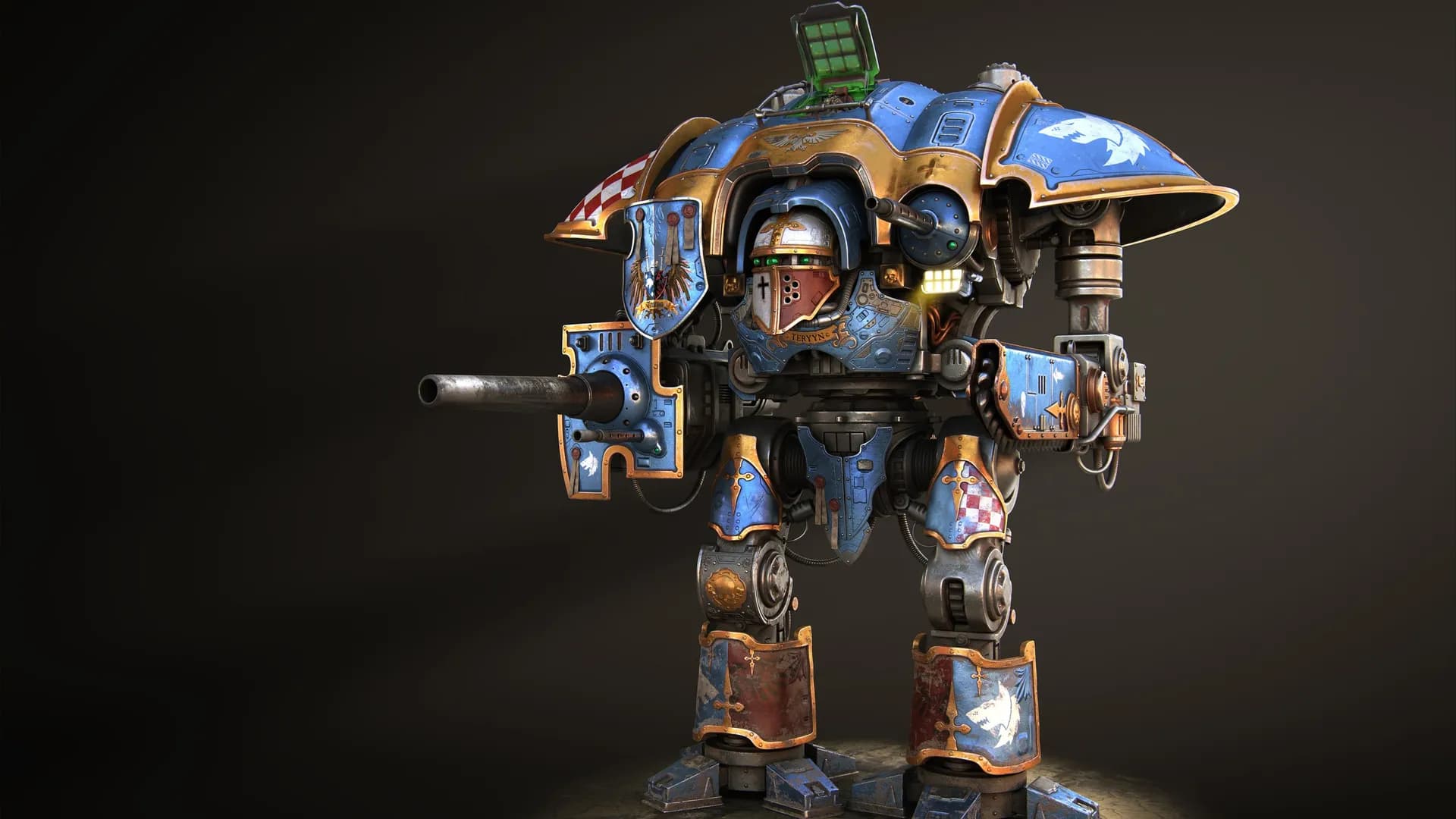
On a hundred feudal worlds scattered across the galaxy, noble houses still keep the old ways. Their scions are raised on tales of honor and ancestry, taught to joust and to rule, and when they come of age they undergo a ritual that will bind them forever to a towering war machine. Stepping into the cockpit, the young noble sits upon a throne wired directly into their mind, and the voices of every pilot who came before them rise up to greet them. From that day on, they are no longer just a person. They are a Knight.
The Imperial Knights are among the most iconic war engines of Warhammer 40,000: walking fortresses many times the height of a human, armed with battle cannons, chainswords the size of a tank and ion shields that can turn aside fire meant to level a building. Behind every Knight stands a noble house, a code of chivalry and a bond with either the Imperium or the Adeptus Mechanicus that stretches back to the Dark Age of Technology. In this guide we explore where they came from, how their houses are organized, the classes of Knight that go to war, their heroes, their fallen kin and how they play on the tabletop. For a comparison with every other army, start with our Warhammer 40K factions guide.
Imperial Knights sit at a fascinating crossroads in the setting: they are medieval chivalry fused with ancient super-science, a living tradition preserved through thousands of years of isolation and war.
Imperial Knights at a Glance
| Aspect | Detail |
|---|---|
| Also known as | The Questor Imperialis and Questor Mechanicus, the Knight Houses |
| Origin | Human colonists of the Dark Age of Technology who built war walkers to protect new worlds |
| Homeworlds | Knight Worlds, feudal planets ruled by noble houses |
| Allegiance | Either the Imperium (Questor Imperialis) or the Adeptus Mechanicus (Questor Mechanicus) |
| Pilots | Nobles bonded to their Knight through the Throne Mechanicum |
| Key classes | Armiger, Questoris, Dominus and the heavy Acastus and Cerastus patterns |
| Defining trait | Feudal honor, ancestral memory and towering firepower |
| Fallen kin | The Chaos Knights, houses lost to the Dark Gods |
Origins: Guardians of the First Colonies
The story of the Imperial Knights begins in the Dark Age of Technology, the golden age of human expansion when colony fleets spread across the galaxy using Standard Template Construct technology. Many of these new worlds were hostile, full of dangerous wildlife, harsh terrain and alien threats. To protect their colonies, the settlers built large, versatile walking machines from STC designs. These Knights served as tools for construction and agriculture, and as weapons of war.
Piloting a Knight was a demanding task, and over generations the families who mastered it became the colony's protectors, its nobility and eventually its rulers. When the Age of Strife plunged humanity into darkness, cut off from Terra and from each other, these colonies survived through their Knights. In isolation, they developed into feudal societies, with noble houses governing worlds whose peasants looked to the Knights for protection. These are the Knight Worlds.
When the Great Crusade reached these worlds, many houses were rediscovered by the Mechanicum of Mars, which recognized the value of their war engines and the ancient technology they preserved. Some swore oaths to the Emperor, while others pledged themselves to the Mechanicum and its Forge Worlds. This split remains at the heart of the Knights' identity today.
The Throne Mechanicum and the Ritual of Becoming
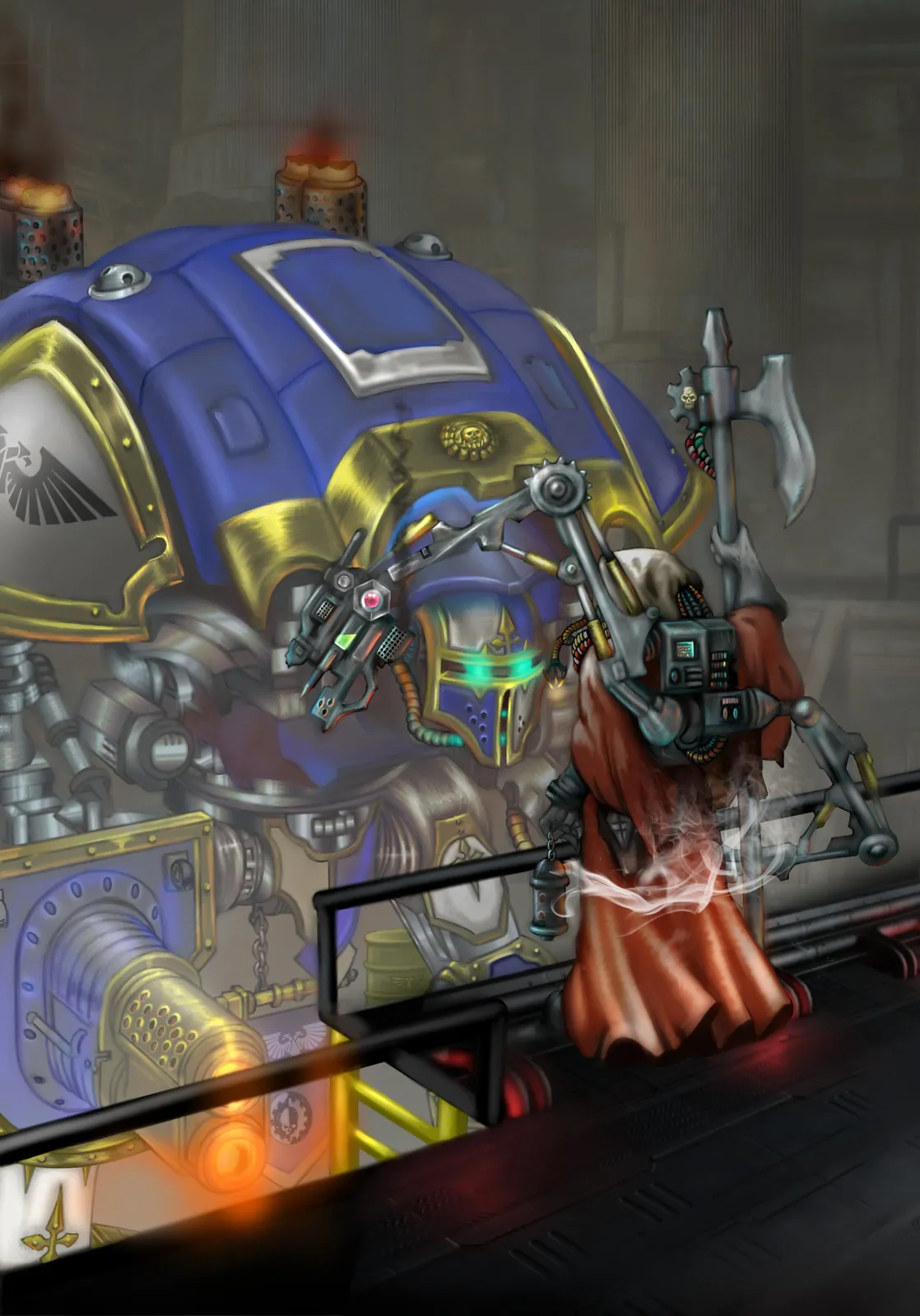
At the heart of every Knight lies the Throne Mechanicum, an ancient neural interface that binds the pilot's mind to their war machine. Through it, the Knight responds to its pilot's thoughts as if it were their own body. But the Throne is more than a control system. Over the centuries, it records the personalities, memories and instincts of every noble who has sat upon it. When a new pilot is bonded, they inherit these echoes. A young knight may feel the courage of a long-dead ancestor in a moment of crisis, or hear the whispers of a predecessor's rage.
The bonding happens during the Ritual of Becoming, a sacred rite that each noble undergoes before they can pilot a Knight. The experience is intense and dangerous. Some nobles are overwhelmed by the voices of the Throne and emerge broken or changed, while others are strengthened by their ancestors and bond seamlessly with their machine. Once bonded, a noble's identity becomes intertwined with that of their Knight, and many pilots treat the machine with the reverence owed to a family elder.
This system creates a powerful continuity. A Knight that has served for thousands of years carries a living memory of its house's history, and its pilot is never truly alone in the cockpit. It also creates the risk of corruption, as the house's dark secrets and failures are carried forward just as surely as its virtues.
The Noble Houses: Questor Imperialis and Questor Mechanicus
Imperial Knights are organized into noble houses, each of which rules a Knight World and maintains its own traditions, heraldry and code of honor. The houses fall into two broad allegiances.
Questor Imperialis
Houses of the Questor Imperialis swear fealty to the Emperor and the Imperium of Man. They tend to emphasize chivalric virtues, ancestral pride and duty to the Throne. Well-known Questor Imperialis houses include House Terryn, famous for its aggressive tactics; House Griffith, a house of jousting champions; House Cadmus, renowned for its hunting traditions; House Hawkshroud, known for its fierce loyalty to allies; and House Mortan, a house of grim warriors.
Questor Mechanicus
Houses of the Questor Mechanicus owe their allegiance to the Adeptus Mechanicus and the Machine God. They often maintain close ties with a specific Forge World, and their rituals are steeped in Mechanicus doctrine. Notable Questor Mechanicus houses include House Raven, one of the oldest and most powerful; House Taranis, linked to Mars itself; and House Vulker, known for its relentless advances.
In battle, both kinds of house often fight alongside the forces of their patrons. Questor Mechanicus Knights frequently march with the Skitarii and the Titan Legions of the Adeptus Titanicus, while Questor Imperialis houses support the Astra Militarum and Space Marines on campaigns across the galaxy.
Freeblades: Knights Without a House
Not every Knight belongs to a house. Freeblades are wandering Knights who have left or lost their house, whether through shame, tragedy or a personal quest. Some are the last survivors of a destroyed house; others have been exiled for a crime or chose to leave to atone for a failure. Freeblades often hide their identity behind new heraldry and fight wherever their own sense of honor leads them.
The most famous Freeblade is Sir Hekhtur, who pilots the Knight Preceptor Canis Rex. Captured and imprisoned by the forces of Chaos, Hekhtur eventually broke free, and he has since dedicated himself to hunting the enemies of the Imperium, above all the servants of the Dark Gods. He is one of the most iconic heroes of the Imperial Knights.
Classes of Knight
The Knights that go to war come in several classes, each built from a different ancient design.
- Armiger-class: smaller, faster Knights such as the Armiger Warglaive and the Armiger Helverin. They are piloted by bondsmen of the noble houses, who use a simpler neural interface and serve as squires and hunters in support of the larger Knights.
- Questoris-class: the classic Knights, including the Knight Paladin, Knight Errant, Knight Warden, Knight Gallant, Knight Crusader and Knight Preceptor. They form the backbone of most houses.
- Dominus-class: larger and slower, powered by twin plasma cores. The Knight Castellan and Knight Valiant are among the most powerful war engines a house can field.
- Acastus and Cerastus patterns: rare and powerful designs, such as the Knight Porphyrion and the Knight Lancer, often available through Forge World.
Knights are armed with a mix of ranged weapons, such as battle cannons, thermal cannons and gatling cannons, and close-combat weapons like reaper chainswords and thunderstrike gauntlets. Their ion shields can deflect incoming fire, but they must be angled toward the threat, so even the mightiest Knight must be careful not to be outflanked.
The Fallen: Renegade and Chaos Knights
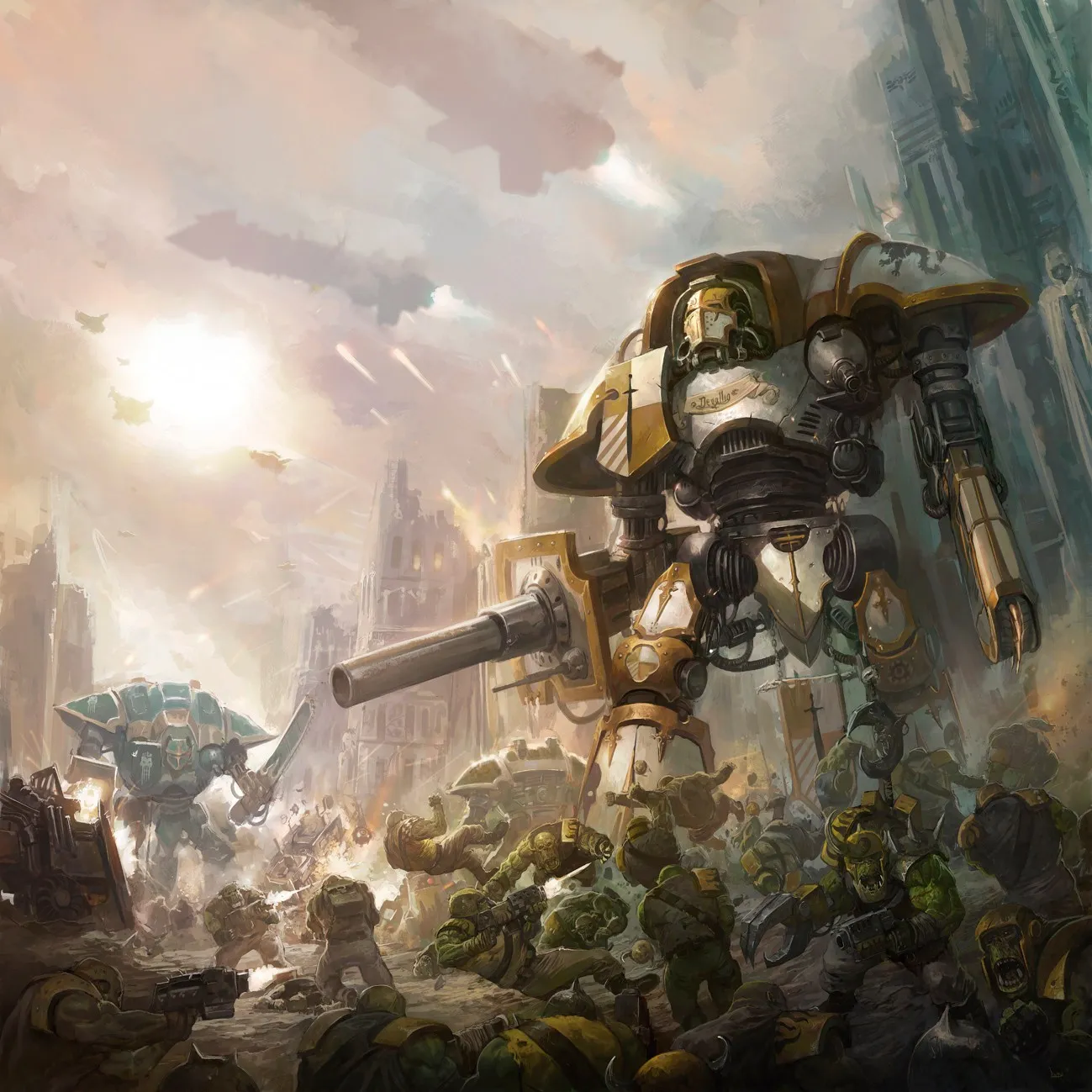
Not all houses have remained loyal. During the Horus Heresy, some houses sided with the Warmaster, and others have fallen in the ten thousand years since. Because the Throne Mechanicum carries a pilot's impulses forward through the generations, a traitorous noble's rage and ambition can poison a house from within long after that noble is gone.
Today, these fallen houses are known as Chaos Knights. Their war engines are twisted and daemon-touched, their pilots consumed by the voices of their Thrones. The loyal houses regard them with special hatred, and duels between loyal and traitor Knights are among the most dramatic battles in the setting. For the Imperial Knights, the Chaos Knights are a dark mirror, a reminder of what they could become if they abandoned their oaths.
The Imperial Knights in the Indomitus Era
The opening of the Great Rift cut many Knight Worlds off from the rest of the Imperium, leaving them to fight alone against daemonic incursions and alien invasions. Many houses suffered grievous losses, and some were destroyed entirely. Others joined the Indomitus Crusade, fighting alongside Roboute Guilliman's forces to reclaim lost worlds.
Knights now fight on almost every front of the Imperium's wars, against the Orks, the Tyranids, the Necrons and the forces of Chaos. Their towering presence is a source of hope for embattled Imperial forces, and their noble traditions offer a sense of continuity in a galaxy that seems to be falling apart.
Themes: Chivalry in the Grim Darkness
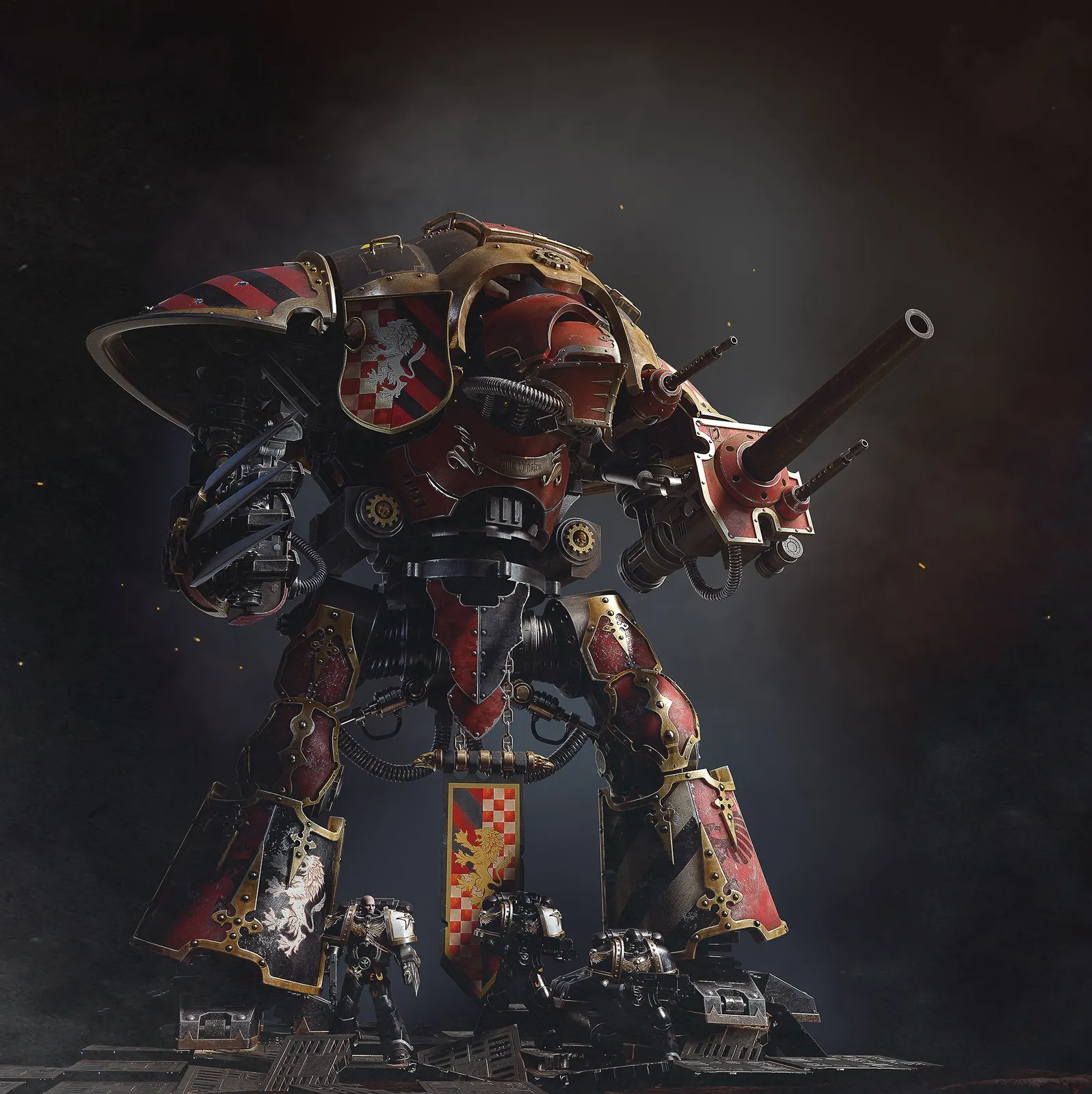
The Imperial Knights bring a distinct flavor to the Warhammer 40,000 setting. Where most Imperial forces are faceless, conscripted and bureaucratic, the Knights are personal, proud and steeped in tradition. Each noble has a name, a lineage and a reputation to uphold. Their battles are fought for honor as much as for victory.
Yet even the Knights reflect the grimness of the setting. Their feudal worlds can be harsh, ruled by nobles who see their subjects as serfs. Their Thrones Mechanicum can drive pilots to madness or corruption. And for all their heroism, the Knights are just one force among many fighting a war that never ends. That mix of romance and tragedy makes them a superb source of inspiration for campaigns and stories, from courtly intrigue on a Knight World to desperate last stands against overwhelming odds.
How the Imperial Knights Play on the Tabletop
On the tabletop, Imperial Knights are an army of very few, very large models. A typical force consists of a handful of big Knights, sometimes supported by smaller Armigers. Each Knight is a powerful centerpiece with enormous firepower and durability, and the army is relatively simple to collect and learn because there are so few models to manage.
The flip side is that each model is a big target. Your opponent will point all their anti-tank weapons at your Knights, and losing one can be a serious blow. Knights excel at dominating the battlefield and smashing through enemy lines, but they can struggle to hold many objectives at once. They are perfect for players who love big models, heraldry and a simple, direct playstyle.
Imperial Knights FAQ
How tall is an Imperial Knight?
Imperial Knights are many times the height of a human, towering over tanks and infantry. Exact heights vary by class and by source, but a Questoris-class Knight is commonly described as roughly 12 meters (about 40 feet) tall. Armigers are smaller, while Dominus-class Knights are larger and bulkier.
What is the difference between Imperial Knights and Titans?
Knights are smaller war engines piloted by a single noble bonded through the Throne Mechanicum, while Titans are colossal god-machines crewed by a team led by a Princeps. Titans belong to the Titan Legions of the Adeptus Mechanicus, while Knights belong to noble houses. Both are among the most powerful war machines in the Imperium.
Who pilots Imperial Knights?
Imperial Knights are piloted by nobles of the Knight houses, who undergo the Ritual of Becoming to bond with their Knight's Throne Mechanicum. Armiger-class Knights are piloted by bondsmen, lower-ranking members of the household who serve the nobles.
What are Freeblades?
Freeblades are Knights who have left or lost their house. Some are survivors of destroyed houses, others are exiles or penitents. They often adopt new heraldry and fight wherever their sense of honor leads them. Sir Hekhtur and his Knight Canis Rex are the most famous example.
Are Chaos Knights the same as Imperial Knights?
Chaos Knights are former Imperial Knight houses that have fallen to Chaos. They share the same origins and many of the same war machines, but they serve the Dark Gods and are twisted by daemonic influence. They are bitter enemies of the loyal houses.
Continue Exploring
- Warhammer 40K Factions: Complete Guide to All 29 Armies — every army, its lore and how it plays
- The Chaos Knights — the fallen houses that serve the Dark Gods.
- The Adeptus Titanicus — the Titan Legions and their god-machines.
- The Adeptus Mechanicus — the tech-priests of Mars and the Machine God.
- The Adeptus Custodes — the golden guardians of the Emperor's Throne.
For the rest of the setting, browse every guide in the Warhammer 40K lore hub. To chronicle your own noble house, its lineage and its wars, Anima is free and runs in your browser with no account: a wiki, a timeline, and campaigns with a live DM screen.
Keep reading
More from this topic
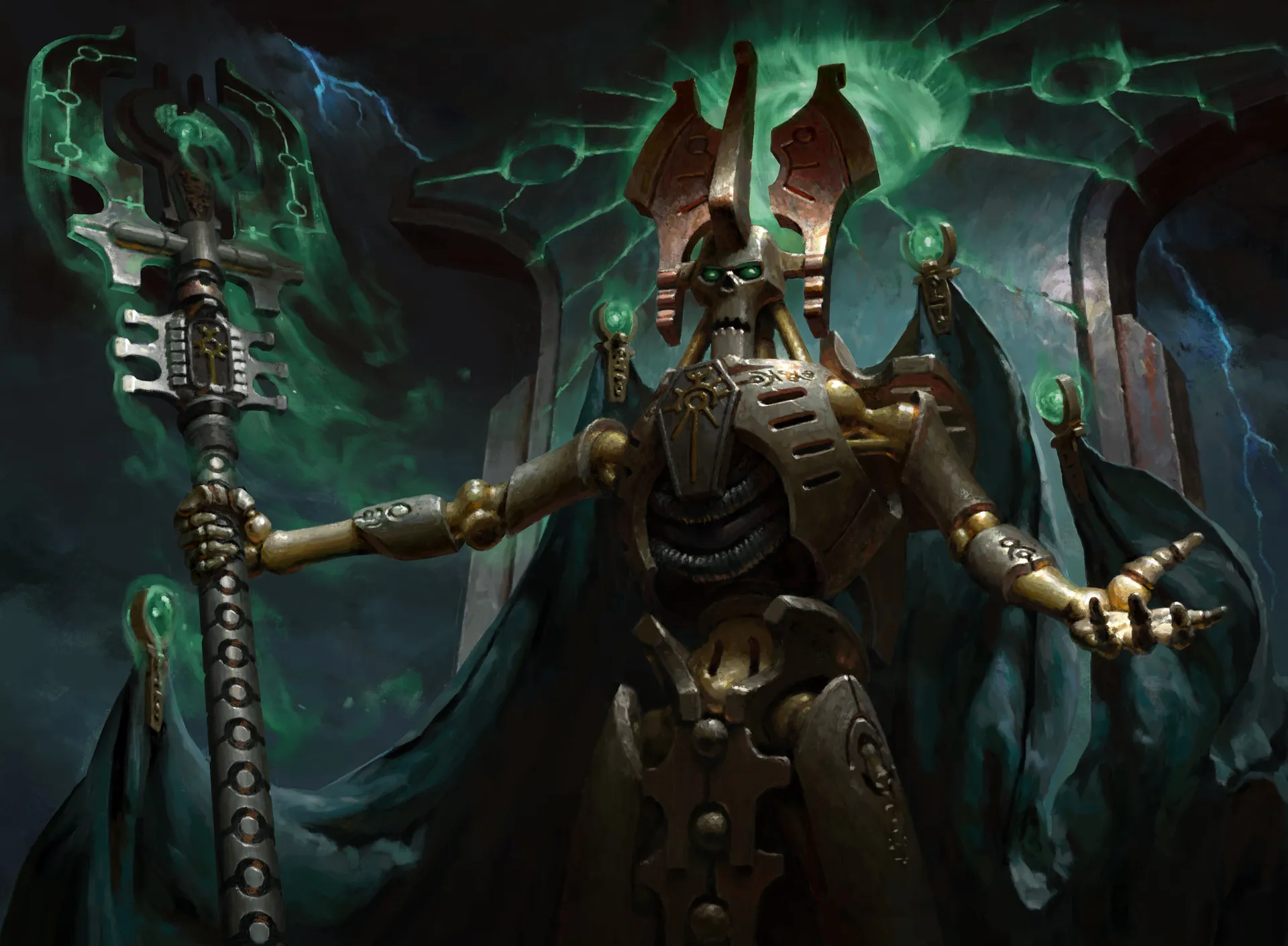
Necrons: Warhammer 40K Lore Guide
The complete lore of the Necrons — the doomed Necrontyr, the C’tan star-gods, biotransference, the War in Heaven, and the deathless dynasties now waking to reclaim the galaxy.
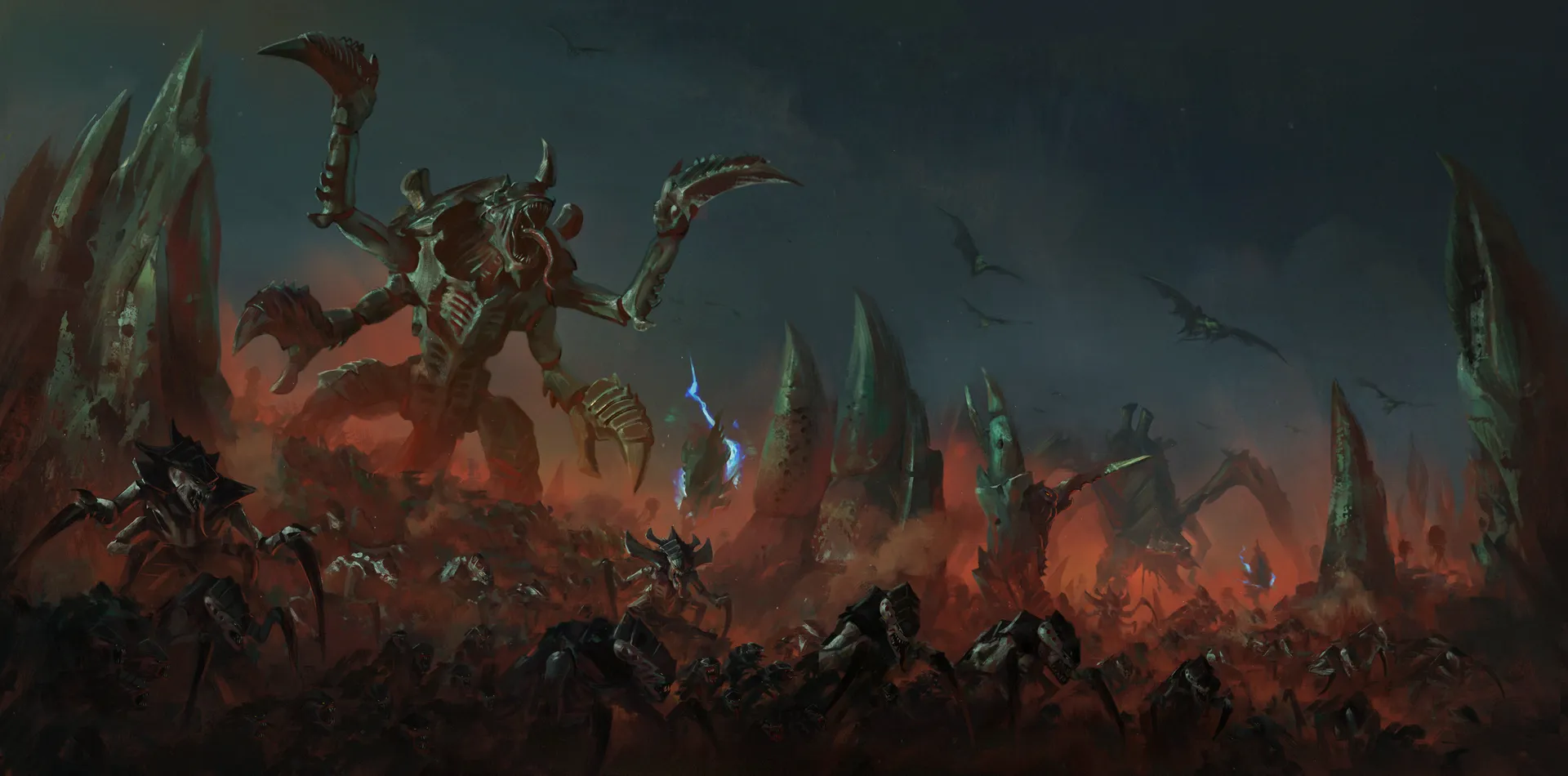
Tyranids: Warhammer 40K Lore Guide
The complete lore of the Tyranids — the Great Devourer, the Hive Mind, the Shadow in the Warp, the great Hive Fleets, Genestealer Cults, and the hunger that crossed the void between galaxies.
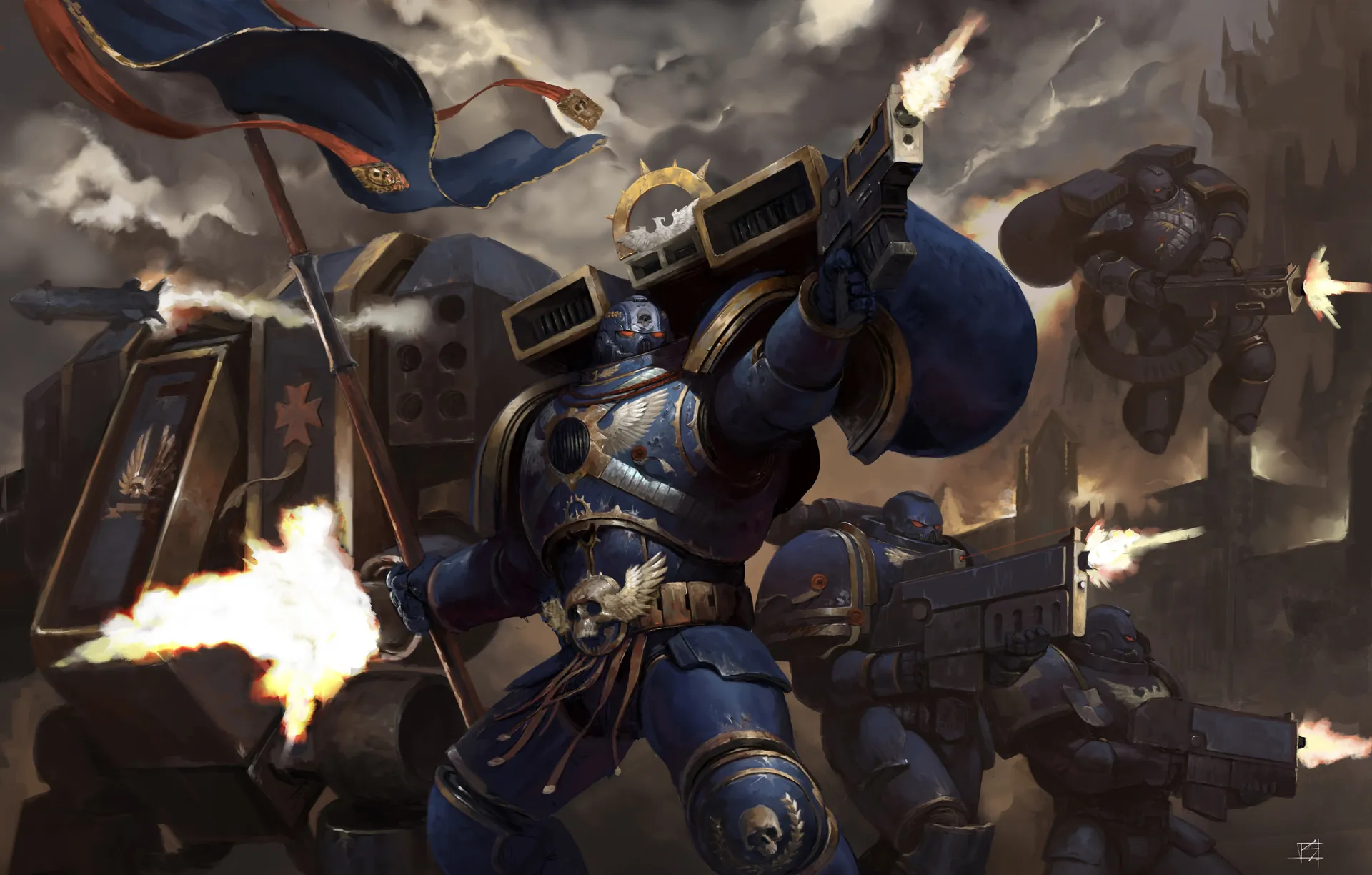
Space Marines (Adeptus Astartes): Warhammer 40K Lore Guide
The complete lore of the Space Marines — the Primarchs, gene-seed, the Horus Heresy, the Codex Astartes and the Chapters, the Primaris and Guilliman’s return, and the cost of the Angels of Death.
Start building your world today
A linked wiki, a timeline and a live DM screen — free, in your browser, no account needed.