Astra Militarum (Imperial Guard): Warhammer 40K Lore Guide
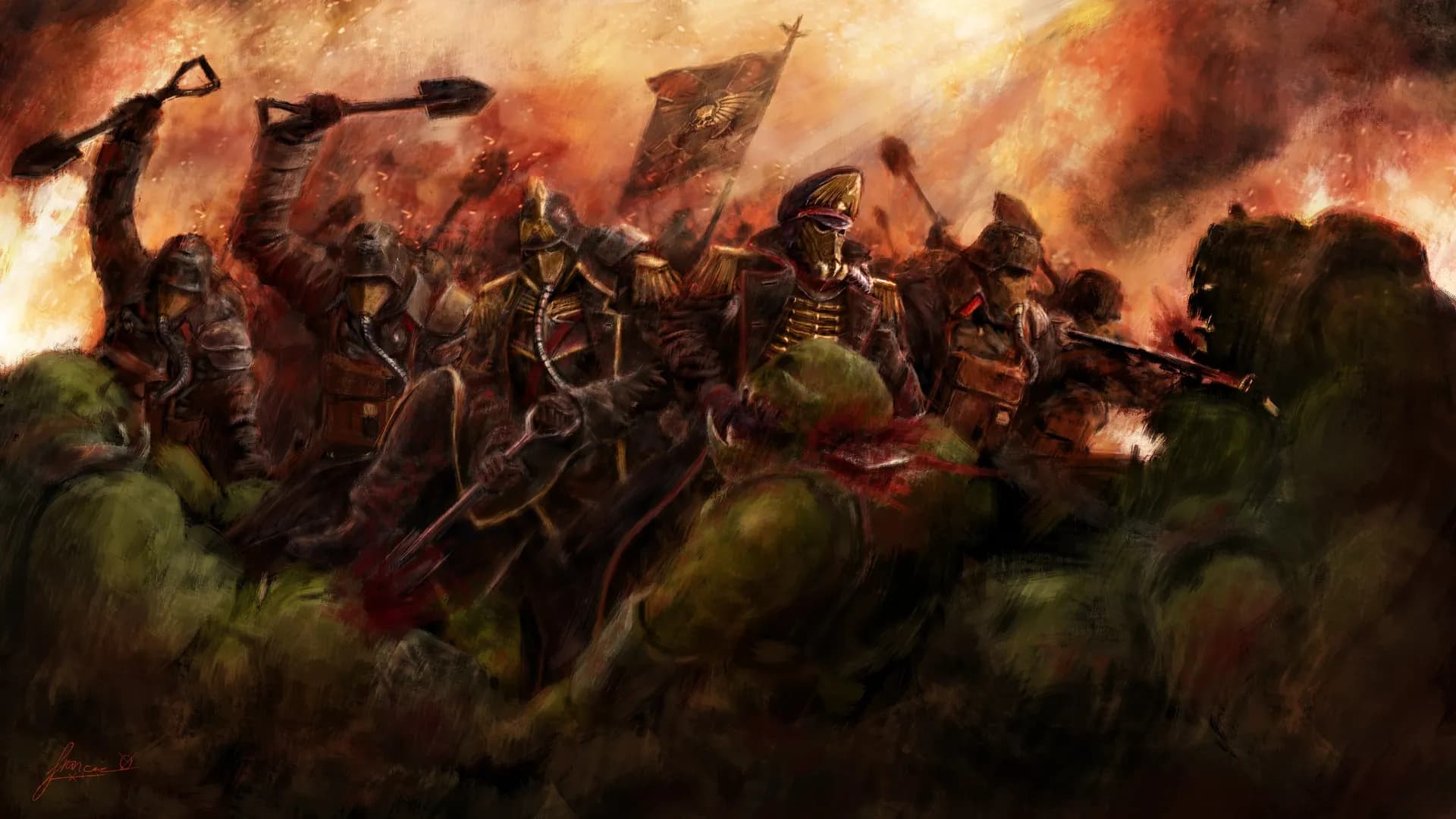
The galaxy of the 41st Millennium is full of superhumans: gene-forged Space Marines, golden Custodians, deathless Necron lords. The Astra Militarum is not. Better known by its older name, the Imperial Guard, it is made of ordinary men and women. They are conscripted from a million worlds, handed a lasgun and a flak vest, and sent to stand between humanity and things that want it extinct. They are not stronger than their enemies, faster, or better armed. What they have is numbers, and the willingness to spend them.
The Guard is the hammer of the Imperium: the largest fighting force in the galaxy, counted in billions of soldiers, backed by endless columns of tanks and artillery. Of all the Warhammer 40K factions, it is the most human, and in many ways the most heroic. This guide covers its origins, how a regiment is raised and run, the famous regiments and commanders, the war machines, and the grim culture that keeps it marching, before a short look at how the army plays on the tabletop.
Astra Militarum at a Glance
| Aspect | Detail |
|---|---|
| Also known as | The Imperial Guard, the Hammer of the Emperor |
| Nature | Unaugmented human soldiers raised by planetary tithe |
| Size | Billions of soldiers in countless regiments |
| Command | The Lord Solar (currently Lord Solar Leontus), Lord Generals, regimental officers |
| Support | Departmento Munitorum logistics, Commissars of the Officio Prefectus, Enginseers, priests and sanctioned psykers |
| Famous regiments | Cadian Shock Troops, Catachan Jungle Fighters, Death Korps of Krieg, Tanith First and Only |
| Signature weapons | The lasgun, the Leman Russ battle tank, the Baneblade super-heavy |
| Defining trait | Courage without superhuman gifts: victory through mass, firepower and sacrifice |
Origins: From the Imperial Army to the Guard
During the Great Crusade, the Emperor's conquest of the galaxy was spearheaded by the Space Marine Legions. Behind them marched the Imperial Army, a vast mortal host that garrisoned conquered worlds and fought alongside the Legions in every theater. Its regiments and its starships answered to the same commanders. When the Warmaster Horus turned traitor, much of that army followed him into rebellion.
The Horus Heresy taught the Imperium a brutal lesson about concentrated power. In the reorganization that followed, the Imperial Army was split in two. Ground forces became the Imperial Guard, and the fleets that carried them became the Imperial Navy. A Guard general cannot move his armies between stars without the Navy, and a Navy admiral has no army to land. The arrangement guarantees that no single commander can ever again take an army and its fleet to war against Terra. It also produces endless friction, delays and rivalry, which is fitting for the Imperium.
Over ten thousand years the Guard has become the bedrock of Imperial defense. Space Marines are rare and strike where they choose. The Guard goes everywhere, holds every line, and absorbs the losses no other force could survive.
How a Regiment Is Raised
Every Imperial world owes a tithe, and for many that tithe is paid in soldiers. When the Departmento Munitorum calls a Founding, a planet raises new regiments from its own people, usually from its planetary defense forces. The Munitorum then equips them, ships them off and keeps them supplied, through a bureaucracy so vast that some regiments receive orders meant for units that died centuries ago.
Regiments keep the name and character of their homeworld, which is why the Guard is so varied. A death-world regiment fights nothing like a regiment raised from an underhive or a feudal world. They almost never go home. A regiment serves until it is destroyed, absorbed into another unit, or granted land on a world it helped conquer. Many Guardsmen spend their whole lives in uniform, hundreds of light years from the place they were born.
Around each regiment orbits a constellation of other Imperial organizations:
- Commissars of the Officio Prefectus enforce discipline and morale, with the authority to execute cowards and incompetent officers on the spot. The best inspire through example; the worst inspire through fear.
- Tech-Priest Enginseers of the Adeptus Mechanicus tend the tanks and appease their machine spirits with rite and unguent.
- Ministorum priests preach the Imperial Creed, and in desperate moments lead the charge themselves.
- Sanctioned psykers, trained and bound by the Scholastia Psykana, channel the Warp under close watch. They are executed at the first sign of possession.
- Abhumans such as hulking, dim-witted Ogryns and diminutive, sharp-eyed Ratlings serve in auxiliary units.
Above the line regiments stand the Militarum Tempestus. Its Tempestus Scions are raised from the orphans of the Schola Progenium, trained to elite standards and equipped with hot-shot lasguns and carapace armor. They are the closest the Guard has to special forces.
Famous Regiments of the Imperial Guard
Thousands of worlds supply soldiers, but a handful of regiments have become icons of the setting.
Cadian Shock Troops
Cadia guarded the Cadian Gate, the only stable route out of the Eye of Terror. Its whole society was built around war, and every Cadian child learned to strip a lasgun. Cadian regiments became the template for the Guard: disciplined, professional and fielded in staggering numbers. Cadia held through twelve Black Crusades. During the thirteenth, at the end of the 41st Millennium, it finally fell when Abaddon the Despoiler drove a Blackstone Fortress into the planet's surface. The world was lost, but its regiments, scattered across the galaxy, fight on. Survivors still answer one another with "Cadia stands" — a sentence now somewhere between defiance and grief. Their war against the Traitor Legions is told from the other side in our Chaos Space Marines guide.
Catachan Jungle Fighters
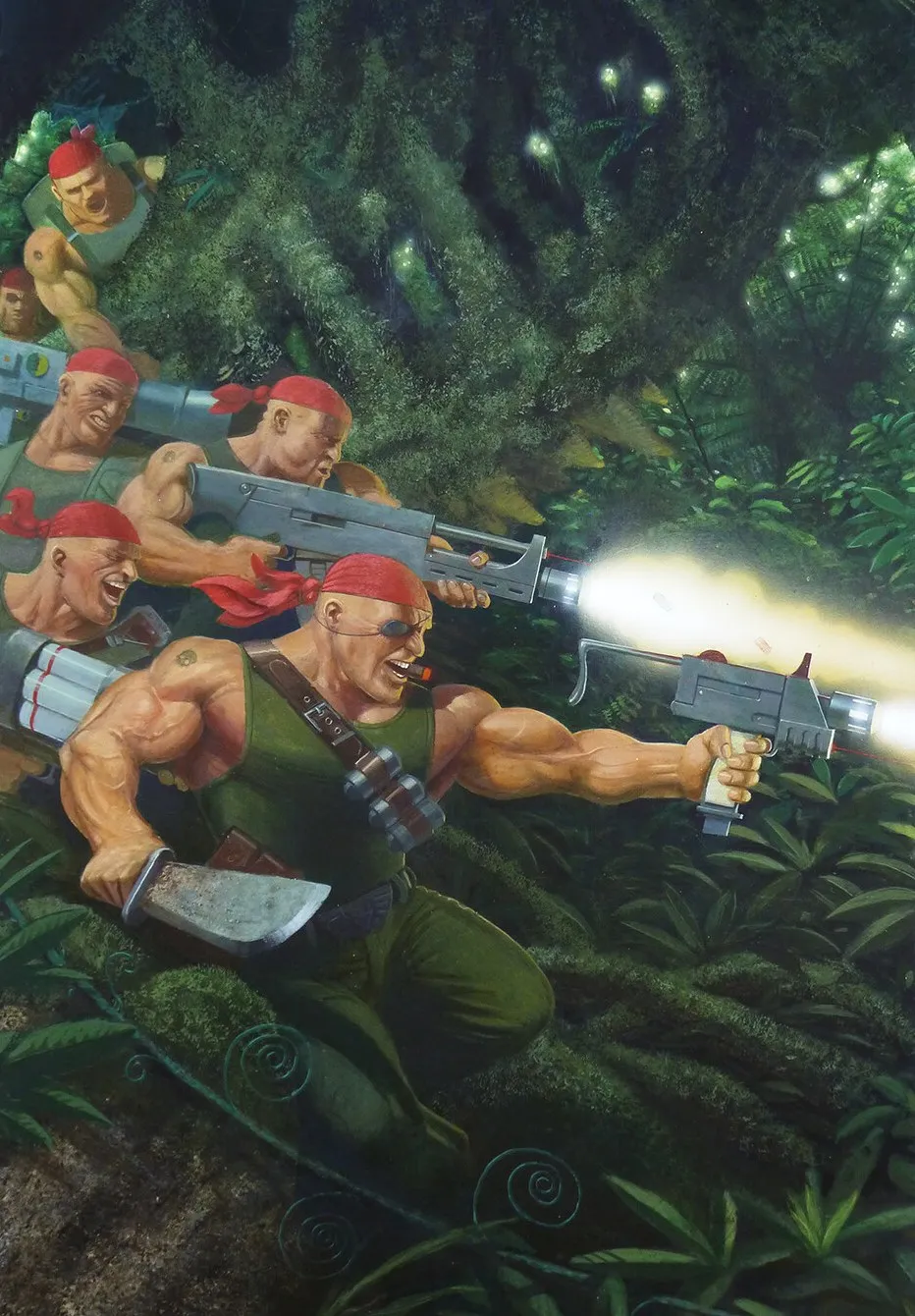
Catachan is a death world, a jungle planet where nearly every plant and animal can kill a person. Its regiments are huge, self-reliant survivalists, masters of ambush, traps and close-quarters fighting who regard other worlds as soft. Their most famous officer is Colonel "Iron Hand" Straken, a grizzled veteran whose bionic arm replaced the one he lost to one of his homeworld's predators.
Death Korps of Krieg
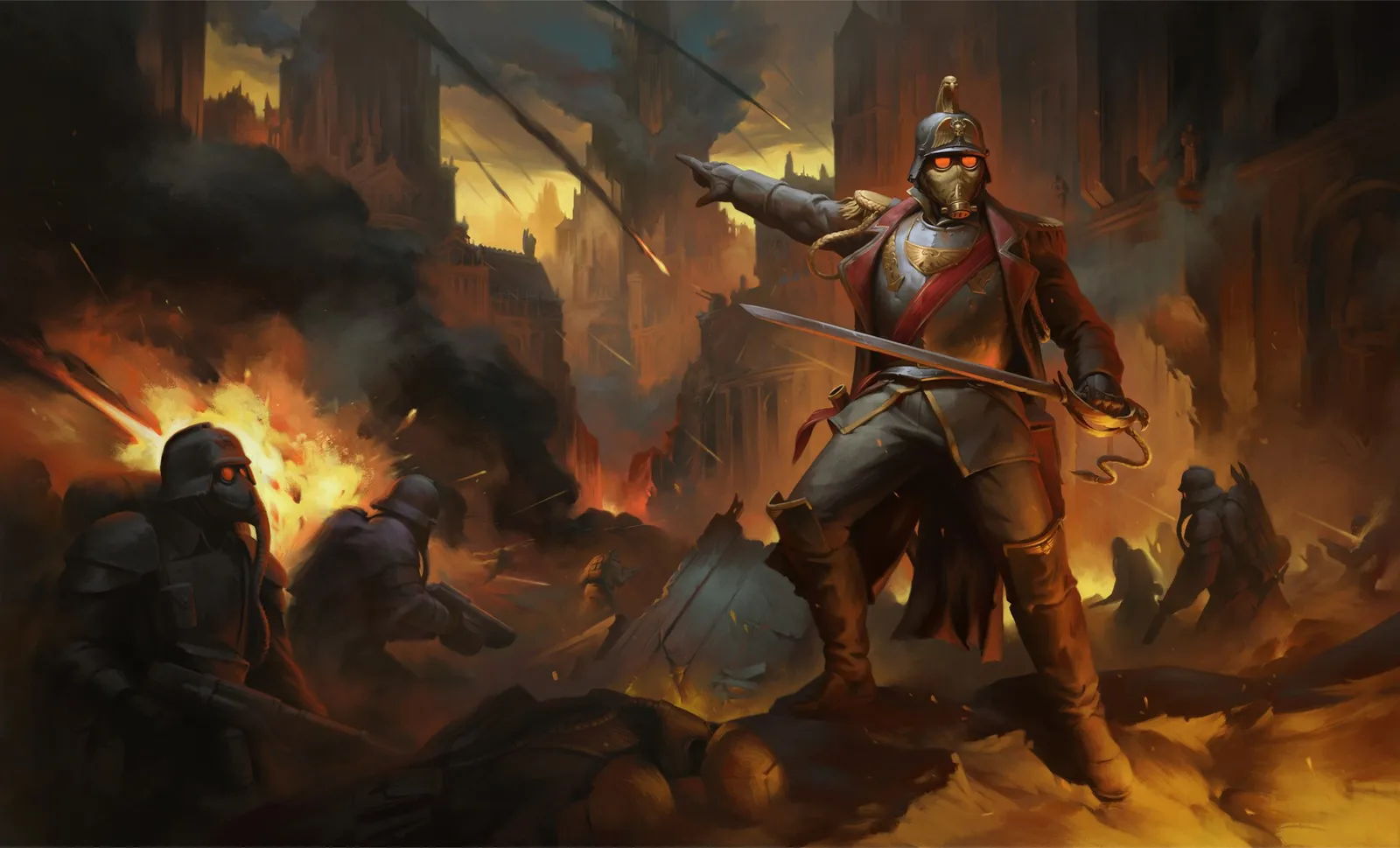
When the leaders of Krieg tried to declare independence from the Imperium, loyalist forces under Colonel Jurten answered with atomic fire on their own world. The civil war that followed lasted centuries and left Krieg a poisoned wasteland. Its people now believe they carry an ancestral sin, and they seek atonement in death for the Emperor. Krieg regiments wear gas masks and greatcoats, dig vast trench systems and wage grinding siege warfare with chilling indifference to their own losses.
Other Notable Regiments
- Tanith First and Only — "Gaunt's Ghosts," a scout regiment whose forest homeworld was destroyed on the day of its founding, made famous by Dan Abnett's long-running Black Library novels.
- Armageddon Steel Legion — mechanized infantry from the hive world of Armageddon, veterans of repeated Ork invasions.
- Mordian Iron Guard — parade-ground discipline from a world locked in eternal night.
- Valhallan Ice Warriors, Tallarn Desert Raiders, Vostroyan Firstborn — regiments whose homeworlds shaped everything from their uniforms to their tactics.
Heroes and Commanders
The Guard has no Primarchs or living Saints of its own, so its heroes are men and women who survived long enough to become legends.
- Lord Solar Leontus — supreme commander of the Astra Militarum in the Indomitus era, a strategist of legendary calm who leads Guilliman's mortal armies.
- Lord Castellan Ursarkar E. Creed — the tactical genius who commanded Cadia's defense in its final days. He survived the planet's death and remains the symbol of Cadian defiance.
- Commissar Sebastian Yarrick — the "Old Man of Armageddon," hero of the wars against the Ork warlord Ghazghkull Thraka, whose decades-long rivalry with him is the stuff of Imperial legend. More on that foe in our Orks lore guide.
- Colonel "Iron Hand" Straken — the ultimate Catachan, a bionic-armed veteran who leads from the front.
- Ibram Gaunt — the commissar-colonel of the Tanith First, perhaps the most famous Guardsman in Black Library fiction.
The Tank Parks: Armor and Artillery
If the Guardsman is the Imperium's most common soldier, the tank is its most beloved weapon. No other faction in the galaxy fields armor on the scale of the Astra Militarum.
- Leman Russ — the iconic main battle tank, built in dozens of patterns on countless forge worlds. Rugged, simple and endlessly reliable.
- Rogal Dorn — a newer, heavier battle tank fielded in the Indomitus era.
- Baneblade and its variants — super-heavy tanks so precious that each is a relic in its own right, crewed by dynasties of tankers.
- Chimera — the ubiquitous armored transport, the backbone of mechanized regiments.
- Basilisk, Manticore and Deathstrike — artillery that can level a city block from beyond the horizon. Guard doctrine treats artillery as the true "queen of battle."
- Sentinels, Hellhound flame tanks and Valkyrie gunships round out the arsenal.
Each tank is maintained by Enginseers who treat it as a living thing with a machine spirit to placate. Tank crews often name their vehicles, paint kill markings on the hull, and mourn them when they are lost.
Life in the Guard: Faith, Fear and the Lasgun
The standard-issue lasgun is cheap, reliable and easy to recharge. It is also mocked as a "flashlight" by soldiers who have watched its beams fail against heavier armor. It sums up the Guard: not the best tool, but one there are billions of, which works in any climate.
A Guardsman's life is dominated by the Imperial Creed and by the Imperial Infantryman's Uplifting Primer, a field manual famous among fans for its mix of practical advice and absurd propaganda. Soldiers are taught that the Emperor protects, that doubt is the first step toward heresy, and that dying at one's post is the highest form of service. Some believe it completely. Others survive on gallows humor, contraband amasec and loyalty to the comrades beside them.
That tension gives the Guard its storytelling power. In a setting full of demigods, it is ordinary people who hold the line. They are often outmatched and frequently wasted by careless generals, and they keep going anyway. The Imperium could not survive without them, and it rarely thanks them.
The Guard in the Era Indomitus
The opening of the Great Rift tore the Imperium in half, and the Guard bore the brunt of the chaos that followed. When Roboute Guilliman returned and launched the Indomitus Crusade, its fleets carried enormous numbers of Guard regiments alongside the new Primaris Space Marines described in our Space Marines lore guide. Lord Solar Leontus leads the Astra Militarum in this new era under Guilliman's authority.
The enemies are the same as ever, and more numerous. The Tyranid hive fleets strip worlds bare, and Guard regiments are often spent simply to buy time for an evacuation or a counterstroke. Genestealer Cults hide inside planetary defense forces, the very pool the Guard recruits from, and some cults turn whole regiments against the Imperium when they rise. Traitor Guardsmen fight under the banners of the Dark Gods. Whatever comes, the Guard is usually the first to meet it and the last to leave.
How the Astra Militarum Plays on the Tabletop
On the tabletop, the Astra Militarum is about mass and firepower. You field large squads of cheap infantry, officers who issue orders to boost the soldiers around them, and the best tank park in the game. The army rewards careful positioning and layered fire: infantry screens and holds objectives while armor and artillery do the killing from range.
The trade-off is fragility. An individual Guardsman dies to almost anything, so you win by trading efficiently and keeping the gunline intact. Many collectors build around a theme — a Cadian combined-arms force, a Krieg siege army, a Catachan ambush list, or a pure armored company — and the range supports all of them. It is a lot of models to build and paint, but few armies look as convincing on a table.
Astra Militarum FAQ
What is the difference between the Astra Militarum and the Imperial Guard?
None — they are the same organization. "Astra Militarum" is the formal High Gothic name Games Workshop has used for the faction in recent editions, while "Imperial Guard" is the older and still widely used name. In the lore, both terms are used for the Imperium's mortal army.
Are Imperial Guardsmen just normal humans?
Yes. Unlike Space Marines or Custodes, Guardsmen receive no genetic enhancement. Some regiments come from harsh worlds that produce unusually tough soldiers, and Tempestus Scions are rigorously trained, but every Guardsman is fundamentally an ordinary human being. That is the point of the faction.
What happened to Cadia?
Cadia fell during Abaddon's 13th Black Crusade at the close of the 41st Millennium, when a Blackstone Fortress was crashed into the planet. Its pylons failed and the world broke apart. Surviving Cadian regiments fight on across the galaxy, and Lord Castellan Creed survived to lead them.
Why do Death Korps of Krieg want to die?
Krieg's people believe their world betrayed the Emperor when its rulers rebelled, even though loyalists won the resulting civil war. Every Kriegsman is raised to atone for that ancient sin, and the highest atonement is to die in the Emperor's service. That is why they accept casualties that horrify other regiments.
Who commands the Astra Militarum?
In the current setting, the supreme commander is Lord Solar Leontus, under the authority of Roboute Guilliman as Lord Commander of the Imperium. Below him, Lord Generals and Lord Castellans command war zones, and regimental colonels lead individual regiments.
How many soldiers are in the Imperial Guard?
The lore never gives a precise count, and the Munitorum itself probably could not either. The Astra Militarum is described as numbering in the billions, organized into regiments that can range from a few hundred soldiers to many thousands, across a million worlds.
Continue Exploring
- Warhammer 40K Factions: Complete Guide to All 29 Armies — every army, its lore and how it plays
- The Adeptus Mechanicus — the tech-priests who build the Guard's tanks and bless their machine spirits.
- The Adepta Sororitas — the warrior nuns who often fight beside the Guard against heresy.
- Imperial Agents — the Inquisitors and assassins who can commandeer whole regiments.
- The Space Marines — the Angels of Death the Guard fights beside and is often left behind by.
- Death Korps of Krieg — the Death Korps of Krieg in depth
- Cadian Shock Troops — the Cadian Shock Troops in depth
- Catachan Jungle Fighters — the Catachan Jungle Fighters in depth
For every other army and setting deep-dive, browse the Warhammer 40K lore hub. To chronicle your own regiment, its battles and its fallen, Anima is free and runs in your browser with no account: a wiki, a timeline, and campaigns with a live DM screen.
Keep reading
More from this topic
Necrons: Warhammer 40K Lore Guide
The complete lore of the Necrons — the doomed Necrontyr, the C’tan star-gods, biotransference, the War in Heaven, and the deathless dynasties now waking to reclaim the galaxy.
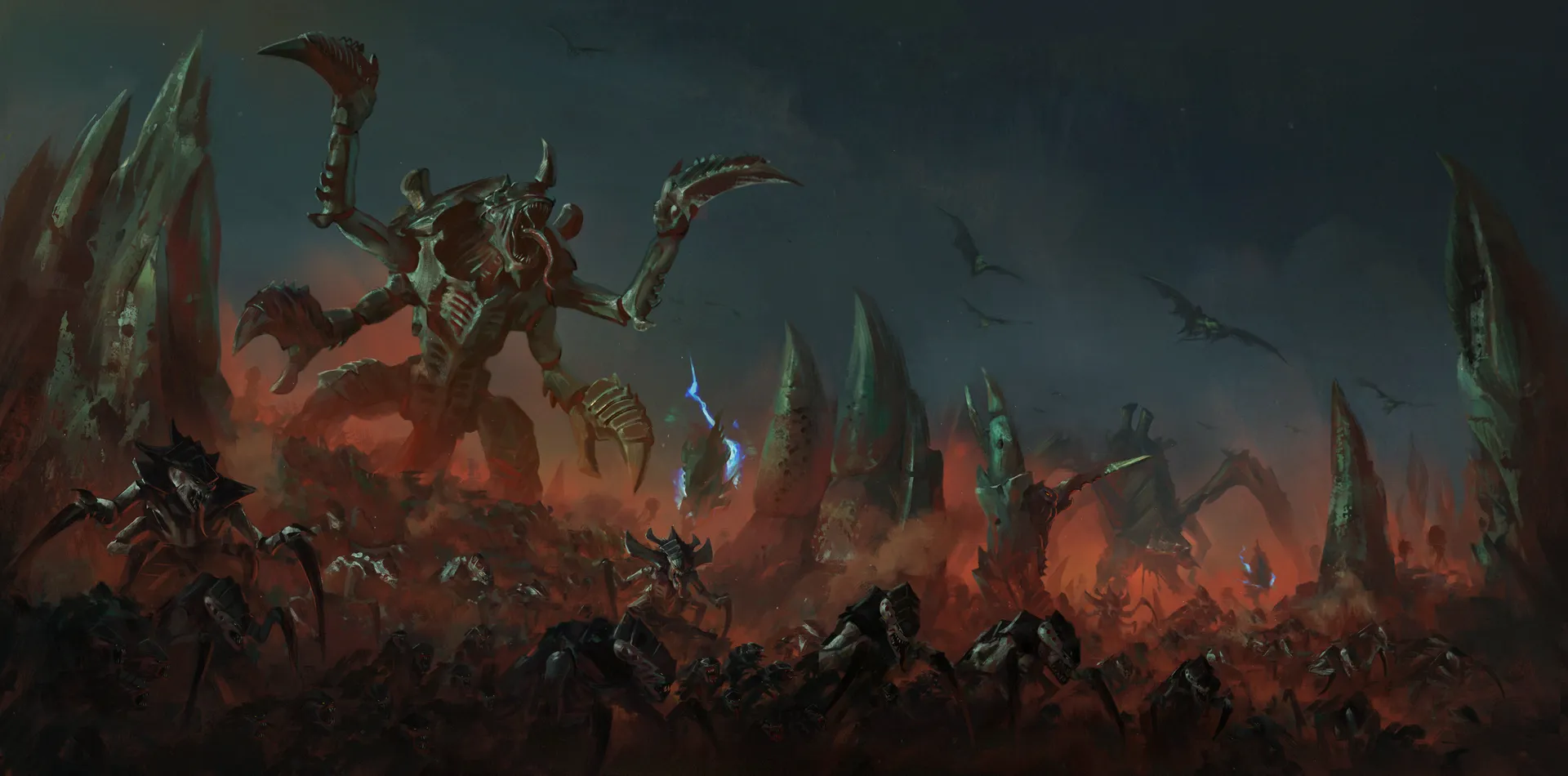
Tyranids: Warhammer 40K Lore Guide
The complete lore of the Tyranids — the Great Devourer, the Hive Mind, the Shadow in the Warp, the great Hive Fleets, Genestealer Cults, and the hunger that crossed the void between galaxies.
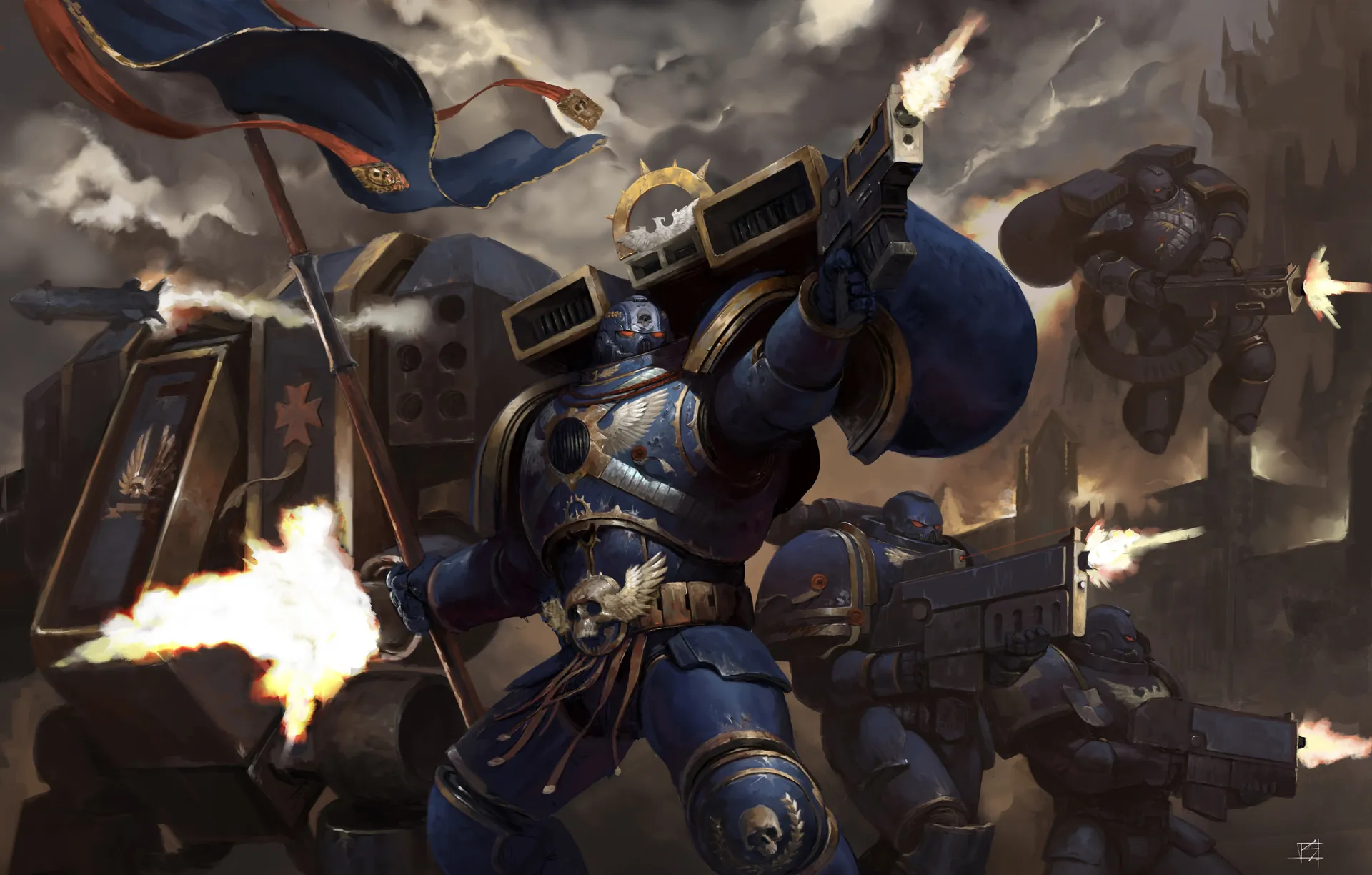
Space Marines (Adeptus Astartes): Warhammer 40K Lore Guide
The complete lore of the Space Marines — the Primarchs, gene-seed, the Horus Heresy, the Codex Astartes and the Chapters, the Primaris and Guilliman’s return, and the cost of the Angels of Death.
Start building your world today
A linked wiki, a timeline and a live DM screen — free, in your browser, no account needed.