Death Korps of Krieg: Warhammer 40K Lore Guide
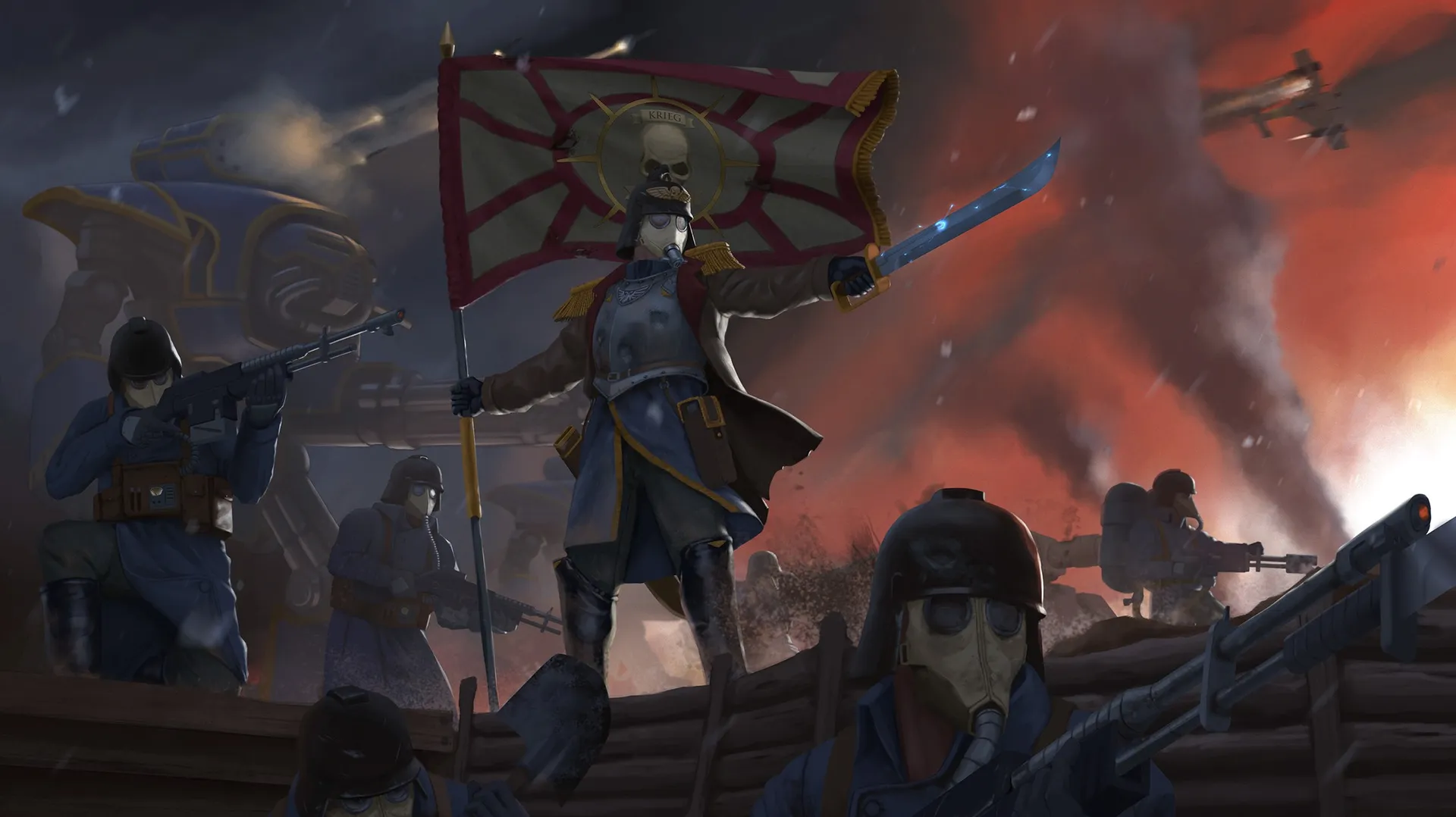
Gas masks, long greatcoats, bayonets fixed, and an endless line of trenches running toward the enemy guns. The Death Korps of Krieg are the most recognizable soldiers in Warhammer 40,000. They come from a world their own ancestors burned with atomic fire, and they march to war believing that their whole people carries a debt of treason only death can repay. Other regiments fight to survive. Krieg fights to be spent.
The Death Korps are the grimmest of the Astra Militarum regiments, specialists in siege warfare and attrition who are sent wherever the Imperium needs a fortress broken and does not care what it costs. This guide covers the Purging of Krieg and its five-century civil war, how Kriegsmen are raised, the siege regiment, the Quartermasters, Grenadiers and Death Riders, the great campaigns from Vraks to Armageddon, and the 2025 plastic range.
Death Korps of Krieg at a Glance
| Aspect | Detail |
|---|---|
| Homeworld | Krieg, a former hive world in the Segmentum Tempestus, now an irradiated wasteland |
| Specialty | Trench, siege and attrition warfare |
| Defining belief | Atonement for Krieg's ancient rebellion through death in the Emperor's service |
| Signature look | Gas mask and rebreather, plasteel helmet, chemically treated greatcoat |
| Unique roles | Quartermasters, Grenadiers, Death Riders, Combat Engineers, Watchmasters |
| Famous campaigns | The Siege of Vraks, the Third War for Armageddon, the Nachmund Rift War |
| Notable figures | Colonel Jurten, Veteran Colonel Tyborc, Lord Marshal Varnan Dreir |
| Motto | "In life, war. In death, peace. In life, shame. In death, atonement." |
The Rebellion and the Purging of Krieg
Krieg was not always a ruin. It was a prosperous hive world of billions, built on manufacture and trade and ruled by a council of Autocrats. Over generations those rulers grew decadent and paranoid. They fortified their world against imagined outside threats and came to resent the Administratum's hold over a planet they considered their own. In the 40th Millennium the High Autocrat declared Krieg independent of the Imperium and renounced the Emperor.
Civil war followed, and most of the planet fell quickly to the rebels. One hive held out: Ferrograd, under Colonel Jurten of the Krieg 83rd regiment. Jurten had orders not to let Krieg fall, and he knew no relief fleet large enough to save it was coming. He decided that Krieg would belong to the Emperor or to no one. On the Feast of the Emperor's Ascension he answered the rebellion with atomic fire. The episode is remembered as the Purging.
For days the planet burned. The ecosystem collapsed, a nuclear winter set in, and still the war did not end. Survivors on both sides fought on from underground bunkers and the radioactive chem-wastes. The loyalists retook their world inch by inch over roughly five hundred years before Krieg finally returned to Imperial rule. The people who emerged were shaped by permanent war, poisoned air and a single conviction: their world had betrayed the Emperor, and they would spend every life they had to make it right.
Born to Atone: Krieg Society and Recruitment
By order of the High Lords of Terra, Krieg's sole purpose is now to produce soldiers, and its tithe is set at the maximum the population can bear. The old Imperial Armour books describe unusual methods to keep the regiments flowing, including "vitae womb" birthing techniques that the Adeptus Mechanicus's Magos Biologis consider dangerous and abhorrent, and a eugenics program inherited from the civil war years to weed out mutation.
Training is designed to break recruits and rebuild them. Children learn tunnel drills while still small enough to crawl through narrow galleries, fight combat servitors, and spend their nights under hypno-training fed directly into the optic nerve. The final test is the surface of Krieg itself: mock battles fought across the irradiated battlefields of the civil war. Only those who survive become Korpsmen.
The result is a soldier who is disciplined, self-sufficient and terrifyingly calm. Every Kriegsman is taught that, as an individual, he does not matter; he is a pebble in the avalanche that will bury the Emperor's enemies. Krieg issues no medals, because courage is simply expected. Soldiers are known by serial numbers rather than names, and a Kriegsman earns or regains a name only through promotion, martyrdom or an act of exceptional bravery.
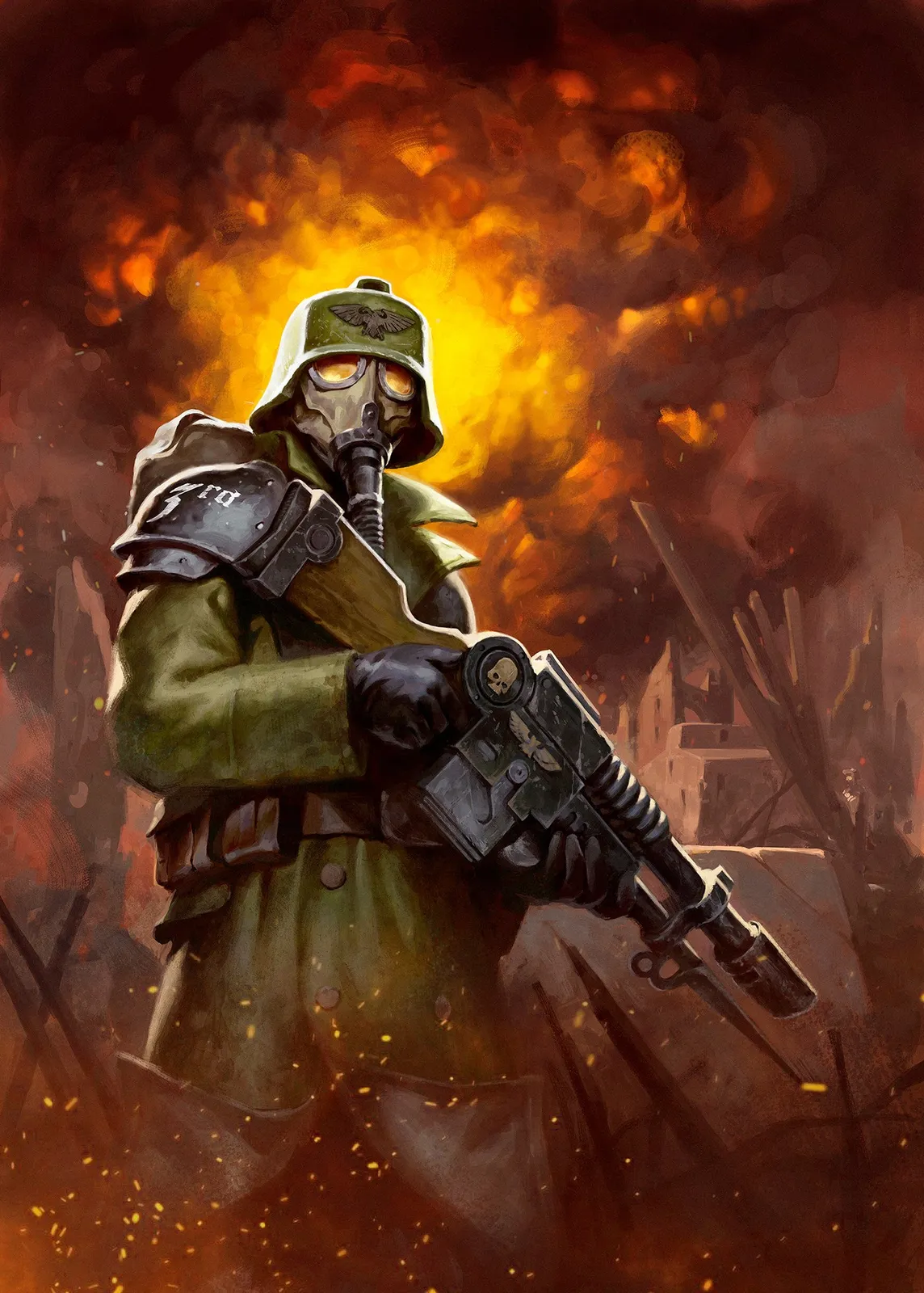
The mask is the culture. Korpsmen are famously reluctant to remove their rebreathers around anyone not from Krieg, even aboard Navy ships, and do so only when a superior directly orders it. Black Library fiction suggests there is not much face left underneath: the poisons of Krieg leave few of them recognizably human.
The Siege Regiment: How Krieg Makes War
Krieg's doctrine fits in a sentence: any battle in which Krieg's capacity to wage war and willingness to die exceed the enemy's is already won, and everything else is a matter of time. The siege regiment is the purest expression of that idea. A sustained artillery barrage opens the assault. Human waves follow, advancing in dispersed formation across no man's land, then closing ranks to pour disciplined volleys of las-fire into enemy positions before the bayonet charge. Krieg's long sword-bayonet is no ornament; recruits drill with it from childhood, and the charge remains a preferred tactic.
Everything in the regiment serves that grinding advance:
- Infantry companies are enormous, more than seven hundred soldiers at full strength, built from ten-man squads led by Watchmasters, Krieg's sergeants.
- Heavy weapons are concentrated in separate platoons, so slow-moving teams never stagger the infantry advance. They shore up the flanks and hold captured ground.
- Artillery comes in layers, from towed mortars and quad-launchers supporting the line to Earthshakers, Medusa siege guns and Colossus bombards smashing fortifications. A siege army adds whole bombardment korps to keep the shells falling for months.
- Armor is parceled out to infantry platoons rather than massed, with Leman Russ siege variants fitted with dozer blades and trench rails. Krieg commanders treat lost tanks with the same indifference as lost men.
- Transports and engineers are built for trench war: the huge Gorgon armored assault transport carries infantry across no man's land, Centaurs tow guns and carry command squads, Hades breaching drills tunnel beneath enemy lines, and Combat Engineers undermine defenses from below.
Above the regiment sits the line korps, several siege regiments on one front, and above that the siege army. Krieg also raises infantry, mechanized and armored regiments, all sharing the same discipline and indifference to losses.
That indifference has a cost. Unless explicitly ordered to withdraw, a Krieg unit will fight an overwhelming foe until it is destroyed, even when retreat would serve the campaign better. That is why the Commissars attached to Death Korps regiments, among the few non-Kriegsmen in their ranks, spend less time enforcing courage than restraining it, reminding Krieg officers of the strategic picture beyond the next trench line.
Quartermasters, Grenadiers and Death Riders
Several roles exist only in the Death Korps, and each one says something about Krieg.
The Quartermaster and the Emperor's Peace
The Quartermaster was born in the atomic wastes of the civil war. In a war where every piece of materiel had to be recovered and a single tear in an environment seal meant a slow, lingering death, a soldier who could not return to the fight or reach an aid station under his own power became a liability. Such soldiers were granted an honorable field execution known as the blessing of the Emperor's Peace. Quartermasters still perform that duty. They are chosen for mental aptitude and faith and trained in field medicine, tech-lore and the Imperial Creed. On the battlefield, aided by servitors, they triage the wounded, administer last rites, end the lives of those beyond saving and recover their weapons and equipment for the next soldier. They also track ammunition and attrition for their officers: medic, priest, executioner and accountant in one.
Grenadiers
Grenadiers are Krieg's heavy infantry, veterans hand-picked by their Watchmasters to spearhead assaults in heavier armor. They often paint a skull on their masks, a "death's head" that marks their acceptance that death is coming and their resolve not to falter when it does. A Grenadier who survives a stint as shock troops returns to the line as a Watchmaster.
The Death Riders
Instead of Sentinels, siege regiments rely on the Death Riders of Krieg: cavalry squadrons, with rider and mount both masked against the poisoned air, who scout ahead, exploit breakthroughs and counter-attack enemy assaults with lance and saber. Death Rider service is also Krieg's officer school. Most officers are selected from the ranks during training and have already been marked for the Riders, so many colonels still wear the tall boots and breastplate of their cavalry days and carry a laspistol and saber long after they stopped riding. Rhuairidh James's 2026 Black Library novel Death Rider takes readers inside this world, seen partly through the eyes of a commissar assigned to a Krieg regiment.
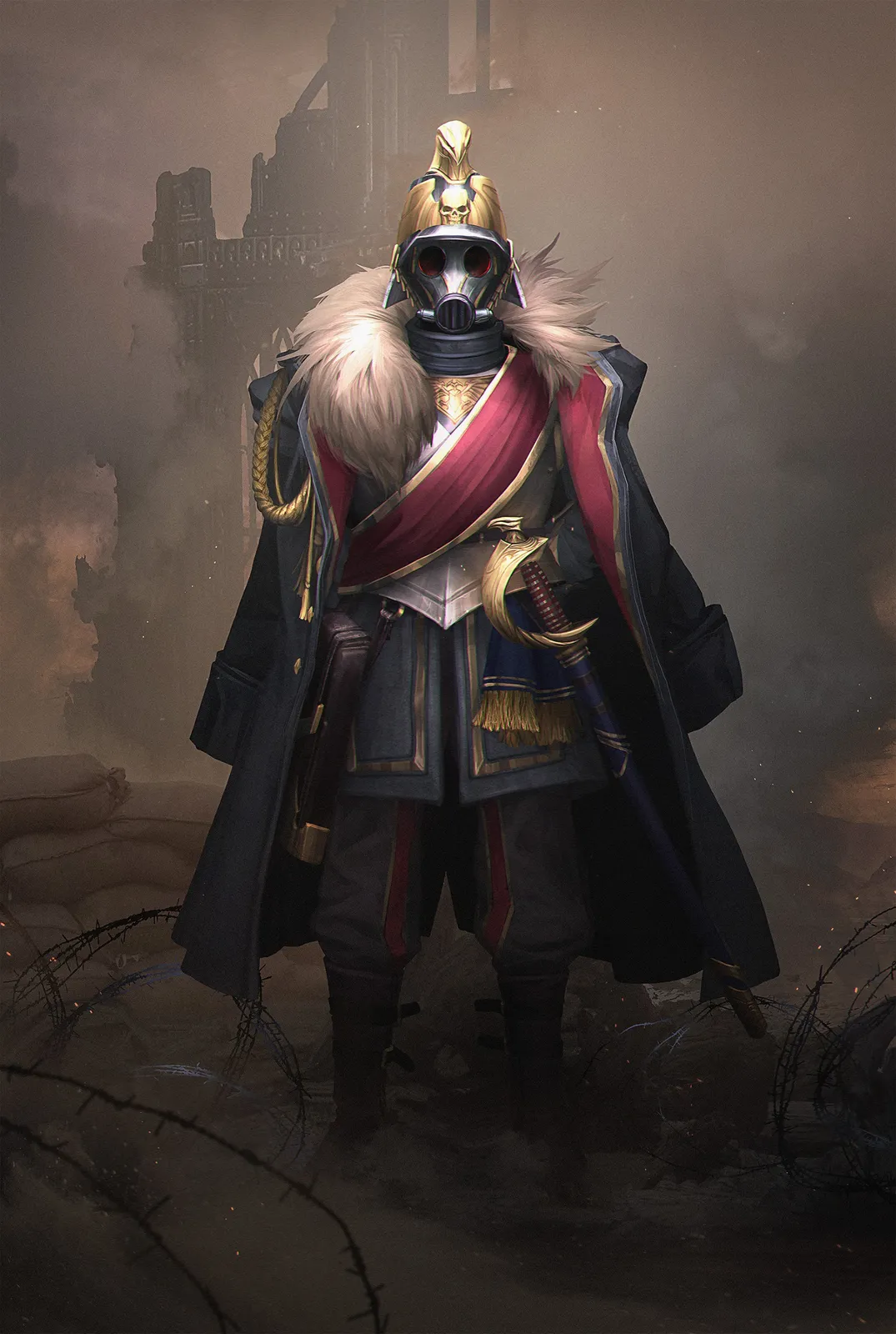
Officers rise through skill, seniority and survival rather than birth, and fight on the front line up to regimental level. They regard their soldiers much as other commanders regard ammunition, which causes friction whenever non-Krieg units are placed under them.
The Siege of Vraks and Other Campaigns
The defining Death Korps story is the Siege of Vraks, told across three Forge World Imperial Armour books and later in Steve Lyons' novel Siege of Vraks. Vraks Prime was an armory world seized by the apostate Cardinal Xaphan, and its fortress-citadel had to be taken by storm. The Imperium sent Krieg. The siege lasted seventeen years, an industrial meat grinder of trench lines, artillery duels and mass assaults that eventually drew in Traitor Astartes and daemons. Krieg regiments, including Veteran Colonel Tyborc's 261st, broke the citadel through sheer, deliberate attrition. If you want to see the enemy side of that war, the renegades who flocked to Xaphan's banner are covered in our Chaos Space Marines guide.
Krieg has fought almost everywhere the Imperium bleeds. Its regiments fought on Armageddon during the Third War, including the defense of Hive Tartarus, against the Ork hordes of Ghazghkull Thraka. They held the line at Tarsis Ultra against the Tyranids, fought in the Taros Campaign and the Octarius War, and in the Indomitus era deployed in staggering numbers: 125 regiments fought in the defense of Sangua Terra during the Nachmund Rift War, and forty-five more were organized into a single line korps during the Season of Blood. Steve Lyons' novel Dead Men Walking pits a Krieg regiment against the Necrons, another enemy that does not fear death.
Heroes of Krieg
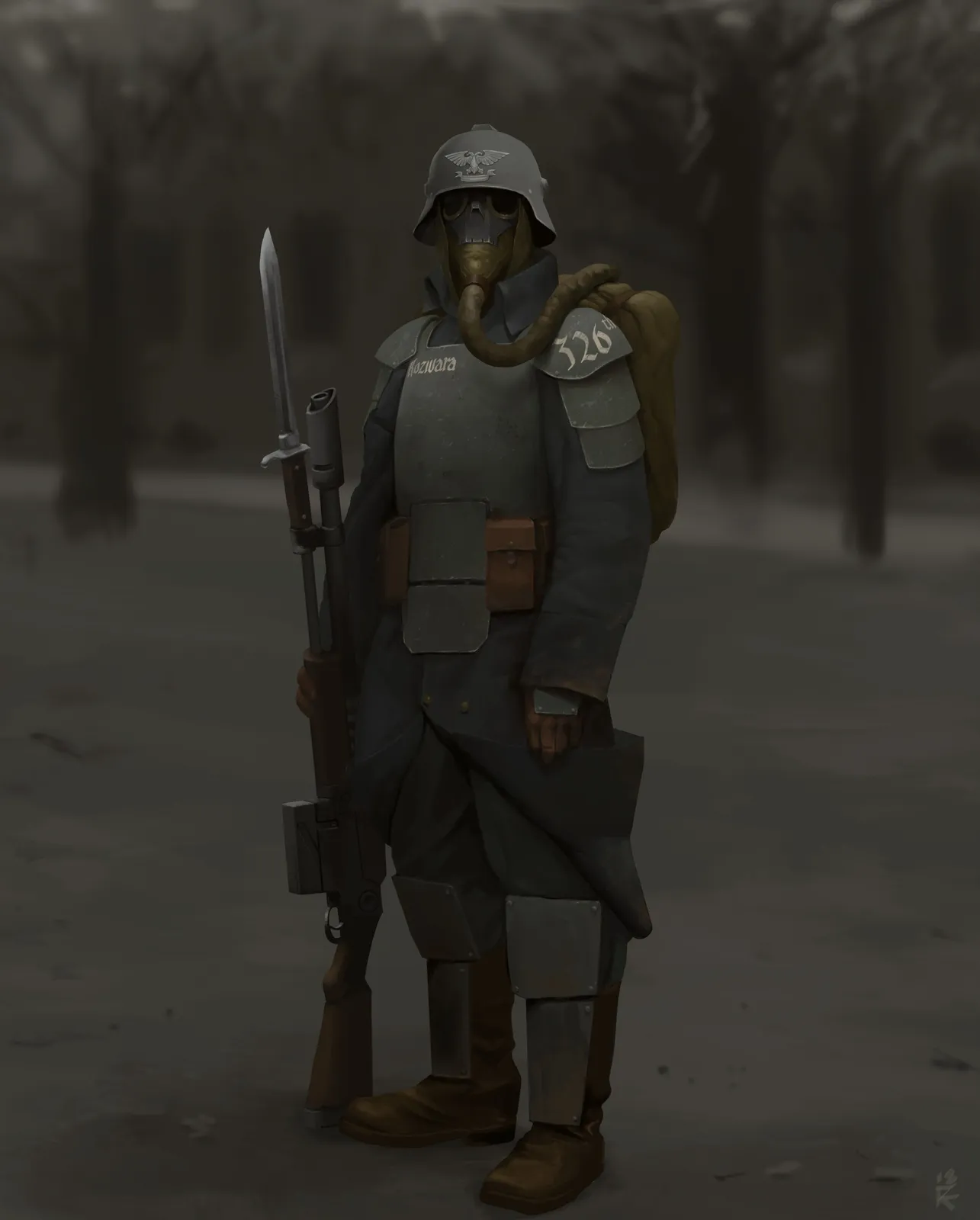
A culture that refuses individual glory still produces a few names.
- Colonel Jurten — the loyalist commander of Ferrograd who ordered the Purging. Krieg remembers him as the man who chose the Emperor over his own world, and the Death Korps descend from his decision.
- Veteran Colonel Tyborc — commander of the 261st Krieg Siege Regiment at Vraks and a viewpoint character in the Vraks fiction, where he reflects on how Krieg's stories teach its people to see themselves as unworthy, and why they need to.
- Lord Marshal Varnan Dreir — a senior commander who rose from the 143rd Krieg regiment, introduced with the 2025 range and fielded as the army's centerpiece character.
How Krieg Differs From the Rest of the Guard
On paper, Krieg is just another Astra Militarum regiment. In practice it differs from the rest of the Guard in several ways:
- Motivation. Cadians fight because war is their culture and their world was the Imperium's gate. Catachans fight because nothing a battlefield throws at them is worse than home. Krieg fights to die well, which no other regiment does.
- Doctrine. Most regiments maneuver; Krieg digs. It is the Guard's specialist in static fronts, fortresses and wars of attrition.
- Abhumans and psykers. Krieg rarely fields Ogryns, despises Ratlings for their insubordination, and keeps sanctioned psykers vanishingly rare.
- Identity. No medals, no names, no faces. Where other regiments celebrate their heroes, Krieg celebrates its dead.
Collecting and Playing the Death Korps
For years the Death Korps existed almost entirely as Forge World resin, which made them iconic but expensive. Games Workshop brought them into plastic in stages: first a Krieg veteran squad for Kill Team in 2021, then a full range in January 2025, launched with an army set alongside the new Astra Militarum codex. That release added Lord Marshal Dreir, Death Riders, Combat Engineers with a remote mine, a heavy artillery team, a command squad and heavy weapon teams, making an all-plastic Krieg army possible for the first time.
On the tabletop, a Krieg army plays the way the lore reads. You field large blocks of infantry that are meant to be spent, supported by artillery that softens the target before the advance and by engineers and cavalry who exploit the gaps. It rewards players who think in attrition: trading units for ground and holding objectives through sheer numbers. It is also a forgiving army to paint: greatcoats, mud and verdigris look better the grimier they get.
Death Korps of Krieg FAQ
Why do the Death Korps of Krieg want to die?
Their world rebelled against the Emperor in the 40th Millennium. Even though loyalists won the five-century civil war that followed, every Kriegsman is raised to believe Krieg still owes a debt of treason, and the highest atonement is to die in the Emperor's service.
Are the Death Korps of Krieg clones?
Not exactly, though the idea is popular. Forge World's Siege of Vraks books describe "vitae womb" birthing methods and eugenics programs used to meet Krieg's huge tithe. The lore stops short of calling every Kriegsman a vat-grown clone, and the novels portray them as human beings shaped by brutal conditioning.
Why do Krieg soldiers never take off their masks?
Partly practicality, since they are raised on a poisoned world, and partly culture: the mask is part of the uniform and the symbol of their anonymity.
What was the Siege of Vraks?
A seventeen-year Imperial campaign to retake the armory world Vraks Prime from the apostate Cardinal Xaphan and his traitor army. Krieg siege regiments did most of the dying and most of the winning, and the campaign is told in Forge World's Imperial Armour volumes and Steve Lyons' novel Siege of Vraks.
Continue Exploring
- Astra Militarum (Imperial Guard) — the full story of the Imperium's mortal army, its tanks and its commanders.
- Warhammer 40K factions guide — all 29 armies, their lore and how they play.
- Cadian Shock Troops — the soldiers of the fallen fortress world that guarded the Eye of Terror.
- Catachan Jungle Fighters — death-world survivalists and masters of the ambush.
- Adeptus Mechanicus — the tech-priests who build Krieg's guns and frown at its birthing vats.
For every other army and setting deep-dive, browse the Warhammer 40K lore hub. To chronicle your own siege regiment, its trench lines and its numbered dead, Anima is free and runs in your browser with no account: a wiki, a timeline, and campaigns with a live DM screen.
Keep reading
More from this topic
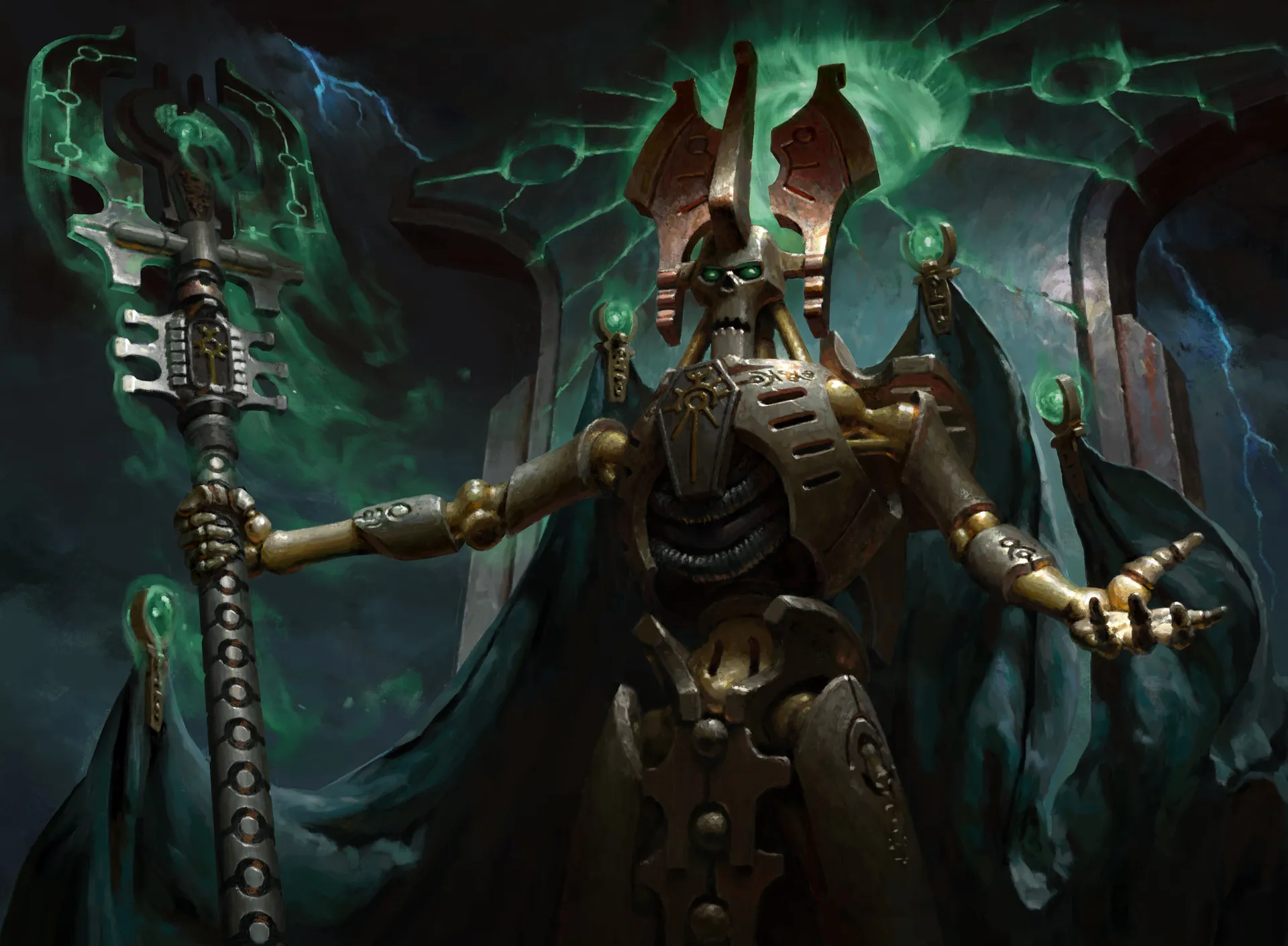
Necrons: Warhammer 40K Lore Guide
The complete lore of the Necrons — the doomed Necrontyr, the C’tan star-gods, biotransference, the War in Heaven, and the deathless dynasties now waking to reclaim the galaxy.
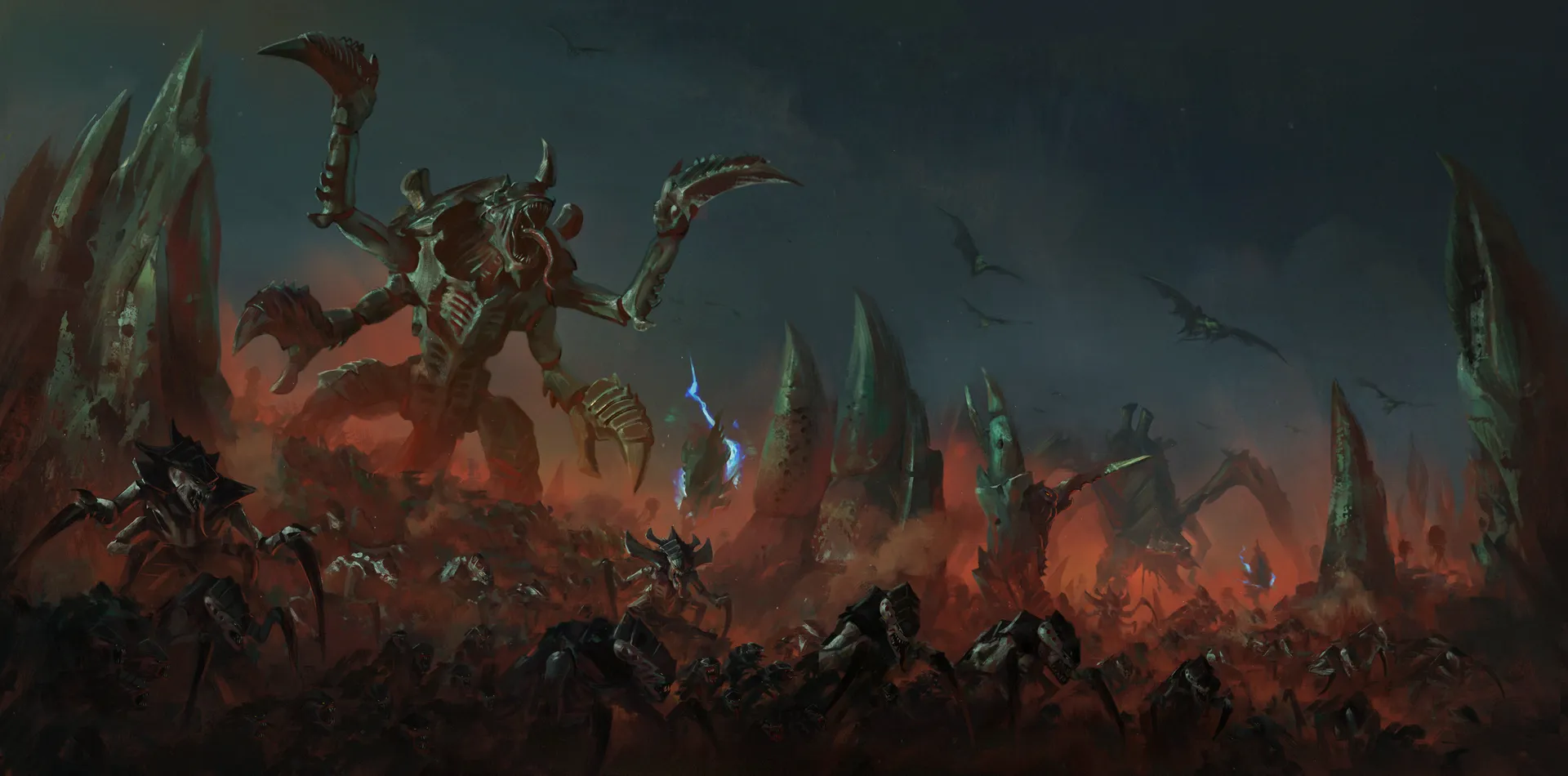
Tyranids: Warhammer 40K Lore Guide
The complete lore of the Tyranids — the Great Devourer, the Hive Mind, the Shadow in the Warp, the great Hive Fleets, Genestealer Cults, and the hunger that crossed the void between galaxies.
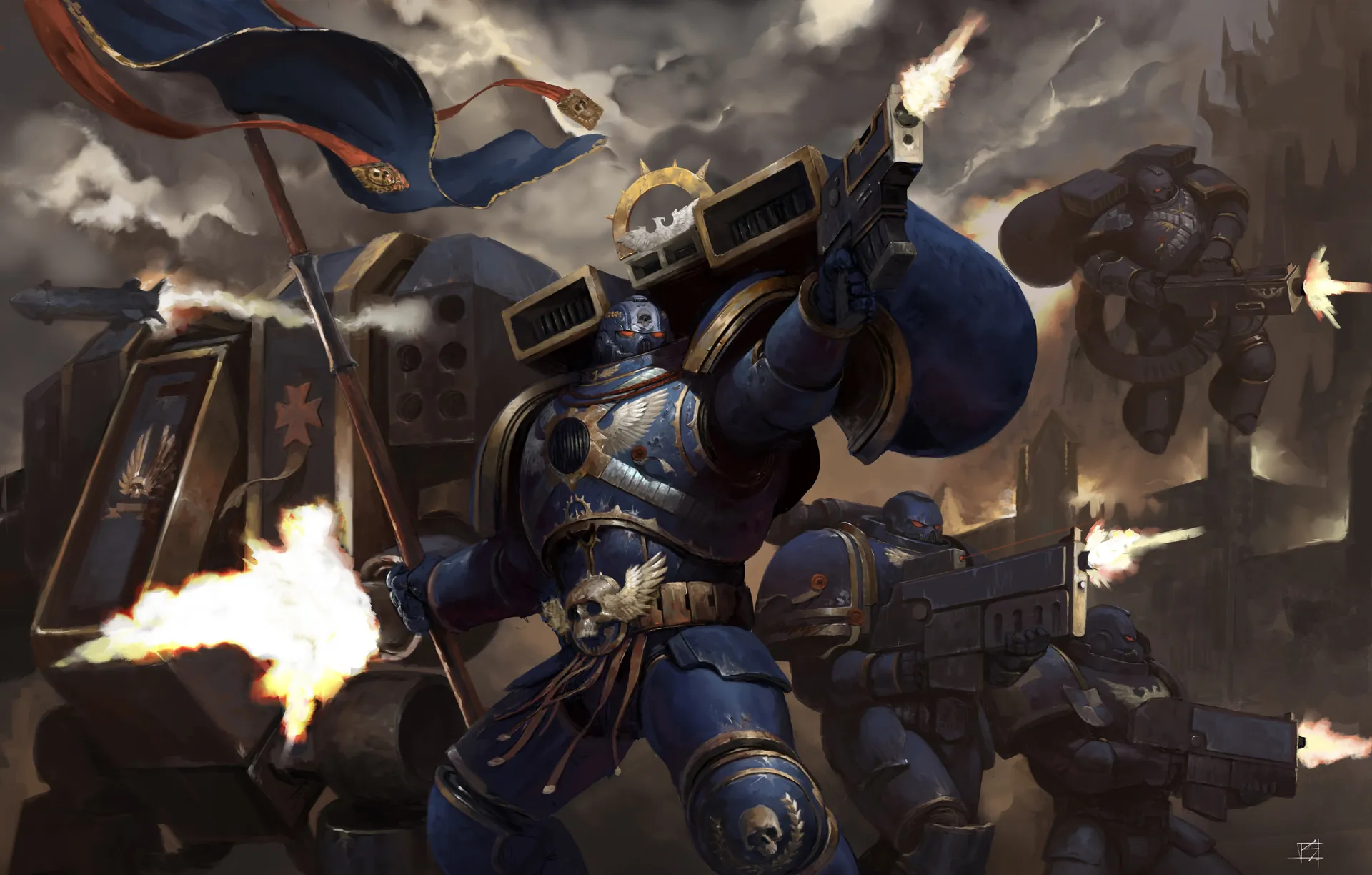
Space Marines (Adeptus Astartes): Warhammer 40K Lore Guide
The complete lore of the Space Marines — the Primarchs, gene-seed, the Horus Heresy, the Codex Astartes and the Chapters, the Primaris and Guilliman’s return, and the cost of the Angels of Death.
Start building your world today
A linked wiki, a timeline and a live DM screen — free, in your browser, no account needed.