Adeptus Mechanicus: Warhammer 40K Lore Guide
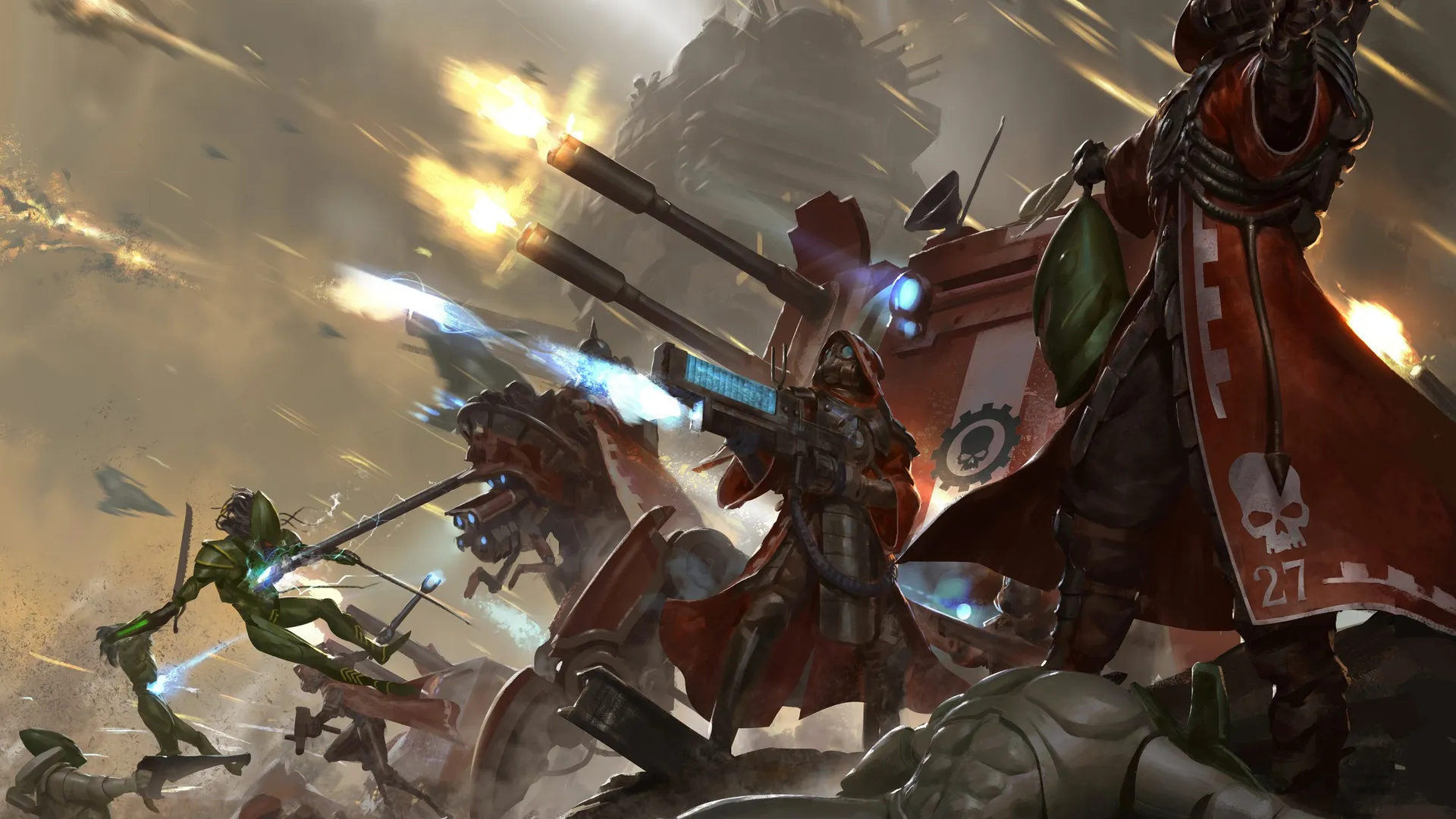
Incense hangs over the battlefield, along with ozone and the smell of burning machine oil. Hooded figures in rust-red robes chant in a language of clicks and data-bursts, while cyborg soldiers advance in perfect step, their weapons glowing with radiation. Above them stride walking engines older than empires. This is the Adeptus Mechanicus, the priesthood of Mars. They worship the Machine God, hoard the lost science of humanity's golden age, and regard the frail human body as something to be improved upon, piece by piece, until little flesh remains.
Without the Mechanicus, the Imperium would have no tanks, no starships, no bolters and no Space Marine armor. Every lasgun is built in its forges, and every machine spirit is blessed by its priests. Among all the Warhammer 40K factions, the Cult Mechanicus is one of the strangest: an empire within the Imperium, allied to Terra by an ancient treaty, pursuing its own sacred goals. This guide covers its history, its faith, its forge worlds and its armies, and the great schism that still divides it.
Adeptus Mechanicus at a Glance
| Aspect | Detail |
|---|---|
| Also known as | The Cult Mechanicus, the Tech-Priests of Mars, the Mechanicum (in the Horus Heresy era) |
| Homeworld | Mars, the Red Planet, and countless forge worlds |
| Faith | Worship of the Machine God, of whom the Emperor is held to be the avatar, the Omnissiah |
| Leadership | The Fabricator-General of Mars, one of the High Lords of Terra |
| Armies | Skitarii legions, Tech-Priests, battle servitors, Electro-Priests, war robots |
| Allied orders | The Titan Legions of the Collegia Titanica and the Knight houses of the Questor Mechanicus |
| Famous figure | Archmagos Dominus Belisarius Cawl, creator of the Primaris Space Marines |
| Defining trait | Reverence for knowledge combined with a fear of innovation |
Mars and the Treaty of Olympus
Long before the Imperium, during the Age of Strife, Mars was a world of tech-cults. Its priesthood preserved fragments of the advanced science humanity had possessed in the Dark Age of Technology, and turned the planet into a single colossal forge. When the Emperor arrived to reunite humanity, he did not conquer Mars. He made a deal.
Under the Treaty of Olympus, Mars recognized the Emperor's rule and placed its forges at the service of the Great Crusade. In return, the Mechanicum kept its autonomy, its territories and its religion. Central to the agreement was the belief, carefully encouraged, that the Emperor was the Omnissiah, the living avatar of the Machine God. Mars thus served a god, not a conqueror, and that difference has shaped Imperial politics ever since.
The Schism of Mars
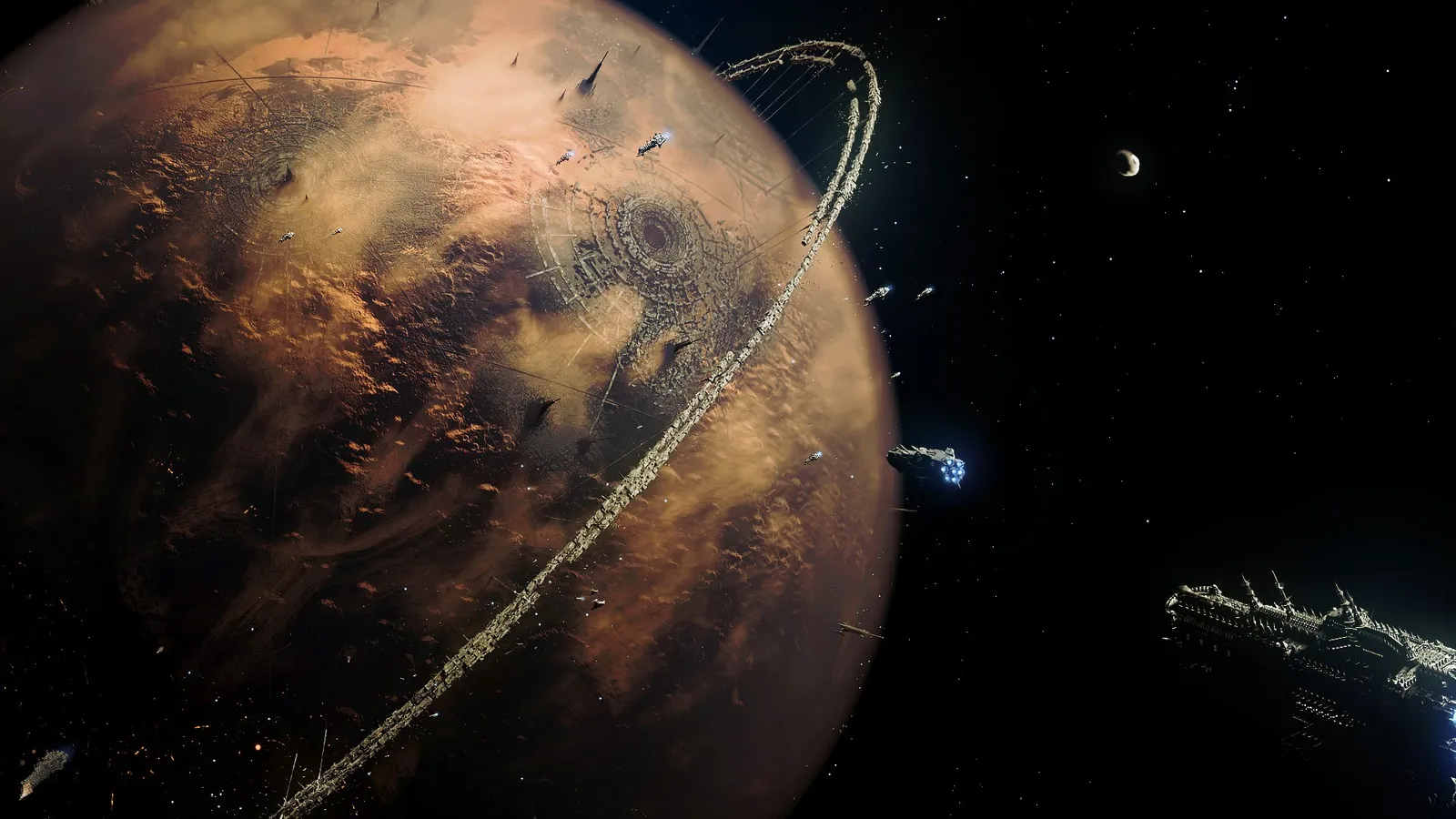
When Horus rebelled, the Mechanicum split. The Fabricator-General of the time, Kelbor-Hal, had never fully accepted the Emperor as the Omnissiah, and he sided with the Warmaster. Civil war engulfed Mars, an event known as the Schism of Mars. The traitor faction became the Dark Mechanicum, which fused its machines with the Warp and its daemons. Its descendants still serve Chaos today.
After the Heresy, the loyalist Mechanicum was rebuilt as the Adeptus Mechanicus. It was more closely integrated with the Imperium, though never fully subordinate. Its leader, the Fabricator-General, sits among the High Lords of Terra, and Mars remains the single most important industrial world in the Imperium.
The Cult Mechanicus: Faith in the Machine
The religion of the Adeptus Mechanicus is not the Imperial Creed. Tech-priests worship the Machine God, the divine principle behind all technology. Knowledge is the highest good, and every machine contains a machine spirit that must be honored with rite and ritual. To a tech-priest, applying sacred oils to a tank, chanting the right litany before firing a cannon, or burning incense over a cogitator are not superstitions. They are the correct way to operate the device.
The ultimate goal of the faith is the Quest for Knowledge: recovering the lost technology of humanity's past, and above all the Standard Template Constructs, or STCs. These ancient databanks hold the blueprints for everything from tractors to battle tanks. The Mechanicus builds from these templates, and the rare discovery of a complete STC fragment is treated as a holy event.
The other side of that reverence is a deep fear of innovation. Inventing something new, rather than rediscovering something old, risks tech-heresy. A tech-priest who strays too far may be branded a heretek and hunted. That is why the Imperium's technology has barely changed in ten thousand years. It is also why the setting's most interesting tech-priests are the ones who push against those limits.
The flesh is weak, and the Mechanicus knows it. Tech-priests replace their bodies with augmetics as they rise in rank, until the most senior are towering assemblies of metal, mechadendrite limbs and cables, with only a few organs or a brain left of the original person. This progression is a spiritual journey toward the Machine God, and it is a defining part of the faction's body-horror aesthetic.
Binharic and the Noosphere
Senior tech-priests often abandon ordinary speech in favor of binharic cant, a machine language of clicks, tones and compressed data. Many communicate through the noosphere, an invisible data-network that lets augmented minds share information instantly. To outsiders, a gathering of magi can look like silent figures standing motionless while entire debates pass between them. It is one of the clearest signs of how far the Mechanicus has drifted from the humanity it serves.
Rank, too, is measured in transformation. A junior acolyte may have only a few implants. A Magos has given up much of their body. An Archmagos may be more machine than person, with a voice that comes from a vox-grille and limbs that number in the dozens. Each step is seen as a step closer to the Machine God, and each makes the priest a little less able to understand the frail humans around them.
The Forge Worlds
Mars is only the first of the forge worlds, planet-sized factories that each act as a semi-independent domain of the Mechanicus. Every forge world has its own traditions, specialties and rivalries. The best known include:
- Mars — the Red Planet, seat of the Fabricator-General. Its surface is entirely covered in forge-complexes, and orbital shipyards ring the planet.
- Ryza — masters of plasma technology, famous for surviving long and brutal Ork sieges.
- Metalica — obsessed with order and efficiency, and relentless in its war against the Orks. Its Skitarii fight amid a deafening industrial din.
- Lucius — a hollow world with an artificial sun burning at its core, one of the strangest wonders of the Mechanicus.
- Stygies VIII — notorious for its interest in xenos technology, a practice the more orthodox regard as dangerously close to heresy.
- Agripinaa — a forge world near the Eye of Terror, hardened by endless war against Chaos.
- Graia — legendary for its unwavering logic and its refusal ever to retreat.
Beyond the forge worlds sail the Explorator fleets: expeditions led by magi who venture into the unknown to recover ancient technology. Many of the setting's stories begin with an Explorator fleet finding something it should have left alone.
The Armies of the Omnissiah
The Adeptus Mechanicus does not depend on the Astra Militarum or the Space Marines to defend itself. It fields armies of its own, as strange as its faith.
Tech-Priests
Tech-priests are the faction's leaders and specialists. A Tech-Priest Dominus commands armies and wields deadly archeotech. A Manipulus manipulates the machine spirits of the army's own weapons, and Enginseers keep vehicles alive in battle. Many Enginseers serve with Guard regiments, as described in our Astra Militarum guide. Other specialists include the scholarly Lexmechanics and the Genetors, who study biology.
The Skitarii Legions
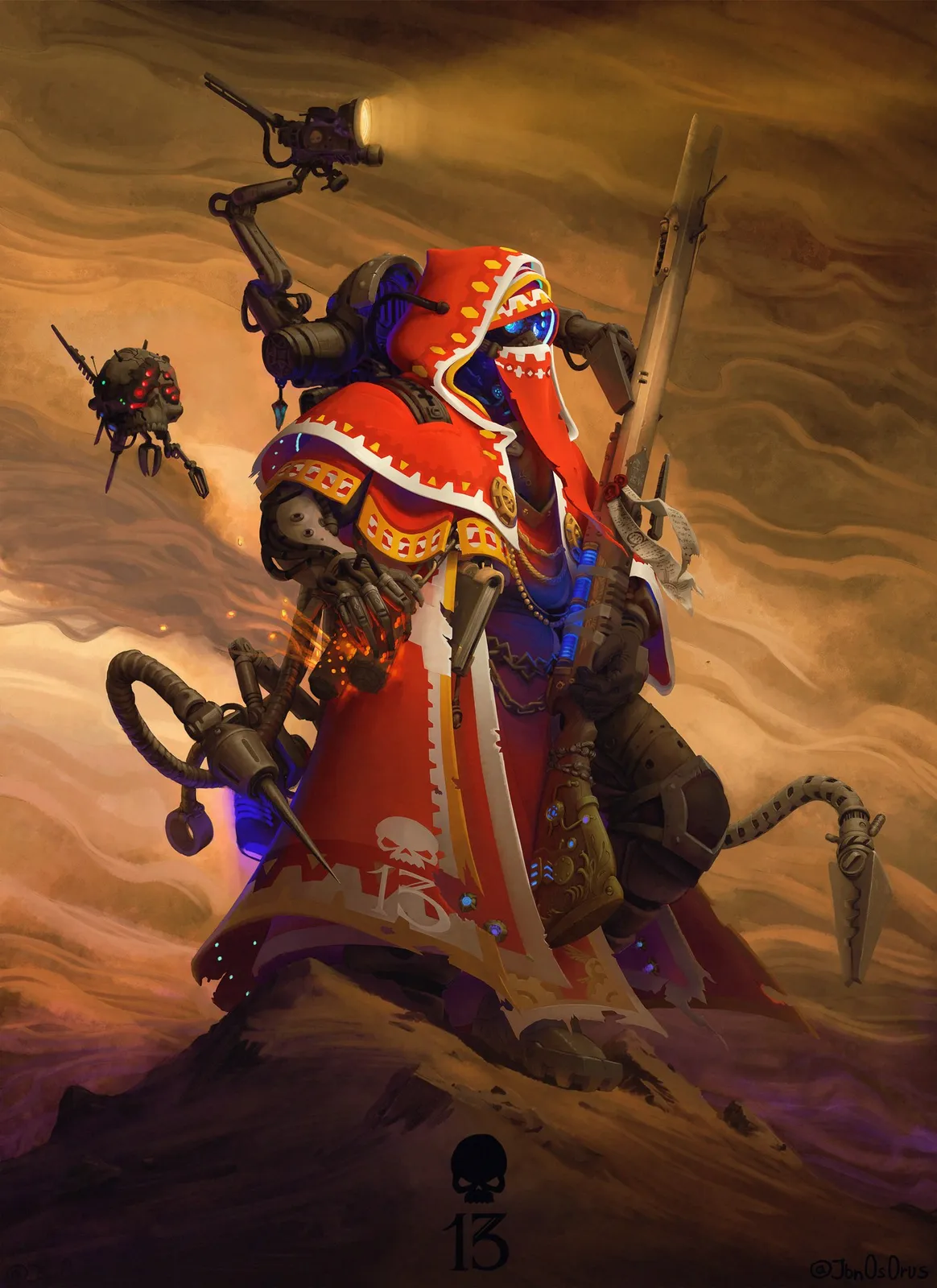
The Skitarii are the Mechanicus's soldiers: cyborgs so heavily augmented that their thoughts can be overridden remotely by their commanders. Skitarii Rangers are long-range marksmen, while the Skitarii Vanguard carry radium weapons and are so saturated with radiation that they poison the enemies around them. Sicarian infiltrators and ruststalkers are swift killers. Cavalry includes the hound-like Serberys mounts and the two-legged Ironstrider walkers, and the Onager Dunecrawler provides heavy support.
Servitors, Robots and Zealots
- Kataphron Breachers and Destroyers — battle servitors, half human and half tracked weapon platform.
- Electro-Priests — Fulgurite and Corpuscarii zealots who channel the Motive Force through their own bodies as crackling electricity.
- Kastelan Robots — ancient war robots of the Legio Cybernetica, guided by Datasmiths.
- Skorpius hover-tanks and Archaeopter aircraft — the Mechanicus's own vehicles.
Beyond these armies, the Mechanicus also commands the god-engines of the Titan Legions. Our Adeptus Titanicus guide covers them, and the Knight houses sworn to Mars, Questor Mechanicus, are covered in our Imperial Knights guide.
Belisarius Cawl and the Great Work
No tech-priest is more important to the modern setting than Archmagos Dominus Belisarius Cawl. A bizarre, immensely powerful figure who has lived for ten thousand years, Cawl spent millennia working in secret on a project ordered by Roboute Guilliman before the Primarch's long sleep. The result was the Primaris Space Marines, a new generation of Astartes, explained in our Space Marines lore guide.
When Guilliman was revived, Cawl revealed his Great Work, and the Primaris marched out in the Indomitus Crusade. To the Imperium, Cawl is a hero. To the conservative factions of Mars he is a dangerous radical, a magos who openly innovates and blurs the line between rediscovery and invention. That tension between Cawl and the orthodox priesthood is one of the most important storylines for the faction in the current era.
Secrets Beneath the Red Planet
The Mechanicus is full of secrets, and Mars holds the deepest of them. Lore across many editions hints that the Noctis Labyrinth, beneath the surface of Mars, imprisons something ancient. Many fans identify it as the C'tan known as the Void Dragon, and the Machine God the Mechanicus worships may be connected to it. Games Workshop has deliberately never confirmed the connection. Our Necrons lore guide explains what the C'tan are and why the idea is so unsettling.
The Mechanicus also faces rivals for technology. The Kin of the Leagues of Votann possess advanced technology the Mechanicus would give anything to study, and they treat it as a practical tool rather than a sacred mystery.
How the Adeptus Mechanicus Plays on the Tabletop
On the tabletop, the Adeptus Mechanicus is a shooting army with a twist. Its forces switch between offensive and defensive doctrines as the battle unfolds, reflecting the cold, data-driven warfare of the Cult Mechanicus. Skitarii provide the backbone, Tech-Priests boost and repair, and Kastelan Robots, Dunecrawlers and Skorpius tanks bring heavy firepower.
The trade-off is fragility up close: most Mechanicus infantry hate being charged, so positioning and choosing when to switch posture matter a great deal. Its rules take practice, but players who enjoy optimization find it rewarding. The model range is also one of the most distinctive in Warhammer 40,000, full of mechadendrites, censers and strange machines, which makes the army a favorite with painters and converters.
Adeptus Mechanicus FAQ
Is the Emperor the Omnissiah?
Officially, yes. The Treaty of Olympus rests on the Mechanicus recognizing the Emperor as the avatar of the Machine God. Belief in this varies among tech-priests. Kelbor-Hal's rebellion during the Horus Heresy showed that some never accepted it, and the true nature of the Machine God remains one of the setting's open questions.
Why is the Adeptus Mechanicus afraid of innovation?
Their faith holds that all knowledge already exists and should be rediscovered, not invented. Humanity's Dark Age of Technology ended in catastrophe, and the Mechanicus sees uncontrolled invention as both blasphemous and dangerous. Creating something new risks tech-heresy. This is why radical innovators like Belisarius Cawl are so controversial.
Are Skitarii human?
They began as humans, but Skitarii are so heavily augmented that they are better understood as cyborgs. Their minds can be overridden by data-tethers from their commanders, and much of their individuality is suppressed. Some retain a sense of self; many do not.
What is an STC?
A Standard Template Construct is an ancient databank from the Dark Age of Technology containing designs for machines and equipment. The Imperium's tanks and vehicles, such as the ubiquitous Rhino transport, derive from STC patterns. Complete STCs are almost impossible to find, and recovering one is the holiest goal of the Quest for Knowledge.
Who is Belisarius Cawl?
Belisarius Cawl is an Archmagos Dominus of the Adeptus Mechanicus who spent ten thousand years creating the Primaris Space Marines at Roboute Guilliman's command. He is one of the most powerful, eccentric and controversial figures in the Imperium, and the face of the faction in the modern era.
What is the difference between the Mechanicum and the Adeptus Mechanicus?
The Mechanicum is the name used for the Martian priesthood during the Great Crusade and Horus Heresy eras, when it was largely independent. After the Heresy and the Schism of Mars, the loyalist remnants were reorganized as the Adeptus Mechanicus and integrated more closely into the Imperium.
Continue Exploring
- Warhammer 40K Factions: Complete Guide to All 29 Armies — every army, its lore and how it plays
- Adeptus Titanicus — the Titan Legions, god-machines worshipped by the Mechanicus.
- Imperial Knights — the noble houses, many of them sworn to the forge worlds as the Questor Mechanicus.
- The Astra Militarum — the mortal army that fights in the Mechanicus's tanks.
For every other army and setting deep-dive, browse the Warhammer 40K lore hub. To chronicle your own forge world, its magi and its Explorator fleets, Anima is free and runs in your browser with no account: a wiki, a timeline, and campaigns with a live DM screen.
Keep reading
More from this topic
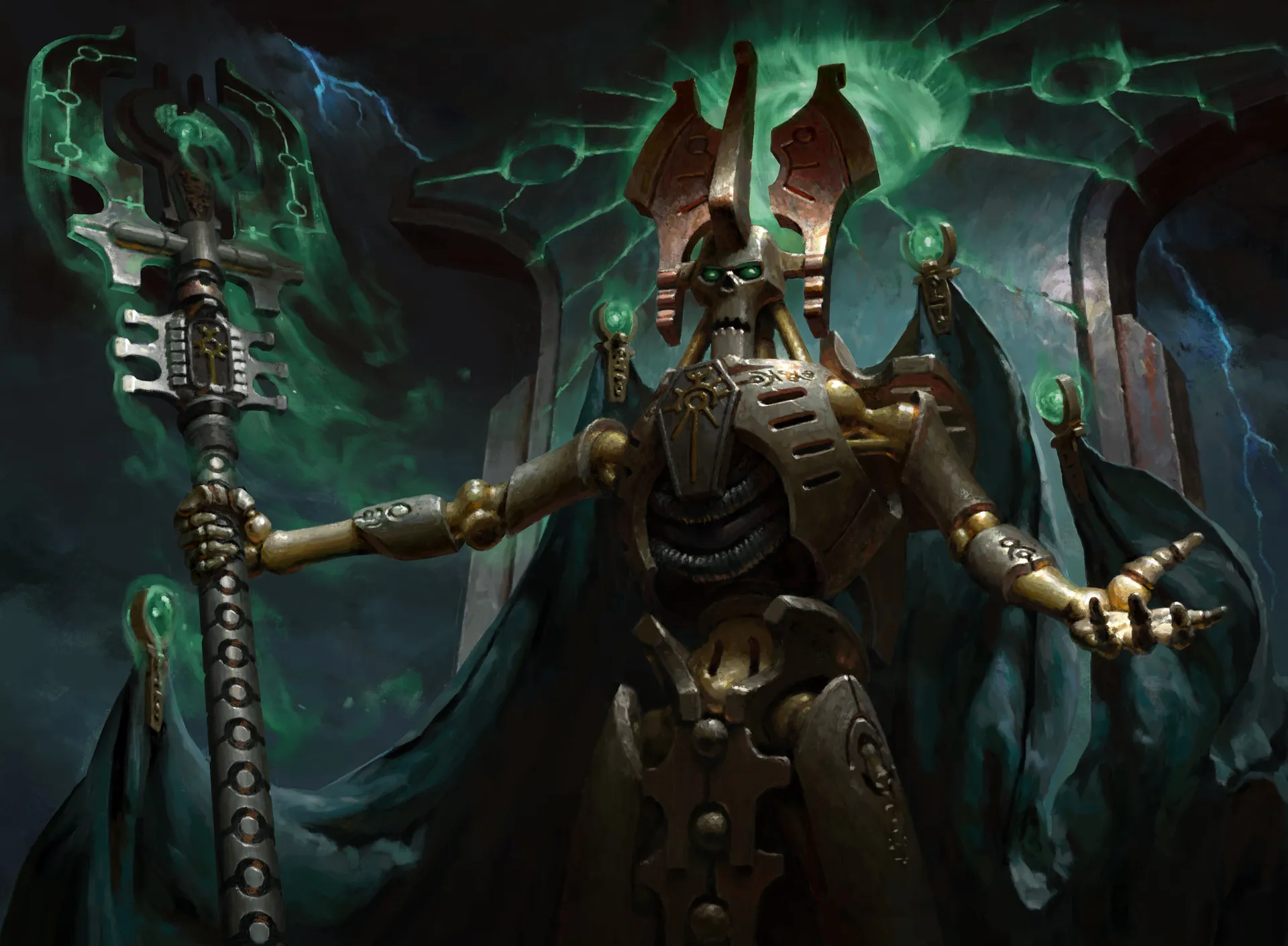
Necrons: Warhammer 40K Lore Guide
The complete lore of the Necrons — the doomed Necrontyr, the C’tan star-gods, biotransference, the War in Heaven, and the deathless dynasties now waking to reclaim the galaxy.
Tyranids: Warhammer 40K Lore Guide
The complete lore of the Tyranids — the Great Devourer, the Hive Mind, the Shadow in the Warp, the great Hive Fleets, Genestealer Cults, and the hunger that crossed the void between galaxies.
Space Marines (Adeptus Astartes): Warhammer 40K Lore Guide
The complete lore of the Space Marines — the Primarchs, gene-seed, the Horus Heresy, the Codex Astartes and the Chapters, the Primaris and Guilliman’s return, and the cost of the Angels of Death.
Start building your world today
A linked wiki, a timeline and a live DM screen — free, in your browser, no account needed.