Adeptus Titanicus: Warhammer 40K Lore Guide
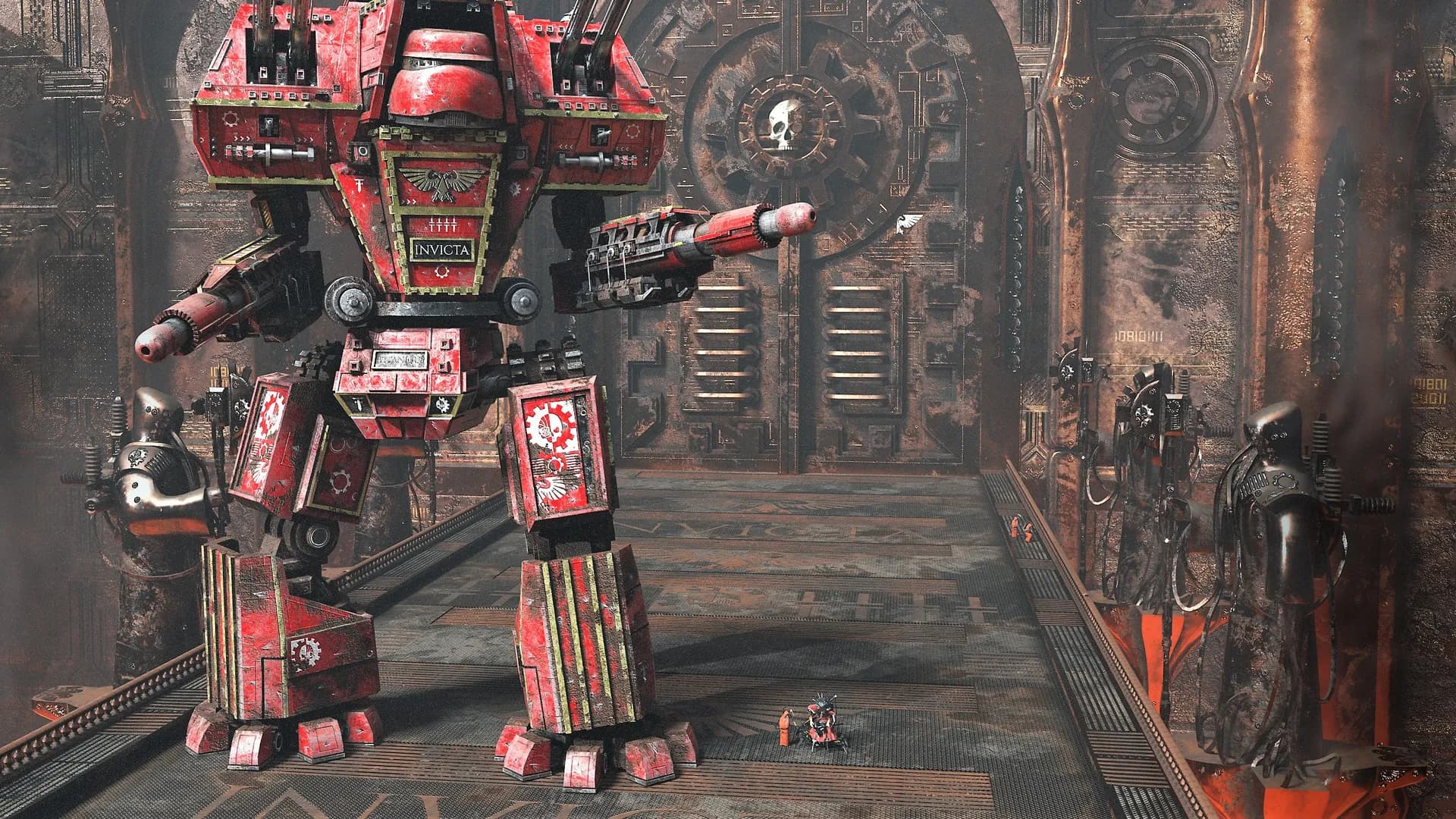
The ground shakes long before it comes into view. Then a shadow falls across the battlefield, and the soldiers below look up at a cathedral of armored steel walking on two legs, its weapons the size of buildings, its war horns sounding a blast that can be heard for miles. To the faithful of the Adeptus Mechanicus, this is no mere machine. It is a God-Engine, an avatar of the Omnissiah given form, and the warriors who walk it into battle are its priests as much as its crew. This is a Titan, and the orders that wage war with them are the Titan Legions of the Adeptus Titanicus.
Titans are the largest and most powerful war machines the Imperium can field outside of its starships. A single Titan can decide the fate of a city, and a full Legion on the march can break a world. In this guide we explore the Collegia Titanica, the ancient Legions and their histories, the bond between a Princeps and their machine, the classes of Titan from the nimble Warhound to the city-sized Imperator, the traitor Legions of the Titanicus Traitoris and how these god-machines play on the tabletop. For an overview of every army in the setting, see our Warhammer 40K factions guide.
Titans sit at the very top of the Imperium's war machine. They are symbols of power, objects of worship and some of the oldest relics of the human race, and their story is woven through every major conflict in Warhammer 40,000's history.
Adeptus Titanicus at a Glance
| Aspect | Detail |
|---|---|
| Also known as | The Collegia Titanica, the Titan Legions (Legios), the God-Engines |
| Parent organization | The Adeptus Mechanicus |
| Commanders | Princeps, bonded to their Titan through a Mind Impulse Unit (MIU) |
| Crew | Moderati, sensori and tech-priests, led by the Princeps |
| Main classes | Warhound (scout), Reaver and Warlord (battle), Warmaster, Imperator and Warmonger (heavy) |
| Famous Legios | Legio Ignatum, Legio Metalica, Legio Gryphonicus, Legio Astorum, Legio Solaria |
| Traitors | The Titanicus Traitoris, including Legio Mortis |
| Defining trait | Colossal scale, sacred technology and a living bond between pilot and machine |
Origins: The God-Engines of Mars
The roots of the Titan Legions lie in the Dark Age of Technology, when humanity built war machines of unimaginable power. Much of that knowledge was lost in the Age of Strife, but on Mars, the priesthood of the Mechanicum preserved and rebuilt what it could. Titans were constructed in the great forges of the Red Planet and its sister Forge Worlds, and the orders that crewed them became the first Titan Legions.
When the Emperor reached Mars and sealed the Treaty of Olympus with the Mechanicum, the Titan Legions became part of the Great Crusade. They marched beside the Space Marine Legions and the Imperial Army on countless worlds, and their presence often decided the outcome of the largest battles. Each Legio developed its own traditions, heraldry and reputation, and many were bound to a specific Forge World that built and maintained their engines.
To the Mechanicum, Titans have never been mere tools. They are believed to house powerful machine spirits, fragments of the Omnissiah's will, and they are treated with the reverence due to living beings. A Titan's construction, maintenance and deployment are surrounded by rituals, prayers and sacred rites. Destroying a Titan is regarded as a grave sacrilege, and recovering a fallen one is a holy duty.
The Princeps and the Mind Impulse Unit
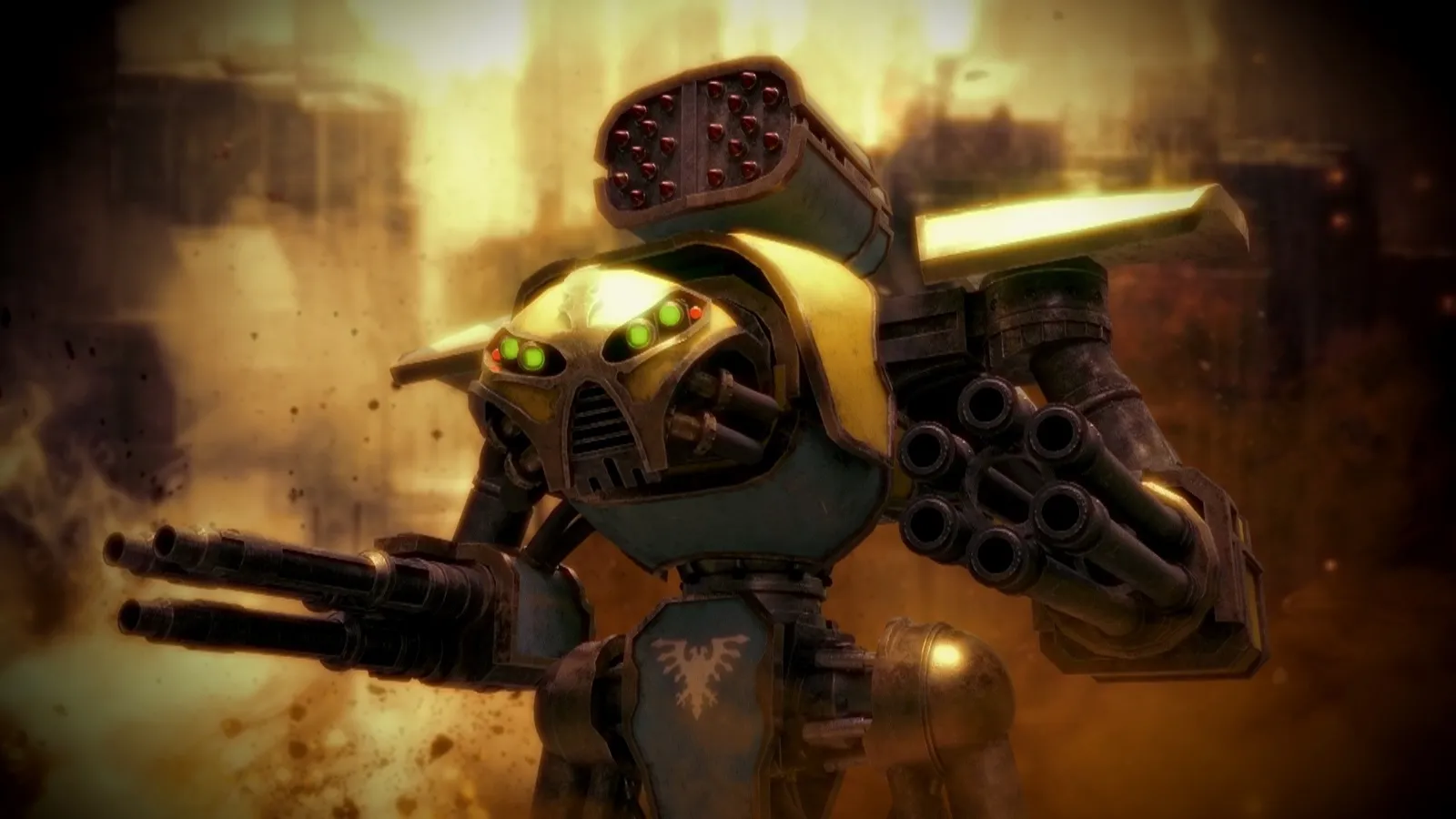
A Titan is commanded by a Princeps, one of the most honored figures in the Mechanicus. The Princeps is bonded to the Titan through a Mind Impulse Unit (MIU), a neural interface that links their mind directly to the Titan's systems and to its machine spirit. Through the MIU and the Titan's wider data network, often called the Manifold, the Princeps experiences the Titan as an extension of their own body: they feel its weapons as their fists, its reactor as their heartbeat and its damage as wounds.
The bond is not without danger. A Titan's machine spirit is ancient, proud and often aggressive, and a Princeps must constantly master it. Over long years of service, many Princeps find their personalities subsumed by the machine. The most senior often withdraw from ordinary life entirely, suspended in amniotic tanks inside their Titans and rarely or never leaving them. Some Princeps have been driven mad by their bond, and a Titan whose machine spirit has grown wild can be as dangerous to its own side as to the enemy.
The Princeps does not walk alone. A Titan's crew includes Moderati, who assist with steering and weapons; sensori, who manage the Titan's sensors; and tech-priests who tend to its systems, appease its machine spirit and keep its plasma reactor stable. Larger Titans carry many more crew, and the very largest serve as mobile fortresses with garrisons of troops.
Classes of Titan
The Collegia Titanica fields several classes of Titan, each designed for a different role on the battlefield.
Warhound Scout Titans
The Warhound is the smallest and fastest Titan class. Agile and aggressive, Warhounds often hunt in packs, scouting ahead of the main battle line, flanking enemy positions and running down fleeing foes. Their Princeps are known for their bold, almost predatory temperaments, a reflection of the wild machine spirits of their engines.
Reaver Battle Titans
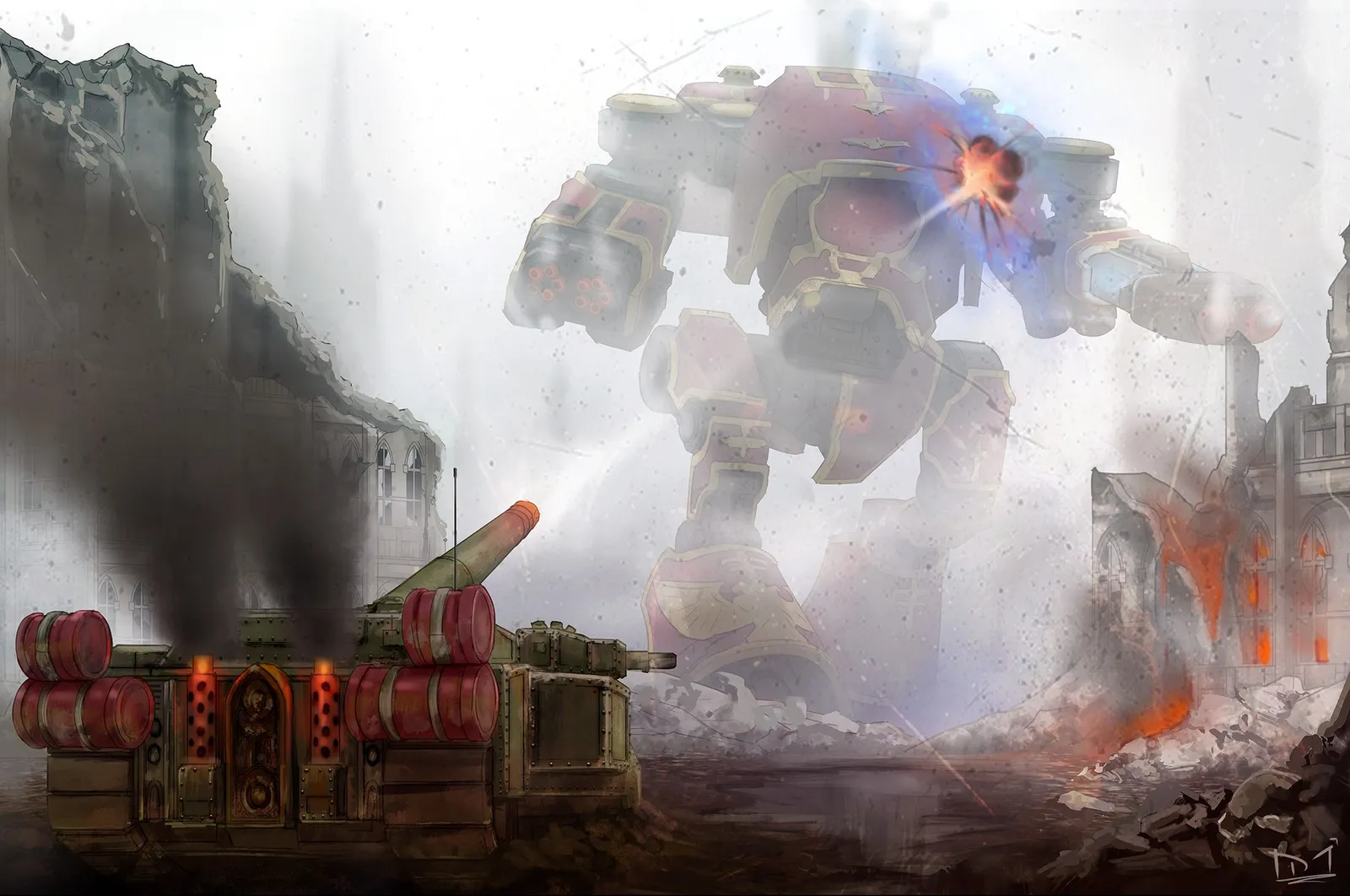
The Reaver is a mid-sized battle Titan, a reliable workhorse that balances speed, armor and firepower. Reavers often form the backbone of Titan maniples, the small battle groups in which Titans fight together.
Warlord Battle Titans
The Warlord is the iconic Titan of the Imperium: a huge, heavily armed battle Titan carrying weapons on its arms and carapace that can destroy tanks, buildings and even other Titans. Warlords are the mainstay of most Legions and the backbone of their battle lines.
Heavy Titans: Warmaster, Imperator and Warmonger
Above the Warlord stand the heaviest Titans. The Warmaster is a massive heavy battle Titan. The Imperator and Warmonger belong to the Emperor class, the largest Titans of all. An Imperator is effectively a walking fortress, carrying a chapel, a garrison of troops and weapons capable of leveling entire city blocks, while the Warmonger is built to command and to destroy aircraft and enemy fortifications. These are rare and precious engines, and their deployment is a sign of a war of the highest importance.
The Legions
The Collegia Titanica is divided into Legios, each with its own history, traditions and heraldry. Some of the most famous loyalist Legions include:
- Legio Ignatum (the Fire Wasps): one of the oldest and most honored Legions, closely tied to Mars and celebrated for its defense of Terra during the Horus Heresy.
- Legio Metalica (the Iron Skulls): tied to the Forge World of Metalica, renowned for its aggressive tactics and its role in the wars for Armageddon.
- Legio Gryphonicus (the War Griffons): a Legion with a long history of service in the Imperium's greatest campaigns.
- Legio Astorum (the Warp Runners): a storied loyalist Legion whose engines have fought in many of the Imperium's great wars.
- Legio Solaria (the Imperial Hunters): known for its swift Warhound packs and its tradition of female Princeps.
Each Legio typically works with allied Knight houses, especially houses of the Questor Mechanicus, which serve as escorts and outriders for the larger Titans. You can learn more about these houses in our Imperial Knights guide.
The Horus Heresy and the Titanicus Traitoris
The Horus Heresy tore the Mechanicum apart. When Mars itself split into rival factions, Titan Legions found themselves fighting on both sides. Some Legios remained loyal to the Emperor, while others followed the Fabricator General Kelbor-Hal into rebellion and allied with Horus. Titan fought Titan on Mars, on countless worlds of the Heresy and finally on Terra itself, where loyal Legions such as Legio Ignatum fought to defend the Imperial Palace.
The traitor Legions became the Titanicus Traitoris. Over the millennia that followed, their engines and crews were warped by the power of Chaos into daemon-haunted horrors. Their machine spirits are tainted by daemonic presences, and their crews are twisted by the Dark Gods. The most infamous traitor Legion is Legio Mortis (the Death's Heads), which sided with Horus at the very start of the Heresy and remains one of the most feared Chaos forces in the galaxy.
The traitor Titans fight alongside the Chaos Space Marines and the Chaos Knights, and they remain the most dangerous war machines the forces of Chaos can field. Battles between loyal and traitor Titans are among the most devastating conflicts in the setting.
Titans in the Indomitus Era
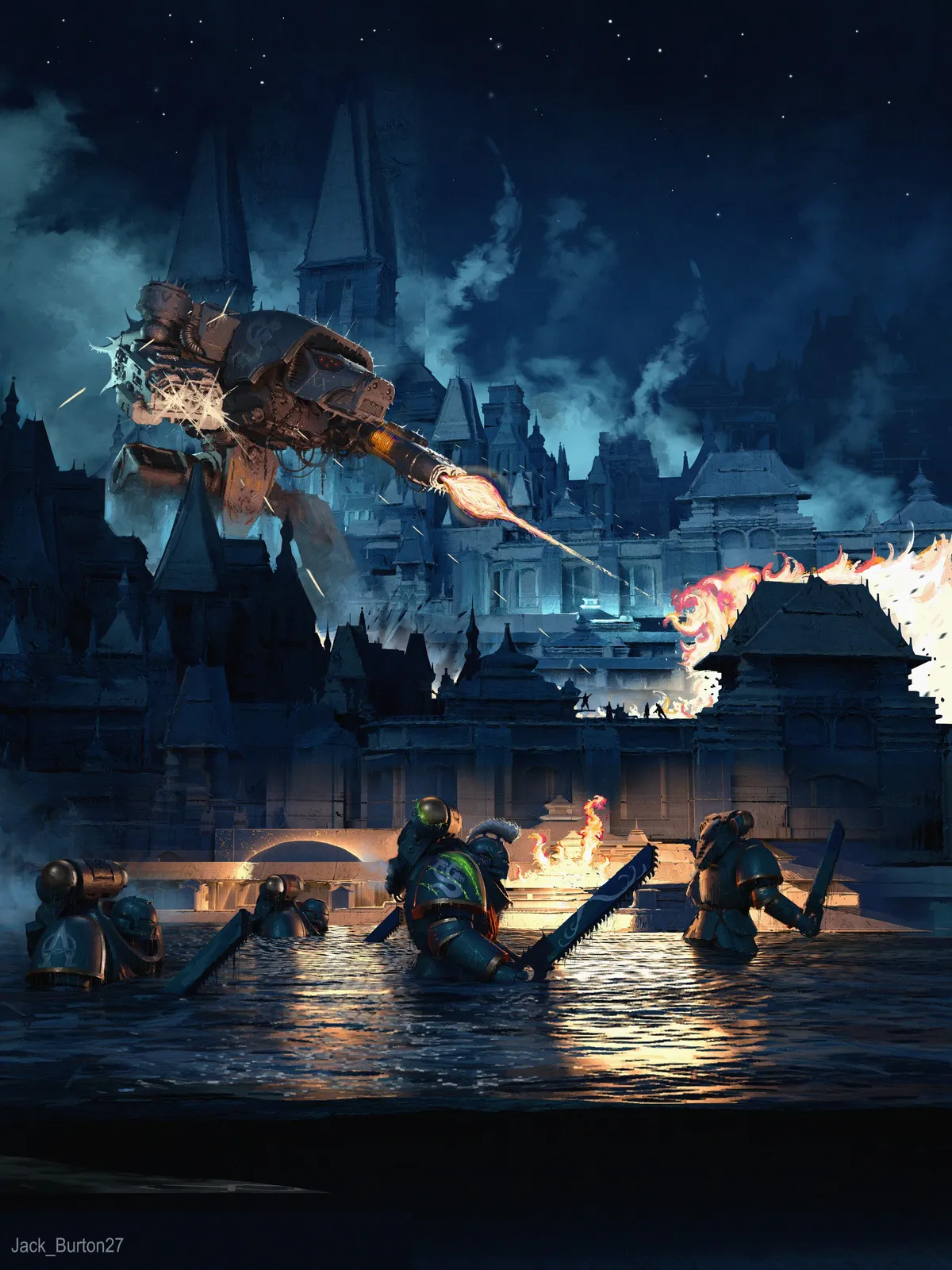
Ten thousand years after the Heresy, the Titan Legions still fight in the Imperium's greatest wars. Their numbers are lower than in the days of the Great Crusade, many of their engines have been lost, and the Forge Worlds struggle to build new ones. Every Titan is a priceless relic, and its loss is mourned as a tragedy.
The opening of the Great Rift brought new wars on a scale not seen since the Heresy. Titan Legions joined the Indomitus Crusade, fought daemonic incursions and alien invasions, and faced their old traitor foes once again. They march beside the Adeptus Mechanicus, the Astra Militarum and the Space Marines, and the sight of a Titan on the horizon is still enough to lift the spirits of embattled Imperial forces.
Themes: Faith, Machine and Scale
The Adeptus Titanicus embodies some of the most powerful themes in the Warhammer 40,000 setting. Titans represent the blending of faith and technology at the heart of the Mechanicus, where machines are worshipped as gods and their pilots are priests. They represent the immense scale of war in the far future, where entire cities can be destroyed in a single battle. And they represent the cost of power: Princeps who gradually lose themselves to their machines, engines lost forever, and Legions corrupted beyond recognition.
For storytellers and game masters, Titans are perfect set pieces. A Titan battle can be the climax of an entire campaign, and a wounded Titan crew struggling to keep their machine alive is a story in itself.
How the Adeptus Titanicus Play on the Tabletop
In Warhammer 40,000, the Titan Legions are an army of one or two colossal models. In the 11th edition, their faction rules cover the Warhound and Reaver Titans. You can field them as a standalone army, or add a single Titan to almost any Imperium force as a towering centerpiece. Titans bring huge firepower and resilience, and they can dominate the battlefield with their sheer presence.
The challenge is that a Titan army is tiny, can't be everywhere at once, and draws every anti-tank weapon your opponent owns. It's a serious investment of time and money, but there is nothing else quite like putting a Titan on the table. Chaos players can use the same rules for the traitor Titans of the Titanicus Traitoris. Titan battles also have their own dedicated game, Adeptus Titanicus, played at a smaller scale with full maniples of Titans.
Adeptus Titanicus FAQ
What is a Princeps?
A Princeps is the commander of a Titan, bonded to the machine through a Mind Impulse Unit. They experience the Titan as an extension of their own body and must master its often-aggressive machine spirit. Princeps are among the most revered figures in the Adeptus Mechanicus.
How big is a Warlord Titan?
Warlord Titans are many times larger than Imperial Knights, towering over tanks and buildings. Exact heights vary between sources, but they are described as dozens of meters tall. Emperor-class Titans such as the Imperator are larger still, effectively walking fortresses.
What is the difference between Titans and Imperial Knights?
Knights are smaller war engines piloted by a single noble, while Titans are much larger god-machines crewed by a team led by a Princeps. Titans belong to the Titan Legions of the Adeptus Mechanicus, while Knights belong to noble houses. Knights often serve as escorts to Titans in battle.
What is the Titanicus Traitoris?
The Titanicus Traitoris are the Titan Legions that sided with Horus during the Horus Heresy and have since been corrupted by Chaos. Their engines and crews have been warped into daemonic horrors. Legio Mortis is the most infamous of them.
Is Adeptus Titanicus a separate game?
Yes. Adeptus Titanicus is also the name of a standalone Games Workshop game focused on Titan battles, played at a smaller scale than Warhammer 40,000 and set during the Horus Heresy. The 40K faction, by contrast, lets you field Titans alongside regular armies.
Can you use Titans in any Warhammer 40K army?
In the 11th edition, a single Titan can be added to most Imperium armies, and Chaos armies can use the traitor equivalents. Check the latest rules from Games Workshop for exact details.
Continue Exploring
- Warhammer 40K Factions: Complete Guide to All 29 Armies — every army, its lore and how it plays
- The Adeptus Mechanicus — the tech-priests of Mars who build and worship the God-Engines.
- The Imperial Knights — noble houses that march as the Titans' escorts.
- The Chaos Knights — fallen houses that fight beside the traitor Legions.
For the rest of the setting, browse every guide in the Warhammer 40K lore hub. To chronicle your own Legio and its centuries of war, Anima is free and runs in your browser with no account: a wiki, a timeline, and campaigns with a live DM screen.
Keep reading
More from this topic
Necrons: Warhammer 40K Lore Guide
The complete lore of the Necrons — the doomed Necrontyr, the C’tan star-gods, biotransference, the War in Heaven, and the deathless dynasties now waking to reclaim the galaxy.
Tyranids: Warhammer 40K Lore Guide
The complete lore of the Tyranids — the Great Devourer, the Hive Mind, the Shadow in the Warp, the great Hive Fleets, Genestealer Cults, and the hunger that crossed the void between galaxies.
Space Marines (Adeptus Astartes): Warhammer 40K Lore Guide
The complete lore of the Space Marines — the Primarchs, gene-seed, the Horus Heresy, the Codex Astartes and the Chapters, the Primaris and Guilliman’s return, and the cost of the Angels of Death.
Start building your world today
A linked wiki, a timeline and a live DM screen — free, in your browser, no account needed.