The C'tan: Warhammer 40K Lore Guide
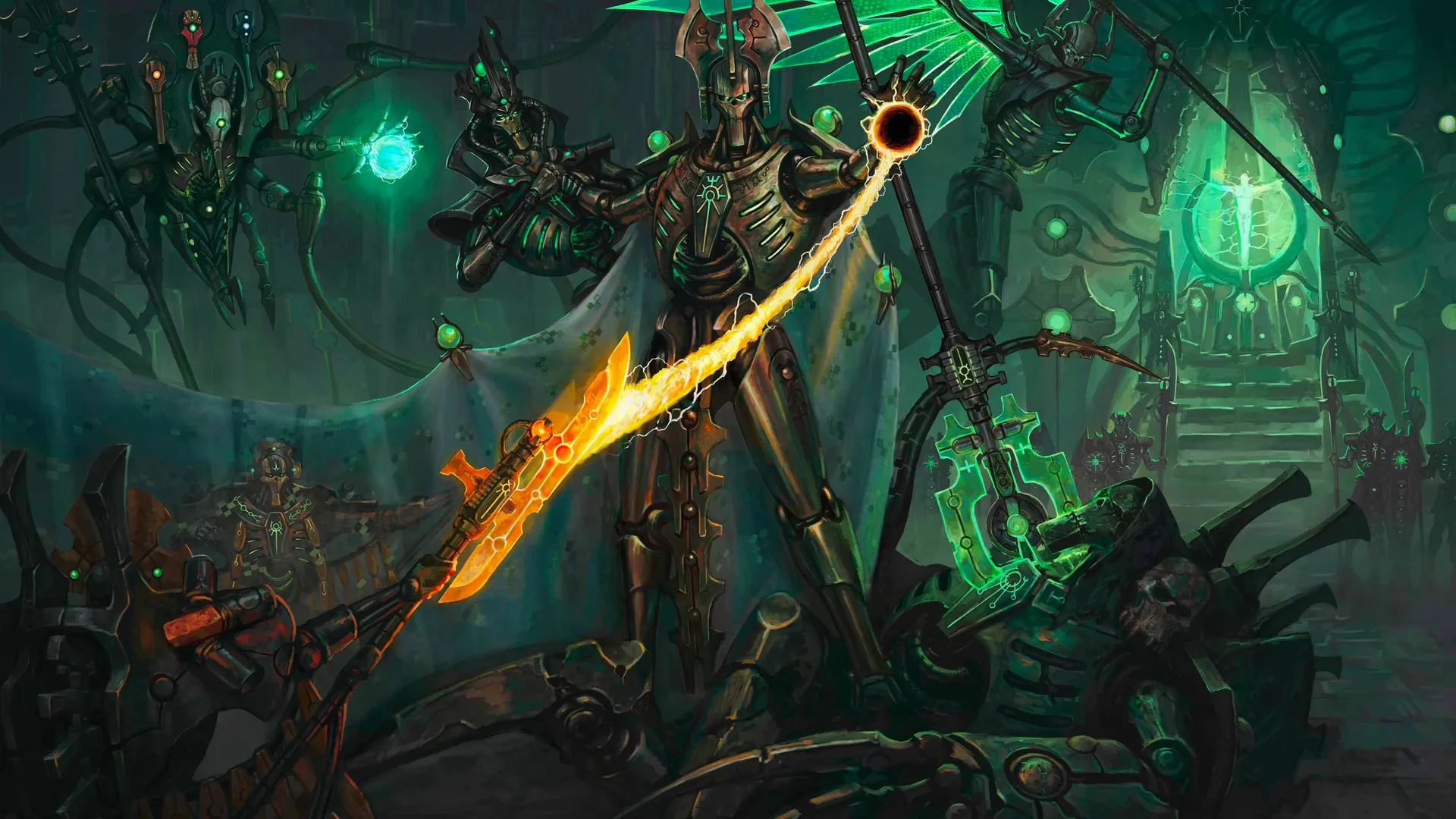
Before the Necrons were metal, before the Old Ones lost their war, there were the star gods. The C'tan were born with the universe, vast creatures of energy that fed on the fire of suns. Given bodies, names and appetites by the Necrontyr, they became the cruelest masters in the history of the galaxy: they devoured the souls of an entire species, ruled a war that burned the stars, and were finally broken into pieces by the slaves they had created. Those pieces are still out there, and some of them remember everything.
The C'tan are inseparable from the story of the Necrons in Warhammer 40K, but they deserve their own look. This guide covers what the C'tan are, how they were incarnated, the great star gods such as the Nightbringer, the Deceiver, the Void Dragon and the Outsider, how they were shattered into Shards, and what those Shards mean in the galaxy and on the tabletop today.
The C'tan at a Glance
| Aspect | Detail |
|---|---|
| Nature | Beings of pure energy, born at the dawn of the universe, who fed on stars |
| Name | "Star Gods" in the Necrontyr tongue; the Aeldari call them the Yngir |
| Bodies | Necrodermis, the living metal later used for the Necrons |
| Famous names | Aza'gorod the Nightbringer, Mephet'ran the Deceiver, Mag'ladroth the Void Dragon, Tsara'noga the Outsider |
| Great crime | Feeding on the Necrontyr's souls during biotransference |
| Fate | Shattered by the Necrons into Shards, most imprisoned in tesseract labyrinths |
| Weakness | The Warp and psychic power, which they cannot comprehend |
| Today | Enslaved weapons of the dynasties, with a few free Shards pursuing their own schemes |
Star Vampires: What the C'tan Were
According to Necron codex lore, the C'tan emerged from the raw energies of creation, among the first self-aware things in existence. In their natural state they barely noticed matter at all. They drifted between stars on wings of magnetic flux and fed on solar radiation, shortening the lives of the suns that sustained them. They were not gods in any moral sense, more like enormous parasites of the cosmos.
That changed when the Necrontyr found them. Searching for a weapon against the Old Ones and a cure for their own short lives, the Necrontyr under the Silent King Szarekh detected an ancient intelligence inside dying stars. They took it for the offspring of their death-god and named these entities the C'tan, the Star Gods.
Incarnation and the Great Betrayal
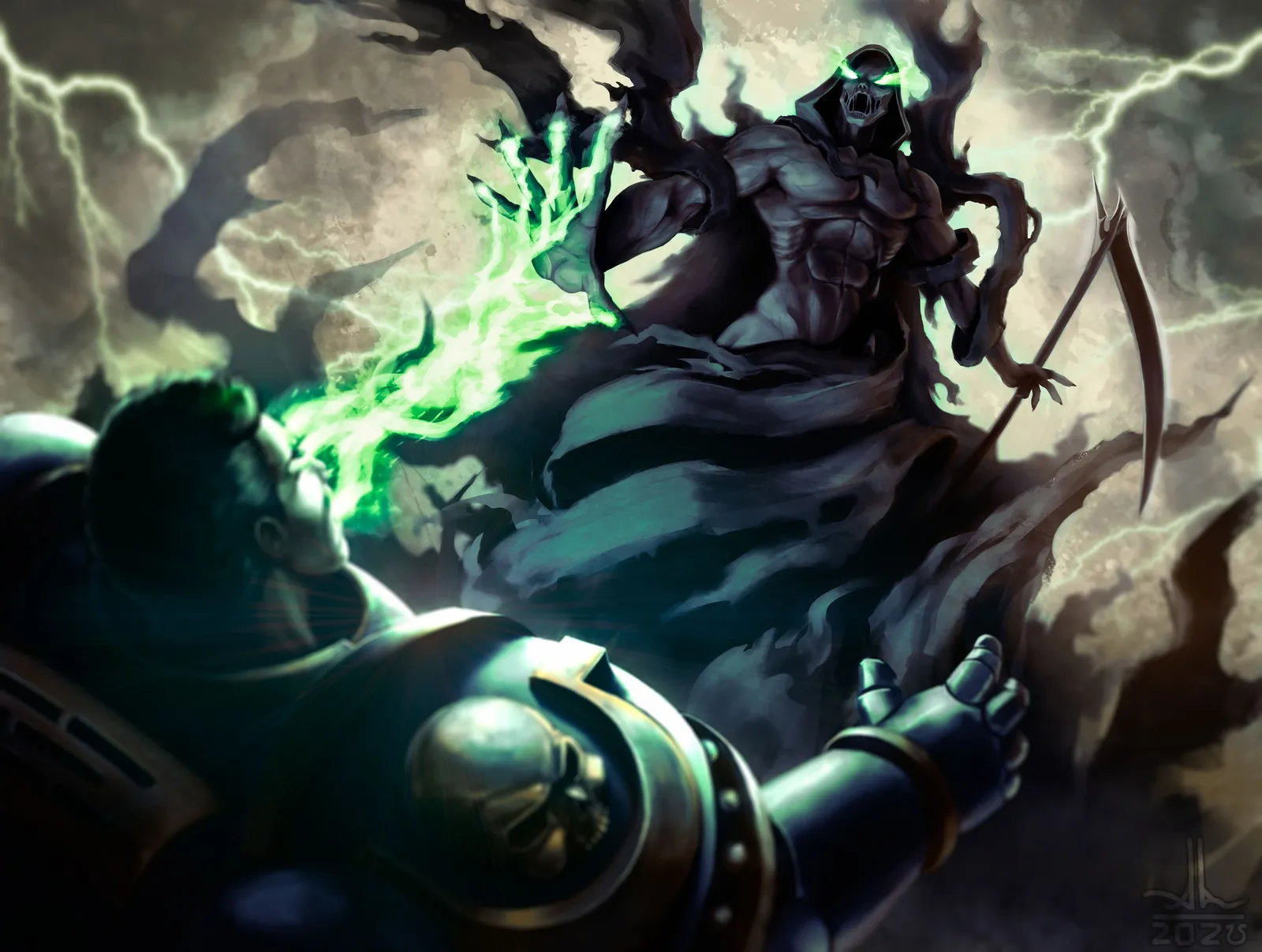
The first C'tan to answer was Aza'gorod, the Nightbringer, born in the very star that had blighted the Necrontyr homeworld. Drawn across a bridge of starlight and bound into a body of living metal, it discovered that the fear of mortals tasted better than sunlight, and began slaughtering the people who had summoned it. Only frantic pledges of service convinced it there were other species to kill.
More C'tan followed, each demanding worship. The cleverest was Mephet'ran, called the Messenger by the Necrontyr and the Deceiver by its own kind. Weaker than many of its siblings, it gathered power through persuasion. It offered the Triarch what the Necrontyr wanted most, unity and immortality, through biotransference. The court debated for a year. According to Necron lore, only the astrologer Orikan spoke against it. The Triarch agreed.
As the Necrontyr poured their minds into metal, the C'tan swarmed around the soul-forges and fed on the life energy released. Only then did Szarekh understand what he had done. In the Black Library novel The Infinite and the Divine, the Deceiver goes further still, crushing opposition to biotransference through a puppet leader who turns out to be one of its own Shards.
The War in Heaven
With the Necrons as their tireless armies, the C'tan turned the War in Heaven against the Old Ones. Planets were razed, stars extinguished and systems swallowed by black holes. To fight back, the Old Ones raised new psychic races, the ancestors of the Aeldari among them, whose Warp-born power the C'tan could neither understand nor easily resist.
The star gods answered in their own ways. The C'tan Nyadra'zatha, the Burning One, gave the Necrons dolmen gates that could force open the Old Ones' webway. Older lore from Battlefleet Gothic material adds that Mag'ladroth, the Void Dragon, planned to seal off the Warp entirely with blackstone pylons like those later found on Cadia. Meanwhile the Deceiver persuaded its siblings that the richest feast of all was each other, and the strongest C'tan began devouring the weak.
The Great C'tan
Dozens of C'tan are named across the editions, but a handful matter most.
- Aza'gorod, the Nightbringer, an avatar of death so terrible that its image, a cowled reaper, is said to have imprinted the fear of dying on the minds of the younger races.
- Mephet'ran, the Deceiver, the liar who brokered biotransference, and the C'tan whose free Shards still meddle in the galaxy.
- Mag'ladroth, the Void Dragon, a force of oblivion and destruction. Older background strongly hints that it is the "Dragon of Mars" the Emperor defeated and imprisoned beneath the Red Planet, a mystery closely tied to the Adeptus Mechanicus.
- Tsara'noga, the Outsider, driven mad by consuming other C'tan, or possibly an Aeldari deity. Aeldari sources quoted in the 9th edition codex suggest it may be the only C'tan never shattered, simply too insane and terrible to defeat.
- Iash'uddra, the Endless Swarm, the most reviled of them all, and Llandu'gor, the Flayer, the only C'tan the Necrons destroyed completely.
Others include Yggra'nya the World Shaper, whose thoughts could break and remake planets, and Zarhulash the Potentate, which in Guy Haley's novel Belisarius Cawl: The Great Work powers the Pharos device.
The Shattering
When the Old Ones had fallen and the C'tan were busy feuding, Szarekh struck. The Necrons turned weapons forged over millions of years of war against their masters. Llandu'gor was annihilated, and in dying it cursed the Necrons with the flayer virus that still drives some of them to wear the skins of the living. Most of the others were broken apart by weapons such as hypercannons into countless Shards, which the Necrons sealed in multidimensional prisons called tesseract labyrinths. Some C'tan may simply have fallen into dormancy as the galaxy's psychic tide starved them.
Then the Necrons slept. The star gods were left in pieces, locked away by the very creatures whose souls they had eaten. It is one of the darkest reversals in the setting: the slaves achieved freedom, but only after losing everything worth being free for.
C'tan Shards in the Modern Galaxy
Since the Great Awakening, Shards appear mostly as enslaved weapons. A dynasty may carry one into battle in a tesseract vault, held by energy shackles, and unleash it when it needs to break an enemy. The Novokh Overlord known as the Crimson King commands a Shard called the Crimson God, and the Sautekh field one called the Death of Suns, as described in our Necron dynasties guide. In extreme cases the Necrons fuse dozens of Shards into a Transcendent C'tan, a weapon as dangerous to its masters as to the enemy.
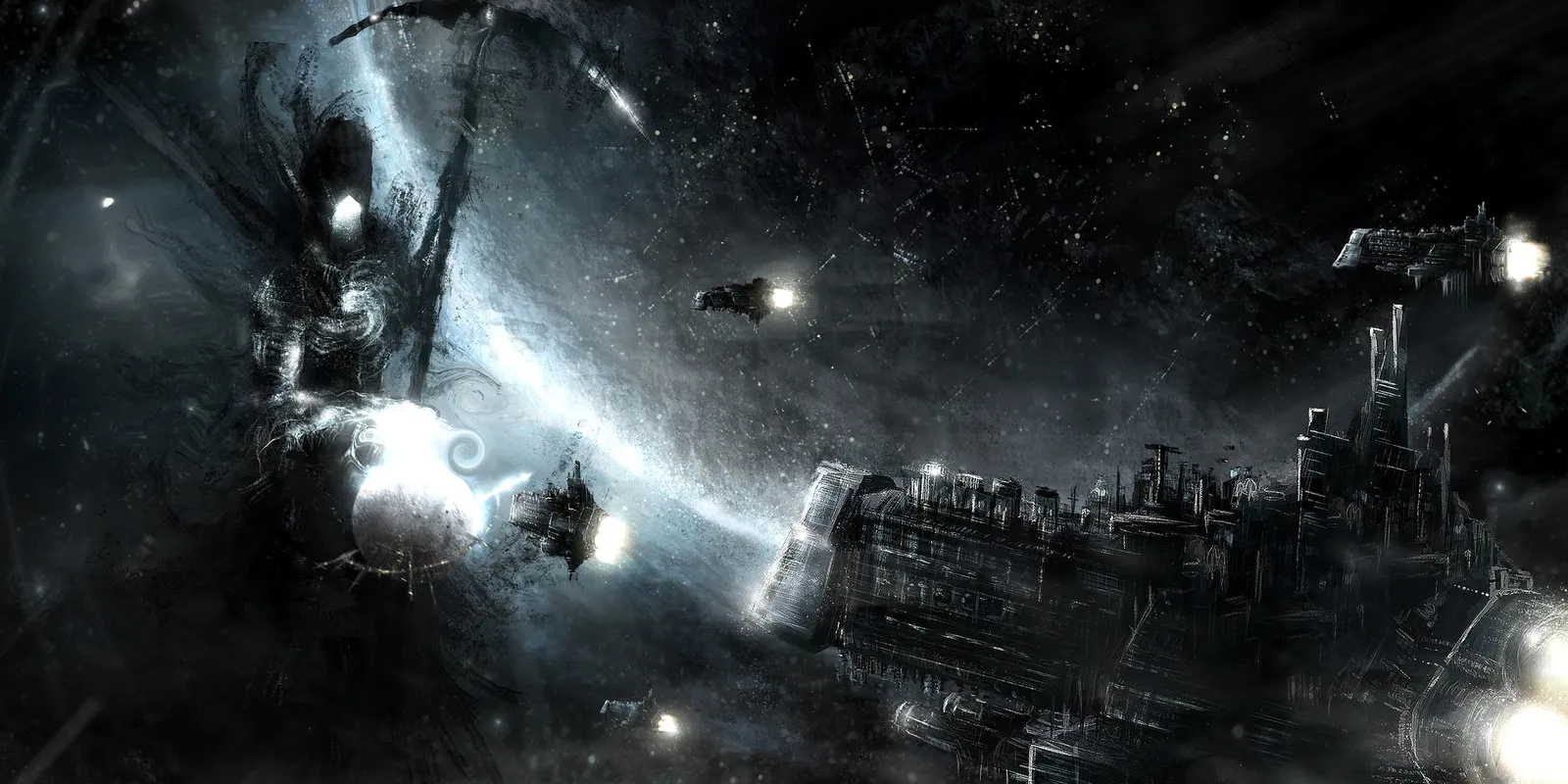
Not every Shard is chained. Free Shards of the Deceiver have been blamed for the Gothic War in Battlefleet Gothic lore, and in Rob Sanders' novel Sons of the Hydra one manipulates the Alpha Legion into building anti-Warp pylons before it is finally trapped. In the video game Warhammer 40,000: Mechanicus, a C'tan called the Sufferer lies captive on the tomb world Silva Tenebris. Third-edition lore even ties the C'tan phase sword of the Callidus assassins to the star gods: when it strikes a C'tan, it is absorbed like a lost piece returning home.
The C'tan, the Warp and the Chaos Gods
The C'tan are creatures of the material universe. They cannot comprehend the Warp, they are vulnerable to psychic power, and their whole strategy in the War in Heaven was to shut the Immaterium out. That makes them a mirror of the Chaos Gods: both are god-like predators that feed on mortals, one born from stars, the other from emotion. Older lore even claims the C'tan seeded the genes for Pariahs, soulless humans, in humanity's ancestors.
Playing With C'tan Shards
On the tabletop, a C'tan Shard is the Necron army's centerpiece monster: a single, nearly unstoppable model that bends reality around it, ignores much of what is thrown at it and dismantles whatever it touches. Games Workshop has produced Shards of the Nightbringer, the Deceiver and the Void Dragon, and the Nightbringer received a new kit in recent years. Collectors often build an army around one star god, choosing a dynasty whose story explains how it was caught.
For narrative players and game masters, a C'tan Shard is also a superb campaign villain or prize. A free Shard of the Deceiver can manipulate every side of a war, a captive Shard can be the reason two Necron dynasties go to war, and an Imperial expedition chasing C'tan technology rarely ends well.
C'tan FAQ
What are the C'tan in Warhammer 40K?
They are ancient energy beings, the "Star Gods", who fed on stars until the Necrontyr gave them bodies of living metal. They led the Necrons in the War in Heaven, fed on their souls during biotransference, and were later shattered by their former slaves.
Are the C'tan dead?
Mostly not. Only Llandu'gor the Flayer was destroyed outright. The rest were broken into Shards and imprisoned, and the Outsider may never have been shattered at all.
What is a C'tan Shard?
A Shard is a fragment of a shattered C'tan, still immensely powerful and still carrying the personality of the original. The Necrons keep Shards in tesseract vaults and use them as weapons.
Is the Void Dragon imprisoned on Mars?
Older Warhammer 40K material strongly implies that the Dragon of Mars the Emperor defeated is the Void Dragon, imprisoned beneath the planet's surface. Games Workshop has never fully confirmed it, which keeps it one of the setting's best-loved mysteries.
Are the C'tan stronger than the Chaos Gods?
The setting never pits them directly. The C'tan were defeated partly because they could not cope with the Warp, while the Chaos Gods exist only in the Warp. A whole C'tan was a galaxy-level threat, but the Shards seen today are much reduced.
Continue Exploring
- The Necrons — the Necrontyr, biotransference and the Great Sleep.
- Warhammer 40K factions guide — every army, its lore and how it plays.
- Necron dynasties — the royal houses that rebelled against the star gods and now hold their Shards.
- Imperial Agents — the Inquisition and the Officio Assassinorum, home of the Callidus Temple.
Browse every guide in the Warhammer 40K lore hub. To chronicle your own star god and the dynasty that caught it, Anima is free and runs in your browser with no account: a wiki, a timeline, and campaigns with a live DM screen.
Keep reading
More from this topic
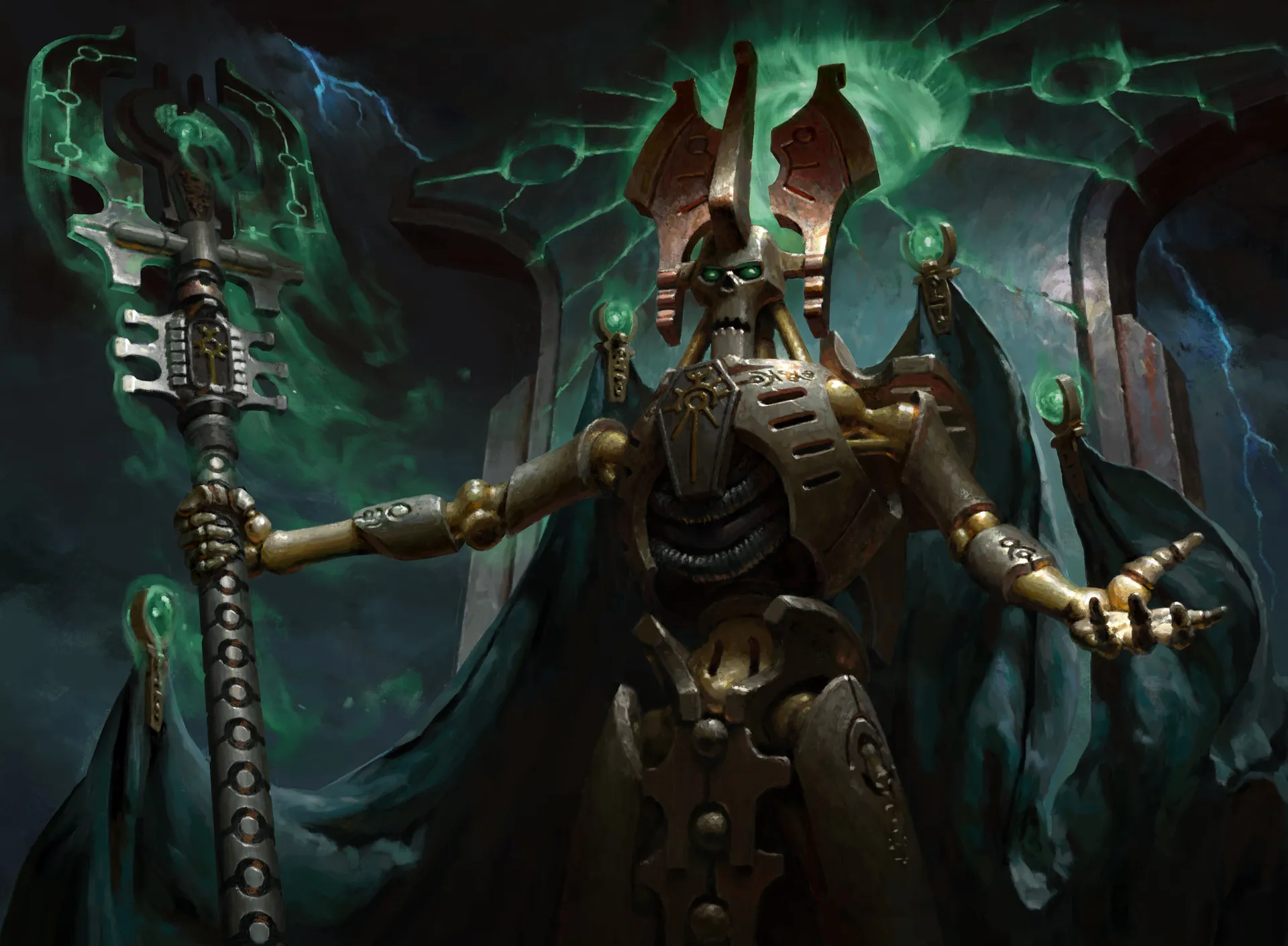
Necrons: Warhammer 40K Lore Guide
The complete lore of the Necrons — the doomed Necrontyr, the C’tan star-gods, biotransference, the War in Heaven, and the deathless dynasties now waking to reclaim the galaxy.
Tyranids: Warhammer 40K Lore Guide
The complete lore of the Tyranids — the Great Devourer, the Hive Mind, the Shadow in the Warp, the great Hive Fleets, Genestealer Cults, and the hunger that crossed the void between galaxies.
Space Marines (Adeptus Astartes): Warhammer 40K Lore Guide
The complete lore of the Space Marines — the Primarchs, gene-seed, the Horus Heresy, the Codex Astartes and the Chapters, the Primaris and Guilliman’s return, and the cost of the Angels of Death.
Start building your world today
A linked wiki, a timeline and a live DM screen — free, in your browser, no account needed.