The Emperor of Mankind: Warhammer 40K Lore Guide

He is the reason the Imperium exists and the reason it has not yet collapsed. The Emperor of Mankind united Terra, created the Primarchs and the Space Marines, and led humanity's reconquest of the stars — then was betrayed by His favorite son and left a shattered body on a life-support throne. For ten thousand years He has neither lived nor died, while a trillion souls worship Him as a god He never claimed to be.
The Emperor sits at the center of every army in our Warhammer 40K factions guide, loyal and traitor alike. Yet He is also the setting's greatest mystery: Games Workshop and Black Library have revealed fragments of His past, His plans and His mistakes, but never the whole truth. This guide gathers what the lore actually says — His origins, the Unification Wars, the Great Crusade, the Horus Heresy, the Golden Throne, the Imperial Cult, and what His condition means in the Great Rift era.
The Emperor at a Glance
| Aspect | Detail |
|---|---|
| Titles | The Emperor of Mankind, the God-Emperor, the Master of Mankind, the Lord of Terra |
| Origins | Born in Anatolia on ancient Terra, according to long-standing lore; His true nature is deliberately left unclear |
| Nature | The most powerful human psyker ever known; effectively immortal |
| Creations | The Thunder Warriors, the Adeptus Custodes, the twenty Primarchs and the Space Marine Legions |
| Seat | The Golden Throne, in the Sanctum Imperialis of the Imperial Palace on Terra |
| Guardians | The Adeptus Custodes and the Sisters of Silence |
| Status in M42 | Interred on the Golden Throne since the end of the Horus Heresy, neither alive nor dead; worshipped by the Imperial Cult |
Origins: A Man Older Than History
Long-standing Warhammer 40,000 lore places the Emperor's birth in Anatolia, on Old Earth, many thousands of years before the Imperium. In that account, a gathering of shamans chose to die together so their souls would be reborn in a single child, uniting their power in one being. Whether this is literal truth, myth or propaganda has never been settled — and the Emperor Himself, in Black Library novels, is a notorious liar about His past.
What the lore does agree on is that He walked hidden through human history for millennia, guiding events from the shadows. Black Library's stories hint at other immortal humans called Perpetuals — among them, according to the novels, the Primarch Vulkan — and at a long, secret struggle against the powers of the warp. For most of human history, He chose not to rule openly.
The Unification Wars and the Treaty of Olympus
The Emperor stepped out of the shadows during the Age of Strife, when warp storms isolated Terra and humanity collapsed into barbarism. With an army of genetically engineered super-soldiers called the Thunder Warriors, He conquered the warring techno-barbarian states of Terra in the Unification Wars. When the fighting was done, the Thunder Warriors were wiped out, and the Imperium's earliest days began with a mass grave of the Emperor's own creations — a pattern the lore returns to again and again.
He then secured the Imperium's future with a pact: the Treaty of Olympus, which bound the Tech-Priests of Mars to Terra. The Adeptus Mechanicus provided the fleets, Titans and industry the Great Crusade would need, and in return the Martian priesthood kept its autonomy. Some Tech-Priests came to worship the Emperor as the Omnissiah, the embodiment of their Machine God — a belief that still shapes Mars today.
The Primarchs and the Great Crusade
In secret laboratories beneath the Himalayan mountains, the Emperor created His masterpieces: twenty superhuman sons, the Primarchs, each designed to lead humanity's armies. Before they were finished, the Chaos Gods reached into the laboratory and scattered the infants across the galaxy. The Emperor salvaged their genetic legacy to create the Space Marine Legions, and set out to find His lost sons world by world.
The Great Crusade reconquered thousands of worlds over two centuries. As each Primarch was found, he was given command of his Legion. The Emperor preached the Imperial Truth: reason, science and the rejection of all gods. He refused worship, and when Lorgar's Word Bearers built cathedrals to Him, He had their perfect city of Monarchia destroyed as a lesson. The irony that the Imperium now worships Him is one of the cruelest in the setting.
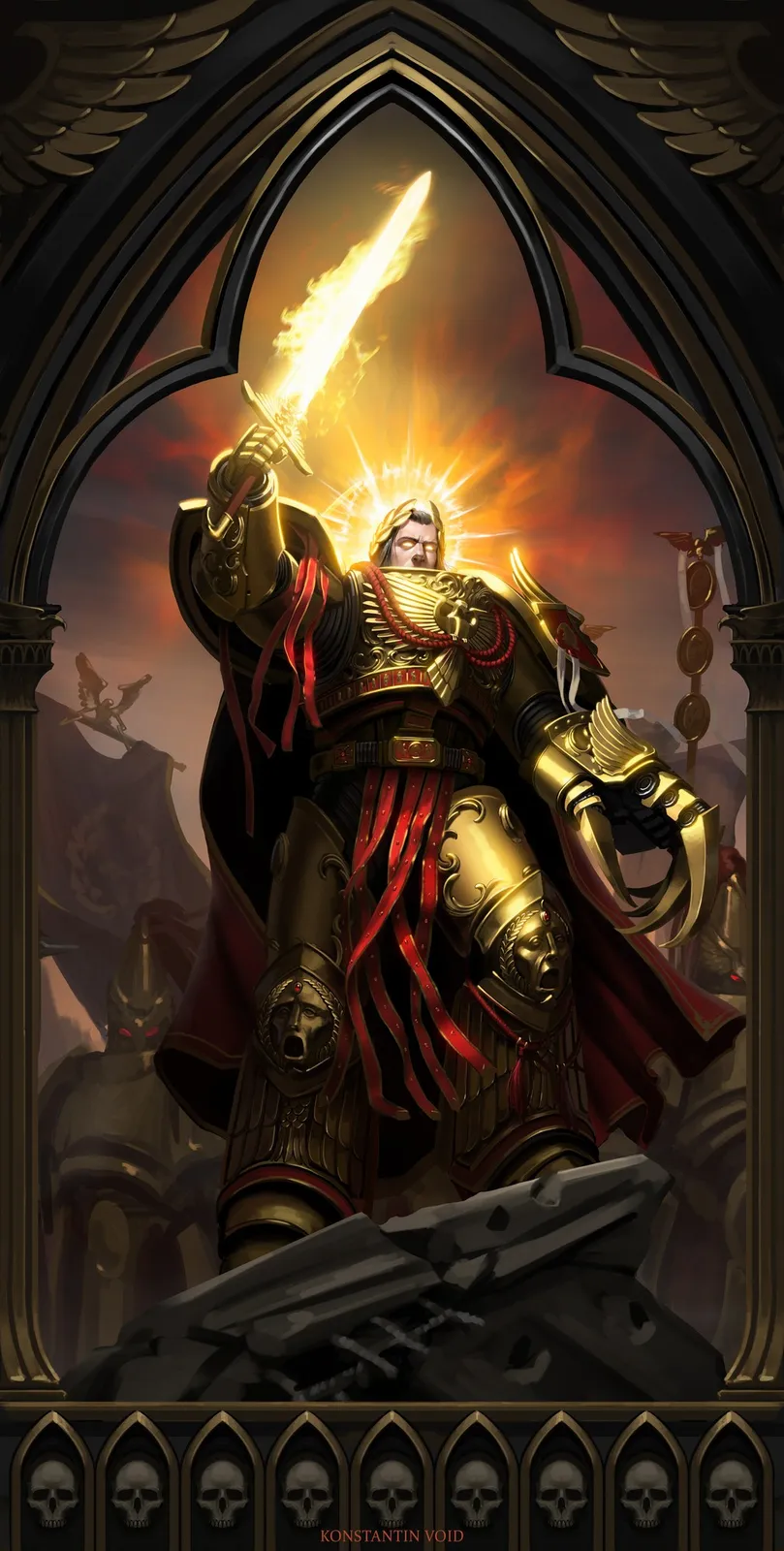
The Webway Project and Horus's Rebellion
After the triumph at Ullanor, the Emperor named Horus Lupercal Warmaster and returned to Terra. Black Library's novels reveal why: beneath the Imperial Palace He was building a human Webway, a network of passages through the Aeldari labyrinth dimension that would let humanity travel without the warp. If it worked, humanity would be free of the Chaos Gods' influence. The Emperor told almost no one.
That silence helped make the Horus Heresy possible. Horus, corrupted by Chaos and resentful of his father's absence, led half the Legions in rebellion. Then Magnus the Red, trying to warn the Emperor with sorcery, shattered the Webway's protective wards, and daemons began pouring into the tunnels beneath Terra. The Custodes fought a desperate secret war below the Palace, and the Emperor had to sit upon the Golden Throne — originally the control device of the Webway gate — to hold the breach shut with His mind. In Black Library's account, His regent Malcador the Sigillite later took His place on the Throne so the Emperor could lead the final defense, and the effort consumed Malcador.
The full story of the war, from Isstvan to the walls of the Palace, is covered in our Horus Heresy guide.
The Duel With Horus
At the climax of the Siege of Terra, Horus lowered the shields of his flagship, the Vengeful Spirit, and the Emperor teleported aboard. Sanguinius reached Horus first and died. When the Emperor faced His son, He hesitated, still unwilling to destroy him, and Horus crippled Him. Then the Emperor struck with His full power, killing Horus and destroying his soul so completely that nothing remained for Chaos to claim. Dan Abnett's The End and the Death, the final volumes of Black Library's Siege of Terra series, explores this confrontation and the Emperor's inner struggle in depth.
The Emperor's body was ruined. He was carried back to the Palace and interred within the Golden Throne. He has not moved or spoken aloud since.
The Golden Throne and the Astronomican
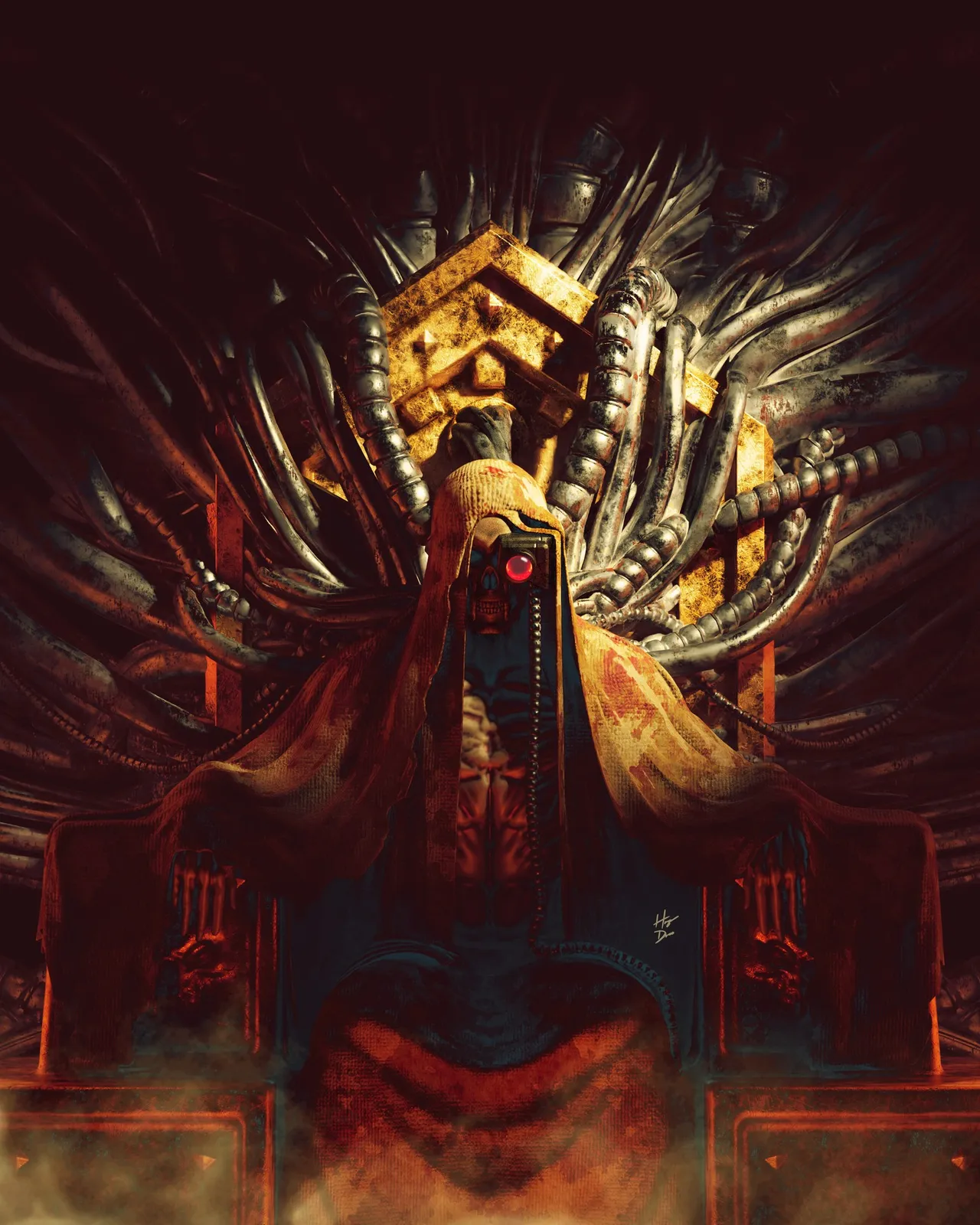
The Golden Throne is an ancient machine whose full workings are no longer understood. It sustains the Emperor's broken body, but its components are failing, and the Tech-Priests who tend it can only patch what they cannot rebuild. Every day, it is said, a thousand psykers are sacrificed to sustain the Emperor's spirit.
From the Throne, the Emperor powers the Astronomican, a psychic beacon that Navigators use to steer ships through the warp. Without it, interstellar travel in the Imperium would become close to impossible. He also continues to hold back the daemonic breach in the Webway beneath Terra. The Imperium, in other words, depends on the continued suffering of its creator.
The Guardians: Custodes and Sisters of Silence
The Emperor's personal guard, the Adeptus Custodes, have kept watch over the Throne for ten millennia. Each Custodian was individually crafted, far beyond a Space Marine in ability, and sworn to Him alone. Beside them stand the Sisters of Silence, psychic blanks whose very presence disrupts the warp. Together they guard His body, His Palace and, more quietly, the secrets of what happened beneath Terra during the Heresy.
From Man to God: The Imperial Cult
Within centuries of His interment, the Emperor's rationalist Imperium had become a theocracy. The Imperial Cult worships Him as the God-Emperor, the Ecclesiarchy preaches His divinity across a million worlds, and the Adepta Sororitas fight in His name, sometimes accompanied by miracles that suggest His power still reaches His faithful. Living Saints, visions and faith-fueled wonders appear throughout the lore.
Is He a god? The setting refuses to answer. Some characters believe He is a dying man trapped in a machine; others believe faith is turning Him into a true warp entity; others still fear what He might become if His body finally fails. Black Library has explored all three possibilities without confirming any.
The Emperor in the Great Rift Era
In the current setting, the Emperor's situation is more desperate than ever. The Great Rift has split the galaxy, cutting Imperium Nihilus off from the Astronomican's light. When Roboute Guilliman returned and became Lord Commander of the Imperium, one of his first acts was to enter the Throne Room and stand before his father. What passed between them is not fully revealed, but Guilliman emerged determined to fight for humanity rather than for the theocracy that had grown in the Emperor's name.
The Golden Throne continues to decay. The returned Primarchs, Belisarius Cawl, the Custodes and the High Lords each have their own theories about how long it can last — and what should happen when it fails. As of the current setting, the Emperor remains on the Throne, silent and unchanged.
The Emperor on the Tabletop
The Emperor is not a playable model in Warhammer 40,000. He is present instead through the armies that serve Him: the Custodes who guard His Throne, the Space Marines built from His sons, and the Sisters of Battle who fight in His name.
For players and roleplayers, the Emperor is best treated as a force rather than a character — an absent, ambiguous presence whose will is interpreted, and often twisted, by the people who claim to serve Him.
Emperor of Mankind FAQ
Is the Emperor of Mankind alive?
In a sense. His body is kept functioning by the Golden Throne, and His mind is still active enough to power the Astronomican and hold back the daemonic breach beneath Terra. But He has not spoken or moved since the end of the Horus Heresy.
Is the Emperor a god in Warhammer 40K?
The lore leaves this deliberately ambiguous. He rejected worship in life, but He is now venerated by trillions, and miracles occur in His name. Whether He is a god, a corpse or something in between is one of the setting's central open questions.
How old is the Emperor of Mankind?
Many tens of thousands of years. Long-standing lore places His birth in Anatolia before recorded history, and He has spent around ten thousand years on the Golden Throne.
Who created the Primarchs?
The Emperor. He crafted the twenty Primarchs in His Himalayan laboratories before the Chaos Gods scattered them across the galaxy. He later found eighteen of them; the records of the other two were erased.
What is the Golden Throne?
A failing ancient machine that sustains the Emperor's ruined body. It was originally the control device for His Webway project, and it now lets Him power the Astronomican and hold the breach beneath the Imperial Palace closed.
Will the Emperor ever return?
Nobody knows. Some Imperial factions pray for His resurrection, others fear it, and Games Workshop has never confirmed what His fate will be. As of the current setting, He remains on the Golden Throne.
Continue Exploring
- Warhammer 40K Factions: Complete Guide to All 29 Armies — every army, its lore and how it plays
- The Horus Heresy — the civil war that left Him on the Golden Throne
- The Primarchs — His twenty sons and their fates
- Roboute Guilliman — the son who rules in His name today
- Space Marines (Adeptus Astartes) — the Angels of Death He created
Browse every guide in the Warhammer 40K lore hub, or name a warrior sworn to the Throne with the Space Marine name generator. To chronicle your own corner of the Imperium, Anima is free and runs in your browser with no account: a wiki, a timeline, and campaigns with a live DM screen.
Keep reading
More from this topic
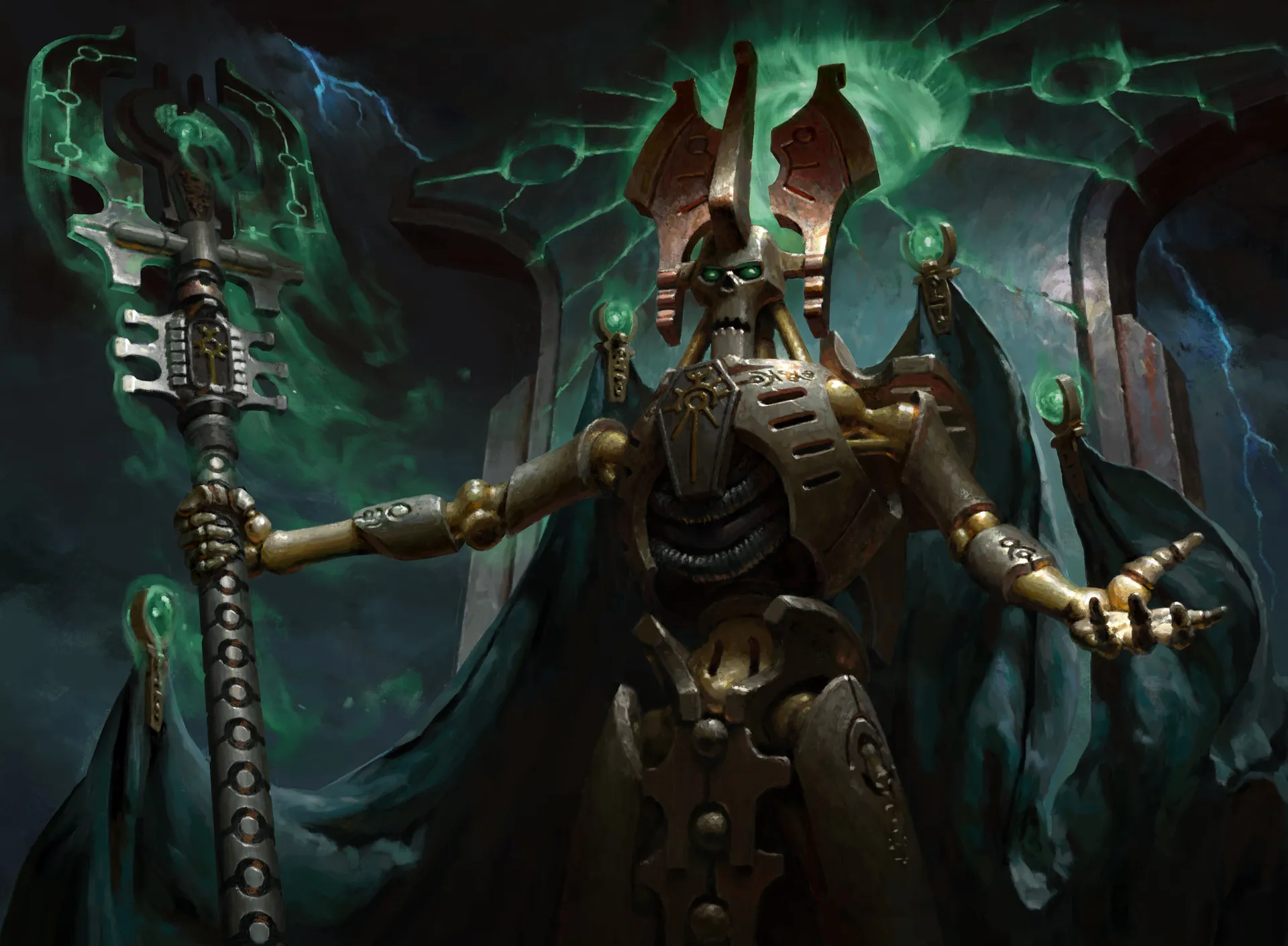
Necrons: Warhammer 40K Lore Guide
The complete lore of the Necrons — the doomed Necrontyr, the C’tan star-gods, biotransference, the War in Heaven, and the deathless dynasties now waking to reclaim the galaxy.
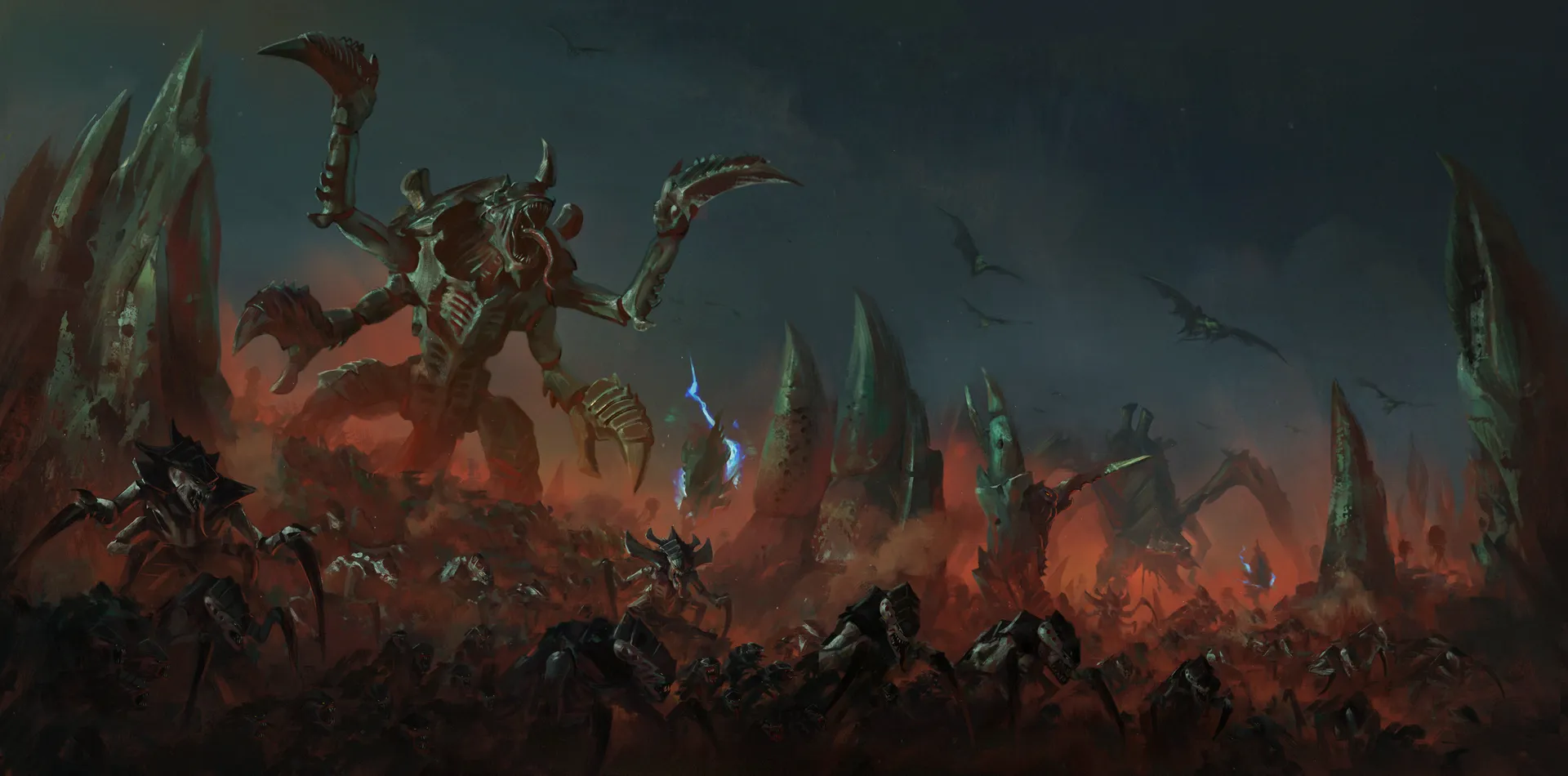
Tyranids: Warhammer 40K Lore Guide
The complete lore of the Tyranids — the Great Devourer, the Hive Mind, the Shadow in the Warp, the great Hive Fleets, Genestealer Cults, and the hunger that crossed the void between galaxies.
Space Marines (Adeptus Astartes): Warhammer 40K Lore Guide
The complete lore of the Space Marines — the Primarchs, gene-seed, the Horus Heresy, the Codex Astartes and the Chapters, the Primaris and Guilliman’s return, and the cost of the Angels of Death.
Start building your world today
A linked wiki, a timeline and a live DM screen — free, in your browser, no account needed.