The Horus Heresy: Warhammer 40K Lore Guide
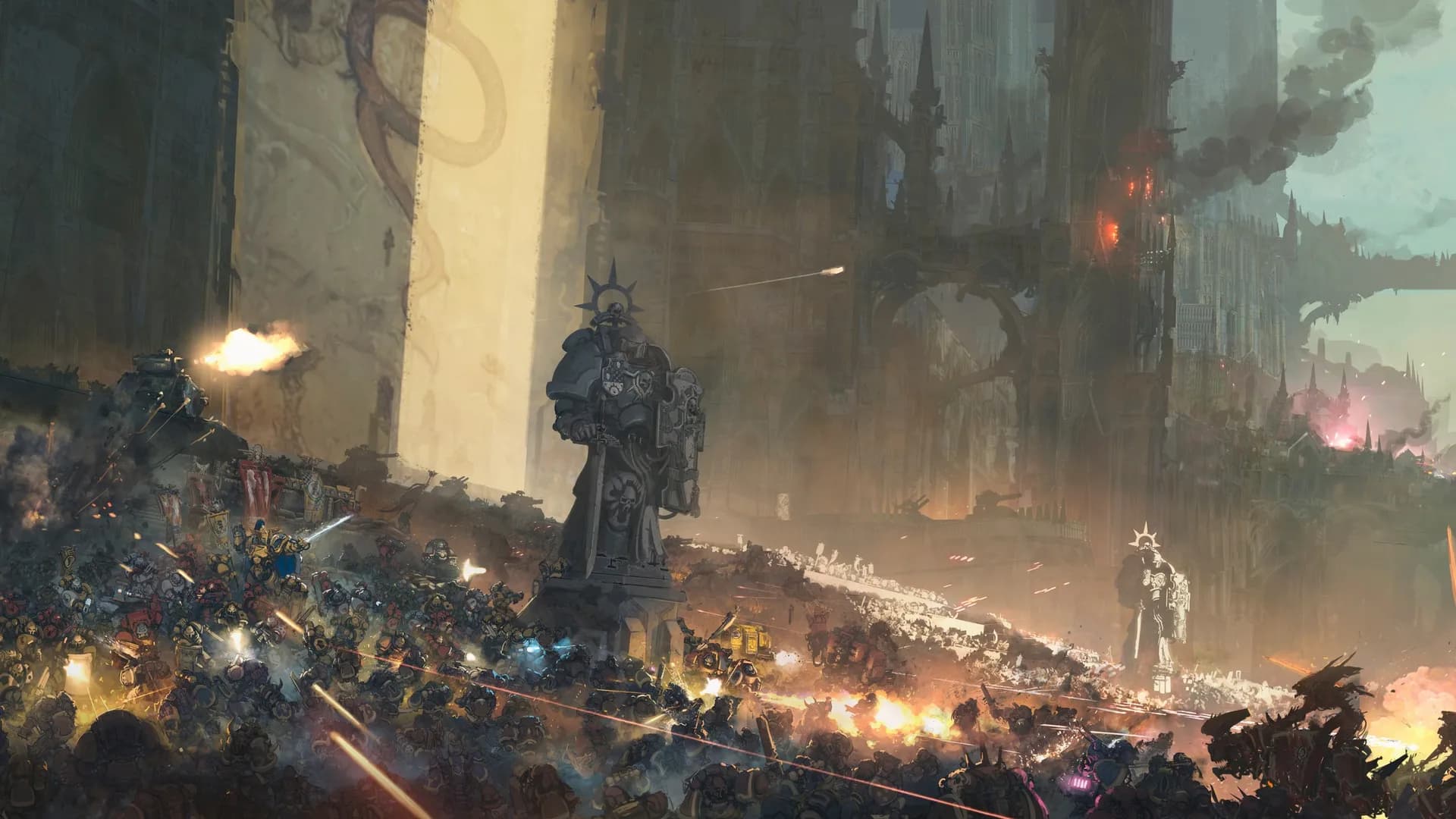
Every story in Warhammer 40,000 is, in one way or another, a consequence of the Horus Heresy. Ten thousand years before the current setting, the Emperor's favorite son turned against Him, half of the Space Marine Legions followed, and a golden age of conquest ended in a civil war that burned across the galaxy and reached the walls of the Imperial Palace on Terra. The Emperor won, but only by being broken beyond healing and entombed on the Golden Throne.
The Heresy is the origin point of almost every faction in our Warhammer 40K factions guide: the traitor Legions that became the Chaos Space Marines, the loyal Legions broken into Chapters, the Custodes' ten-thousand-year vigil, even the religion that now worships the Emperor as a god. This guide explains the causes of the war, the key battles from Isstvan to the Siege of Terra, which Legions chose which side, how it ended, and why it still matters in the 42nd millennium.
The Horus Heresy at a Glance
| Aspect | Detail |
|---|---|
| When | The early 31st millennium (around 005–014.M31), roughly 10,000 years before the current setting |
| Instigator | Horus Lupercal, Warmaster of the Great Crusade, corrupted by the Chaos Gods |
| Loyal Legions | Dark Angels, White Scars, Space Wolves, Imperial Fists, Blood Angels, Iron Hands, Ultramarines, Salamanders, Raven Guard |
| Traitor Legions | Emperor's Children, Iron Warriors, Night Lords, World Eaters, Death Guard, Thousand Sons, Sons of Horus, Word Bearers, Alpha Legion |
| Key battles | Isstvan III, the Dropsite Massacre on Isstvan V, Calth, Signus, Prospero, Beta-Garmon, the Siege of Terra |
| Outcome | Horus slain by the Emperor; the Emperor interred on the Golden Throne; traitors driven into the Eye of Terror |
| Main source | Black Library's Horus Heresy and Siege of Terra novel series, plus Games Workshop's Horus Heresy game |
Before the Fall: The Great Crusade
After uniting Terra, the Emperor of Mankind launched the Great Crusade to reclaim the scattered human worlds of the galaxy. His instruments were the twenty Space Marine Legions and, as each was rediscovered, the demigods who led them — the Primarchs, the Emperor's gene-forged sons. The Crusade was preached in the name of the Imperial Truth, a doctrine of reason that rejected religion and gods of every kind.
After the great victory at Ullanor, the Emperor returned to Terra and named Horus Lupercal, the first Primarch He had found, as Warmaster: commander of all the Imperium's armies in His absence. The Emperor did not explain why He was leaving. In Black Library's later novels, the reason is revealed as a secret project to open the Webway for humanity beneath the Imperial Palace. To several Primarchs it simply felt like abandonment, and resentments that had been growing for decades began to sharpen.
Other fractures widened at the same time. The Council of Nikaea ruled against the use of psychic powers in the Legions, a judgment that wounded Magnus the Red's Thousand Sons. Lorgar's Word Bearers had been publicly rebuked on Monarchia for worshipping the Emperor as a god, and in their humiliation they turned toward older powers. Bureaucrats from Terra began administering the conquered worlds, and some Primarchs felt replaced by clerks.
The Corruption of Horus
The Heresy has a recognizable starting point in the novels. In Graham McNeill's False Gods, Horus is wounded on the moon of Davin by a cursed blade, the Anathame. Dying, he is carried to a lodge temple where the Word Bearers' First Chaplain, Erebus, has prepared the ground. Within visions sent by the warp, the Chaos Gods show Horus a future in which the Emperor is worshipped as a tyrant god and the Primarchs are forgotten. Horus is offered the power to prevent it, and accepts.
Horus did not become a cartoon villain overnight. The Black Library series presents him as proud, wounded and convinced that he was saving humanity from a father who had lied to it. That conviction is what made him so dangerous: other Primarchs followed him because they believed him, not only because they were corrupted. In the end, all four Chaos Gods poured their power into him.
Isstvan: The War Begins
The rebellion became open war at Isstvan III. Horus ordered the four Legions under his direct command — the Sons of Horus, Emperor's Children, World Eaters and Death Guard — to purge their own loyal warriors. Those deemed untrustworthy were sent to the planet's surface, which was then bombarded with life-eater virus bombs. Some loyalists survived the firestorm and held out, and a few escaped aboard the frigate Eisenstein to warn Terra.
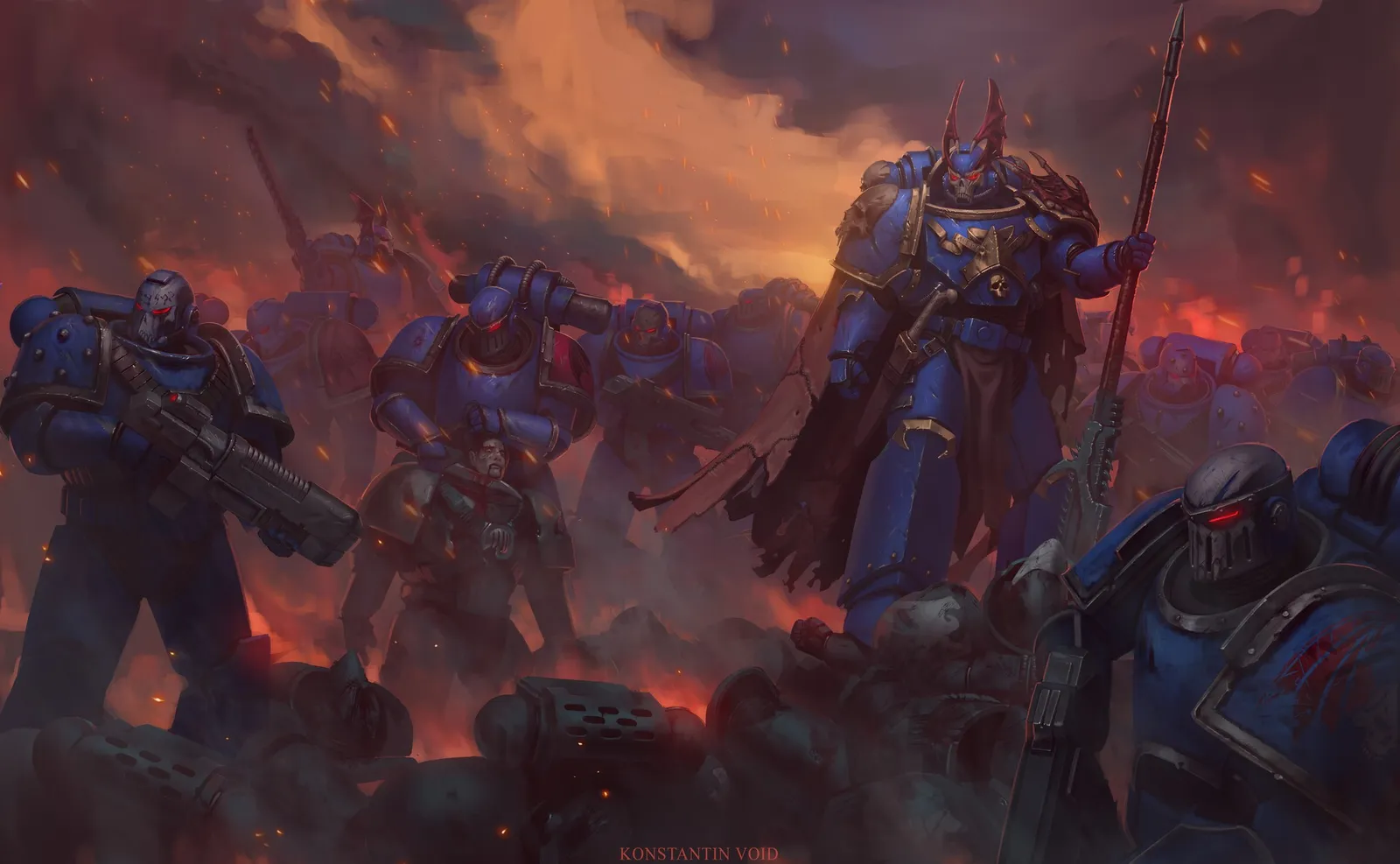
The Emperor sent seven Legions to crush the rebels at Isstvan V. The first wave — the Iron Hands, Raven Guard and Salamanders — dropped onto the planet and engaged the traitors. Then the second wave landed and revealed its true allegiance: the Night Lords, Iron Warriors, Alpha Legion and Word Bearers had joined Horus. The loyalists were caught between two armies in what became known as the Dropsite Massacre. Ferrus Manus was slain by his former friend Fulgrim, and Vulkan and Corax barely escaped with fragments of their Legions.
A Galaxy at War
After Isstvan, the Heresy spread across the Imperium. Horus marched slowly toward Terra while other battles erupted in every direction. The most important are told in individual Black Library novels:
- Calth. In Dan Abnett's Know No Fear, the Word Bearers ambush the Ultramarines during a muster at Calth, crippling the largest loyal Legion before it can reach Terra. Lorgar's sons go on to devastate the realm of Ultramar in the Shadow Crusade.
- Signus. Horus lures the Blood Angels into a daemon-haunted system, where the Bloodthirster Ka'Bandha unleashes the Legion's hidden flaw (James Swallow's Fear to Tread).
- Prospero. Magnus the Red uses sorcery to warn the Emperor of Horus's betrayal and shatters the wards of the Imperial Palace's Webway project. Leman Russ is sent to bring him to Terra, but Horus twists the order, and the Space Wolves burn the Thousand Sons' homeworld. Magnus's Legion has nowhere left to go but Tzeentch.
- Imperium Secundus. Cut off by the Ruinstorm, Guilliman founds a second Imperium in Ultramar in case Terra has fallen, with Sanguinius briefly crowned as its ruler.
- The Webway War. Beneath Terra, the Custodes and the Emperor Himself fight daemons pouring through the ruined Webway breach — a war that ends with the Emperor bound to the Golden Throne to hold it shut.
- Beta-Garmon. The largest Titan war of the Heresy, in which the Legios of both sides tear each other apart before the final advance on Terra.
Not every loyal Legion was certain. The White Scars' allegiance was questioned until Jaghatai Khan chose the Emperor, and the Dark Angels fought a long, secretive war against the Night Lords on the Imperium's eastern fringe. Some Legions split internally, with loyalists and traitors from the same bloodline fighting each other.
The Siege of Terra
Horus finally reached the Sol System with his traitor Legions, daemon allies and the Dark Mechanicum. The Siege of Terra, told across Black Library's ten-book Siege of Terra series, was fought in orbit, across Sol's planets and moons, and finally inside the Imperial Palace itself. Rogal Dorn commanded the defense as Praetorian of Terra, with Sanguinius, the Khan, the Adeptus Custodes, the Sisters of Silence, the Imperial Army and countless civilians holding the walls.
The traitors' assault turned the Palace into a hellscape. Angron's World Eaters and Fulgrim's Emperor's Children waded through the defenses, the Death Guard brought plague, and the boundaries between Terra and the warp began to collapse. Sanguinius held the Eternity Gate against a Greater Daemon of Khorne, while Dorn's defenses buckled one by one. Loyalist relief fleets under Guilliman, the Lion and Russ were coming, but would not arrive in time.
The Final Duel and the Golden Throne
At the moment the Palace was about to fall, Horus lowered the void shields of his flagship, the Vengeful Spirit. Why he did so is debated in the lore — confidence, a challenge, a last flicker of the son he had been — but the Emperor took the opening. He teleported aboard with Sanguinius, Rogal Dorn and a host of Custodians and Space Marines, and the warp-twisted ship scattered them.
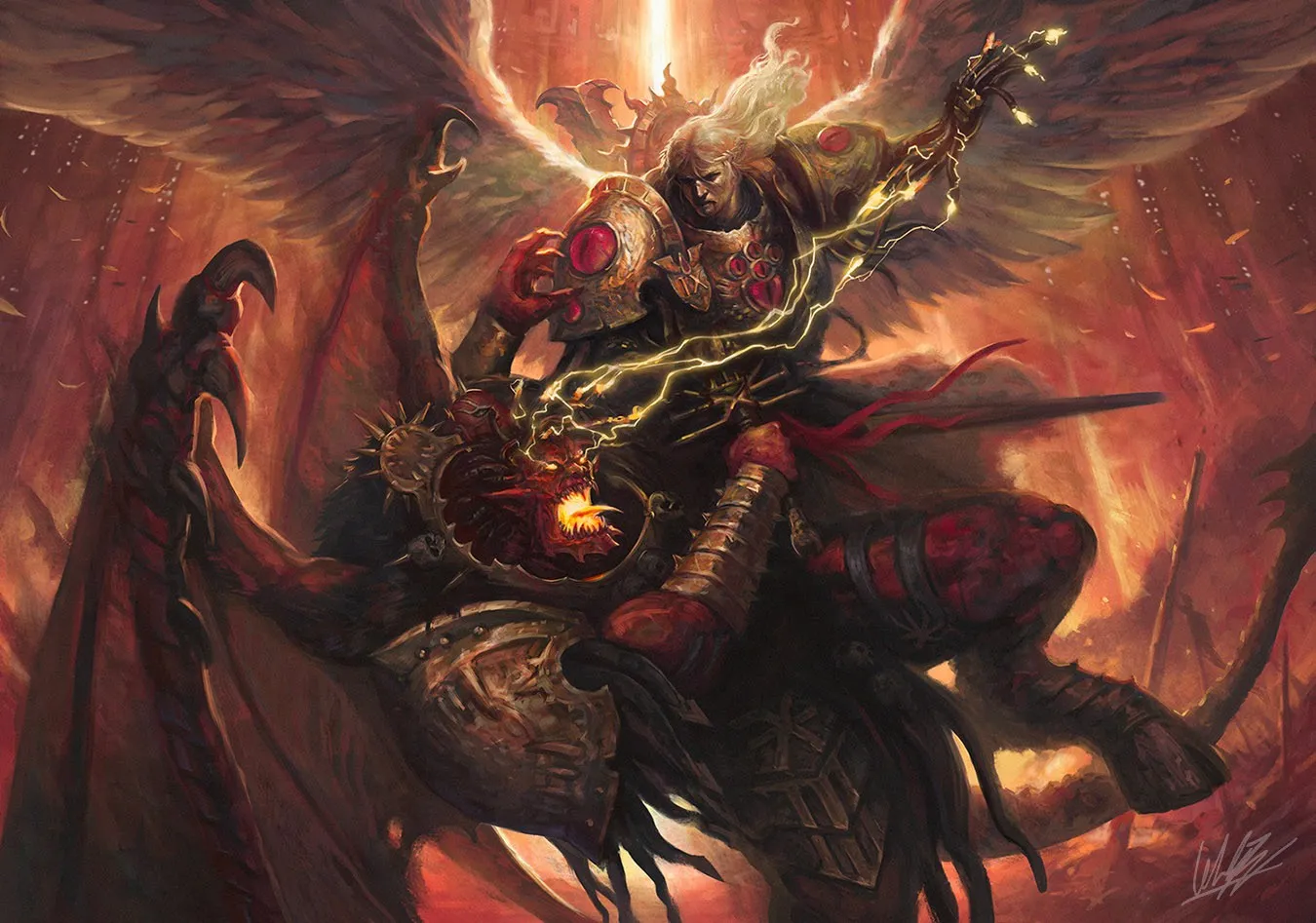
Sanguinius reached Horus first and was killed. When the Emperor arrived, He fought His son and at first held back, unwilling to destroy him. Horus crippled Him. Only then did the Emperor unleash His full power, killing Horus and annihilating his soul so completely that he could never return as a daemon. Dan Abnett's The End and the Death, the three-volume finale of the Siege of Terra series, tells this confrontation in detail.
The victory was ruinous. The Emperor was carried back to the Palace mortally wounded and interred in the Golden Throne, where He has remained ever since, kept alive by ancient machinery and the daily sacrifice of psykers. With His death-like silence, the Imperium He had built as a secular state slowly turned Him into a god.
The Scouring and the Aftermath
With Horus dead, the traitor host collapsed into infighting and retreat. During the Great Scouring, the loyalists hunted the fleeing Legions across the galaxy until most of them took refuge in the Eye of Terror. Many battles of this era — such as the Iron Cage, where Perturabo's Iron Warriors trapped Dorn's Imperial Fists — were brutal epilogues to the war.
Guilliman, determined that no single commander should ever again control a Legion, wrote the Codex Astartes. The Legions were broken into Chapters of around a thousand warriors in the Second Founding, a decision that drove some Primarchs to fury. Dorn's Imperial Fists split into Chapters such as the Black Templars, and the Imperium's institutions were reshaped to divide power.
Inside the Eye of Terror, the traitor Legions fought among themselves in the Legion Wars. The Sons of Horus were destroyed and remade by Abaddon as the Black Legion, while the Death Guard, Thousand Sons, World Eaters and Emperor's Children were consumed by their patron gods. All of them became what the Imperium now calls the Chaos Space Marines.
Why the Heresy Still Matters in the 42nd Millennium
In 40K's current era, the Heresy is not distant history for those who fought it. Traitor Space Marines inside the Eye, where time flows strangely, include veterans of the Siege of Terra. Abaddon has waged Black Crusades to finish what Horus began, and his thirteenth tore open the Great Rift. Daemon Primarchs — Magnus, Mortarion, Angron and Fulgrim — have returned to the material universe, while Roboute Guilliman and Lion El'Jonson have come back to fight for the Imperium. The family war of the Emperor's sons has started again.
The Heresy also explains the Imperium's character: the paranoia of the Inquisition, the worship of a silent Emperor, the hatred between loyalist and traitor Marines, and the ever-present fear that the next Horus is already rising.
The Horus Heresy Novels and Tabletop Game
Black Library's The Horus Heresy series began in 2006 with Dan Abnett's Horus Rising and grew into dozens of novels and anthologies. Its sequel, The Siege of Terra, opened with John French's The Solar War and concluded with the three volumes of The End and the Death. Together they are the most detailed account of the war, and they expanded and occasionally rewrote older lore.
On the tabletop, Games Workshop publishes a dedicated Horus Heresy game, often called "30K", set during the war itself. It uses older marks of power armor, full Legion forces, Primarchs as playable models, and a heavy focus on brother-against-brother battles. It is the place to field Sanguinius, Horus or Ferrus Manus in person.
Horus Heresy FAQ
What was the Horus Heresy?
It was a galaxy-wide civil war in which the Warmaster Horus and nine of the eighteen surviving Space Marine Legions rebelled against the Emperor. It ended with the Siege of Terra, the death of Horus, and the Emperor's interment on the Golden Throne.
Why did Horus betray the Emperor?
Horus was corrupted by the Chaos Gods after being wounded on Davin, but he was also driven by pride and resentment. He believed the Emperor had abandoned the Great Crusade, lied to His sons, and planned to become a god — so he convinced himself rebellion would save humanity.
How long did the Horus Heresy last?
The Heresy is usually dated across roughly seven to nine years of the early 31st millennium, from the Isstvan atrocities around 005.M31 to the Siege of Terra around 014.M31. The Great Scouring that followed lasted years longer.
Which Legions turned traitor?
Nine: the Emperor's Children, Iron Warriors, Night Lords, World Eaters, Death Guard, Thousand Sons, Sons of Horus, Word Bearers and Alpha Legion. The other nine known Legions stayed loyal; the records of the II and XI Legions had been erased before the war began.
Who won the Horus Heresy?
The loyalists, technically. Horus was destroyed and the Palace held, but the Emperor was left near death on the Golden Throne, several Primarchs were dead, and the traitors escaped into the Eye of Terror to fight the Long War ever since.
Where should I start reading the Horus Heresy?
Most readers begin with the opening trilogy — Horus Rising, False Gods and Galaxy in Flames — which covers Horus's fall and the Isstvan III atrocity. From there, the series branches into Legion-specific novels before converging on the Siege of Terra.
Continue Exploring
- Warhammer 40K Factions: Complete Guide to All 29 Armies — every army, its lore and how it plays
- Horus Lupercal — the Warmaster at the heart of the war
- The Emperor of Mankind — the father Horus rebelled against
- The Primarchs — all twenty sons and which side they chose
- Space Marines (Adeptus Astartes) — the loyal Legions and the Chapters they became
- Abaddon the Despoiler — Horus's heir and the Long War
Browse every guide in the Warhammer 40K lore hub, or name a Legionary of your own with the Space Marine name generator or the Chaos Space Marine name generator. To chronicle your own Heresy-era campaign, Anima is free and runs in your browser with no account: a wiki, a timeline, and campaigns with a live DM screen.
Keep reading
More from this topic
Necrons: Warhammer 40K Lore Guide
The complete lore of the Necrons — the doomed Necrontyr, the C’tan star-gods, biotransference, the War in Heaven, and the deathless dynasties now waking to reclaim the galaxy.
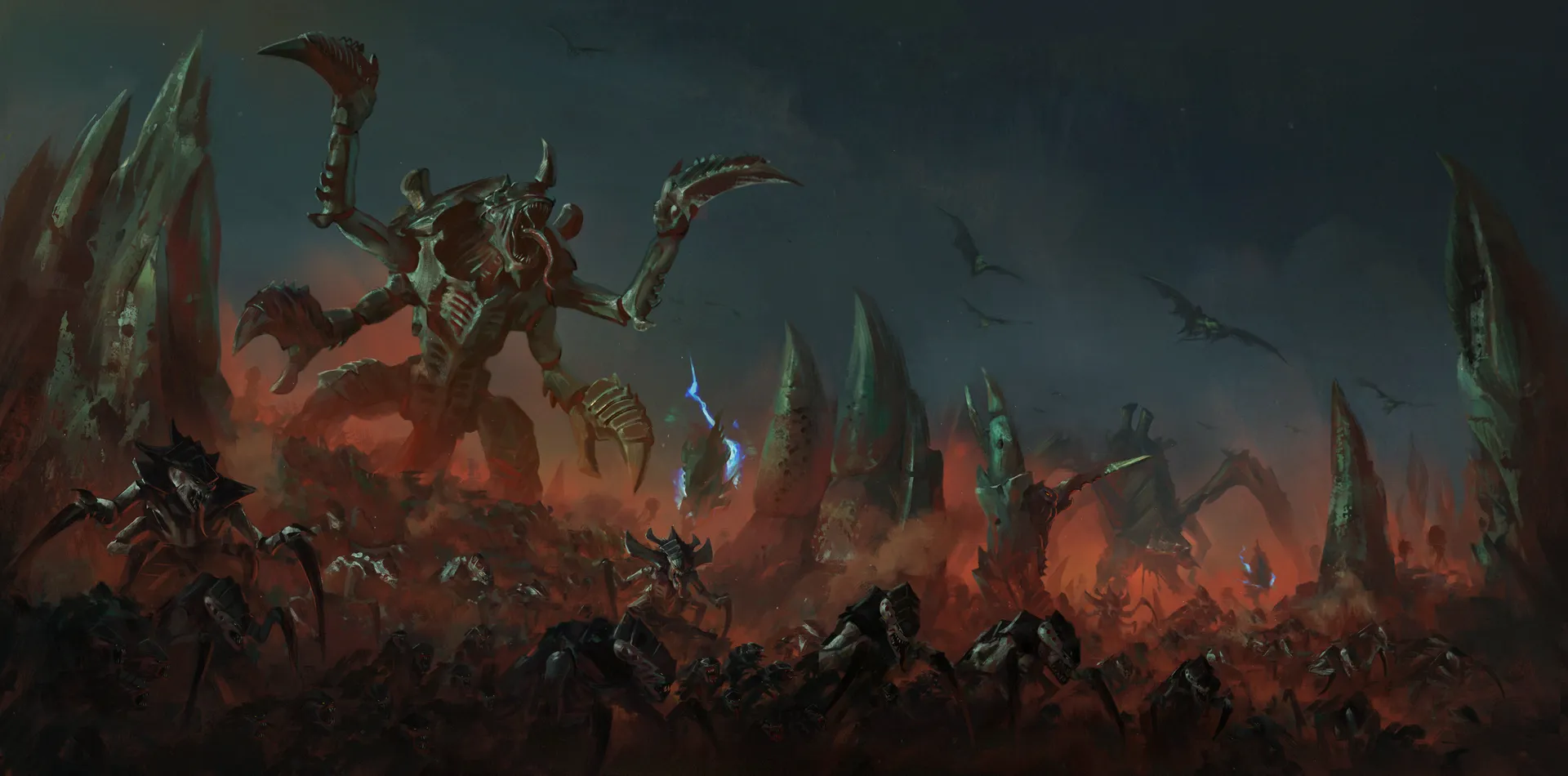
Tyranids: Warhammer 40K Lore Guide
The complete lore of the Tyranids — the Great Devourer, the Hive Mind, the Shadow in the Warp, the great Hive Fleets, Genestealer Cults, and the hunger that crossed the void between galaxies.
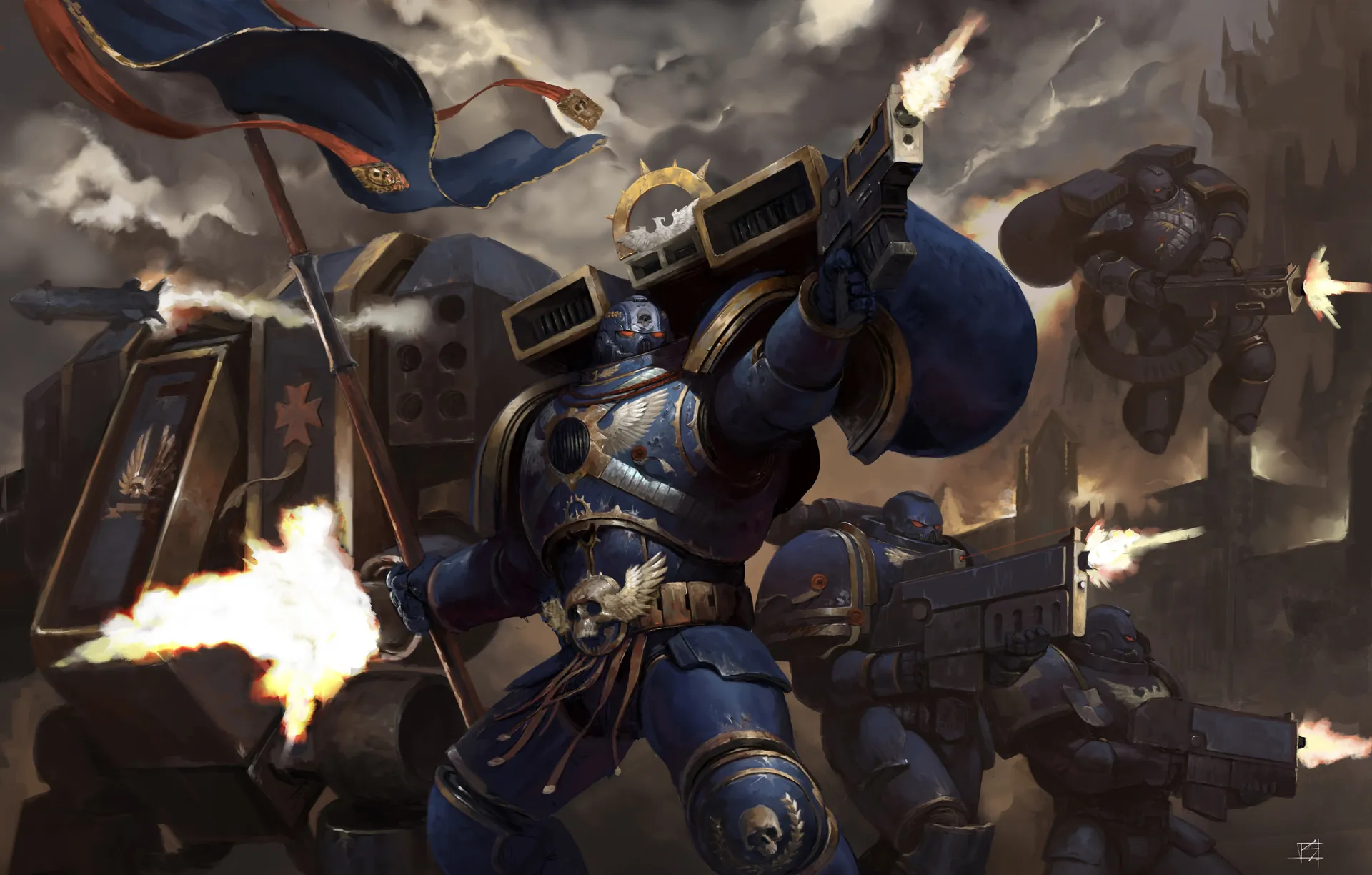
Space Marines (Adeptus Astartes): Warhammer 40K Lore Guide
The complete lore of the Space Marines — the Primarchs, gene-seed, the Horus Heresy, the Codex Astartes and the Chapters, the Primaris and Guilliman’s return, and the cost of the Angels of Death.
Start building your world today
A linked wiki, a timeline and a live DM screen — free, in your browser, no account needed.