Konrad Curze: Warhammer 40K Lore Guide
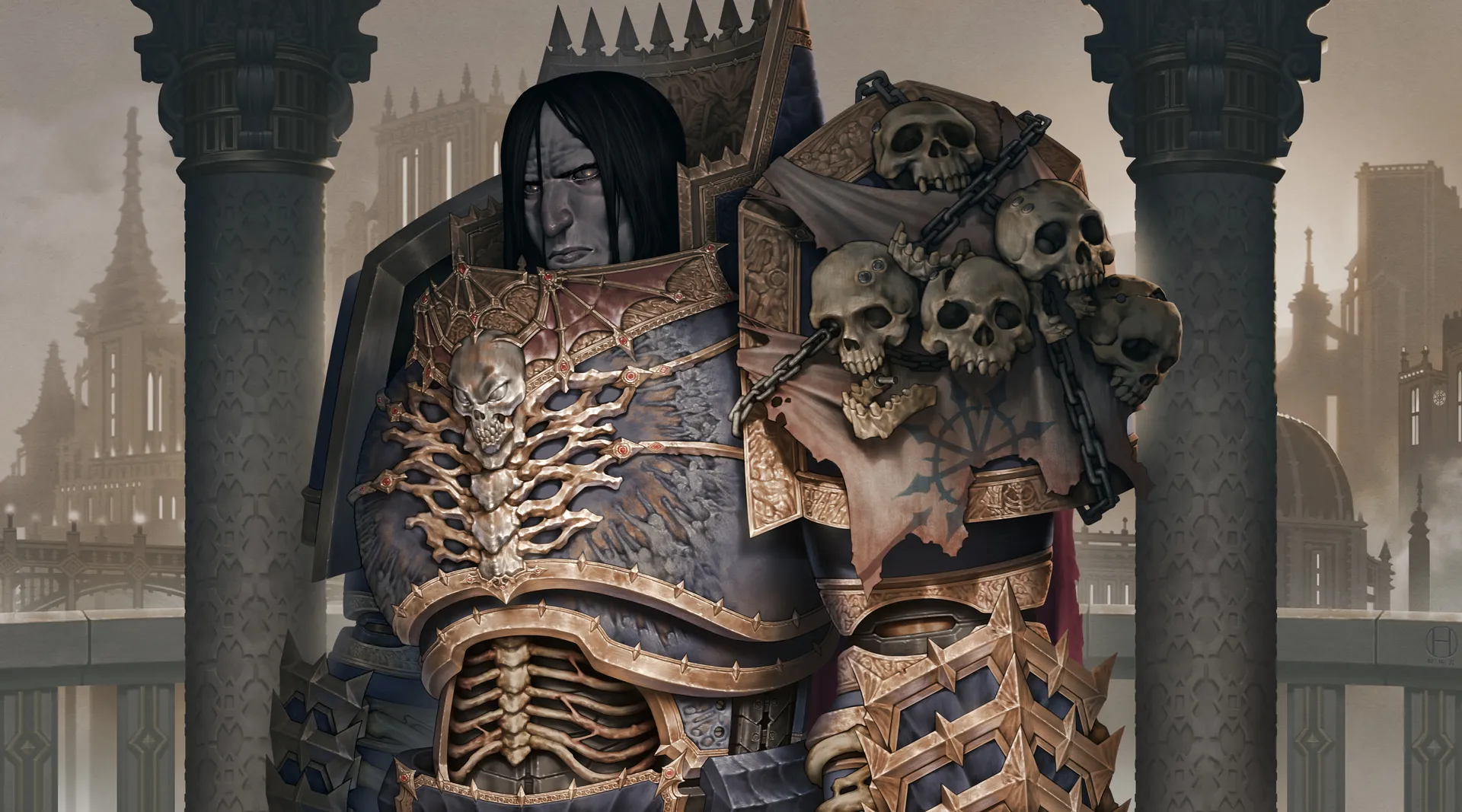
Konrad Curze never had a childhood. He had a city drowning in crime, a sky without a sun and a head full of visions of murder, betrayal and his own death. Out of that darkness he built a philosophy: people are not good, only afraid, and order can only be kept by making punishment so terrible that no one dares to sin. The Night Haunter applied that idea to a planet, then to a Legion, then to the galaxy, and when the Imperium finally sent an assassin to kill him, he welcomed her.
Curze was the Primarch of the Night Lords, the VIII Legion and the most feared of the Traitor Legions. Our Legion guide covers his sons and their raids; this page is about the man: his years as a vigilante on Nostramo, his prophetic curse, his clashes with his brothers, his death on Tsagualsa and why he remains one of the most discussed characters in the setting.
Konrad Curze at a Glance
| Aspect | Detail |
|---|---|
| Titles | The Night Haunter, the Lord of the Night, the Dark King |
| Allegiance | Loyal during the Great Crusade; traitor during the Horus Heresy, though he never truly served the Chaos Gods |
| Legion | VIII Legion, the Night Lords |
| Homeworld | Nostramo, a world of near-perpetual night, later destroyed on his orders |
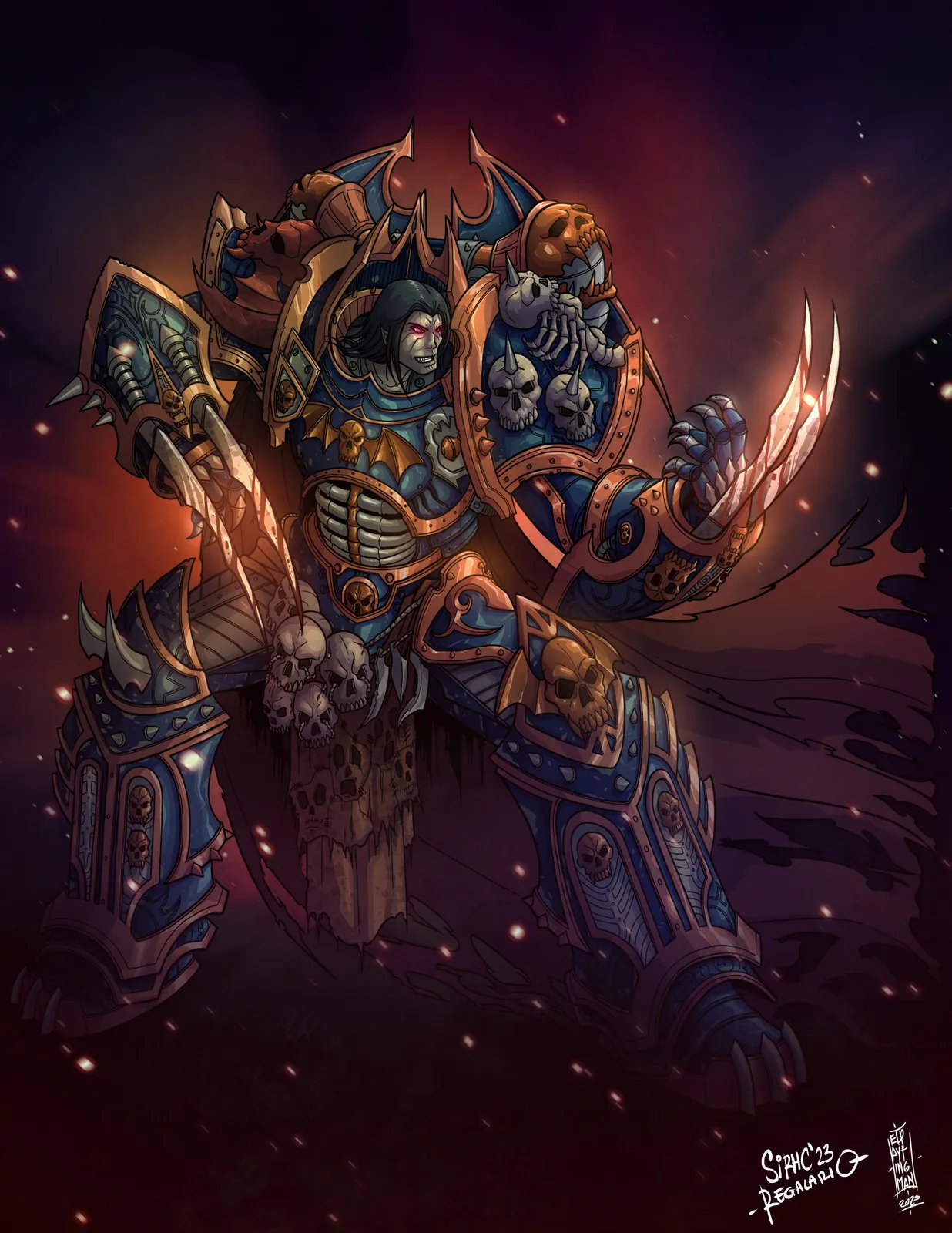
| Signature Wargear | A pair of lightning claws named Mercy and Forgiveness |
| Status in M42 | Dead, assassinated by the Callidus Assassin M'Shen after the Heresy |
| Key Fiction | Guy Haley's Konrad Curze: The Night Haunter; Aaron Dembski-Bowden's Night Lords trilogy and The Dark King |
Origin: The Vigilante of Nostramo Quintus
Like all of the Primarchs, Curze was torn from the Emperor's gene-laboratories as an infant and cast across the galaxy. He landed on Nostramo, a world locked in near-perpetual darkness, rich in adamantium and ruled by crime syndicates. Unlike most of his brothers, he had no foster parent, no mentor and no tutor. He raised himself in the alleys of Nostramo Quintus, feeding on scraps and watching the strong prey on the weak.
The visions began early. Curze saw the future in flashes, almost always violent, and could not shut them out. As he grew, he turned his strength and his foresight on the criminals of the city. He hunted them, tortured them and left their mutilated bodies on public display. The killings worked: crime fell, and the population lived in terror of the shadow that stalked the rooftops. Curze came to believe that this was justice. He was not a hero who protected the innocent; he was a punisher who made sure the guilty had nowhere to hide.
When the Emperor reached Nostramo and reclaimed his lost son, Curze took command of the VIII Legion and shaped it in his own image, recruiting from Nostramo's underhives. The cruelty of his methods became Legion doctrine.
Defining Deeds: Terror as a Weapon of Compliance
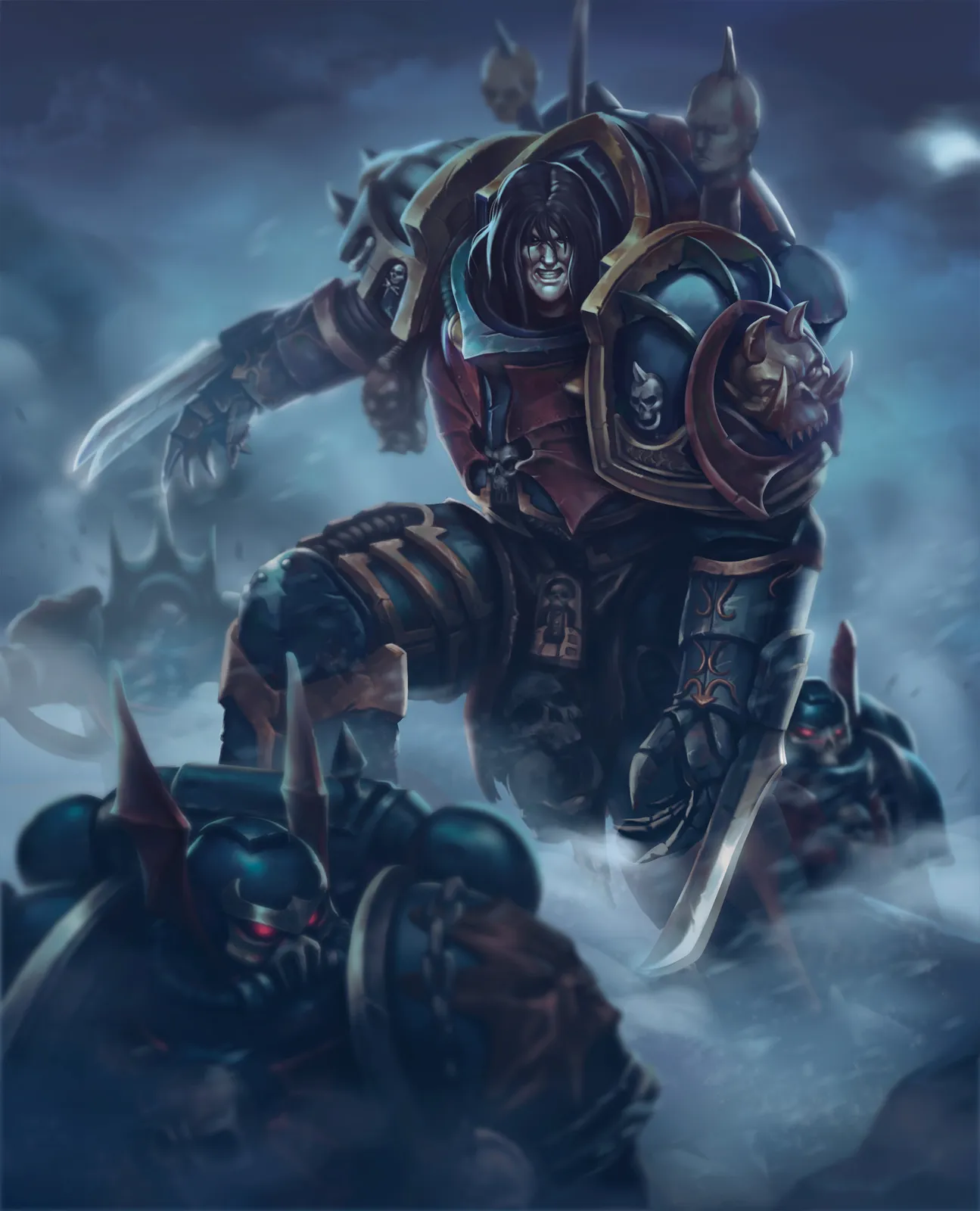
During the Great Crusade, the Night Lords became the Imperium's instrument of fear. Curze would make an example of one city, often in the most horrifying way imaginable, and the rest of the world would surrender. It was efficient, and for a time the Imperium accepted it. But his brothers grew uneasy, and Curze's mind continued to fray under the weight of his visions. Worse, Nostramo itself slipped back into corruption once he left, and Curze answered with the act that defines him: he ordered his fleet to fire on his own homeworld until it broke apart. The Night Lords lost their only source of recruits; Curze lost the last proof that his philosophy could work.
The Break with His Brothers
Curze's relationships with the other Primarchs were brittle. His visions told him the Legions would turn on each other and that his father would eventually punish him, and he did not keep these prophecies to himself. When Rogal Dorn confronted him over his methods, the argument ended with Curze attacking his brother and leaving him badly wounded before fleeing to his Legion. From then on he was effectively a renegade, and it was no surprise when he joined Horus.
At the Dropsite Massacre on Isstvan V, the Night Lords were part of the traitor second wave that turned on the loyalists. During the Horus Heresy, Curze waged his own private war more than he served Horus's strategy, and several of his most famous episodes come from Black Library novels:
- The Thramas Crusade: a long, savage campaign against Lion El'Jonson and the Dark Angels, ending with Curze gravely injured after a duel with the Lion.
- The torment of Vulkan: in Nick Kyme's Vulkan Lives, Curze holds the Salamanders Primarch captive and tries to break him with torture, convinced that Vulkan's compassion is a lie.
- The haunting of Macragge: in Dan Abnett's The Unremembered Empire, Curze stalks the Ultramarines' capital as a murderer in the dark, clashing with both Roboute Guilliman and the Lion.
Personality and Relationships
Curze is one of the most psychologically complex characters in Warhammer 40,000. He was intelligent, articulate and sometimes darkly funny, but also tormented, paranoid and prone to fits of violence. The core of his tragedy is that his visions never lied to him. He saw his Legion's fall and his own death, and he could not change either. Some fiction suggests that he followed Horus less out of conviction than because he had already seen that he would.
He also never embraced Chaos in the way his fellow traitors did. Curze did not take a patron god, did not ascend to daemonhood and held the Warp's powers in contempt. His betrayal was personal: against a father he believed would condemn him, and against an Imperium he saw as a larger version of the Nostramo he had once ruled through fear.
- The Emperor: Curze believed his father had created him to be a weapon of terror and would discard him once the galaxy was conquered. His death was meant to prove that point.
- Rogal Dorn: the brother he attacked and wounded, and the face of the moral judgment Curze could not stand.
- Lion El'Jonson: his greatest battlefield rival, and in many fans' eyes his dark mirror, equally ruthless but disciplined where Curze was unhinged.
- Corvus Corax: the Raven Guard Primarch also fought from the shadows, but used stealth to protect the oppressed. Our Corvus Corax guide explores the comparison.
- Vulkan: Curze's captive in Black Library fiction, whose refusal to break infuriated him. See our Vulkan guide.
Fate: Death on Tsagualsa
After the Heresy failed, Curze withdrew to Tsagualsa, a bleak fortress world on the galactic fringe, from which his Legion raided the Imperium. The Officio Assassinorum sent a Callidus Assassin, M'Shen, to kill him. Curze had seen her coming for years. He made no attempt to escape. In the most famous telling, he spoke to her before the end, explaining that his death would prove everything he believed: that the Imperium rules through fear and punishment just as he did, and would kill him for doing openly what it did in the shadows. Then he let her strike. You can read more about the Assassins who carry out such missions in our Imperial Agents guide.
Curze is dead in the current setting and has not returned, unlike several of his traitor brothers who now walk the galaxy as Daemon Primarchs. His Legion never recovered from his loss. Night Lords warbands still invoke his memory, argue over his relics and claim to be his true heirs, and the Night Lords who raid the Imperium Nihilus in the 42nd millennium do so as the scattered sons of a dead prophet.
Why Konrad Curze Endures
Curze is often compared to a darker Batman, and the comparison is fair as far as it goes: a lone vigilante who strikes from the night against criminals. But Warhammer takes the idea further than any superhero story would. Curze's justice has no limits, no mercy and no hope, and it produces exactly what he feared: a world that behaves only while watched, and collapses the moment the watcher leaves. For game masters and writers, he is a gift. He is a villain who is right about some things, wrong about the most important ones, and fully aware of his own doom.
Konrad Curze on the Tabletop
Because Curze died long before the 41st millennium, he does not appear as a playable character in standard Warhammer 40,000. He belongs to Warhammer: The Horus Heresy, where Forge World produced a resin model of the Night Haunter: gaunt, pale and crouched to pounce, with his twin lightning claws and a cloak of flayed trophies. On the table he plays as a terrifying assassin, a Primarch who excels at hunting down isolated enemy characters and breaking the morale of everything around him.
In 40K, his legacy is fielded through Night Lords warbands built from the Chaos Space Marines range, with jump-pack Raptors and Warp Talons and lords armed with lightning claws in tribute to their father.
Konrad Curze FAQ
How did Konrad Curze die?
He was assassinated on Tsagualsa by M'Shen, a Callidus Assassin of the Officio Assassinorum, after the Horus Heresy. Curze had foreseen her coming and chose not to resist, believing his death would prove that the Imperium ruled through fear just as he had.
Why did Konrad Curze destroy Nostramo?
Once Curze left Nostramo to lead the Great Crusade, his homeworld slid back into the crime and corruption he had suppressed through terror. Enraged that his work had been undone, he had his fleet fire on Nostramo until the planet was destroyed.
Did Konrad Curze worship Chaos?
No. Curze sided with Horus, but he never devoted himself to any of the Chaos Gods and never became a daemon. His rebellion was driven by his visions and his hatred of the Imperium's hypocrisy, not by faith in the Warp.
Why is Konrad Curze compared to Batman?
Both are vigilantes who fight crime from the shadows of a dark city and use fear as a weapon. The difference is that Curze kills, tortures and displays his victims, and his justice ends up destroying the world he wanted to save.
Could Konrad Curze see the future?
Yes. Curze was cursed with prophetic visions throughout his life, mostly of violence and death. He foresaw the Horus Heresy, the fall of his Legion and his own assassination.
Continue Exploring
- Night Lords — Curze's VIII Legion and its war of terror.
- The Primarchs — all twenty sons of the Emperor, loyal, traitor and lost.
- Lion El'Jonson — Curze's nemesis in the Thramas Crusade.
- Rogal Dorn — the brother Curze attacked before the Heresy.
- The Horus Heresy — the civil war that gave Curze his war of terror.
- Warhammer 40K factions guide — every army, its lore and how it plays.
For every other army and character deep-dive, browse the Warhammer 40K lore hub, and name your own Night Lords raider with the Chaos Space Marine name generator. To chronicle your own terror campaign, Anima is free and runs in your browser with no account: a wiki, a timeline, and campaigns with a live DM screen.
Keep reading
More from this topic
Necrons: Warhammer 40K Lore Guide
The complete lore of the Necrons — the doomed Necrontyr, the C’tan star-gods, biotransference, the War in Heaven, and the deathless dynasties now waking to reclaim the galaxy.
Tyranids: Warhammer 40K Lore Guide
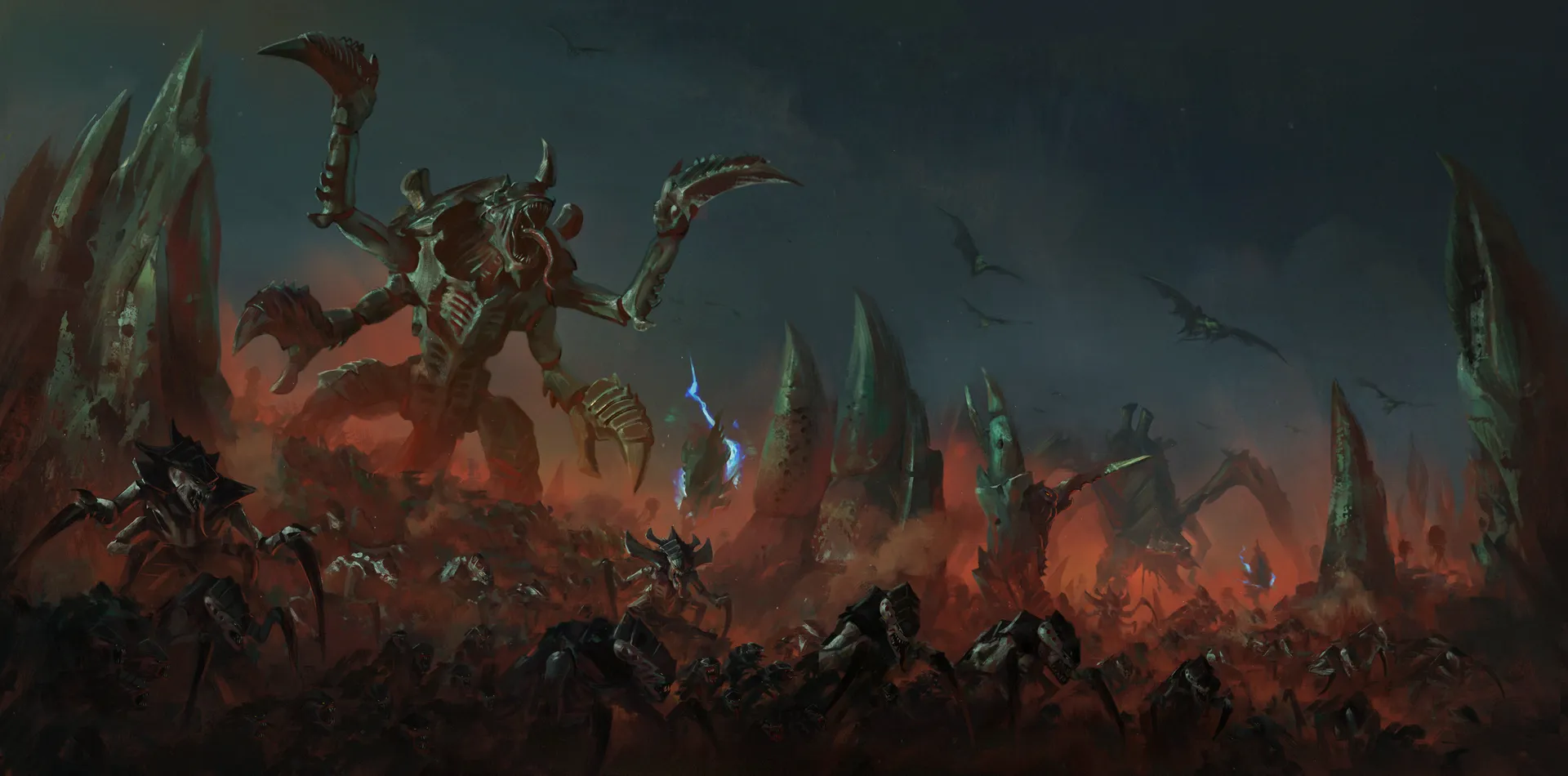
The complete lore of the Tyranids — the Great Devourer, the Hive Mind, the Shadow in the Warp, the great Hive Fleets, Genestealer Cults, and the hunger that crossed the void between galaxies.
Space Marines (Adeptus Astartes): Warhammer 40K Lore Guide
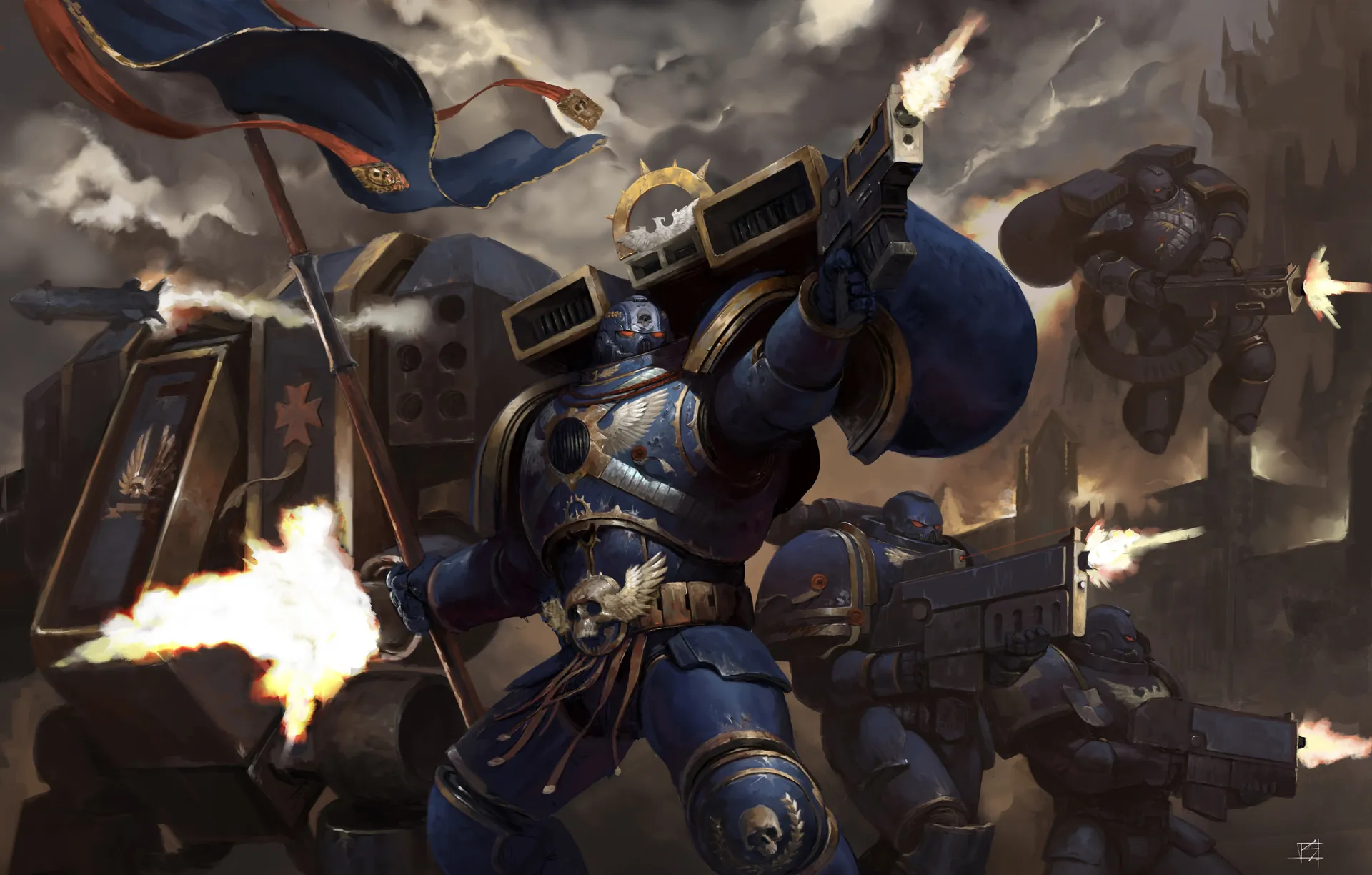
The complete lore of the Space Marines — the Primarchs, gene-seed, the Horus Heresy, the Codex Astartes and the Chapters, the Primaris and Guilliman’s return, and the cost of the Angels of Death.
Start building your world today
A linked wiki, a timeline and a live DM screen — free, in your browser, no account needed.