T'au Empire: Warhammer 40K Lore Guide
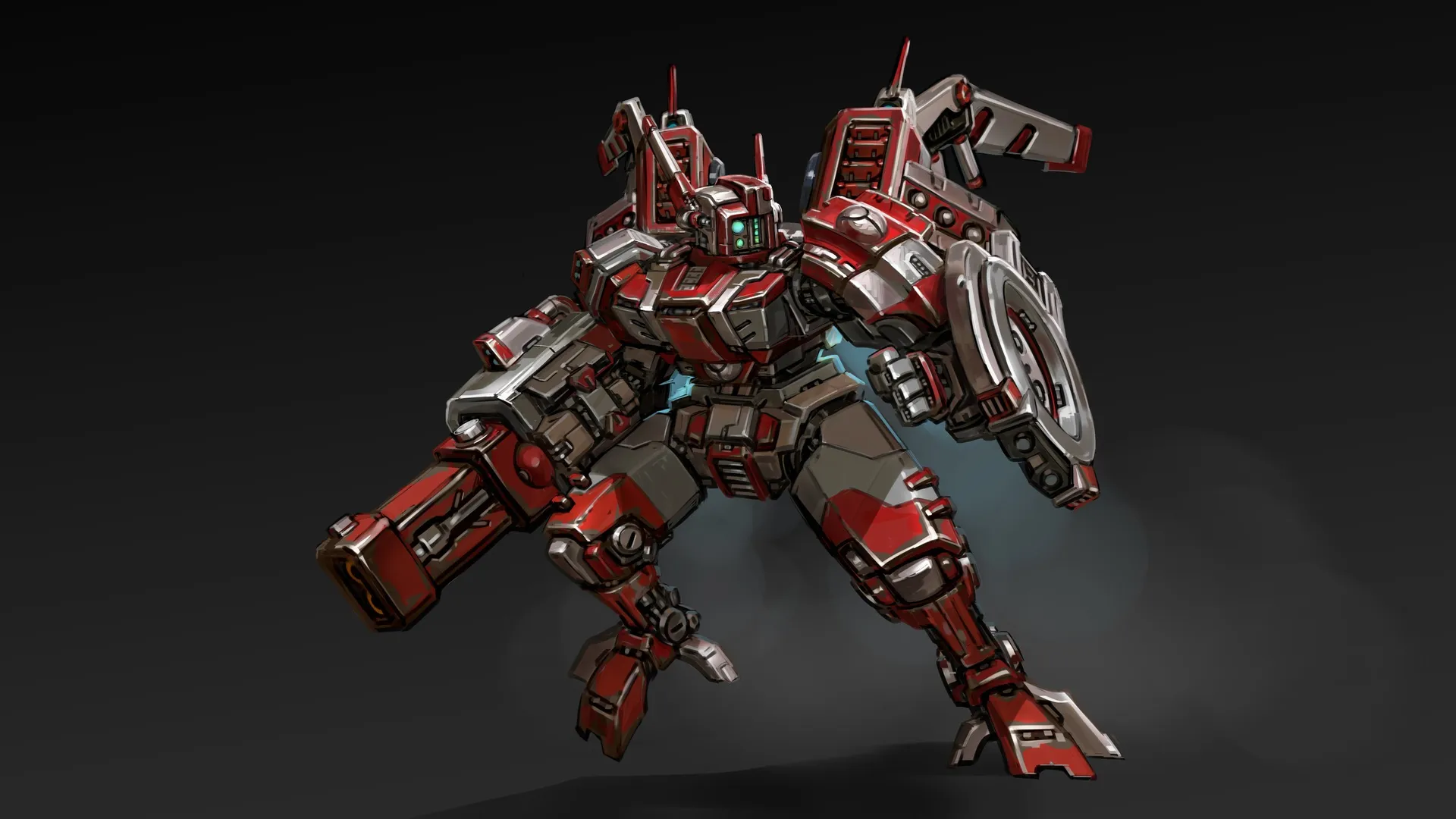
In a galaxy ruled by ancient empires, dying gods and endless war, the T'au are something almost unheard of: a young species with a genuine plan for the future. Barely six thousand years ago their ancestors were stone-age hunters squabbling over the plains of a single world in the Eastern Fringe. Today the T'au Empire spans hundreds of systems, fields the most advanced ranged weaponry in the galaxy and marches beneath one idea: the Greater Good. Their armies are sleek and disciplined, their battlesuits stride through warzones like sculpted war machines, and their diplomats offer conquered worlds something the Imperium never does: a place in a shared and orderly future.
For anyone searching for Tau 40K lore, this guide covers the full story: the caste system, the mysterious Ethereals who rule it, the Spheres of Expansion that pushed the Empire across the Damocles Gulf, the renegade Farsight Enclaves, the alien auxiliaries who fight under the T'au banner, and the battlesuit doctrine that defines their way of war. To see how they compare with the rest of the setting, start with our overview of all the Warhammer 40K factions.
T'au Empire at a Glance
| Aspect | Detail |
|---|---|
| Also Known As | The Tau, the T'au Empire, followers of the Tau'va (Greater Good) |
| Homeworld | T'au, in the Eastern Fringe of the galaxy |
| Government | A caste society ruled by the Ethereal caste |
| Philosophy | The Greater Good: every individual serves the good of the whole |
| Expansion | Successive "Spheres of Expansion" across the Damocles Gulf and beyond |
| Military Doctrine | Precise ranged firepower, battlesuits, drones and coordinated strikes |
| Allies | Kroot, Vespid, human Gue'vesa and other client species |
| Weakness | Little taste for close combat and slow warp travel |
Origins: From Plains Hunters to Star Empire
The T'au evolved on a temperate world near the galaxy's Eastern Fringe. Imperial records show that an Explorator fleet of the Adeptus Mechanicus surveyed the planet several thousand years before the present era, judged its inhabitants a primitive species and recommended the world for future colonization, which in Imperial terms meant clearing it. Before any colony fleet could follow, violent warp storms engulfed the region and cut it off from the Imperium for millennia.
Those storms gave the T'au time. In isolation, they progressed from stone tools to spaceflight at an astonishing pace, but their early history was far from peaceful. The period the T'au remember as the Mont'au, "the Terror", was an age of famine and bloody conflict between the nomadic hunters of the plains and the settled builders of the mountains. It ended at the besieged mountain city of Fio'taun, where a group of strange, calm T'au appeared and persuaded the warring sides to lay down their weapons. These were the first Ethereals, and the philosophy they preached would remake their entire species.
Within a few thousand years, the T'au had unified their homeworld, mastered space travel and settled their first colony worlds, known as septs. When the warp storms finally cleared, the Imperium found not a primitive tribe but a confident, technologically sophisticated interstellar power that had no intention of being "cleared" by anyone.
The Greater Good and the Caste System
At the heart of T'au society lies the Tau'va, the Greater Good. It holds that every individual exists to serve the good of the whole, and that a society in which each member performs the role they are best suited for will achieve harmony and progress. It is less a religion than a total worldview: the T'au do not pray to gods, and they regard the Imperium's worship of a corpse on a throne with bafflement.
The Greater Good is enforced through a rigid caste structure. Every T'au is born into one of five castes, each named after an element, and is physically and culturally shaped for its role:
- Fire caste (Shas): the warriors. Strong, disciplined and trained from childhood in the philosophy of war, they form the Empire's armies.
- Earth caste (Fio): the builders, scientists and engineers who design everything from pulse weapons to entire cities, and who are responsible for the Empire's runaway technological progress.
- Water caste (Por): the diplomats, administrators and merchants. Their silver tongues bring many worlds into the Empire without a shot fired.
- Air caste (Kor): the pilots and starship crews, tall and slender after generations spent in low gravity aboard ships and orbital stations.
- Ethereal caste (Aun): the rulers, whose word is law and who stand above every other caste.
Marriage and breeding between castes are forbidden, and each caste's duties are defined from birth. To a T'au this is not oppression but purpose. To an outside observer, and certainly to the Inquisition, it can look like a perfectly engineered machine for absorbing individuals into a collective.
The Ethereals: Wise Rulers or Puppeteers?
No caste is more central, or more mysterious, than the Ethereals. They are recognizable by a diamond-shaped mark on their foreheads and by the near-total devotion they inspire. The other castes obey them without question; an Ethereal's presence on the battlefield steels Fire Warriors to extraordinary courage, while an Ethereal's death can plunge an army into grief or drive it into vengeful fury.
Where does that power come from? Official T'au history credits the Ethereals' wisdom. Imperial agents of the Inquisition have long speculated about something more sinister, such as a biological or chemical influence over the other castes. The lore has never confirmed any of these theories, and the ambiguity is intentional. The most famous Ethereal of all is Aun'Va, the venerable Master of the Undying Spirit, long revered as the spiritual leader of the Empire. Other notable Ethereals include Aun'Shi, a rare Ethereal renowned as a blademaster who fights in the front line.
The Spheres of Expansion
The T'au do not expand in a steady trickle. Instead, the Ethereals launch great coordinated waves of colonization known as Spheres of Expansion, each pushing the Empire's borders outward in a burst of conquest, settlement and diplomacy. A limiting factor shapes all of them: T'au starships cannot fully enter the Warp the way Imperial vessels do. They can only skim its edges, so their journeys are slower but far safer from the horrors that lurk within.
The First and Second Spheres
The First Sphere established the core septs around the T'au homeworld. The Second Sphere carried the Empire into contact with other species and, fatefully, with the Imperium. In 742.M41 the Imperium launched the Damocles Gulf Crusade to crush this upstart xenos power. Space Marine Chapters and Imperial Guard regiments forced their way across the Gulf and besieged the T'au sept world of Dal'yth, but the campaign bogged down against the T'au's mobile defense. When the approach of a Tyranid hive fleet threatened the region, the Imperium accepted a negotiated end to hostilities, an outcome the T'au still celebrate as proof that the Greater Good can stand against humanity's might.
The Third and Fourth Spheres
The Third Sphere drove the Empire deeper into contested space, setting off new conflicts with the Imperium in the Damocles Gulf and with Ork and other xenos powers along the frontier. When the Great Rift tore across the galaxy at the start of the current era, the Ethereals saw opportunity as much as danger. A Fourth Sphere was launched as countless Imperial worlds found themselves cut off from Terra in the dark half of the galaxy. Isolated, frightened human populations are prime targets for Water caste envoys, and many have chosen the Greater Good over abandonment.
In the Indomitus era the T'au are therefore expanding at the same time as the Imperium is reconquering. The two sides inevitably collide, from cold diplomatic standoffs to full-scale war, and the T'au often find themselves fighting the Astra Militarum regiments sent to reclaim worlds that have accepted the Greater Good.
Battlesuits and the Fire Caste Way of War
The Fire caste does not believe in glorious last stands or headlong charges. Its doctrine, built on the teachings of legendary commanders, emphasizes precision, mobility and overwhelming firepower delivered at exactly the right moment. Two philosophies dominate: Kauyon, "the patient hunter", which lures the enemy into a prepared killing ground, and Mont'ka, "the killing blow", which identifies a single decisive moment and strikes with everything available.
The backbone of every army is the Fire Warrior, armored in lightweight plate and armed with pulse weapons that outrange and outclass the lasguns of the Imperial Guard. Pathfinder teams move ahead of the main force, marking targets with markerlights so that every gun on the field can find them. Swarms of drones, built and programmed by the Earth caste, act as shields, spotters and gun platforms. Grav-tanks such as the Devilfish transport and the Hammerhead gunship glide across the battlefield on anti-gravity engines, while Air caste pilots fly support from above.
The Battlesuits
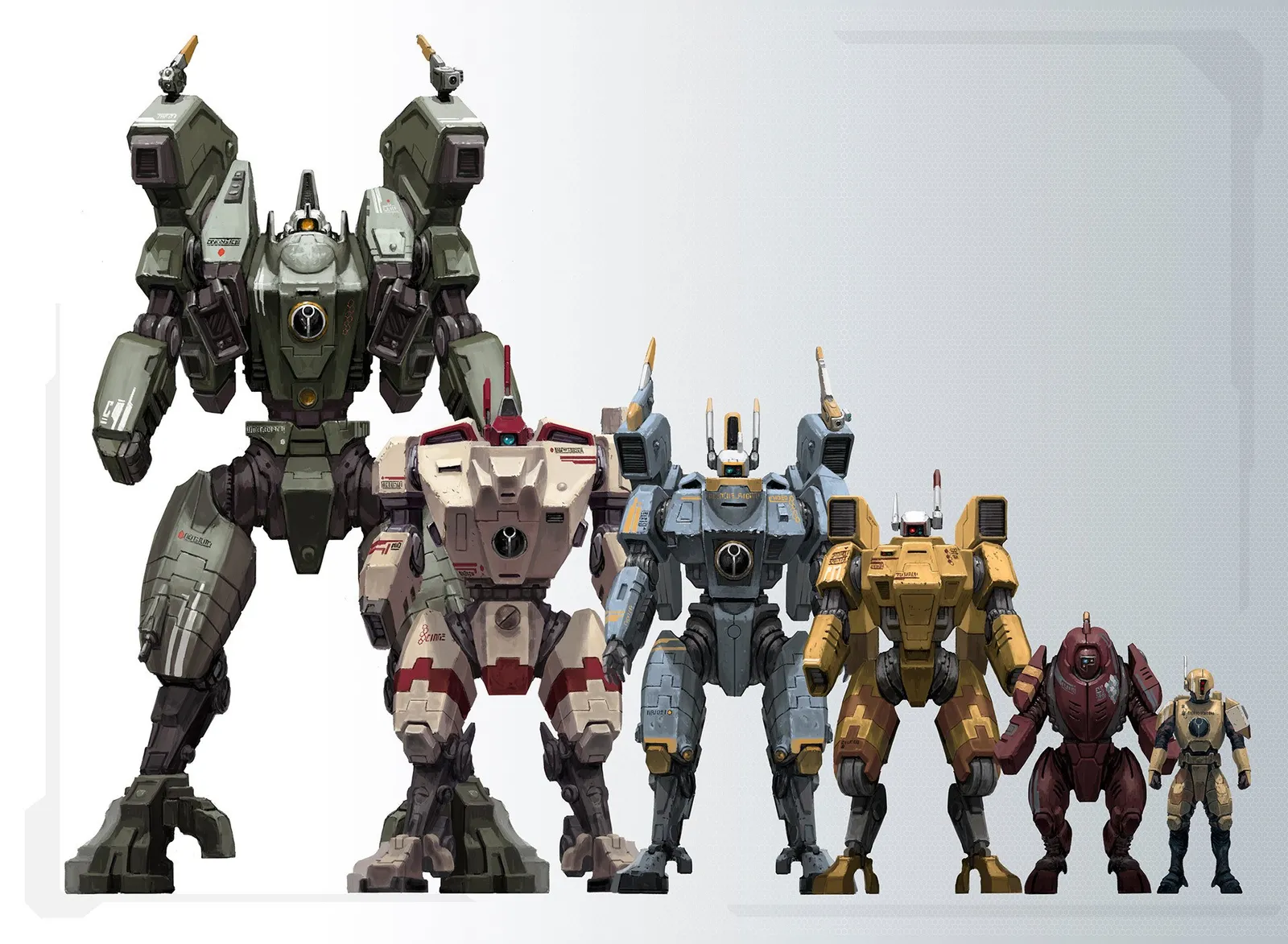
Above all, the T'au are famous for their battlesuits: piloted armored frames that let Fire caste veterans carry the firepower of a tank onto the infantry battlefield. The most important include:
- XV25 Stealth Battlesuits: compact suits fitted with camouflage fields, used to infiltrate and harass.
- XV8 Crisis Battlesuits: the iconic jet-equipped suits, flexible enough to carry almost any weapon combination and the mark of a Fire caste veteran.
- XV88 Broadside Battlesuits: heavy fire-support suits carrying rail weapons capable of punching through tank armor at extreme range.
- XV95 Ghostkeel: a stealthy hunter that uses advanced electronic warfare to vanish from enemy targeting.
- XV104 Riptide: a towering battlesuit powered by a nova reactor that can be pushed beyond its safe limits.
- KV128 Stormsurge: a colossal walking weapons platform that anchors itself to the ground before unleashing its arsenal.
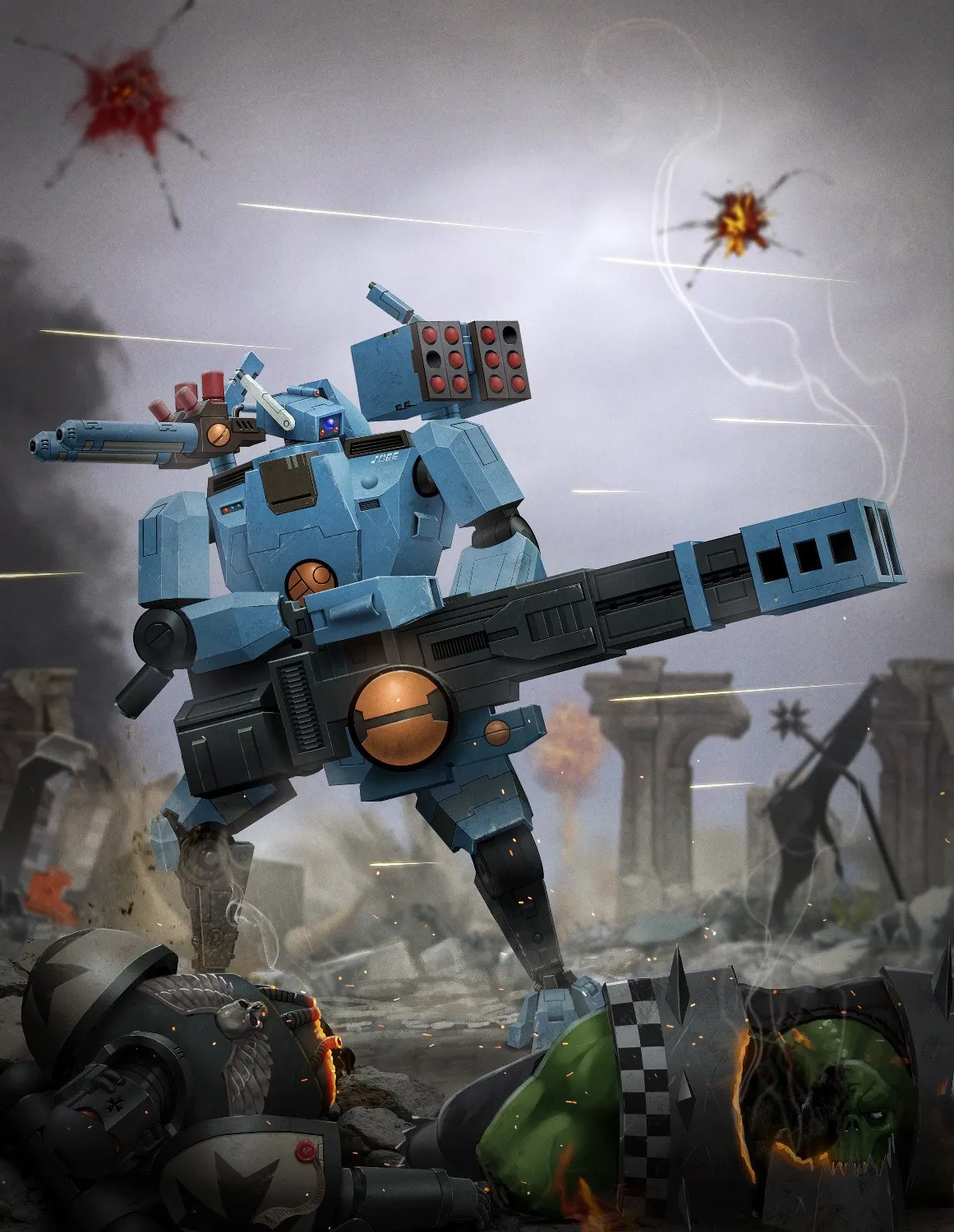
Commanders typically fight in enhanced Crisis-pattern suits or specialized designs such as the high-altitude XV86 Coldstar.
Commanders of Legend
Despite its collective ethos, the T'au Empire has produced a handful of individuals whose names echo across the Eastern Fringe:
- Commander Shadowsun (O'Shaserra): the Empire's foremost military commander and the great living master of Kauyon. Cold, patient and utterly loyal to the Ethereals, she is the model of what the Fire caste aspires to be.
- Commander Farsight (O'Shovah): Shadowsun's great rival, a master of Mont'ka whose aggressive genius once made him the Empire's rising star, before he broke away to found an independent realm.
- Commander Puretide: the legendary strategist whose teachings shaped generations of commanders. His tactical genius was preserved after his death in a neurochip so that future leaders could study it.
- Darkstrider: an unconventional Pathfinder leader who studies his enemies obsessively and breaks with doctrine when he must.
- Longstrike: a celebrated Hammerhead tank ace and one of the Fire caste's most famous gunners.
The Farsight Enclaves
The most dramatic schism in T'au history began with a victory. After winning the brutal Arkunasha War against the Orks, Commander Farsight led an expedition across the Damocles Gulf to reclaim worlds lost to the greenskins. At a world called Arthas Moloch the expedition encountered something far worse than Orks, and the Ethereals who accompanied it were killed. Farsight emerged carrying an ancient, unexplained sword known as the Dawn Blade, and he never returned to the Empire.
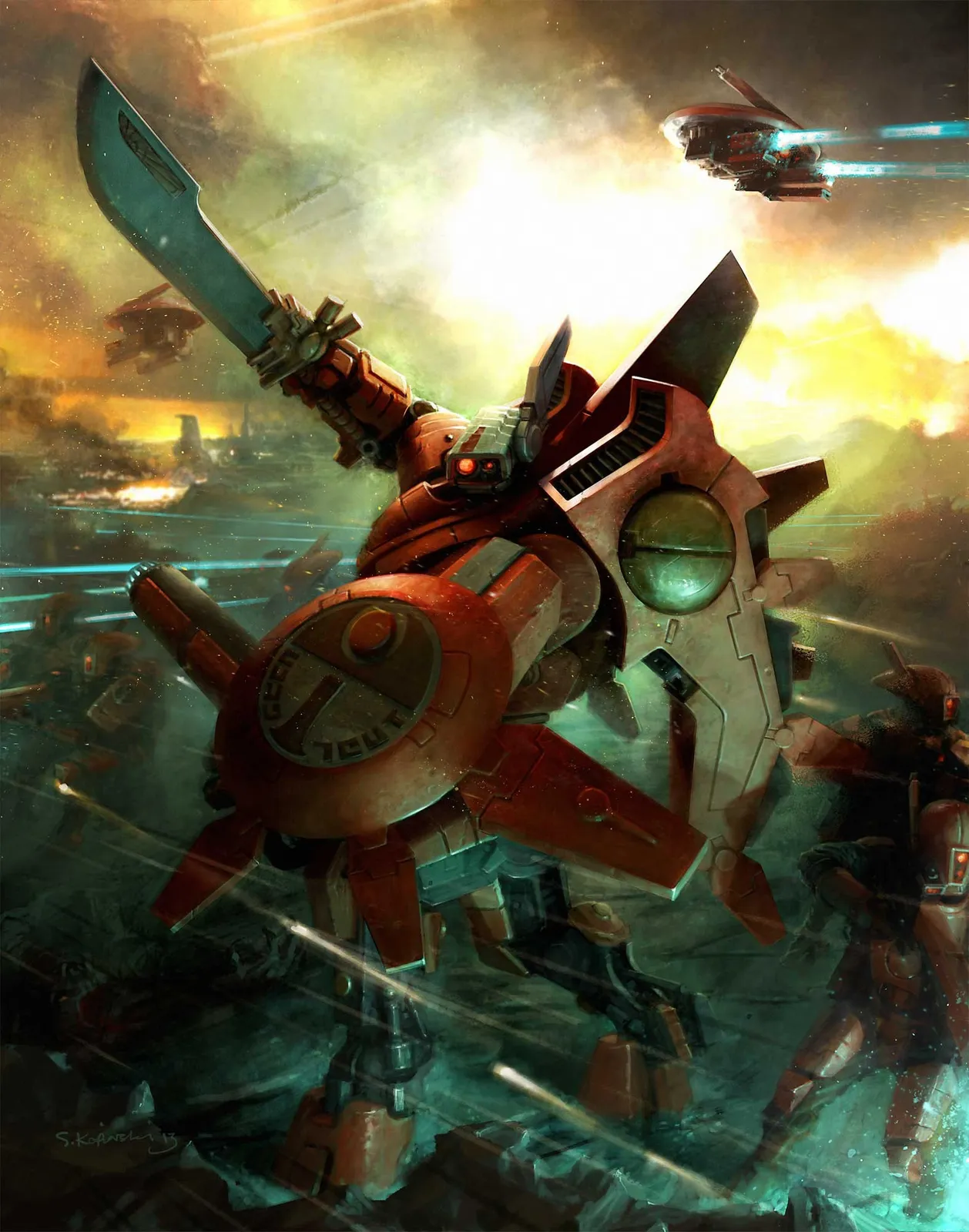
Instead, he founded the Farsight Enclaves, a cluster of breakaway worlds on the far side of the Damocles Gulf. The Enclaves still follow the Greater Good, but on their own terms: without Ethereal rule, they have developed a more martial, independent culture centered on Farsight and his loyal commanders. Farsight himself has lived far longer than any T'au should, and many suspect the Dawn Blade is responsible. The Empire officially regards the Enclaves as renegades, yet the two have fought side by side against common threats when the need was great enough. Whether Farsight is a traitor, a free thinker or simply the one T'au who sees through the Ethereals remains one of the faction's best story hooks.
Kroot, Vespid and the Auxiliaries
The Greater Good is open to any species willing to serve it, and the T'au armies include several alien allies:
- Kroot: lean, avian-looking carnivores from the world of Pech, and the Empire's oldest allies. The Kroot can absorb useful traits from the creatures they eat, guided by Shapers who choose what their kindred should consume. This has produced an astonishing variety of forms, from Kroot Carnivores and Farstalkers to hulking Krootox and hunting Kroothounds. They provide the close-combat ferocity the T'au themselves lack, and many Kroot bands also fight as mercenaries across the galaxy.
- Vespid: insectoid warriors from a storm-wracked world of floating crystal islands. Their Stingwings swoop on enemy positions with neutron weapons, guided by Strain Leaders who use communion helms to relay T'au commands.
- Gue'vesa: humans who have joined the Greater Good, often from worlds abandoned or oppressed by the Imperium. To the Inquisition, they are the worst kind of traitor.
The auxiliaries are both a strength and a source of tension. The Kroot in particular are respected allies but are never fully understood, and their appetites unsettle even the T'au.
Themes: Hope in a Grimdark Galaxy
The T'au occupy a unique place in Warhammer 40,000. Their technology is clean and bright, their armies wear sand, white and ochre instead of skulls and spikes, and their philosophy is built on cooperation rather than hatred. They have almost no presence in the Warp and no psykers of their own, which means the Chaos Gods have found far fewer footholds among them than among humanity.
But the setting never lets them off easily. The Greater Good can also be read as conformity enforced with a smile, and the Empire still expands through war. The T'au are also young and naive about the galaxy's true horrors. They have faced the Tyranids, the Orks and daemonic incursions, and every encounter chips away at the confidence of a species that still believes it can save the galaxy. That tension, between genuine hope and its possible dark underside, makes them a superb faction for storytelling.
How the T'au Empire Plays on the Tabletop
On the tabletop the T'au are the definitive shooting army. Their strength lies in long-range firepower, coordinated targeting and mobility rather than in close combat. A typical force combines Fire Warriors holding objectives, spotters marking priority targets, battlesuits that jump into position to deliver concentrated volleys, and grav-tanks or larger suits providing heavy support. Kroot add a melee and scouting element, letting players cover the army's traditional weakness.
Playing T'au well is about positioning and timing: keeping enemies at arm's length, choosing which threats to remove first and striking with everything at the decisive moment. They suit players who love mecha, clean sci-fi aesthetics and the satisfaction of a perfectly planned volley.
T'au Empire FAQ
Is it Tau or T'au in Warhammer 40K?
Both refer to the same faction. "Tau" was the original spelling used for decades; Games Workshop changed it to "T'au" in 2017 to better reflect the species' own pronunciation, and the army is now officially called the T'au Empire. Most players still use the two interchangeably, which is why "Tau 40K" remains such a common search.
What is the Greater Good?
The Greater Good, or Tau'va, is the T'au guiding philosophy: every individual should serve the good of the whole society, and each person should perform the role they are best suited for. It shapes T'au politics, culture and warfare, and it is offered to every species the Empire encounters, whether they want it or not.
Are the T'au the good guys of 40K?
Not exactly. They are the most idealistic faction and often the most humane, but their Empire still expands through conquest, enforces a rigid caste system and is ruled by Ethereals whose authority is never questioned. The lore deliberately keeps it ambiguous whether the Greater Good is genuine or a form of soft control.
Who are the Ethereals?
The Ethereals are the ruling caste of T'au society. They first appeared during the Mont'au, the age of strife on the T'au homeworld, and united the warring T'au under the Greater Good. Their authority is absolute, and their death can shatter T'au morale. Imperial agents suspect they wield some form of hidden influence, but this has never been confirmed.
Who is Commander Farsight?
Commander Farsight (O'Shovah) is a brilliant and aggressive Fire caste commander who broke away from the T'au Empire after the death of his Ethereal overseers at Arthas Moloch. He founded the Farsight Enclaves, wields the mysterious Dawn Blade and has lived unnaturally long. He is one of the most popular characters in the faction.
Do the T'au have psykers?
No. The T'au have an extremely faint presence in the Warp and produce no psykers. This protects them from many dangers that plague humanity, but it also leaves them ill-equipped to understand the Warp. Some allied species within the Empire do possess psychic gifts.
Continue Exploring
- Warhammer 40K Factions: Complete Guide to All 29 Armies — every army, its lore and how it plays
- The Astra Militarum — the Imperial Guard regiments sent to reclaim worlds lost to the Greater Good.
- The Orks — the greenskin hordes that have fought the T'au since the Arkunasha War.
- The Leagues of Votann — another technologically advanced newcomer, ruled by AI Ancestor Cores.
- The Genestealer Cults — the hidden xenos insurgency rising within the Imperium's worlds.
For the rest of the setting, browse every guide in the Warhammer 40K lore hub. To chronicle your own sept, its commanders and its campaigns, Anima is free and runs in your browser with no account: a wiki, a timeline, and campaigns with a live DM screen.
Keep reading
More from this topic
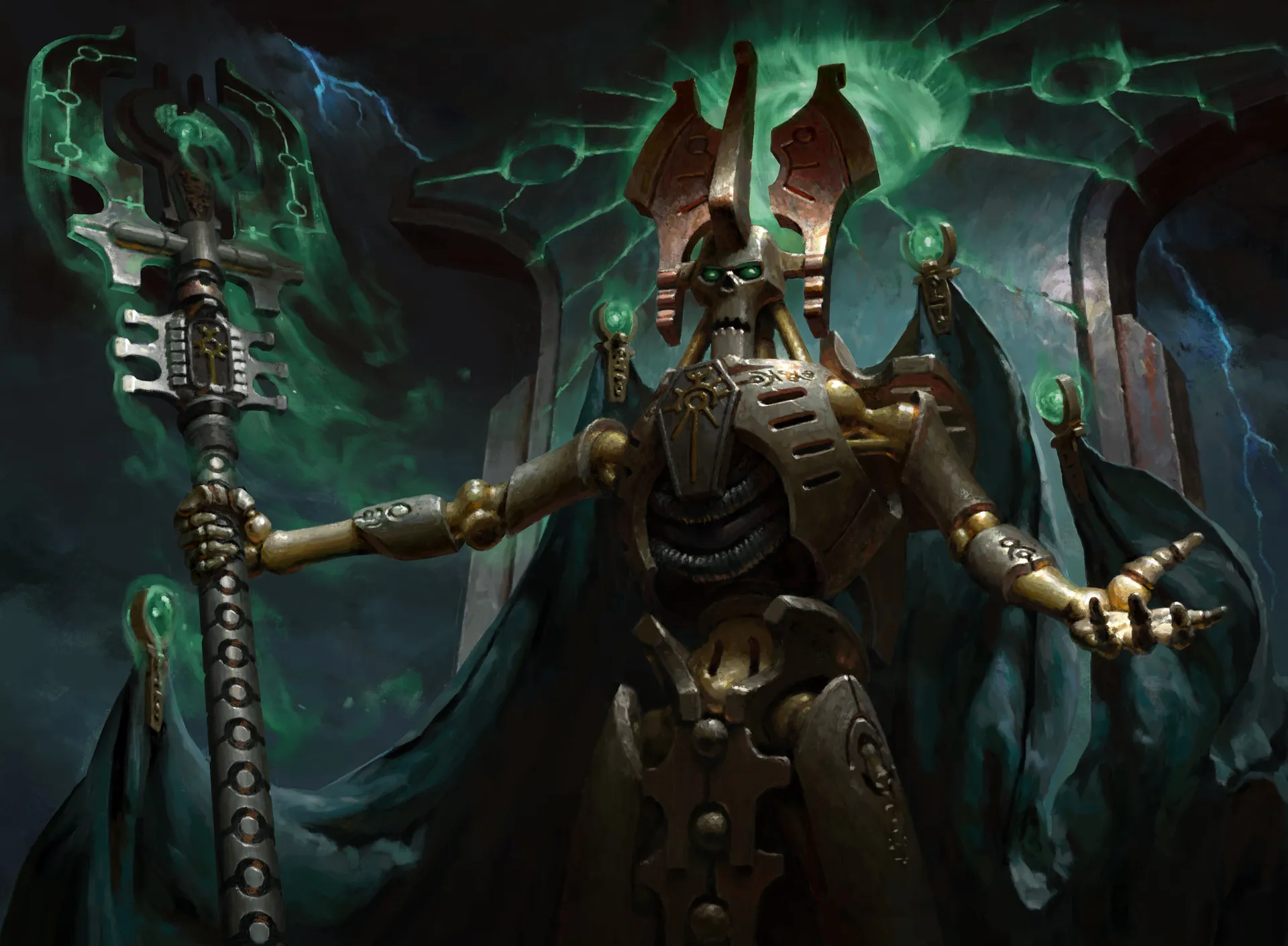
Necrons: Warhammer 40K Lore Guide
The complete lore of the Necrons — the doomed Necrontyr, the C’tan star-gods, biotransference, the War in Heaven, and the deathless dynasties now waking to reclaim the galaxy.
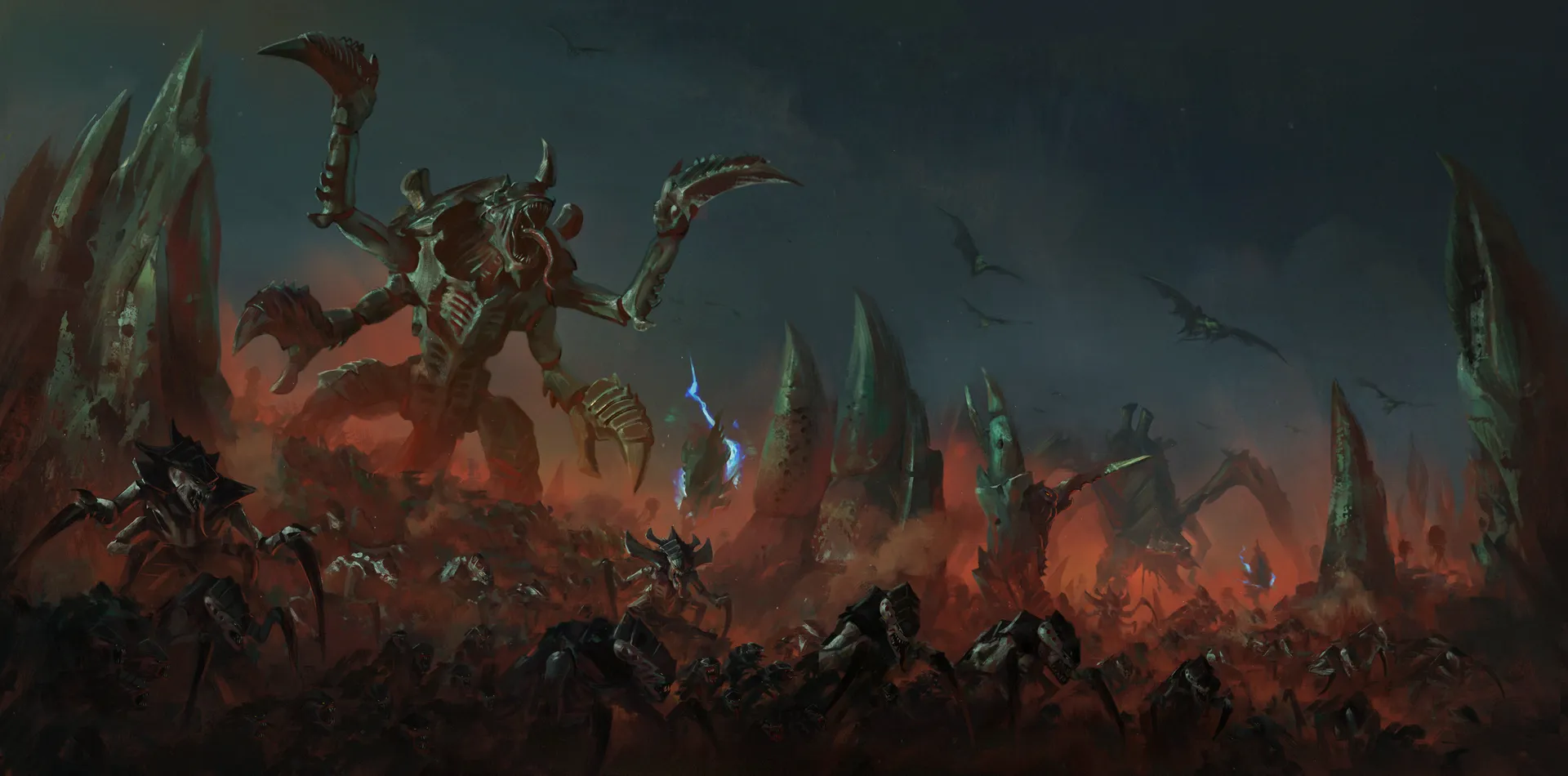
Tyranids: Warhammer 40K Lore Guide
The complete lore of the Tyranids — the Great Devourer, the Hive Mind, the Shadow in the Warp, the great Hive Fleets, Genestealer Cults, and the hunger that crossed the void between galaxies.
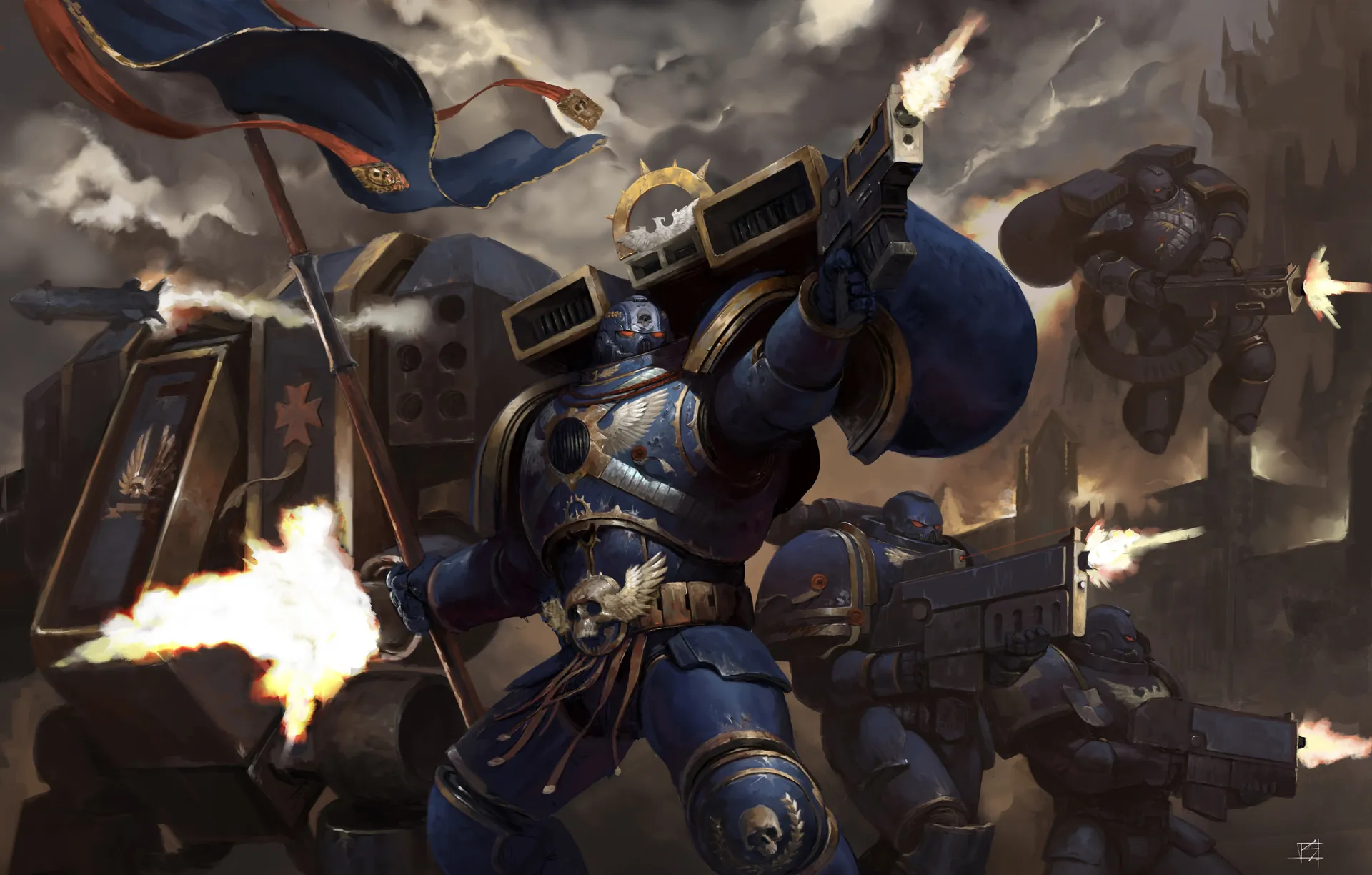
Space Marines (Adeptus Astartes): Warhammer 40K Lore Guide
The complete lore of the Space Marines — the Primarchs, gene-seed, the Horus Heresy, the Codex Astartes and the Chapters, the Primaris and Guilliman’s return, and the cost of the Angels of Death.
Start building your world today
A linked wiki, a timeline and a live DM screen — free, in your browser, no account needed.