Death Guard: Warhammer 40K Lore Guide
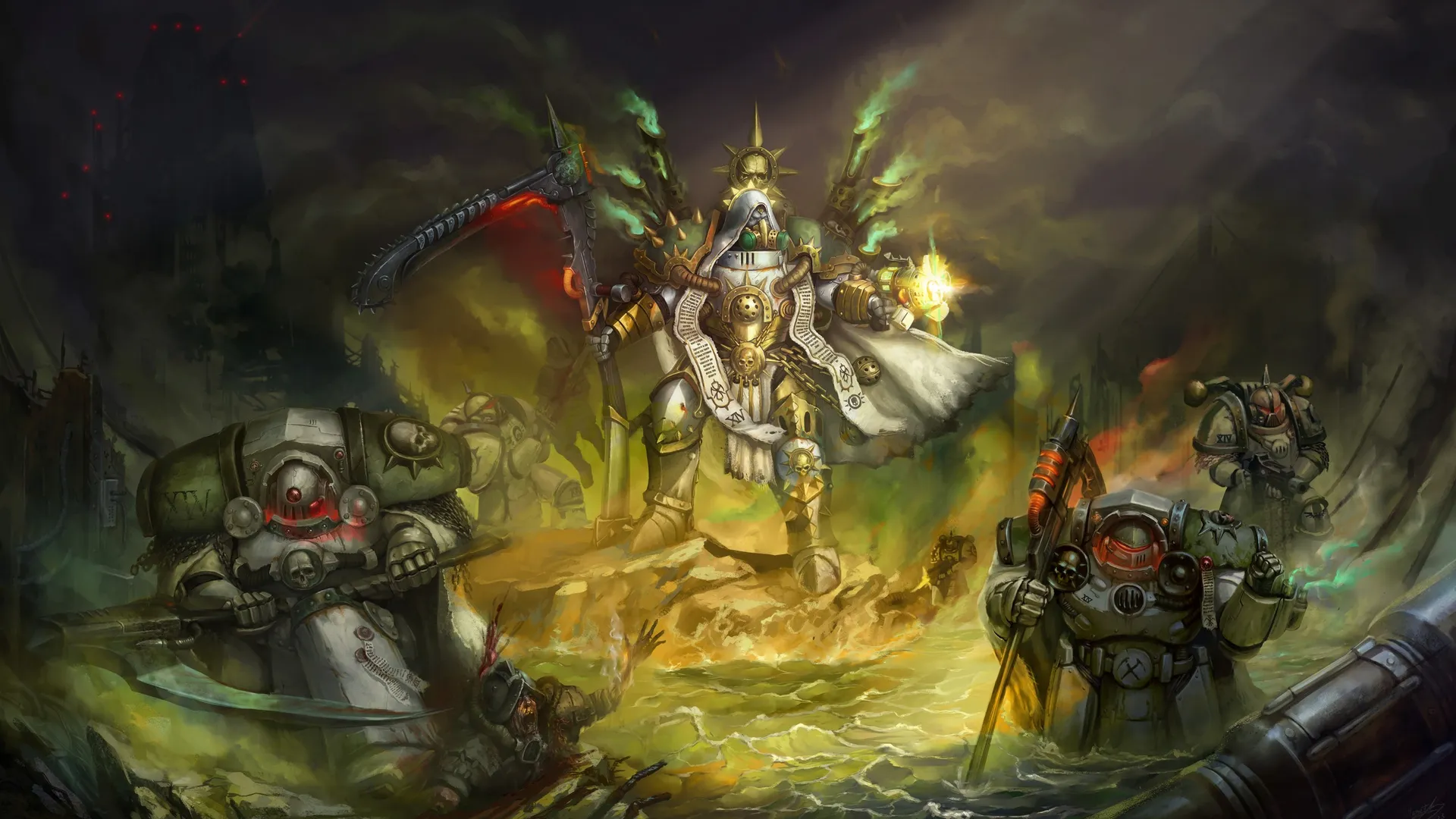
They do not charge. They do not hurry. They advance through the fog of their own corruption at a steady, unstoppable walk, armor split by swollen flesh, bolters dripping, droning flies circling their horned helms like halos. Shot, they keep walking. Burned, they keep walking. The Death Guard are the most resilient of all the Traitor Legions of the Chaos Space Marines, and their entire existence is a cruel joke at the expense of the man who made them: a Primarch who hated sickness and sorcery above all things, now worshipped as a demigod of plague.
This guide traces the XIV Legion from its beginnings as the Dusk Raiders, through the poisoned childhood of Mortarion on Barbarus, to the moment their fleet died and was reborn in the Warp, and on to the Plague Wars that scar the galaxy of the 42nd Millennium. Whether you are painting your first Plague Marine, writing a campaign set in a quarantined hive city, or simply curious how a Legion of stoic survivors became the walking dead, this is the story behind the rot.
Death Guard at a Glance
| Aspect | Detail |
|---|---|
| Legion Number | XIV Legion |
| Pre-Heresy Name | The Dusk Raiders |
| Primarch | Mortarion, the Death Lord, now Daemon Primarch of Nurgle |
| Homeworld | Barbarus (pre-Heresy); the Plague Planet in the Eye of Terror |
| Patron God | Nurgle, the Plague God |
| Sacred Number | Seven |
| Colors | Bone-white and brass in the Heresy; corroded green, rust and bronze today |
| Signature Warriors | Plague Marines, Blightlord and Deathshroud Terminators, Poxwalkers |
| Defining Trait | Unbreakable endurance turned into unkillable, contagious decay |
Barbarus: The Poisoned Cradle of Mortarion
When the Primarchs were scattered across the galaxy, the infant who would become Mortarion fell onto Barbarus, a world smothered in toxic fog. Humans scraped out a living in the valleys, where the air was merely foul; the high peaks, wreathed in lethal mists, belonged to the Overlords, sinister and sorcerous beings who preyed on the villages below. One of these Overlords found the child, raised him as a ward and named him Mortarion, the "child of death."
Mortarion grew up amid horror and necromancy, and he came to loathe his foster-father. He fled to the lowlands, where his Primarch physiology let him survive poisons that killed ordinary men, and he forged the valley folk into a resistance. Together they climbed into the mists and destroyed Overlord after Overlord. His closest human warriors took a name that would outlive Barbarus itself: the Death Guard.
Only one Overlord remained, the one who had raised him, when the Emperor arrived. Mortarion refused to bow to a stranger, and the Emperor accepted a wager: if Mortarion could kill the last Overlord alone, he would keep his independence. Mortarion climbed higher than ever before, into air so poisonous that even he collapsed. The Emperor stepped in and slew the Overlord, saving his son's life. Mortarion kept his word and knelt, but the humiliation festered. The two defining traits of the Death Guard were set from that day: a pride in enduring what would kill anyone else, and a bitter, buried resentment of the Emperor and of all things psychic.
From Dusk Raiders to Death Guard
Before its Primarch was found, the XIV Legion fought the Great Crusade as the Dusk Raiders, a Terran-recruited Legion known for grinding, unglamorous warfare. When Mortarion took command, he renamed it after his Barbaran guerrillas and remade it in his image. The Death Guard became masters of attrition: they marched into toxic atmospheres without flinching, fought through rad-storms and chemical bombardments, and wore down enemies that other Legions would have outmaneuvered. Their bone-colored armor and rebreather-masked helms made them look like an army of the grave long before they actually were one.
Mortarion's hatred of witchcraft also shaped the Legion. The Death Guard were notoriously suspicious of psykers, and Mortarion was among the Primarchs who welcomed restrictions on Legion Librarians. The irony is savage: his First Captain, Calas Typhon, a Barbaran-hardened Terran officer, was secretly a latent psyker who had been quietly dabbling in forbidden lore and already listening to whispers from the Warp. Mortarion trusted him completely.
The Fall: Isstvan and the Destroyer Hive
When Horus rebelled, Mortarion went with him. Some of that was loyalty to Horus, whom he admired; some was the old grudge from Barbarus. At Isstvan III the Warmaster purged the loyalists from the traitor Legions, and the Death Guard bombed their own brothers from orbit. One loyal Death Guard captain, Nathaniel Garro, escaped aboard the frigate Eisenstein and carried the first warning of Horus's treachery to Terra, a story told in the Horus Heresy novel The Flight of the Eisenstein. The Death Guard then took part in the Dropsite Massacre at Isstvan V.
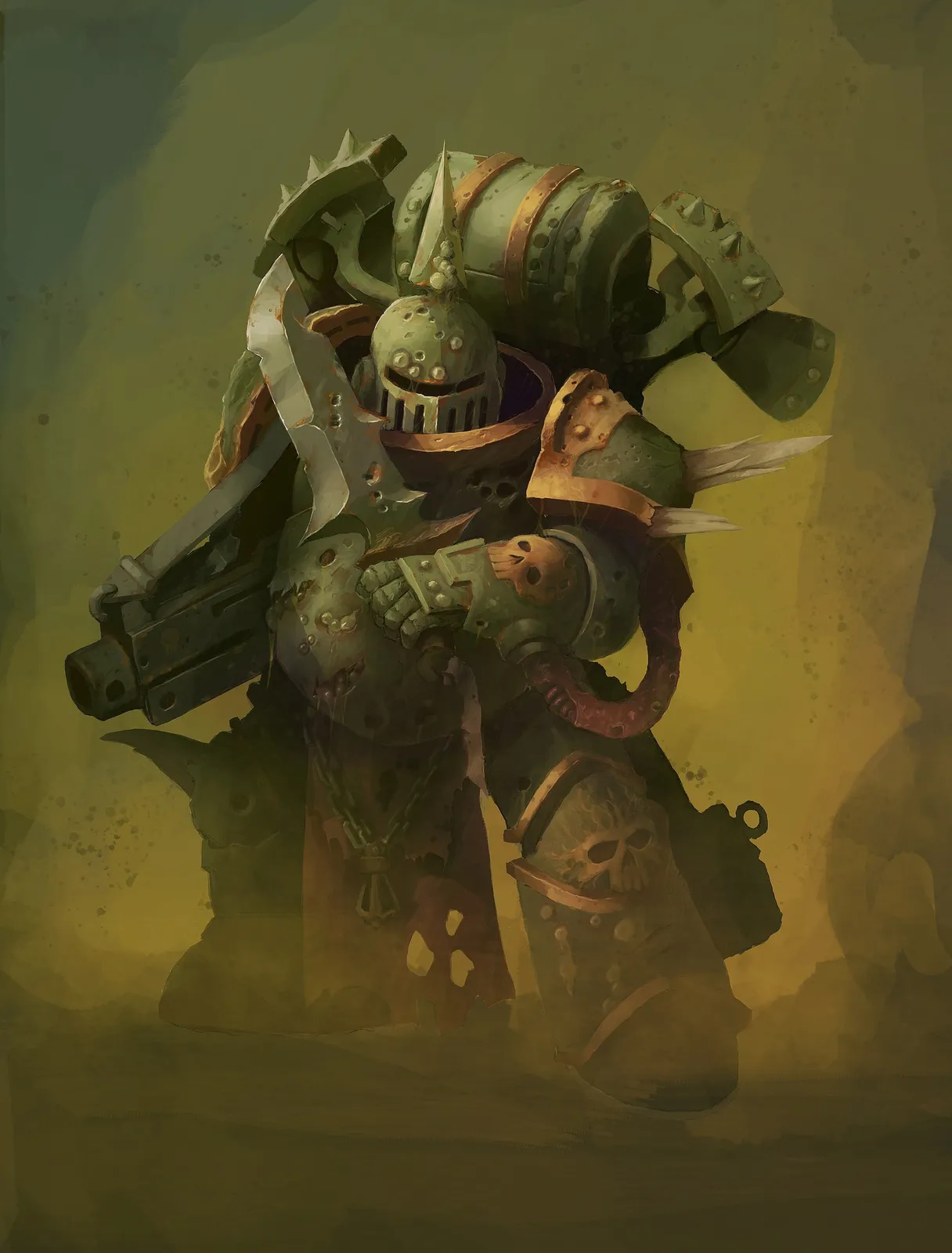
The Legion's true damnation came in the Warp. As the Death Guard fleet sailed for Terra, Typhon had its Navigators killed, and the ships became becalmed in the Immaterium. Then the sickness came: a supernatural plague that bloated flesh, rotted organs and turned armor into a sweltering prison, yet refused to let its victims die. The Death Guard's legendary toughness became a curse; they suffered endlessly while ordinary men would have perished in hours.
Mortarion watched his sons rot and could not save them. In the end the Death Lord, who had spent his life fighting sorcery, offered himself to the power behind the plague in exchange for his Legion's survival. Nurgle accepted. The plague did not end; it became a blessing. The Death Guard rose as the chosen of the Plague God, and Typhon was reborn as Typhus, Herald of Nurgle, his body a living hive for the swarming Destroyer Hive. To understand the god that claimed them, from the Garden of Nurgle to his paradoxical love for his followers, read our complete guide to Nurgle.
The Plague Planet and the Long War
The Death Guard fought on Terra, and after Horus fell they retreated with the other traitors into the Eye of Terror. Mortarion, eventually elevated to a Daemon Primarch, claimed a daemon world of his own: the Plague Planet, a cratered, festering realm where he labors over new diseases. For ten thousand years his Legion has struck out from the Eye, spreading contagion across the Imperium.
Unlike the shattered World Eaters or the scattered Emperor's Children, the Death Guard have kept much of their old discipline. The Legion is organized into seven great Plague Companies, each led by a mighty champion and acting almost like a self-contained army, with its own vessels, Terminators, sorcerers and engines. Seven is Nurgle's sacred number, and it echoes everywhere: in squad sizes, in ritual counts, in the seven-fold structures of their warbands. Within each company, specialist champions tend the Legion's terrible craft: Plague Surgeons harvest gene-seed and spread infection, Biologus Putrifiers brew new contagions, Tallymen count the plagues and the dead, and Malignant Plaguecasters wield the very sorcery Mortarion once despised.
Not every warband answers directly to Mortarion. Typhus in particular roams the galaxy at the head of his own plague fleet, and his relationship with his Primarch is notoriously ambiguous, half-loyal servant, half-rival prophet of Nurgle. The Death Guard are united by their god, but as with every Chaos force, ambition and jealousy rot through the ranks too.
Mortarion's Plague Wars in the Dark Imperium
The opening of the Great Rift and the return of Roboute Guilliman changed everything. Guilliman's revival was an insult to Nurgle, who had good reason to hate the newly awakened Primarch, and Mortarion was sent to break Ultramar. The resulting Plague Wars saw Death Guard fleets fall upon the Realm of Ultramar, seeding its worlds with diseases that turned the population into shambling hordes and filled the sky with flies. Iax, a garden world famed for its fertility, became a particular target, as did Espandor and Parmenio, where Ultramarines, local defense forces and Primaris reinforcements fought desperately against the rising tide.
The Plague Wars are central to Black Library's Dark Imperium trilogy, which builds to a direct confrontation between the two brother-Primarchs. Ultramar survived, but scarred, and Mortarion's ambitions were checked rather than ended. To see the loyalist side of that clash, including Guilliman and the Primaris Marines, start with our Space Marines lore guide. In the current Era Indomitus, the Death Guard remain one of the most dangerous traitor forces in the galaxy, spreading their gifts through the Imperium Nihilus and beyond.
Key Characters of the Death Guard
- Mortarion — the Daemon Primarch, a towering, moth-winged giant who carries the great scythe Silence. He remains proud, brooding and contemptuous of the sorcery his own Legion now uses.
- Typhus — formerly Calas Typhon, Herald of Nurgle and Host of the Destroyer Hive. His insect swarm and his ambitions make him one of the most feared Chaos champions in the galaxy.
- Nathaniel Garro — the loyalist exception. Garro escaped Isstvan and went on to serve Malcador the Sigillite during the Heresy, and Black Library has since brought him into the modern era of the setting.
- Lords of Contagion and Lords of Virulence — Terminator-armored warlords who lead the Legion's warbands, veterans who have endured ten thousand years of war.
The Death Guard rarely wage war alone. Plaguebearers, Nurglings and Great Unclean Ones (the Plague God's daemonic legions, covered in our Chaos Daemons guide) march alongside them, and their mortal victims are pressed into service as walking carriers of disease.
The Plague Legion at War
Every unit of the Death Guard tells the same story: endurance twisted into something monstrous.
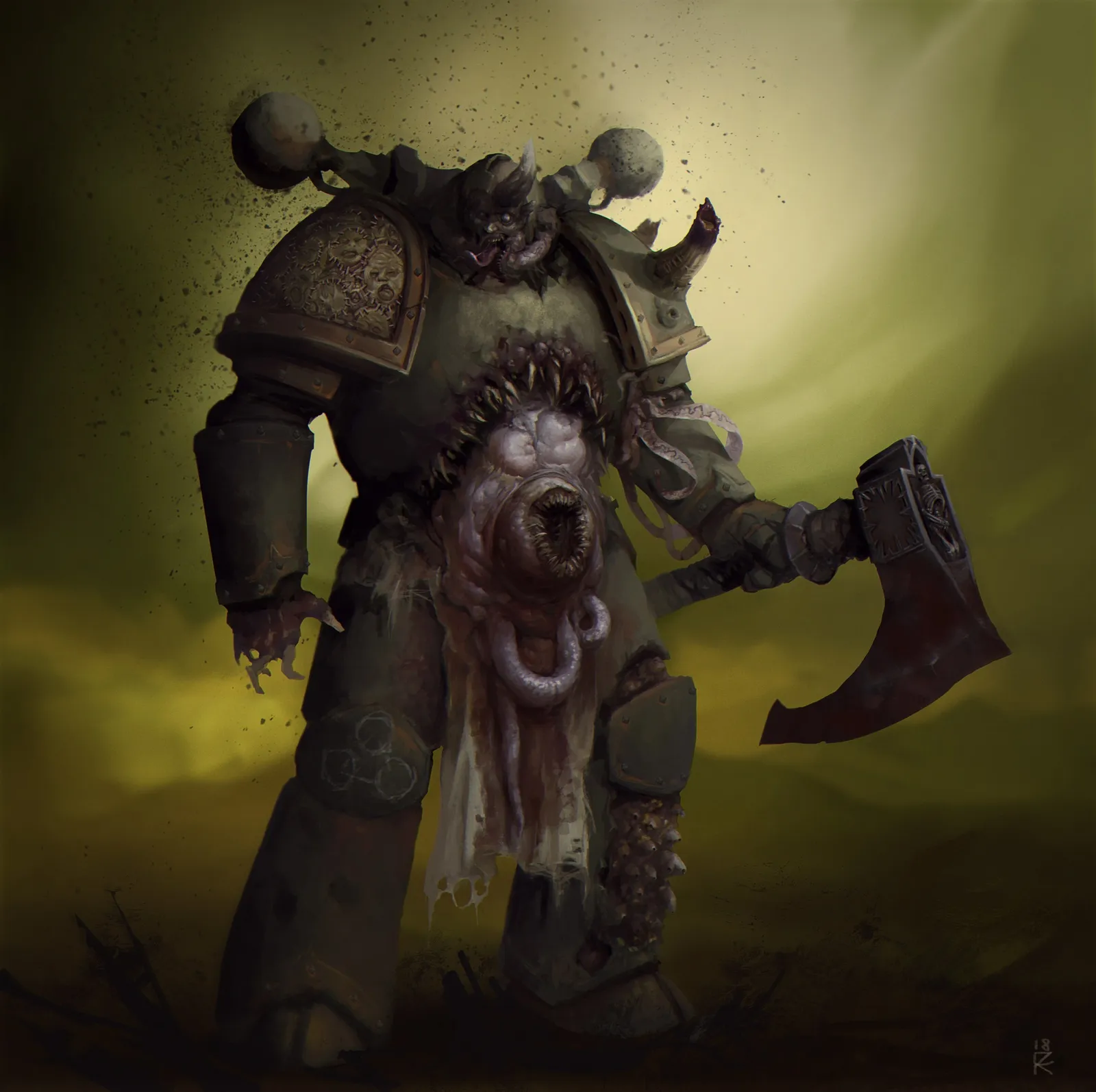
- Plague Marines — the core of the Legion, veteran traitors who have survived since the Heresy. Their bodies are bloated with corruption and their armor fused to their skin, yet they are almost impossible to kill. They carry plague knives, boltguns loaded with toxic rounds, blight grenades and grotesque flame and gas weapons.
- Poxwalkers — victims of the Walking Pox, a disease that kills its host and then reanimates the corpse as a mindless, shuffling carrier. Every Poxwalker was once an Imperial citizen or soldier, and the defenders of a plague-struck world, from planetary militias to the regiments described in our Astra Militarum guide, often end up fighting their own infected comrades.
- Blightlord Terminators — the Legion's elite, descended from the veteran Terminators who endured the voyage through the Warp. Their Cataphractii plate has become a corroded shell for the strongest of Nurgle's chosen.
- Deathshroud Terminators — Mortarion's silent bodyguards, armed with great plague-scythes in imitation of their master.
- Daemon engines — Plagueburst Crawlers that lob explosive contagion, Foetid Bloat-drones that hover on rotting rotors, Myphitic Blight-haulers and other foul war machines where daemon and machine have fused.
- Malignant Plaguecasters — sorcerers of Nurgle who hurl disease and decay through the Warp, a living rebuke to Mortarion's old hatred of psykers.
The Death Guard's relationship with sorcery is one of the richest ironies in the setting, and it puts them at odds with the Legion that embraced the Warp most completely: the Thousand Sons, whom Mortarion despised long before either Legion fell. Nurgle and Tzeentch are eternal rivals too, a feud explained in our overview of all four Chaos Gods.
How the Death Guard Play on the Tabletop
On the tabletop, the Death Guard are built around the same identity as their lore: slow, stubborn and very hard to remove. They are one of the most durable armies in Warhammer 40,000, excellent at walking onto objectives and simply staying there while the enemy wears itself out. Their weapons tend to grind opponents down through toxins and attrition rather than delivering one clean blow, and contagion effects that weaken nearby enemies are a recurring part of their identity.
The trade-off is speed. Death Guard armies cover the table slowly and often lack long-range firepower, so a fast or mobile opponent can try to dance around them. For newcomers, they are famously forgiving: a misplaced unit rarely dies before it can do something useful. For a side-by-side look at how they compare to the other Chaos and Imperial forces, see the Death Guard entry in our Warhammer 40K factions guide.
Death Guard FAQ
Who is the Primarch of the Death Guard?
Mortarion, the XIVth Primarch, raised on the poisonous world of Barbarus. After the Death Guard were struck by plague in the Warp during the Horus Heresy, he gave himself to Nurgle and later became a Daemon Primarch. He rules the Plague Planet in the Eye of Terror and led the Plague Wars against Ultramar after Roboute Guilliman's return.
What were the Death Guard called before the Horus Heresy?
Before Mortarion was found, the XIV Legion was known as the Dusk Raiders. Mortarion renamed it the Death Guard after the human warriors who had fought beside him against the Overlords of Barbarus.
Why did the Death Guard turn to Nurgle?
The Legion had already joined Horus's rebellion, but it was not dedicated to any god until its fleet was trapped in the Warp on the way to Terra. A supernatural plague, deliberately invited by First Captain Typhon, ravaged the Legion without letting anyone die. Mortarion bargained with Nurgle to save his sons, and the Death Guard became the Plague God's chosen Legion.
Are the Death Guard Chaos Space Marines?
Yes. They are one of the original Traitor Legions, so they are Heretic Astartes in the same sense as the wider Chaos Space Marines. On the tabletop, though, they have long had their own dedicated codex and model range, separate from the general Chaos Space Marines army, because they are wholly devoted to Nurgle.
Who is Typhus?
Typhus, once Calas Typhon, was the Death Guard's First Captain and the architect of its fall. Secretly a psyker, he sabotaged the Legion's voyage through the Warp so that Nurgle's plague could claim it. Today he is the Herald of Nurgle and Host of the Destroyer Hive, a swarm of daemonic flies that lives inside his body, and he roams the galaxy spreading disease, often acting independently of Mortarion.
Were there any loyalist Death Guard?
A few. The most famous is Battle-Captain Nathaniel Garro, who escaped the purge at Isstvan III aboard the Eisenstein and warned Terra of Horus's betrayal. Garro and his fellow survivors went on to serve the Imperium in secret during the Heresy, and Black Library has since carried his story forward into the modern era.
Continue Exploring
- Warhammer 40K Factions: Complete Guide to All 29 Armies — every army, its lore and how it plays
- Chaos Space Marines — the Traitor Legions, the Black Legion and the Long War against the Imperium.
- The Thousand Sons — Magnus's sorcerer Legion, whom Mortarion always despised.
- The World Eaters — Angron's berserkers, sworn to Khorne.
- The Emperor's Children — Fulgrim's Legion of perfection turned excess.
- Nurgle: The Plague God — the god who answered Mortarion's desperate bargain.
- Mortarion — Mortarion in depth
Name your own plague-ridden champion with the Chaos Space Marine name generator, or browse every guide in the Warhammer 40K lore hub. To chronicle a Plague Company's slow crusade, Anima is free and runs in your browser with no account: a wiki, a timeline, and campaigns with a live DM screen.
Keep reading
More from this topic
Necrons: Warhammer 40K Lore Guide
The complete lore of the Necrons — the doomed Necrontyr, the C’tan star-gods, biotransference, the War in Heaven, and the deathless dynasties now waking to reclaim the galaxy.
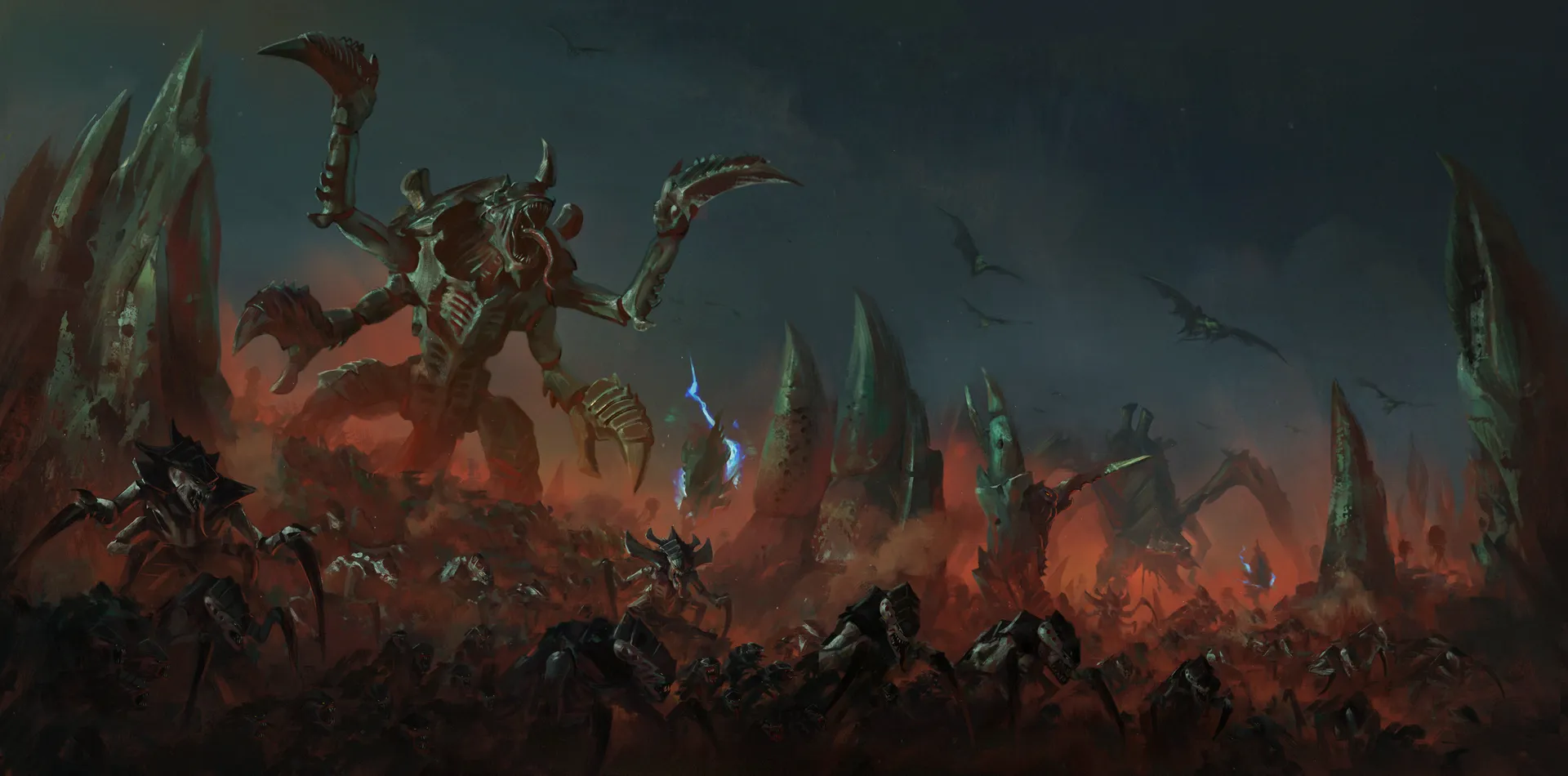
Tyranids: Warhammer 40K Lore Guide
The complete lore of the Tyranids — the Great Devourer, the Hive Mind, the Shadow in the Warp, the great Hive Fleets, Genestealer Cults, and the hunger that crossed the void between galaxies.
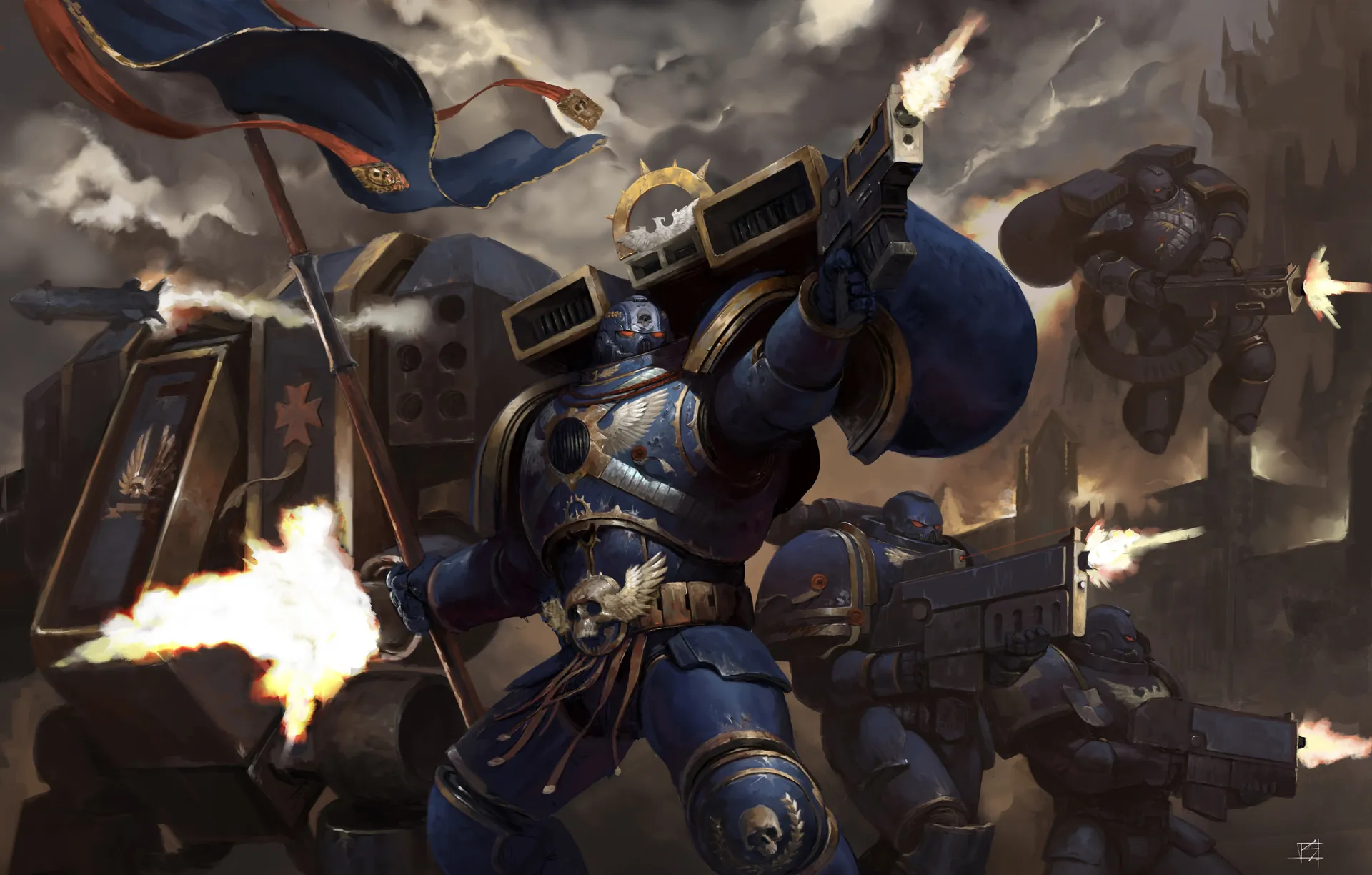
Space Marines (Adeptus Astartes): Warhammer 40K Lore Guide
The complete lore of the Space Marines — the Primarchs, gene-seed, the Horus Heresy, the Codex Astartes and the Chapters, the Primaris and Guilliman’s return, and the cost of the Angels of Death.
Start building your world today
A linked wiki, a timeline and a live DM screen — free, in your browser, no account needed.