Mortarion: Warhammer 40K Lore Guide
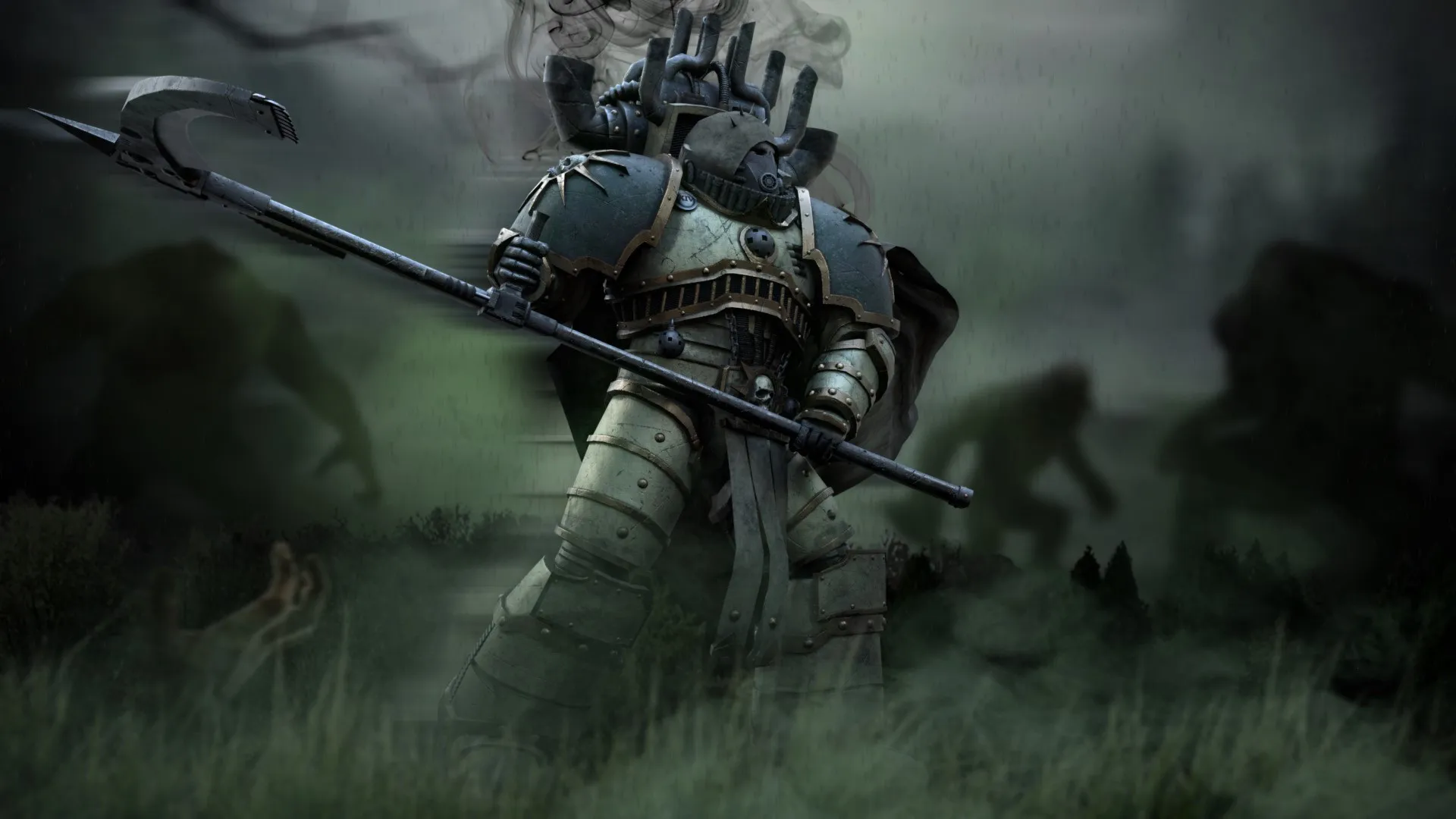
Mortarion hated three things above all else: tyrants, sorcery and weakness. He spent his childhood killing the first, his career persecuting the second and his whole life refusing to show the third. Ten thousand years later he is a winged Daemon Primarch of the Plague God, a being of rot and pestilence who commands sorcerers, rules a planet of disease and owes everything he is to the kind of power he once swore to destroy.
As the Primarch of the Death Guard, Nurgle's plague Legion, Mortarion is the grim center of one of Warhammer 40,000's cruelest ironies. This guide focuses on the Death Lord himself: the poisoned world that raised him, the humiliation that soured his loyalty, the bargain in the Warp that damned him, his role at the Siege of Terra and his Plague Wars against Roboute Guilliman in the Era Indomitus.
Mortarion at a Glance
| Aspect | Detail |
|---|---|
| Titles | The Death Lord, the Reaper, the Pale King, Lord of the Death Guard |
| Primarch Number | XIV |
| Legion | The Death Guard (formerly the Dusk Raiders) |
| Allegiance | Traitor; sworn to Nurgle, the Plague God |
| Homeworld | Barbarus; now the Plague Planet in the Eye of Terror |
| Signature Weapons | Silence, his great scythe, and the Lantern, an ancient energy pistol |
| Defining Trait | Near-limitless endurance and a lifelong loathing of psykers |
| Status in M42 | Daemon Primarch of Nurgle, active |
| Great Rival | Roboute Guilliman, the living Primarch of Ultramar |
Origin: The Child of Death on Barbarus
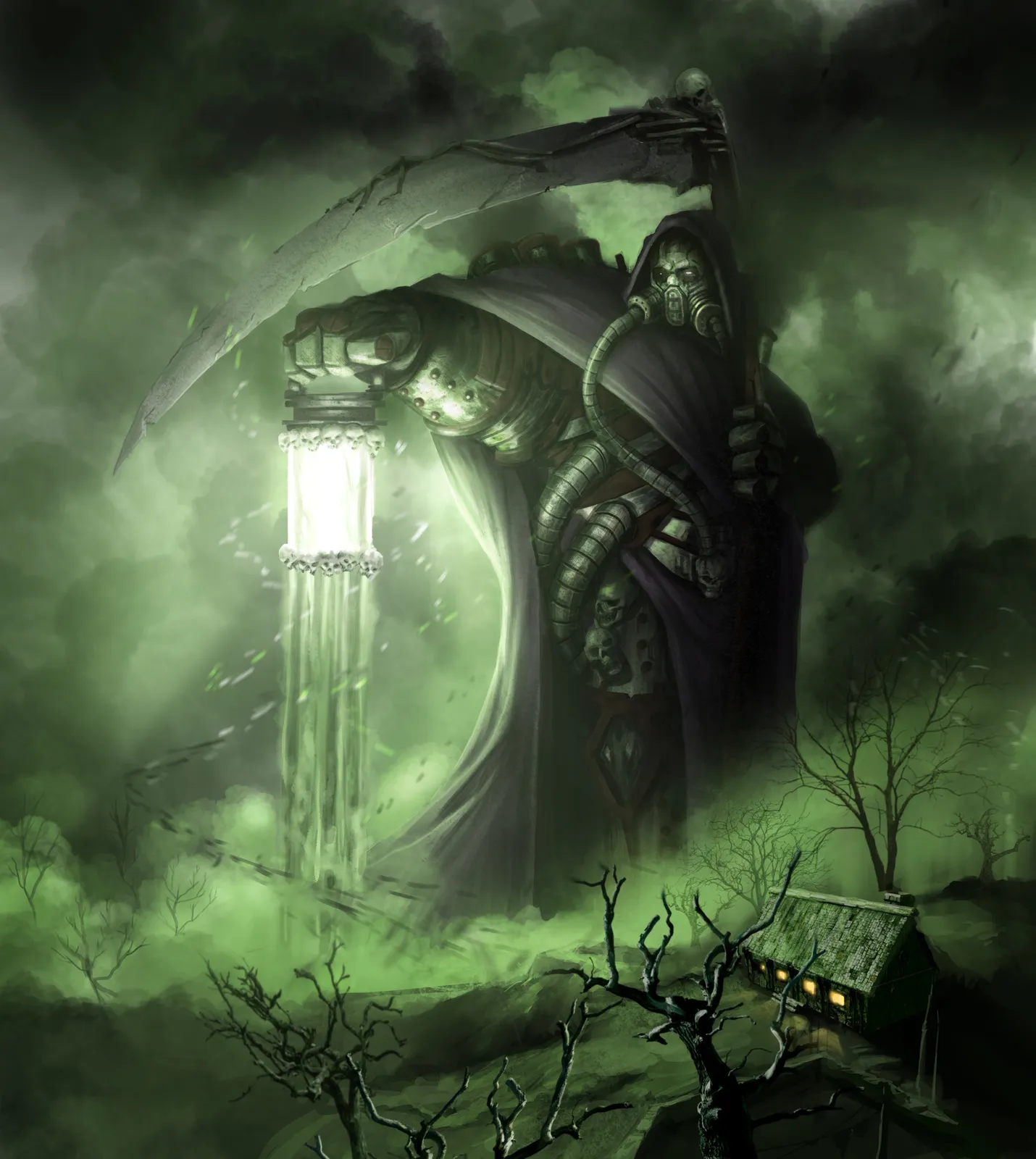
When the Primarchs were scattered from Terra, the infant Mortarion fell onto Barbarus, a world drowned in poisonous fog. Ordinary humans survived in the low valleys; the mist-shrouded heights belonged to the Overlords, necromantic beings who treated the valley folk as livestock and raw material for their experiments. One of them, named Necare in Black Library fiction, found the child, raised him in his fortress and gave him his name.
Mortarion learned two lessons in that fortress. The first was endurance: he grew up breathing air that would kill a man in moments, and he survived it out of sheer stubbornness. The second was hatred of sorcery, the tool his foster father used to dominate everyone around him. As a youth he fled down the mountain, lived among the humans of the valleys and turned them into an army. He made them weapons and armor, trained them to fight in the fog's edge, and led them up into the mists to kill the Overlords one by one. His closest warriors called themselves the Death Guard.
The Wager That Never Healed
When the Emperor arrived, only his foster father remained. Mortarion refused to kneel to an outsider and proposed a challenge: he would kill the last Overlord alone, and if he succeeded, he would stay his own master. He climbed higher into the toxic heights than ever before and finally collapsed. The Emperor followed, killed the Overlord and saved his son. Mortarion honored the bargain and swore loyalty, but he never forgave the rescue. In his mind, a tyrant had taken his victory and his freedom in the same moment. Black Library's Mortarion: The Pale King by David Annandale explores this grudge and his years in the Great Crusade.
The Death Lord in the Great Crusade
Mortarion took command of the XIV Legion, then the Dusk Raiders, and remade it in his image. He renamed it the Death Guard, brought Barbaran recruits into its ranks, and drilled it to fight where others could not: in toxic atmospheres, through chemical barrages and long grinding sieges. He favored relentless advance over clever maneuver and personal endurance over finesse. He carried his scythe Silence and his pistol the Lantern, and wore a rebreather filled with the poisonous air of Barbarus, the only atmosphere that felt like home.
He also became the Legions' loudest enemy of psykers. At the Council of Nikaea he argued alongside Leman Russ against the use of psychic powers in the Legions, and he despised Magnus the Red and his sorcerer-scholars. Among his brothers he was closest to Horus, whom he admired as a true warrior. His First Captain, Calas Typhon, quietly encouraged both his loyalty to Horus and his resentment of the Emperor, while secretly being a psyker himself.
Defining Deeds: Isstvan, the Warp and the Plague
When Horus rebelled, Mortarion followed. Old resentment of the Emperor, admiration for the Warmaster and Typhon's whispers all pulled in the same direction. At Isstvan III the Death Guard purged its own loyalists, and Captain Nathaniel Garro escaped aboard the Eisenstein to warn Terra. The Legion then joined the Drop Site Massacre on Isstvan V. For the full course of the civil war, see our Horus Heresy guide.
The Death Lord's damnation came on the way to Terra. Typhon had the fleet's Navigators killed, and the Death Guard drifted helplessly in the Warp. Then a plague struck, the Destroyer Hive, a sickness that bloated bodies, rotted organs and corroded armor while refusing to let anyone die. James Swallow's novel The Buried Dagger tells this story in grueling detail. Mortarion watched his sons suffer and could not help them; his endurance only meant he suffered the longest. At the end of his strength, the Primarch who had hated sorcery all his life offered himself to the power behind the plague in exchange for his Legion's survival. Nurgle accepted.
The plague did not end. It became a blessing. Typhon became Typhus, Herald of Nurgle, and Mortarion became the Plague God's chosen champion. To understand the god who claimed him, read our complete guide to Nurgle.
The Siege of Terra
Mortarion brought the Death Guard to the Siege of Terra, where his Legion spread disease among the defenders. The Siege of Terra novels follow his transformation into a full Daemon Primarch during the siege, and in Chris Wraight's Warhawk, Jaghatai Khan of the White Scars confronts him in a brutal duel. After Horus fell, Mortarion retreated with the other traitors into the Eye of Terror.
Personality and Relationships
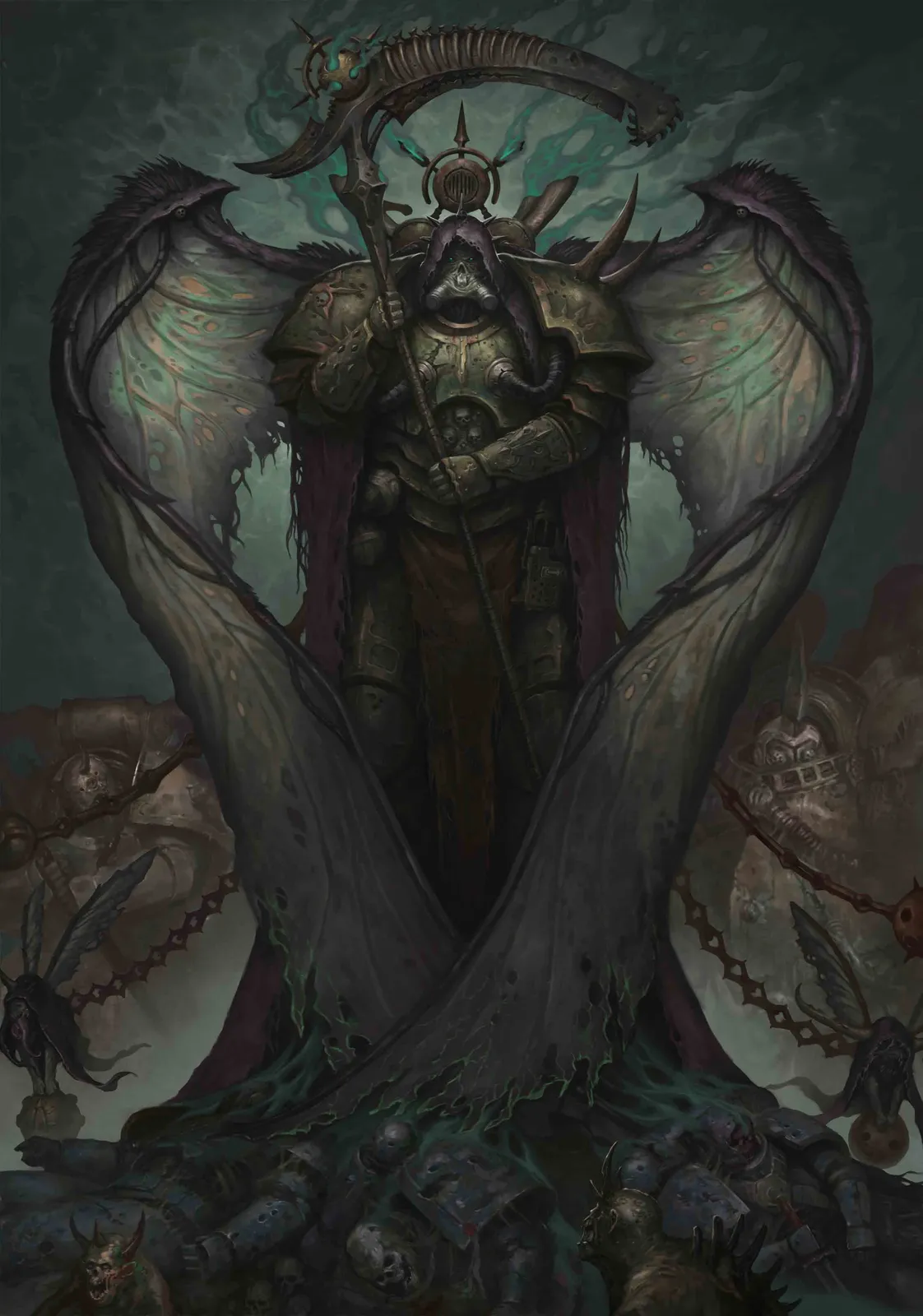
Mortarion is not a gleeful servant of Chaos. He is bitter, brooding and proud, and much of the lore portrays him as a being who still resents every master he has ever had, the Plague God included. He values endurance above all else, which makes his new existence a kind of cosmic joke: he cannot die, cannot weaken and cannot escape.
- The Emperor — the tyrant who robbed him of his victory on Barbarus. Mortarion's resentment never faded.
- Horus — the brother he admired most, and the one he followed into rebellion. Our Horus Lupercal guide covers the Warmaster's fall.
- Typhus — the First Captain who led him to damnation. Their relationship remains tense: Typhus serves Nurgle first and his Primarch second.
- Magnus the Red — the sorcerer brother he despised. With Magnus now bound to Tzeentch and Mortarion to Nurgle, their enmity has become part of a war between gods.
- Roboute Guilliman — the loyalist brother whose return made him Nurgle's prime target in the Era Indomitus.
Fate and Current Status: The Plague Wars
After the Heresy, Mortarion was formally raised as a Daemon Primarch and claimed a daemon world in the Eye of Terror, the Plague Planet, where he brews new diseases and broods over his Legion. For ten thousand years his Plague Companies struck out from the Eye, but Mortarion himself rarely took the field.
The return of Roboute Guilliman changed that. Nurgle saw the revived Primarch as an affront, and Mortarion led the Plague Wars against Ultramar, unleashing contagions across worlds such as Iax, Espandor and Parmenio. Guy Haley's Dark Imperium trilogy dramatizes the conflict and builds to the long-awaited confrontation between the two brothers. Ultramar survived, scarred, and Mortarion survived too.
In the current 2026 setting Mortarion remains a Daemon Primarch of Nurgle, active and dangerous, with the Death Guard spreading plagues across the Imperium Nihilus. His feud with Guilliman is unresolved, and he is one of the few traitor Primarchs who has directly fought a returned loyalist brother in the 42nd Millennium.
Mortarion on the Tabletop
Mortarion leads the Death Guard as their Daemon Primarch, and his model is a towering centerpiece: tattered moth wings, a great scythe, a rebreather-masked face beneath a hood, and Nurglings clinging to his armor. On the table he plays the way he lived: extremely durable, dangerous in melee and almost impossible to remove quickly. He anchors a slow, grinding army of Plague Marines, Terminators and daemon engines, and he is often the piece the opponent's whole plan revolves around stopping.
His pre-heresy self, in bone-white armor with the Lantern and Silence, is also available for Horus Heresy-era play. To see how the Death Guard stack up against every other army, visit our Warhammer 40K factions guide.
Mortarion FAQ
Why did Mortarion turn to Nurgle?
To save his Legion. The Death Guard fleet was trapped in the Warp and ravaged by a plague that would not let them die. Mortarion offered himself to the power behind the sickness in exchange for his sons' survival, and Nurgle accepted. He had already joined Horus's rebellion, but this bargain made him a servant of a Chaos god.
Why does Mortarion hate psykers?
Because he grew up under the Overlords of Barbarus, sorcerous tyrants who ruled through necromancy and terror. He saw psychic power as the tool of oppressors, which is why he opposed the Librarius at Nikaea and despised Magnus the Red.
What is Mortarion's scythe called?
His great scythe is called Silence. He also carries the Lantern, a powerful energy pistol. Both weapons remain part of his daemonic form in the 42nd Millennium.
Did Mortarion fight Guilliman?
Yes. After Guilliman returned, Mortarion led the Plague Wars against Ultramar, and Guy Haley's Dark Imperium novels bring the two Primarchs face to face. Mortarion's offensive was checked but he was not destroyed, and their feud continues.
Is Mortarion a Daemon Prince?
He is a Daemon Primarch, the term used for the traitor Primarchs raised to daemonhood. He rules the Plague Planet in the Eye of Terror and is one of the most powerful servants of Nurgle in the galaxy.
Continue Exploring
- The Death Guard — Mortarion's plague Legion, from the Dusk Raiders to the Plague Companies.
- The Primarchs — all twenty sons of the Emperor and their fates.
- Roboute Guilliman — the returned Primarch who stands between Mortarion and Ultramar.
- Magnus the Red — the sorcerer brother Mortarion despised, now Tzeentch's Daemon Primarch.
- Nurgle: The Plague God — the god who answered Mortarion's plea.
- Warhammer 40K Factions: Complete Guide to All 29 Armies — every army, its lore and how it plays.
Browse every guide in the Warhammer 40K lore hub, or name your own Plague Marine with the Chaos Space Marine name generator. To run a quarantined-world campaign, Anima is free and runs in your browser with no account: a wiki, a timeline, and campaigns with a live DM screen.
Keep reading
More from this topic
Necrons: Warhammer 40K Lore Guide
The complete lore of the Necrons — the doomed Necrontyr, the C’tan star-gods, biotransference, the War in Heaven, and the deathless dynasties now waking to reclaim the galaxy.
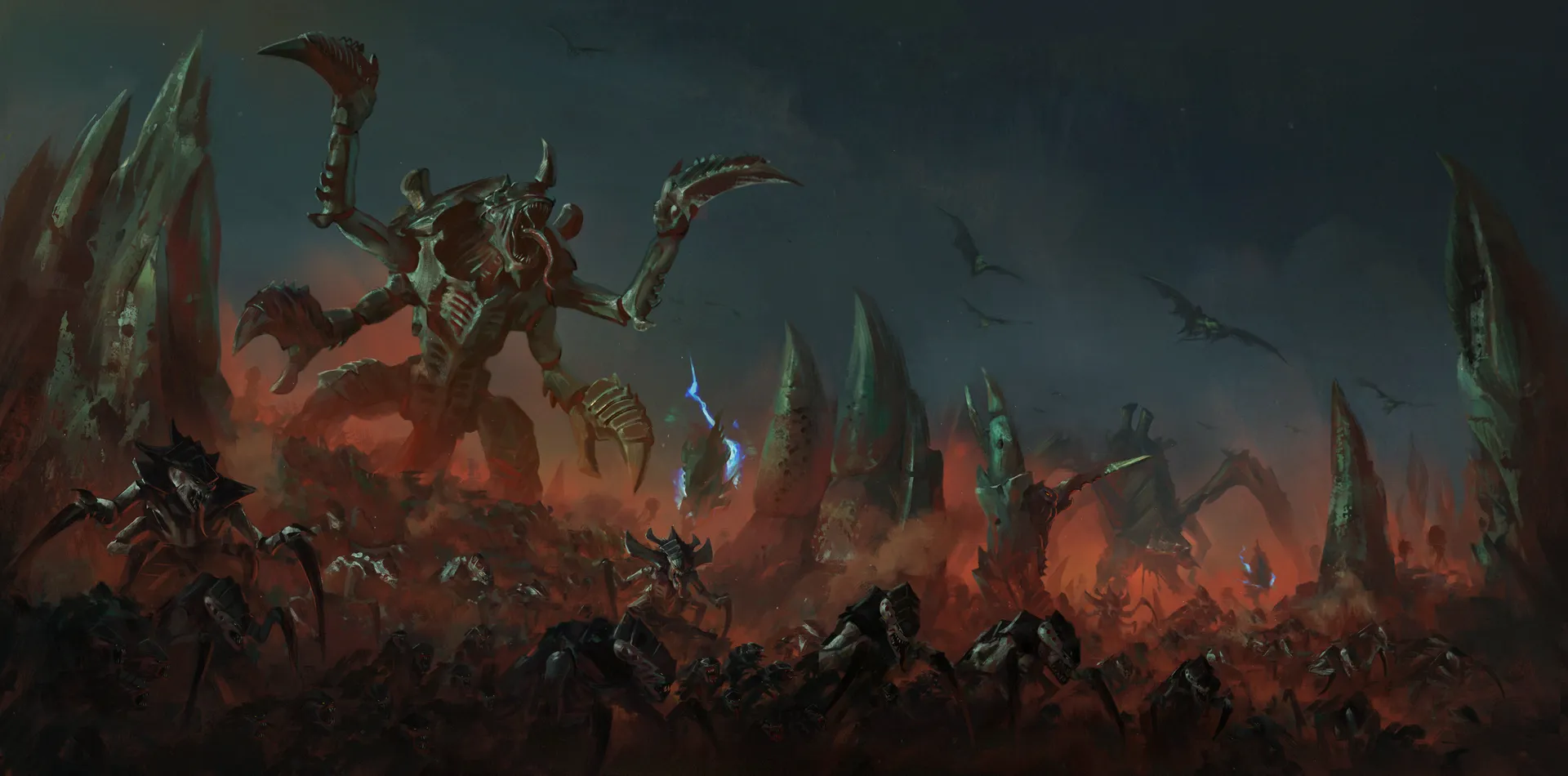
Tyranids: Warhammer 40K Lore Guide
The complete lore of the Tyranids — the Great Devourer, the Hive Mind, the Shadow in the Warp, the great Hive Fleets, Genestealer Cults, and the hunger that crossed the void between galaxies.
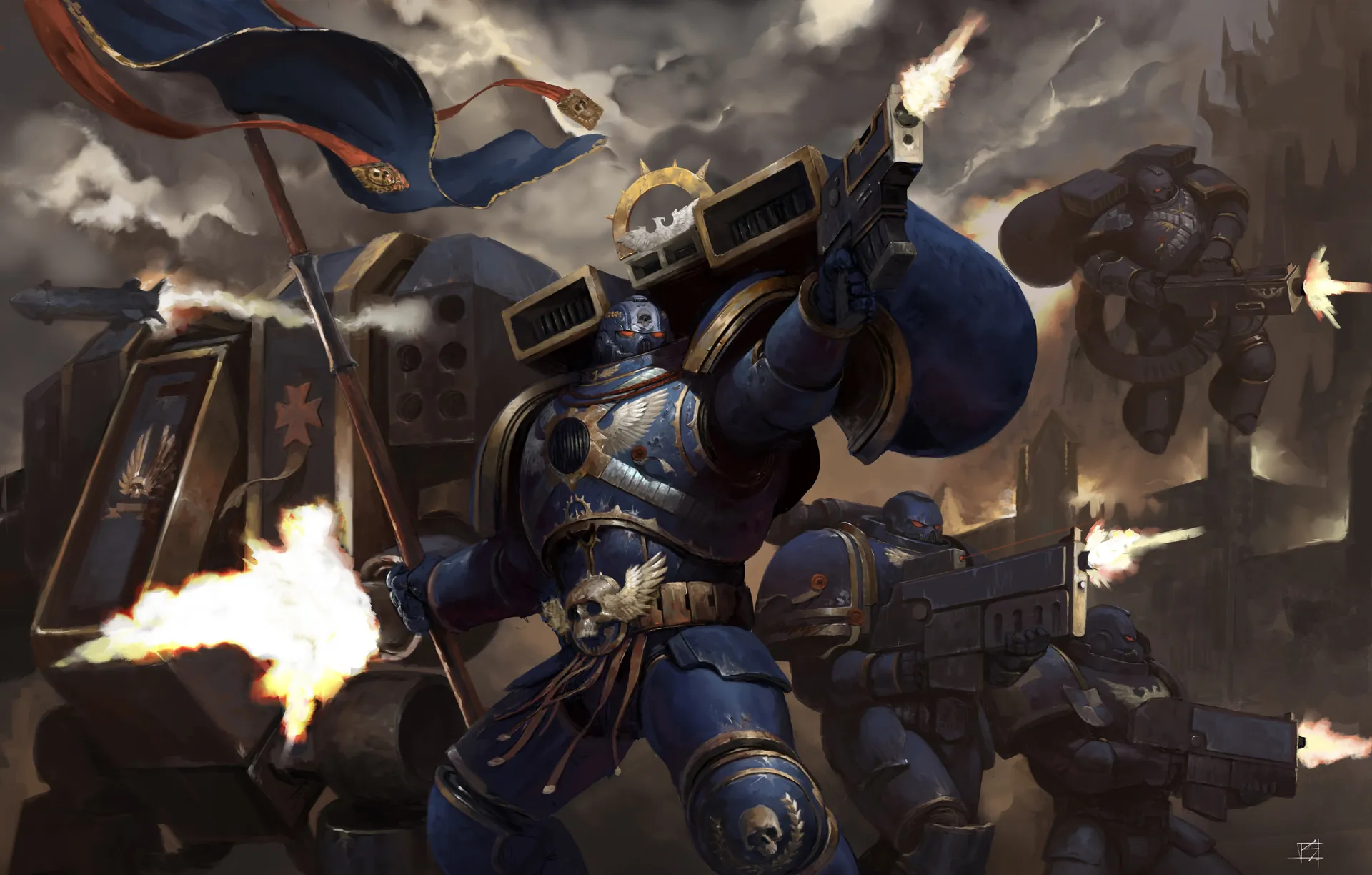
Space Marines (Adeptus Astartes): Warhammer 40K Lore Guide
The complete lore of the Space Marines — the Primarchs, gene-seed, the Horus Heresy, the Codex Astartes and the Chapters, the Primaris and Guilliman’s return, and the cost of the Angels of Death.
Start building your world today
A linked wiki, a timeline and a live DM screen — free, in your browser, no account needed.