Harlequins: Warhammer 40K Lore Guide
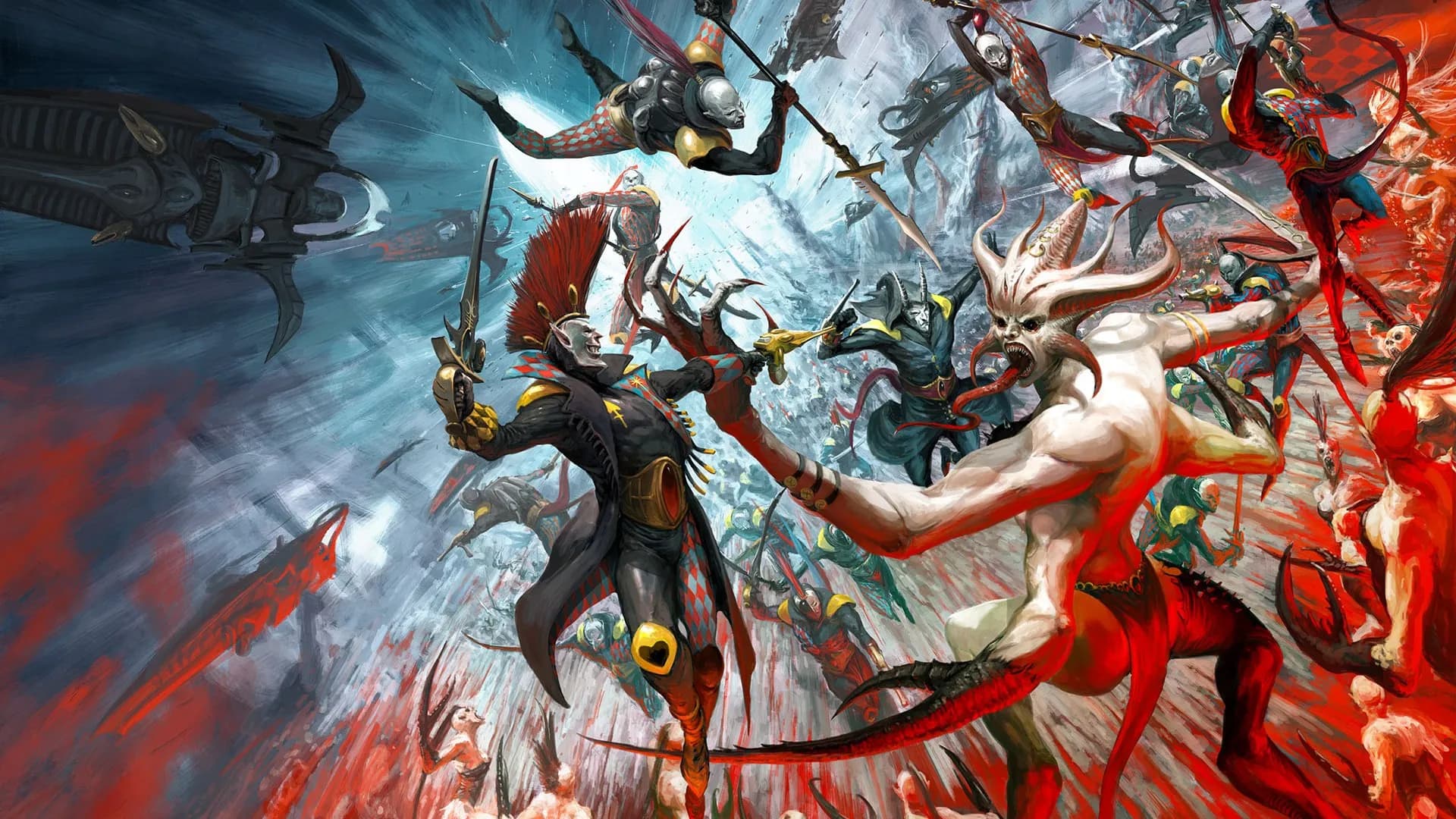
They arrive without warning, stepping out of a webway gate in a blaze of diamond-patterned color, and for a heartbeat the battlefield goes quiet. Then the performance begins. Harlequins somersault over gunfire, their bodies dissolving into clouds of shimmering fragments, and every kill is placed as carefully as a step in a dance. To their audiences they are artists. To their enemies they are the last thing seen before a monofilament blade does its work.
The Harlequins are a distinct order within the wider Aeldari (Eldar) race, loyal to no craftworld and no Kabal, serving only Cegorach, the Laughing God. They are storytellers, assassins, keepers of the Black Library and, perhaps, the only Aeldari with a real plan to cheat Slaanesh. This guide covers where they come from, how a Masque is organized, the great Masques and their deeds, the characters worth knowing, and what it feels like to collect them.
Harlequins at a Glance
| Aspect | Detail |
|---|---|
| Patron | Cegorach, the Laughing God, the only major Aeldari god to escape the Fall intact |
| Home | None fixed; they travel the webway, and guard the Black Library within it |
| Organization | Masques made of Troupes, plus Shadowseers, Death Jesters and Solitaires |
| Recruits | Drawn from every kindred: craftworlds, Commorragh and the Exodite worlds |
| Soul protection | No spirit stones; their survival is a secret of the Laughing God they do not share |
| War style | Lightning assaults, illusion and misdirection, battles staged as mythic plays |
| Signature gear | Holo-suits, flip belts, masks, the monofilament Harlequin's Kiss |
| Great enemy | Slaanesh, whose role in their plays only a Solitaire may dance |
Cegorach and the Origins of the Harlequins
The Harlequins are older than the Fall. In the decadent last centuries of the Aeldari empire, troupes devoted to Cegorach toured the pleasure-worlds performing the ancient mythic cycles, trying to remind a decaying people what they were throwing away. Many audiences answered with violence, and the players learned to fight. That is the origin of the Harlequin habit of treating performance and battle as the same art.
When Slaanesh was born and the Aeldari gods were devoured or shattered, Cegorach did not die. Harlequin belief holds that the trickster kept his distance from the excess that birthed the Dark Prince and slipped away into the webway, where he is said to know every path. His followers vanished with him. For centuries they were silent; then, according to Codex lore, the Masque of the Midnight Sorrow burst out of the webway onto the world of Llayen Nuadh in M33 to rescue an Ulthwé warhost from a daemon horde, and the Harlequins were back on the galactic stage.
Cegorach himself is rarely seen, and never knowingly. Harlequins believe he walks among them in the guise of a player, recognized only after he has gone.
Identity: Players, Not Soldiers
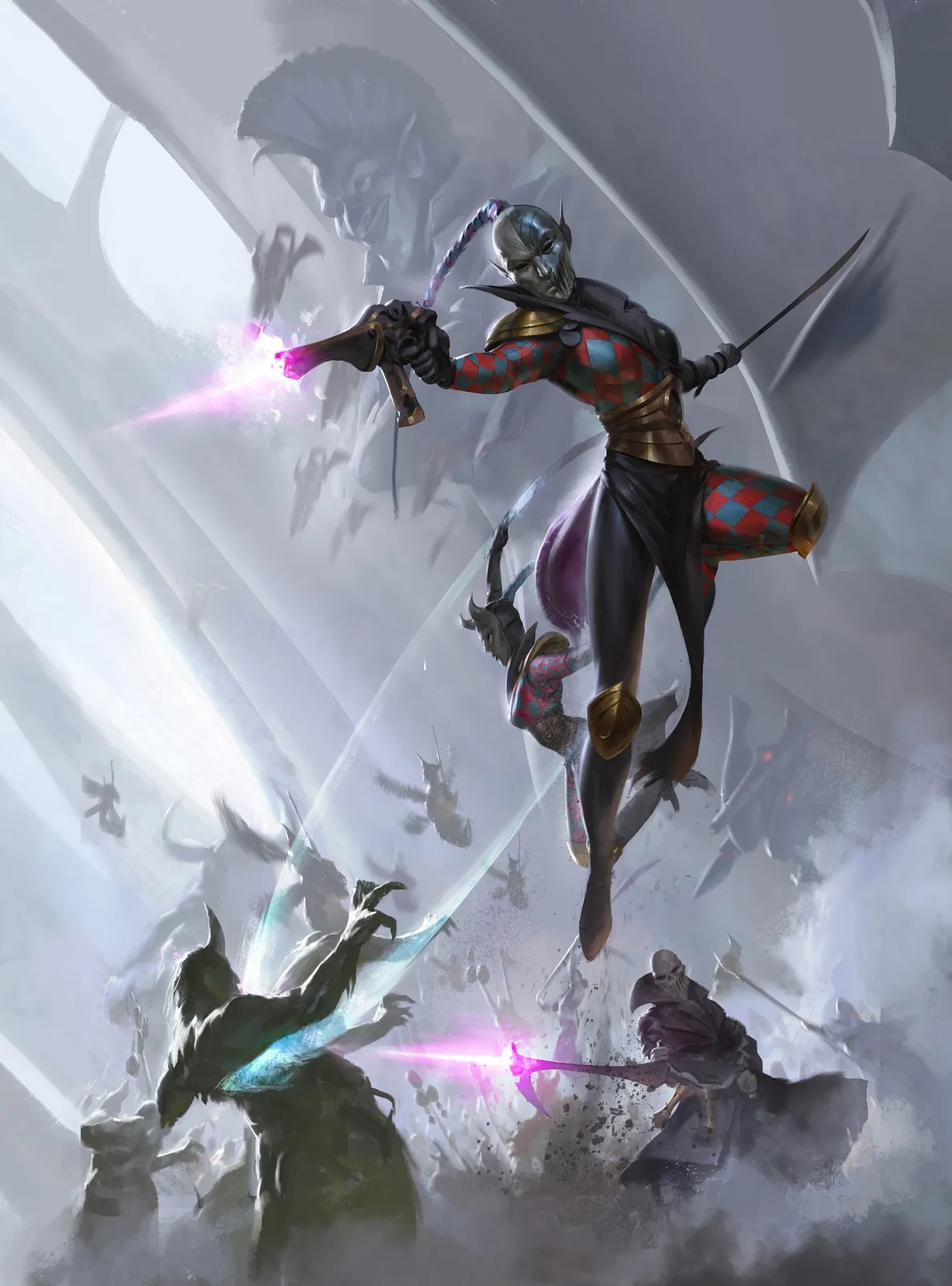
No Aeldari is born a Harlequin. Every one of them is recruited from somewhere else, and every Aeldari culture has its own unsettling stories about how it happens: a masked figure seen in a crowd, a lost wager with a Troupe Master, laughter leading through a webway gate. Whatever the method, joining means the erasure of the old self. Family, name and past are stripped away, and the recruit takes on a role in the troupe, a character such as the Sun Prince or Shaimesh the Poisoner, which shapes every part of the new personality.
This total commitment echoes the Path of the craftworlds, but it runs deeper. A craftworlder can leave an Aspect Shrine; a Harlequin's role is meant to replace who they were. Players are cast into three groups, the Light (heroes of swift action), the Dark (villains and violent ends) and the Twilight (characters of change and transition), and that casting tells each of them what their fellows will do on stage and on the battlefield alike.
Harlequins also face death differently. They wear no spirit stones; their lore holds that the Laughing God protects their souls through a secret they refuse to share even with their own kin, one reason other Aeldari regard them with reverence and unease.
How a Masque Is Organized
A Harlequin company is called a Masque. It has no formal chain of command in the Imperial sense. Instead, leadership comes from the roles of the mythic cycles: the Great Harlequin plays Cegorach himself, Troupe Masters lead the individual Troupes, and specialists slot into the story where it needs them. Masques that perform the same cycles can band together into a Grand Masque.
- Troupes are the core of the company: acrobatic players armed with blades, pistols and the Harlequin's Kiss, a tube of coiled monofilament wire punched into a victim and released inside.
- Shadowseers are the Masque's psykers, hidden behind blank mirrored masks, weaving hallucinations that make enemies see what the troupe wants them to see.
- Death Jesters wear bone-white skeletal costumes and carry the gallows humor of the company. They are its heavy gunners, choosing kills for their dramatic and morbid value.
- Solitaires walk alone. They are the only Harlequins who may dance the role of Slaanesh, and legend holds that their souls are already forfeit. Even other Harlequins keep their distance.
- Skyweavers, Starweavers and Voidweavers are the Masque's machines: jetbikes, open-topped transports and grav-tanks painted in the same riot of color as the players.
On the battlefield a Masque does not issue orders so much as perform. Each mythic cycle has a war-form, the saedath, which sets targets and tempo. The most common is Cegorach's Revenge, the battle counterpart of the Fall. Because every player knows their part, a Masque can move with a coordination no drilled army can match.
The Dance Without End and the Black Library
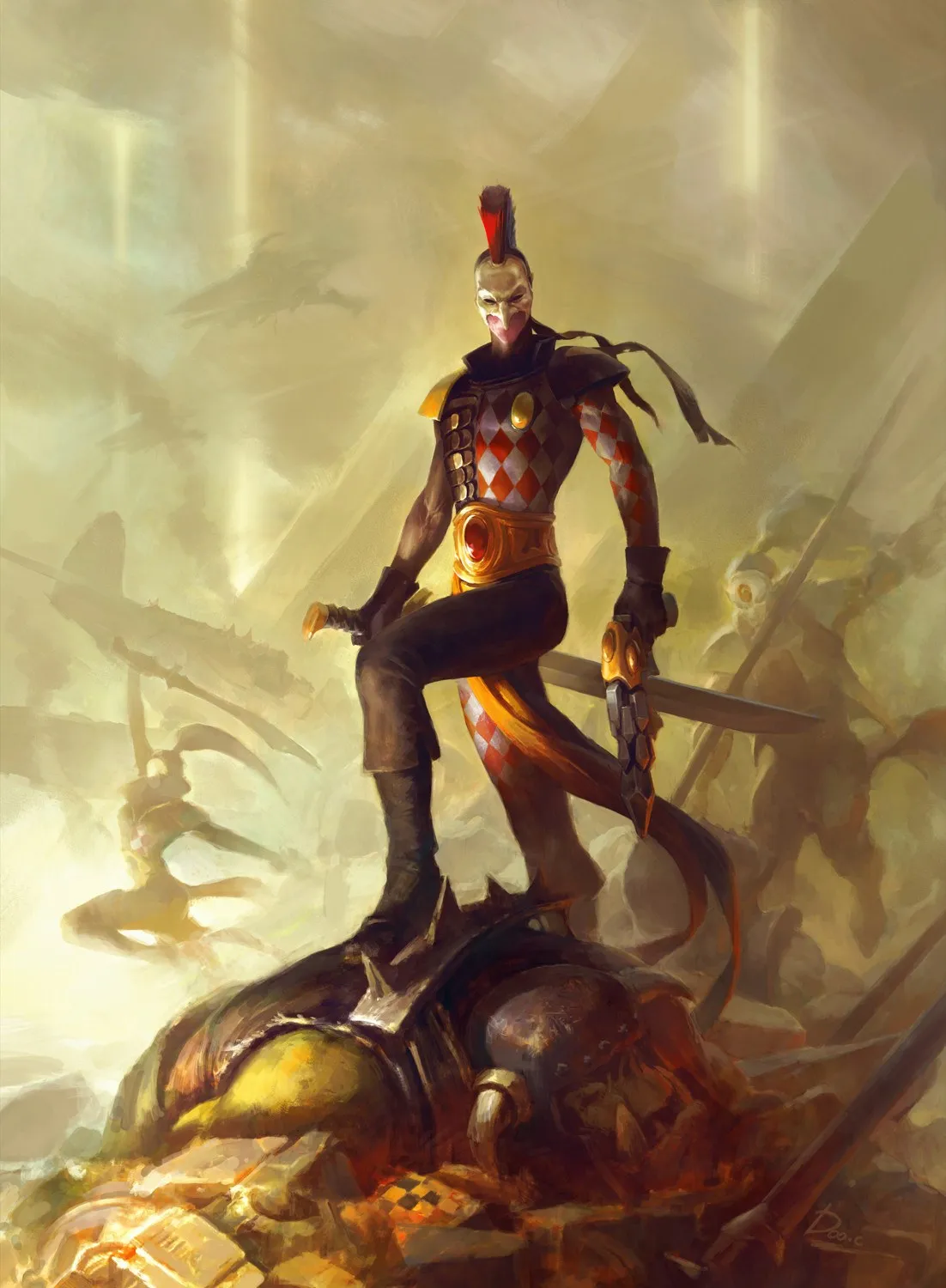
The greatest Harlequin play is The Dance Without End, the story of the Fall. Troupers dance the old race, players take the parts of the doomed gods, Death Jesters drag the fallen deities to the feet of the Solitaire, who erupts onto the stage as Slaanesh. Then the Great Harlequin strolls in as Cegorach, laughing at the cosmic folly, and duels the Dark Prince in a fight that ends unresolved. Some Masques have since added Ynnead, the newly stirring god of the dead, to the cast, sometimes as a fool and sometimes as a savior.
Harlequins also guard the Black Library, a hidden repository in the webway that holds the Aeldari's accumulated knowledge of Chaos. Only the Solitaires are said to know every true path to it. At its heart rests the Crystal Tome of Cegorach, bound in chains of light that faded one by one until, shortly before the Great Rift opened, the book lay open. Its final act changes the tale of the Fall: instead of Chaos triumphing at the Rhana Dandra, the last jest of the Laughing God tricks Slaanesh into spending its power to save the Aeldari. Nobody knows how, which is exactly how the Harlequins like it.
The Library draws dangerous visitors. Ahriman of the Thousand Sons has hunted it for millennia, and at the close of M41 his warband invaded the webway to reach it, only to be thrown back by a coalition of Masques fighting alongside Ulthwé and Lugganath.
The Great Masques and Their Deeds
Codex lore names a number of Grand Masques, each with its own temperament and favored plays.
- Midnight Sorrow, the first Masque to return after the Fall. Its Death Jester Inriam's Shade worked with Eldrad Ulthran on the failed ritual at Coheria meant to wake Ynnead, energy that eventually found its way to Yvraine and the Ynnari.
- Frozen Stars, aggressive and spectacular. In M41 they drove Imperial Knight House Terryn off the maiden world of Velos in a performance remembered as the Giant's Lament, and later danced on Exodite worlds to wash away the plague-rains of the Great Unclean One Rotigus.
- Veiled Path, schemers and manipulators. They turned the Night Lords' terror campaign on Magnor Prime back on its authors, and after Khaine's Gate opened they staged a riotous wake for Asdrubael Vect just before he rose again.
- Silent Shroud, masters of eerie silence, who once let an Ork Waaagh! tear itself apart on Sheng's World and later besieged an Iron Warriors fortress chamber by chamber.
- Soaring Spite, the airborne Masque, fond of Skyweaver squadrons and leaping assaults from Starweavers onto the backs of monsters.
- Dreaming Shadow, morbid hunters of Necrons, who sabotaged a tomb-fortress's temporal machinery on Pardassos and spent a decade purging the tomb world of Maedrax.
- Shattered Mirage, who struck at a Blackstone Fortress held by the Red Corsairs near the Maelstrom and recovered a Talisman of Vaul.
Notable Harlequins and Campaigns
Individual Harlequins are hard to pin down by design, since a player's old name is gone. A few still stand out. Sylandri Veilwalker, a Shadowseer of the Veiled Path, is the best-known named Harlequin of recent editions and has cooperated loosely with Yvraine's cause. The Solitaire called the Spectre of Despair hunted an Imperial governor across an entire system during the Noctis Aeterna; when the governor unleashed an Eversor assassin, the assassin's death-explosion consumed the Solitaire, the Eversor and the governor alike.
The Harlequins' biggest strategic move came at the end of M41 on the maiden world Dûriel, also called Valedor. To stop Hive Fleets Leviathan and Kraken from merging, they brokered an alliance between Biel-Tan, Iyanden and the Drukhari, a war that ended with the planet destroyed and the swarms denied. You can follow those fleets in the Tyranid hive fleets guide. Shortly afterward, the Crystal Tome opened.
How Harlequins Differ From Other Aeldari
Craftworld Aeldari survive through discipline and the Path; the Drukhari survive through cruelty. Harlequins survive through belief in a joke the galaxy has not heard the end of yet. They are the only Aeldari welcome in every kindred's domain, performing in Commorragh's arenas and craftworld domes alike, and the only ones who seem to be working toward a solution to Slaanesh rather than a way to endure it.
They also lack the Aeldari war machine. There are no Aspect Shrines, no Wraith constructs and no Titans in a Masque. What they have is skill, speed and misdirection, which makes them devastating raiders and allies but thin in a long war. In the lore they rarely fight alone for long: they appear, change the course of a battle, and vanish.
Collecting and Playing Harlequins
On the tabletop the Harlequins are a small, elite and very fast force, now folded into the wider Aeldari range. The feel is a glass cannon with a magician's trick: troupes arrive in Starweavers, leap into combat, kill something important and dare the enemy to pin them down. Shadowseers protect them with illusion, Death Jesters pick off targets from range, and a Solitaire can cross the table in a blur. Mistakes are punished hard, so they reward players who enjoy positioning and timing more than trading blows.
For collectors, Harlequins are a painter's army. No two players need wear the same pattern, and Masques are identified by motifs as much as colors, so you can invent your own Masque and its signature play.
Harlequins FAQ
Are Harlequins Craftworld Eldar or Dark Eldar?
Neither. Harlequins are recruited from every Aeldari kindred but belong to none. Once someone joins a Masque, their previous identity is erased, and they answer only to Cegorach and the Masque.
Who is Cegorach?
Cegorach is the Laughing God, the Aeldari trickster deity. He is the only major god of the Aeldari pantheon believed to have survived the Fall intact, by escaping into the webway. Harlequins believe he still walks among them disguised as one of their own.
What is the Black Library in Warhammer 40K?
It is a secret archive hidden in the webway that holds the Aeldari's knowledge of Chaos, guarded by the Harlequins and other mysterious keepers. It should not be confused with Black Library, the real-world publisher of Warhammer fiction, which is named after it.
What does a Solitaire do?
A Solitaire is a lone Harlequin who dances the role of Slaanesh in The Dance Without End. They are said to be the only ones who know every path to the Black Library, and legend holds their souls are already lost. Even other Harlequins avoid them.
Are Harlequins allies of the Imperium?
Only when it suits Cegorach's plans. Masques have warned Imperial worlds, aided Inquisitors and helped defend planets, and they have also double-crossed Imperial forces and attacked Imperial assets. Their loyalty is to the Laughing God's script, not to humanity.
Can you play a Harlequins-only army?
Yes, a Masque can take the field on its own, although its small range of units makes it a specialist choice. Many players run Harlequins alongside other Aeldari, which also matches how they usually appear in the background.
Continue Exploring
- The Aeldari (Eldar) — the Fall, the craftworlds and the broken pantheon behind every Masque.
- Warhammer 40K factions guide — every army, its lore and how it plays.
- The Ynnari — Yvraine's movement of the Reborn, born partly from a Harlequin ritual.
- The Drukhari — Commorragh's raiders, whose arenas still welcome the players of Cegorach.
- Slaanesh — the Dark Prince the Harlequins mock on stage and hope to outwit.
Browse every guide in the Warhammer 40K lore hub, or give a new player a name with the elf name generator. To chronicle your own Masque and its plays, Anima is free and runs in your browser with no account: a wiki, a timeline, and campaigns with a live DM screen.
Keep reading
More from this topic
Necrons: Warhammer 40K Lore Guide
The complete lore of the Necrons — the doomed Necrontyr, the C’tan star-gods, biotransference, the War in Heaven, and the deathless dynasties now waking to reclaim the galaxy.
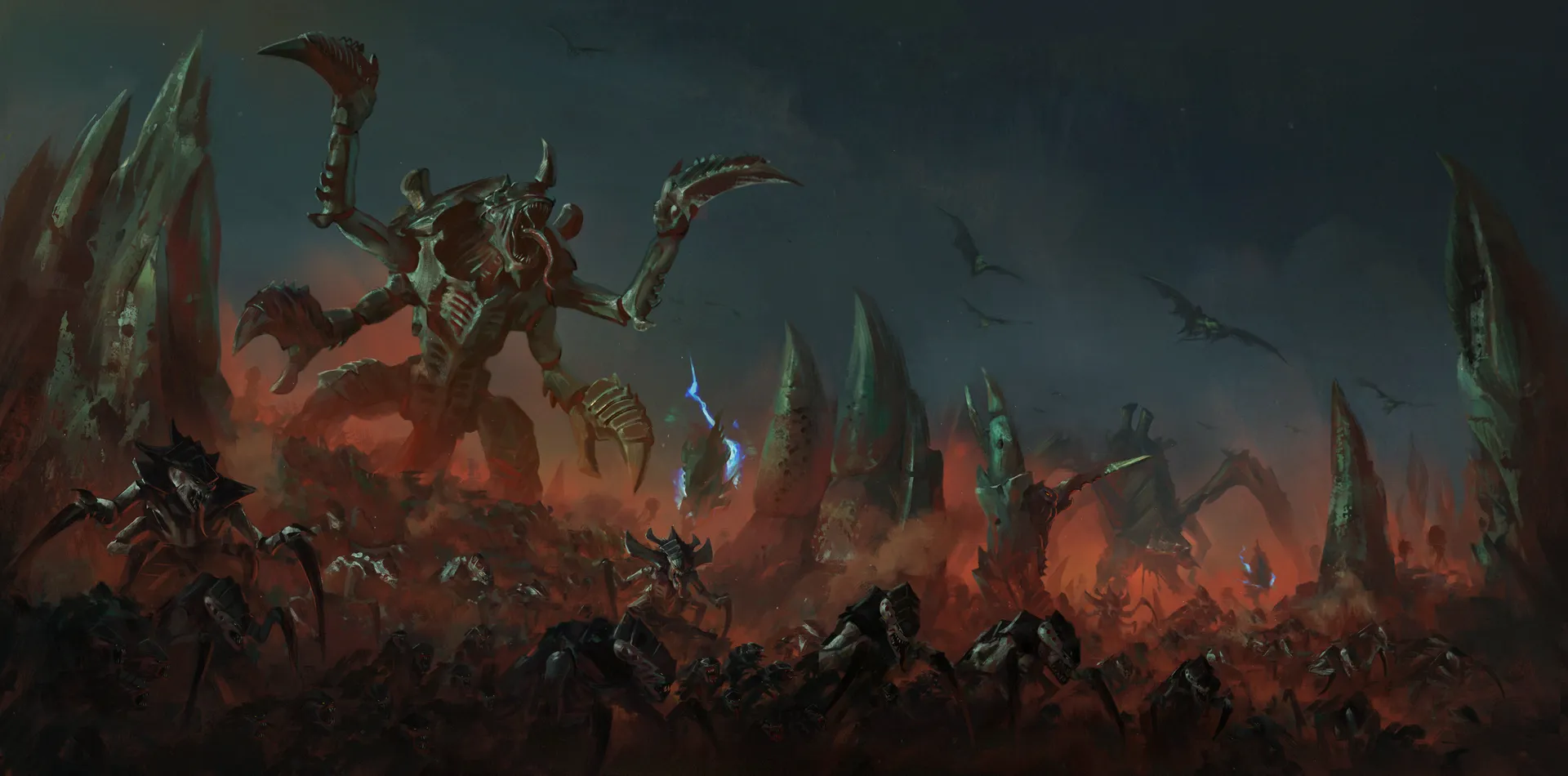
Tyranids: Warhammer 40K Lore Guide
The complete lore of the Tyranids — the Great Devourer, the Hive Mind, the Shadow in the Warp, the great Hive Fleets, Genestealer Cults, and the hunger that crossed the void between galaxies.
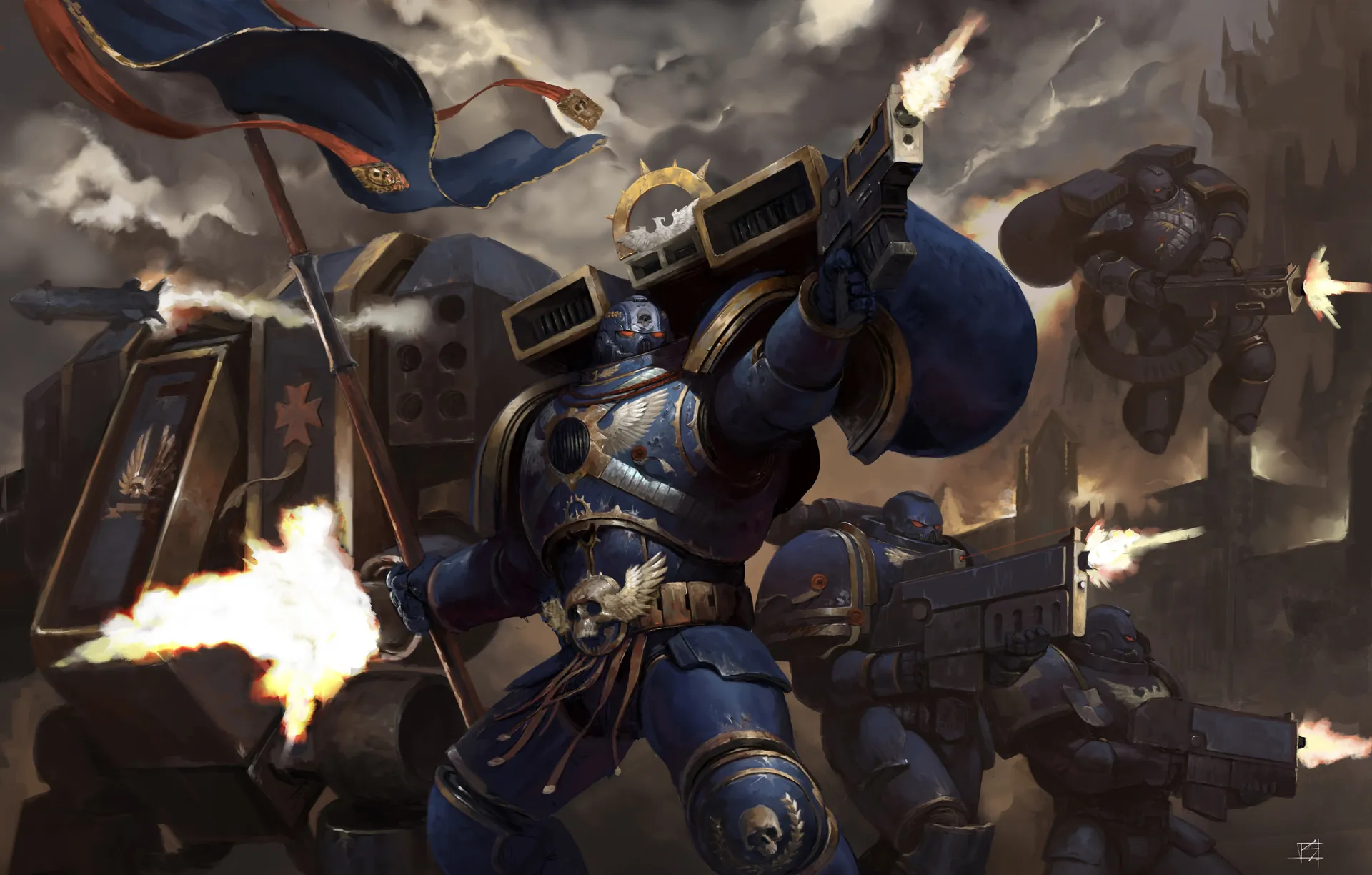
Space Marines (Adeptus Astartes): Warhammer 40K Lore Guide
The complete lore of the Space Marines — the Primarchs, gene-seed, the Horus Heresy, the Codex Astartes and the Chapters, the Primaris and Guilliman’s return, and the cost of the Angels of Death.
Start building your world today
A linked wiki, a timeline and a live DM screen — free, in your browser, no account needed.