Tyranid Hive Fleets: Warhammer 40K Lore Guide
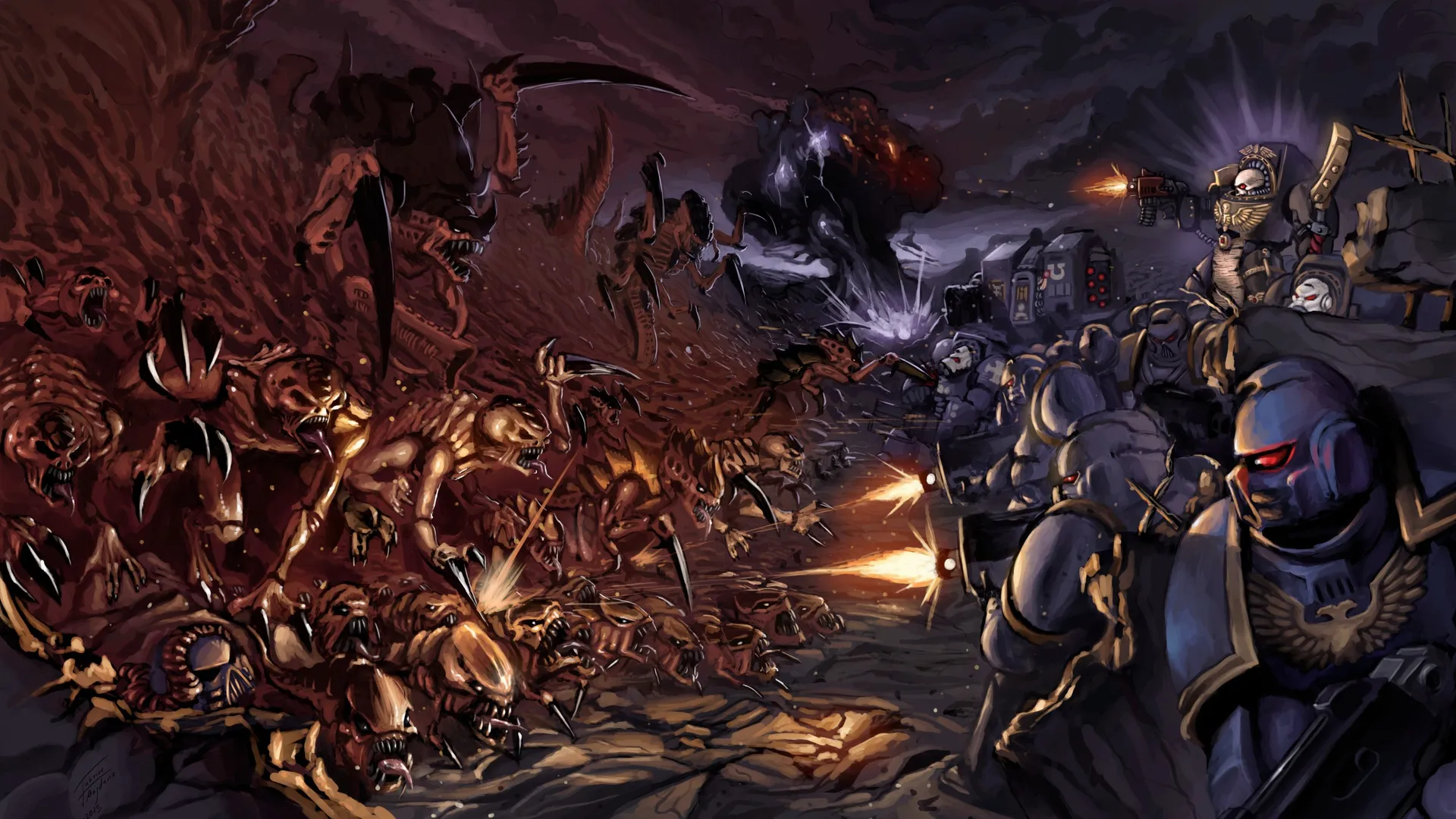
Imperial astronomers first notice the stars going dark. Then astropaths begin to scream, the Warp falls silent, and something enormous blots out the night sky of a frontier world. A hive fleet has arrived. Within weeks the planet's cities will be gone; within months its oceans, atmosphere and every living cell will have been digested and carried away. What is left behind is bare rock.
Hive fleets are the form in which the Tyranids of Warhammer 40K actually reach the galaxy: self-contained armadas of living ships, each one a roving ecosystem under the Hive Mind. The parent guide introduces Behemoth, Kraken and Leviathan. This one goes deeper into all three, then covers Gorgon, Jormungandr, Hydra, Kronos and other named fleets, and explains how to pick and paint one for your own swarm.
Tyranid Hive Fleets at a Glance
| Hive fleet | Known for | Defining moment |
|---|---|---|
| Behemoth | Brute-force frontal assault | The Battle for Macragge, First Tyrannic War |
| Kraken | Speed and countless splinter fleets | Ichar IV and the near-destruction of Iyanden |
| Leviathan | The largest fleet, rising from below the galactic plane | The Devastation of Baal |
| Gorgon | Rapid biological adaptation | The invasion of the T'au Empire |
| Jormungandr | Tunneling ambushes | Burrowing assaults in the Thalassi sector |
| Hydra | Overwhelming numbers, regeneration, cannibalizing other fleets | Hunting the White Scars on Haadekh |
| Kronos | Ranged bio-artillery and a crushing Shadow in the Warp | Hunting Chaos along the Great Rift |
What a Hive Fleet Is
A hive fleet is not an army in the human sense. It is a migrating biosphere: bio-ships that are themselves living creatures, birthing pools that spawn ground forces on demand, and digestive organisms that strip worlds to their crust. Every creature, from the smallest Ripper to the largest hive ship, is part of the Hive Mind's single will. When a world is consumed, its biomass feeds the fleet, and the genetic material of the dead is absorbed for new designs.
Imperial lore stresses that the fleets encountered so far are only fragments, the vanguard of a much larger Tyranid migration crossing the void between galaxies. The Imperium names each fleet after a monster of myth when it is identified. The species itself takes its name from Tyran, an Imperial outpost that recorded the first contact before it was consumed.
Destroying a hive fleet is almost impossible. Even after a decisive defeat, surviving splinter fleets slip away, feed quietly for years or centuries, and return having learned from their parent's death. That is why the great fleets keep reappearing long after the Imperium has declared victory.
Every fleet devours a world in roughly the same stages. Long before the swarm arrives, Genestealer infiltrators may already be breeding in the underhives. As the fleet approaches, its Shadow in the Warp chokes astropathic messages, cutting the planet off from help. Lictors and other vanguard organisms hunt key targets, then spores rain down and the main swarm overwhelms the defenders. Finally the harvest begins: capillary towers rise, digestion pools dissolve everything organic, and the biomass is carried up to the hive ships, leaving a dead world behind.
Behemoth: The First Tyrannic War
Behemoth was the first major fleet to strike the galaxy, crashing into the Eastern Fringe in 745.M41 and driving straight for Ultramar. It did not use subtlety. Behemoth's swarms hurled themselves at defenses in endless waves, relying on mass and ferocity rather than infiltration.
Its defining battle was the assault on Macragge, homeworld of the Ultramarines. The Chapter's entire First Company died holding the polar fortresses, and only the combined strength of the Ultramarines and the Imperial Navy broke the fleet in orbit. Survivors of that war earned the right to be called Tyrannic War Veterans, an honor still carried by Ultramarines who have faced the swarm. Behemoth's splinters lived on: the monstrous Carnifex known as Old One Eye was frozen in the ice of Calth after the war and has since woken more than once, and Graham McNeill's Black Library novel Warriors of Ultramar follows a later Behemoth splinter's attack on Tarsis Ultra.
Kraken: The Second Tyrannic War
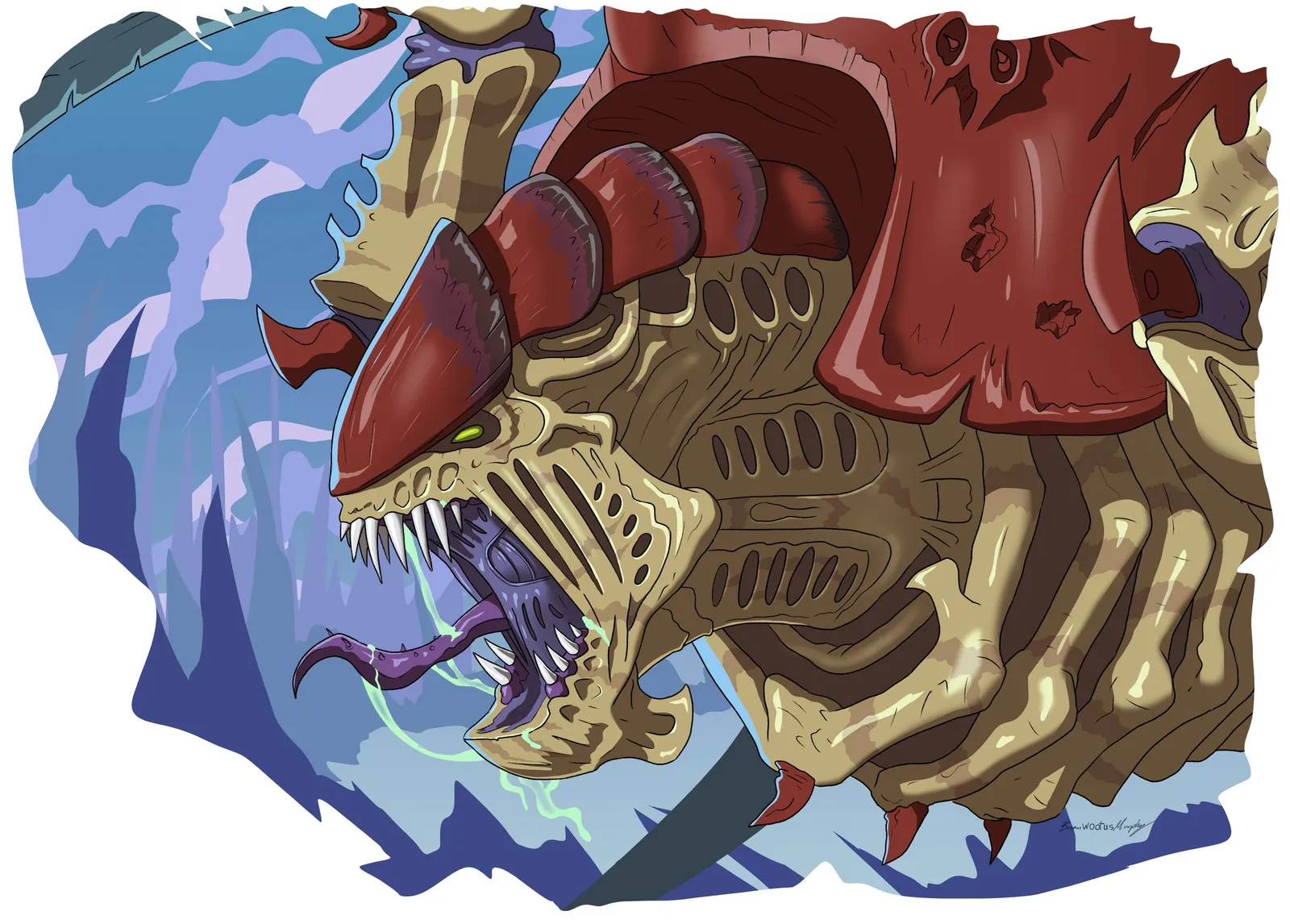
Kraken learned from Behemoth's death. Rather than advance as one mass, it split into innumerable tendrils that struck across the Eastern Fringe at once. Its creatures favored speed: fast-moving swarms that overran defenses before reinforcements could arrive.
Kraken's most famous campaigns include the war on Ichar IV, where the Ultramarines fought again, and the assault on Craftworld Iyanden, which was nearly destroyed. The craftworld survived only after Prince Yriel, long in exile, returned to lead its defense. Kraken was declared defeated, but its splinter fleets still plague the galaxy, and at Valedor at the end of M41 a Kraken tendril came close to merging with Leviathan before a Harlequin-brokered Aeldari alliance destroyed the world to stop it.
Leviathan: The Third Tyrannic War
Leviathan arrived in 997.M41, the largest fleet yet, and it came from an unexpected direction: from below the galactic plane, where Imperial defenses were thinnest. Its tendrils threatened to cut the Imperium in two.
Inquisitor Kryptman's response became infamous. To starve the swarm, he ordered the Exterminatus of worlds in its path, and he diverted one tendril into the Ork empire of Octarius, hoping the two threats would bleed each other. The Octarius war has been grinding ever since, and Orks who survive it only grow bigger.
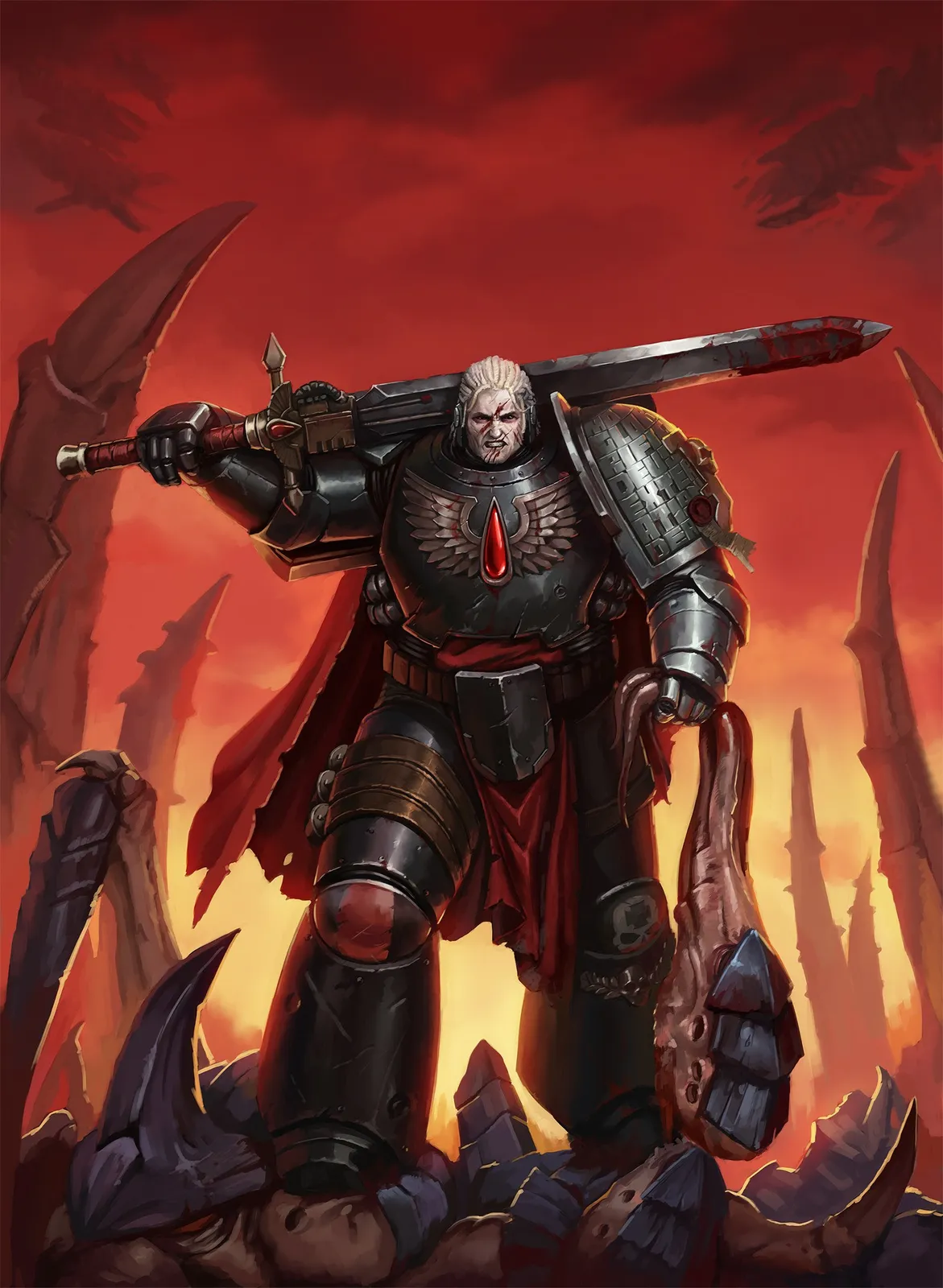
Leviathan's greatest assault was the drive on Baal, homeworld of the Blood Angels. Commander Dante gathered the Successor Chapters of Sanguinius in numbers not seen since the Horus Heresy, and the Devastation of Baal saw the system ravaged and the Chapter pushed to the edge of extinction. The Blood Angels survived, and Roboute Guilliman's Indomitus Crusade later reached Baal to reinforce the battered Sons of Sanguinius. In the current era, Leviathan has returned as the headline Tyranid threat of recent editions, with fresh tendrils surging into the Imperium, as seen in the video game Warhammer 40,000: Space Marine 2.
The Minor Fleets: Gorgon, Jormungandr, Hydra and Kronos
The three great fleets are only the most famous. Codex lore describes many smaller ones, each embodying a different strategy of the Hive Mind.
Gorgon invaded the T'au Empire in 899.M41. It adapted faster than any fleet before it, producing more bio-form varieties and relying on lethal spore weapons, and forced T'au and Imperial forces to fight on the same side. It was thought destroyed a few years later, but fragments survived and have resurfaced on Imperial agri-worlds.
Jormungandr specializes in ambush. Its bio-ships hide inside asteroids and comets, then hurl debris and spores at target worlds. Burrowing organisms such as Raveners, Trygons and Mawlocs tunnel beneath defenses and lie dormant until the moment to strike. The fleet ravaged the Thalassi sector and was later stirred back to life by Leviathan's arrival.
Hydra was woken prematurely from hibernation by Drukhari raiders and has been multiplying ever since. Its creatures regenerate at terrifying speed, and it has begun hunting older hive fleets to cannibalize them, absorbing their memories. It hunted the White Scars across the dunes of Haadekh.
Kronos appeared after the Great Rift opened and follows its line, preying on worlds hit by Chaos. Its Shadow in the Warp is suffocatingly strong, which makes it a natural enemy of daemons, sorcerers and Chaos warbands, and it fights at range with organic artillery rather than charging in.
Other named fleets include Tiamet, Naga, Ouroboris, Moloch and Arachnae, the last of which clashed with the Novokh Necron dynasty. Each is a reminder that the Hive Mind is not one strategy but many.
How Hive Fleets Differ From the Tyranid Race
The Tyranid race is one organism with one appetite. Hive fleets give it texture. They explain why one swarm burrows while another bombards, why one fleet adapts against a single enemy while another simply floods the field, and why the Imperium can win a war and still lose the peace to a splinter fleet. They also give the Tyranids a history: the three Tyrannic Wars, Macragge, Iyanden and Baal are the moments where humanity first understood what it was facing. Many of those worlds were softened up first by Genestealer Cults, the hidden vanguard that calls the fleets in.
Choosing and Painting a Hive Fleet
On the tabletop all hive fleets share the same range, so your fleet is mostly a matter of color and story. Leviathan's bone-white carapace and purple flesh is the modern box-art look. Behemoth's blue skin and red carapace is the classic alternative. Pick a fleet whose personality matches how you like to play: Behemoth and Hydra for overwhelming waves, Kraken for speed, Jormungandr for ambush, Kronos for shooting.
Custom hive fleets are fully supported by the lore. Name yours after a monster, invent the world it devoured first, and decide how it has adapted to the enemies it has met. A splinter fleet with a grudge against one Chapter or one craftworld makes a great campaign villain.
Tyranid Hive Fleets FAQ
How many hive fleets are there?
There are three major hive fleets, Behemoth, Kraken and Leviathan, plus many minor fleets such as Gorgon, Jormungandr, Hydra and Kronos, and countless splinter fleets. The lore suggests even these are only the vanguard of a far larger migration.
What is the biggest Tyranid hive fleet?
Leviathan. It is the largest and most successful fleet recorded, and remains the most active Tyranid threat in the current era.
Why are hive fleets named after monsters?
The Imperium names each newly identified fleet after a creature from ancient myth, such as Behemoth, Kraken or Gorgon. The names are human labels; the Hive Mind has no names at all.
Can a hive fleet be destroyed?
Only with enormous difficulty. Even when a fleet is broken, splinter fleets usually escape and return later, adapted to the weapons that defeated their parent. The most reliable Imperial tactic is to deny the swarm biomass, often by destroying the world itself.
What colors are Hive Fleet Leviathan and Behemoth?
Leviathan is usually painted with bone-white carapace and purple skin, and Behemoth with blue skin and red carapace. You are free to invent your own scheme for a custom fleet.
Continue Exploring
- The Tyranids — the Hive Mind, the Shadow in the Warp and the living weapons of the swarm.
- Warhammer 40K factions guide — every army, its lore and how it plays.
- Genestealer Cults — the hidden uprisings that summon the hive fleets.
- Necron dynasties — the deathless houses whose Silent King fears the swarm above all.
Browse every guide in the Warhammer 40K lore hub. To chronicle a hive fleet's path of destruction world by world, Anima is free and runs in your browser with no account: a wiki, a timeline, and campaigns with a live DM screen.
Keep reading
More from this topic
Necrons: Warhammer 40K Lore Guide
The complete lore of the Necrons — the doomed Necrontyr, the C’tan star-gods, biotransference, the War in Heaven, and the deathless dynasties now waking to reclaim the galaxy.
Tyranids: Warhammer 40K Lore Guide
The complete lore of the Tyranids — the Great Devourer, the Hive Mind, the Shadow in the Warp, the great Hive Fleets, Genestealer Cults, and the hunger that crossed the void between galaxies.
Space Marines (Adeptus Astartes): Warhammer 40K Lore Guide
The complete lore of the Space Marines — the Primarchs, gene-seed, the Horus Heresy, the Codex Astartes and the Chapters, the Primaris and Guilliman’s return, and the cost of the Angels of Death.
Start building your world today
A linked wiki, a timeline and a live DM screen — free, in your browser, no account needed.