White Scars: Warhammer 40K Lore Guide
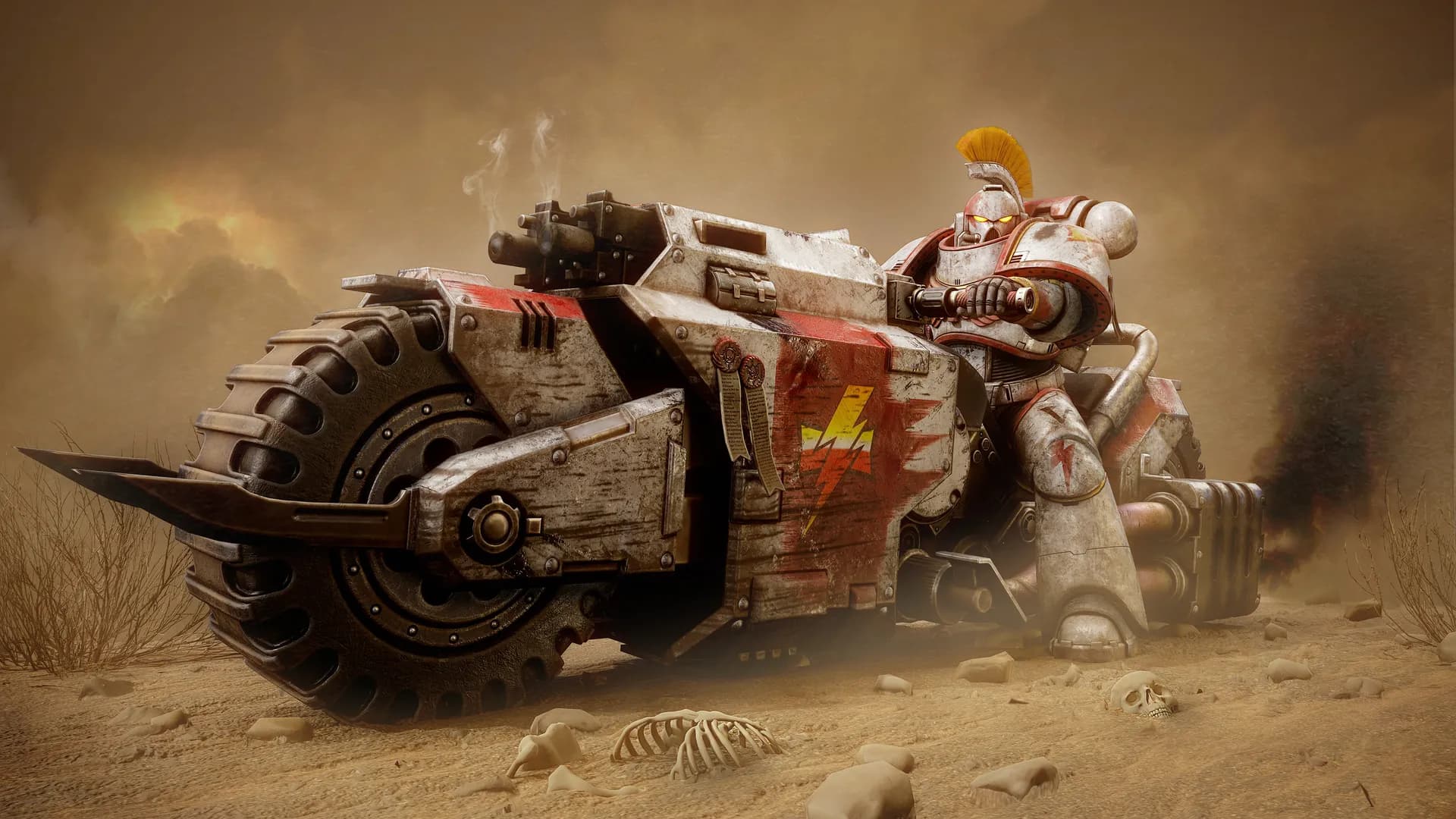
The White Scars fight like a storm crossing the steppe. They do not dig in, they do not wait, and they rarely fight the same battle twice. Mounted on roaring bikes and speeders, armored in white with a crimson lightning bolt, they hit the enemy from an unexpected direction, scatter before the counterblow, and come back from somewhere else. To their foes they are a nightmare of speed; to the Imperium they are the most free-spirited of all the old Legions.
They are one of the First Founding Space Marine Chapters, descended from the V Legion and its Primarch, Jaghatai Khan, the Warhawk. Their culture draws on the horse-riding peoples of the steppe: ritual facial scars, clans called brotherhoods, khans instead of captains, and weather-witch psykers who call down lightning. This guide covers their origins on Chogoris, their part in the Horus Heresy, their organization and heroes, and how they play on the tabletop.
White Scars at a Glance
| Aspect | Detail |
|---|---|
| Legion | V Legion (First Founding) |
| Primarch | Jaghatai Khan, the Warhawk (vanished into the webway after the Heresy) |
| Homeworld | Chogoris, a world of vast steppes and mountains |
| Fortress-Monastery | Quan Zhou, carved into a mountain on Chogoris |
| Chapter Master | The Great Khan, Jubal Khan |
| Colors | White armor with a red lightning-bolt badge and red trim |
| Specialty | Bikes, speeders, lightning raids, hit-and-run warfare |
| Notable Successors | Mantis Warriors, Storm Lords |
Jaghatai Khan and the Riders of Chogoris
The Primarch who would become Jaghatai Khan landed on Chogoris, a world of horse-riding tribes ruled by the decadent Palatine empire. Adopted by a nomad clan, the Talskar, he grew into a warlord of terrifying skill. He united the steppe tribes and overthrew the Palatine, making himself master of the planet before the Emperor ever arrived.
When the Emperor reached Chogoris during the Great Crusade, the Khan pledged himself and was given command of the V Legion. He reshaped it in the image of his people. Legionaries took Chogorian names, wore their scars proudly and fought as mounted raiders. The Legion became the Crusade's great outriders, constantly on the move at the edges of known space, and was often far from the political heart of the Imperium.
That distance mattered. The Khan was a thoughtful, independent figure who distrusted the courtiers of Terra and valued freedom above order. Black Library's Horus Heresy novels, particularly Chris Wraight's Scars and The Path of Heaven, make his loyalty one of the great questions of the early war: courted by both sides, he weighed the arguments before choosing the Emperor.
Terra and Chogoris: A Legion Divided
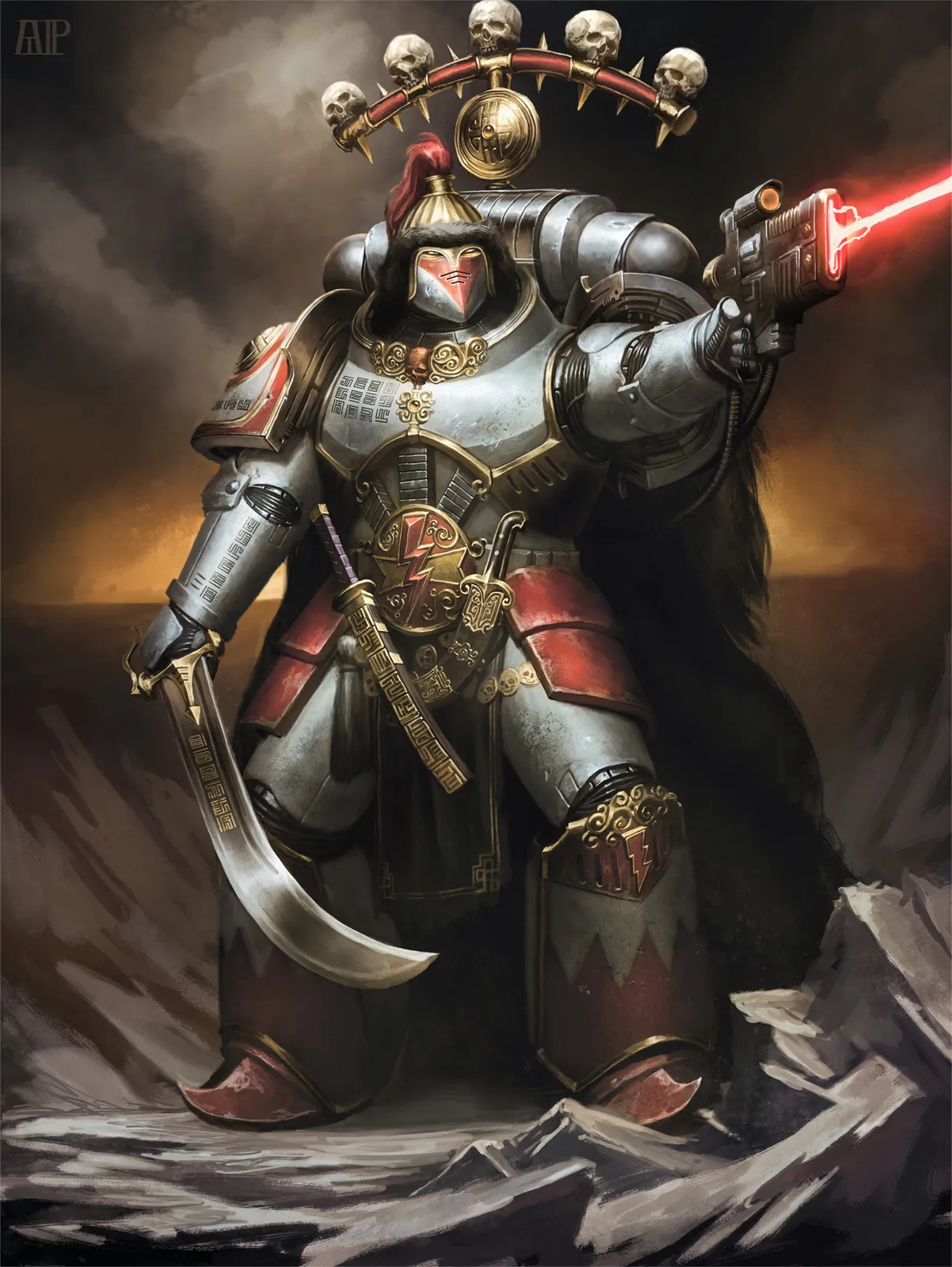
The V Legion was not born on Chogoris. Its first warriors were recruited on Terra before the Khan was found, and when he took command, the Legion slowly absorbed the language, customs and names of his homeworld. Chris Wraight's novels make this a lasting source of tension: Terran-born legionaries who remembered the Legion's earlier, more conventional days served alongside Chogorian warriors who saw the Khan almost as a sky-god. When the Heresy forced the Legion to choose a side, some of those old divisions surfaced as factions and secret loyalties within the ranks.
The Khan resolved the crisis in his own way: by hearing every argument, then choosing the Emperor openly and leading the Legion home to Terra at full speed. The White Scars of the 41st millennium are wholly Chogorian in culture, but the memory of a Legion that almost broke apart is part of why they value brotherhood so fiercely.
The White Scars in the Horus Heresy
Once the Khan committed to the Emperor, the White Scars became some of His fiercest defenders. They fought their way back toward Terra and played a major role in the defense of the Imperial Palace. In the Siege of Terra, the Khan led the defense of the Lion's Gate spaceport and confronted Mortarion, Primarch of the Death Guard, in a battle that left him gravely wounded, according to the Siege of Terra novels.
The Legion survived the war, and at the Second Founding it was divided into the White Scars Chapter and its successors. Unlike several of his brothers, the Khan was not slain. Instead, in the years after the Heresy, he led his warriors into the webway in pursuit of raiders of the Drukhari and did not return. The White Scars believe he still rides somewhere beyond the veil and will come back when he is needed most.
Culture: Scars, Brotherhoods and the Hunt
White Scars culture is one of the most distinctive in the Imperium. Recruits are still drawn from the tribes of Chogoris, and they carry the steppe with them into the Chapter.
- Ritual scars. Every battle-brother bears a ceremonial scar on his face, received during his initiation. Many add more over a lifetime of battle, and the scars give the Chapter its name.
- Brotherhoods. Companies are called brotherhoods, and their captains are Khans. The Chapter Master holds the title of Great Khan.
- Stormseers. The Chapter's Librarians are weather-witches who call lightning, wind and storm onto the battlefield, a role rooted in Chogorian shamanism.
- The hunt. White Scars are famous for vowing to hunt down a single enemy across years and star systems, no matter the cost, until the debt is paid.
Despite their wild image, the White Scars are disciplined, learned and highly coordinated. Speed is not recklessness to them; it is a weapon, and they plan their strikes carefully before they unleash them. They have little patience for long sieges and static lines, which they regard as a waste of warriors who were born to ride.
Organization and Way of War
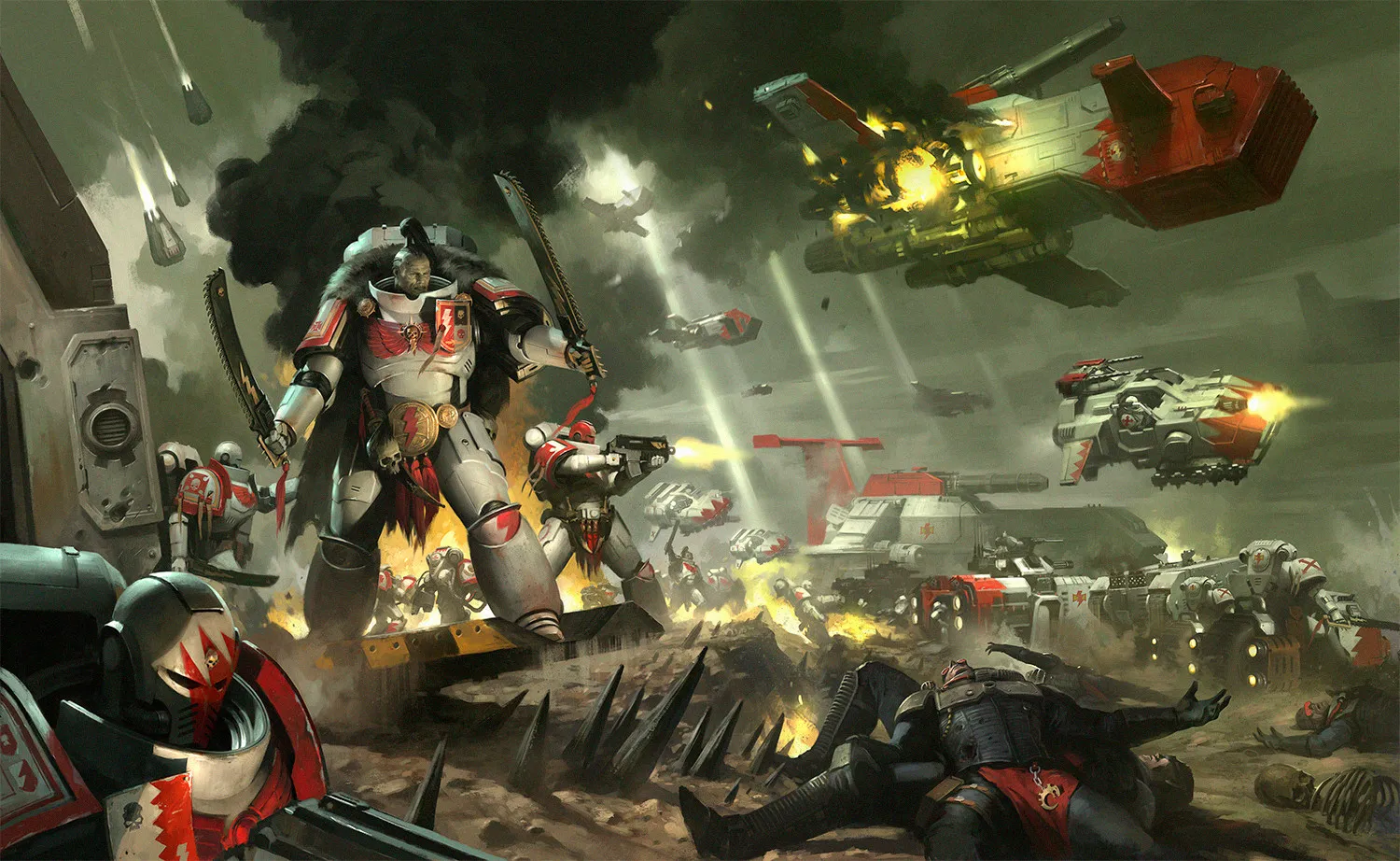
The White Scars broadly follow the Codex Astartes, with ten brotherhoods and the usual specialists. But the balance of their forces is unlike almost any other Chapter. Bikes, attack bikes, land speeders and fast transports appear in far greater numbers than usual, and even line warriors are trained to ride. The arrival of the Primaris Space Marines brought Outriders and gravitic tanks that fit the Chapter's style perfectly.
On campaign, a White Scars force typically operates in widely spread hunting groups. Scouts and bikers find the enemy's weak points, then the brotherhoods converge for a single overwhelming strike before scattering again. Enemies who expect a Space Marine assault to arrive where they can see it often find the White Scars already behind their lines.
Heroes of the White Scars
- Jaghatai Khan is the Chapter's lost Primarch, a master of mounted warfare who wielded a curved power sword and rode into battle on a jetbike in Heresy-era art.
- Kor'sarro Khan, the Master of the Hunt and Captain of the 3rd Brotherhood, is the Chapter's best-known hero. His most famous hunt was against the Daemon Prince Voldorius, whom he pursued across the stars in the campaign known as the Hunt for Voldorius, later told in Andy Hoare's Black Library novel of the same name. He rides the bike Moondrakkan.
- Jubal Khan is the Great Khan, master of the Chapter, who leads its brotherhoods in the Indomitus era.
The Chapter's history is also full of nameless Khans and Stormseers whose deeds are sung in Chogorian ballads rather than recorded in Imperial archives, which fits a people who value the hunt more than its paperwork.
Successor Chapters
The gene-seed of the V Legion has founded several successors, which generally share the White Scars' love of mobility.
- The Mantis Warriors are the most famous, and the most troubled. During the Badab War they sided with the secessionist Astral Claws, fought against the loyalist coalition sent to crush the rebellion, in which the Minotaurs played a leading role, and were later given a penitent crusade rather than destroyed.
- The Storm Lords are another successor associated with the White Scars' gene-line and fast-moving warfare.
How the White Scars Differ From Other Chapters
Every Space Marine Chapter can field bikes and speeders; the White Scars build their entire identity around them. Where the Raven Guard win through stealth and the Imperial Fists through stubborn defense, the White Scars win through speed and freedom of movement. They also stand apart culturally: closer to the saga-warriors of the Space Wolves than to the regimented Ultramarines, but calmer, quieter and more scholarly than Fenris's sons.
Their absent Primarch is another difference. The Khan did not die and did not fall; he simply rode away. That gives the Chapter a hopeful edge rare in a grim setting.
How to Play and Collect the White Scars
On the tabletop the White Scars use the Space Marine range, plus Kor'sarro Khan as a named character. Their identity:
- Identity: a fast, aggressive army built around bikes, Outriders, speeders and transports that hits hard and keeps moving.
- Strengths: exceptional mobility, the ability to grab and contest objectives across the whole table, and strong charges from fast units.
- Challenges: fast units are often lightly protected and expensive, so poor positioning or overextending can cost a lot.
- Best for: players who like a mobile, high-tempo game, and hobbyists who enjoy white armor with bold red detail.
White is a demanding color to paint well; most hobbyists build up from a grey or white undercoat with thin layers, then add the red lightning bolt and steppe details like furs, topknots and trophy charms.
White Scars FAQ
Who is the Primarch of the White Scars?
Jaghatai Khan, the Warhawk, Primarch of the V Legion. He conquered Chogoris before the Emperor found him, fought for the Emperor in the Horus Heresy and later disappeared into the webway hunting Drukhari raiders.
What are the White Scars based on?
Their culture draws on the horse-riding peoples of the Eurasian steppe, especially the Mongols: mounted warfare, khans, clan brotherhoods and a love of open spaces, translated into the far future.
Why are they called the White Scars?
Every warrior bears a ritual facial scar received at his initiation. Combined with their white armor, the scars give the Chapter its name.
Who is Kor'sarro Khan?
Kor'sarro Khan is the Master of the Hunt and Captain of the 3rd Brotherhood, famous for pursuing the Daemon Prince Voldorius across the galaxy until he took his head.
Is Jaghatai Khan coming back?
Nothing official confirms it. He vanished into the webway after the Heresy, and the White Scars believe he still lives, but his return remains one of the setting's open questions.
Continue Exploring
- Space Marines (Adeptus Astartes) — the Primarchs, gene-seed and the Codex Astartes behind every Chapter.
- Warhammer 40K factions guide — every army, its lore and how it plays.
- Raven Guard — the shadow-striking sons of Corvus Corax.
- Ultramarines — Guilliman's Chapter and the keepers of the Codex Astartes.
- Minotaurs — the bronze enforcers of the High Lords and victors of the Badab War.
- Drukhari — the raiders the Khan pursued into the webway.
- Jaghatai Khan — Jaghatai Khan in depth
Browse every guide in the Warhammer 40K lore hub, or name your own Khan with the Space Marine name generator. To chronicle your own Chapter, Anima is free and runs in your browser with no account: a wiki, a timeline, and campaigns with a live DM screen.
Keep reading
More from this topic
Necrons: Warhammer 40K Lore Guide
The complete lore of the Necrons — the doomed Necrontyr, the C’tan star-gods, biotransference, the War in Heaven, and the deathless dynasties now waking to reclaim the galaxy.
Tyranids: Warhammer 40K Lore Guide
The complete lore of the Tyranids — the Great Devourer, the Hive Mind, the Shadow in the Warp, the great Hive Fleets, Genestealer Cults, and the hunger that crossed the void between galaxies.
Space Marines (Adeptus Astartes): Warhammer 40K Lore Guide
The complete lore of the Space Marines — the Primarchs, gene-seed, the Horus Heresy, the Codex Astartes and the Chapters, the Primaris and Guilliman’s return, and the cost of the Angels of Death.
Start building your world today
A linked wiki, a timeline and a live DM screen — free, in your browser, no account needed.