Raven Guard: Warhammer 40K Lore Guide
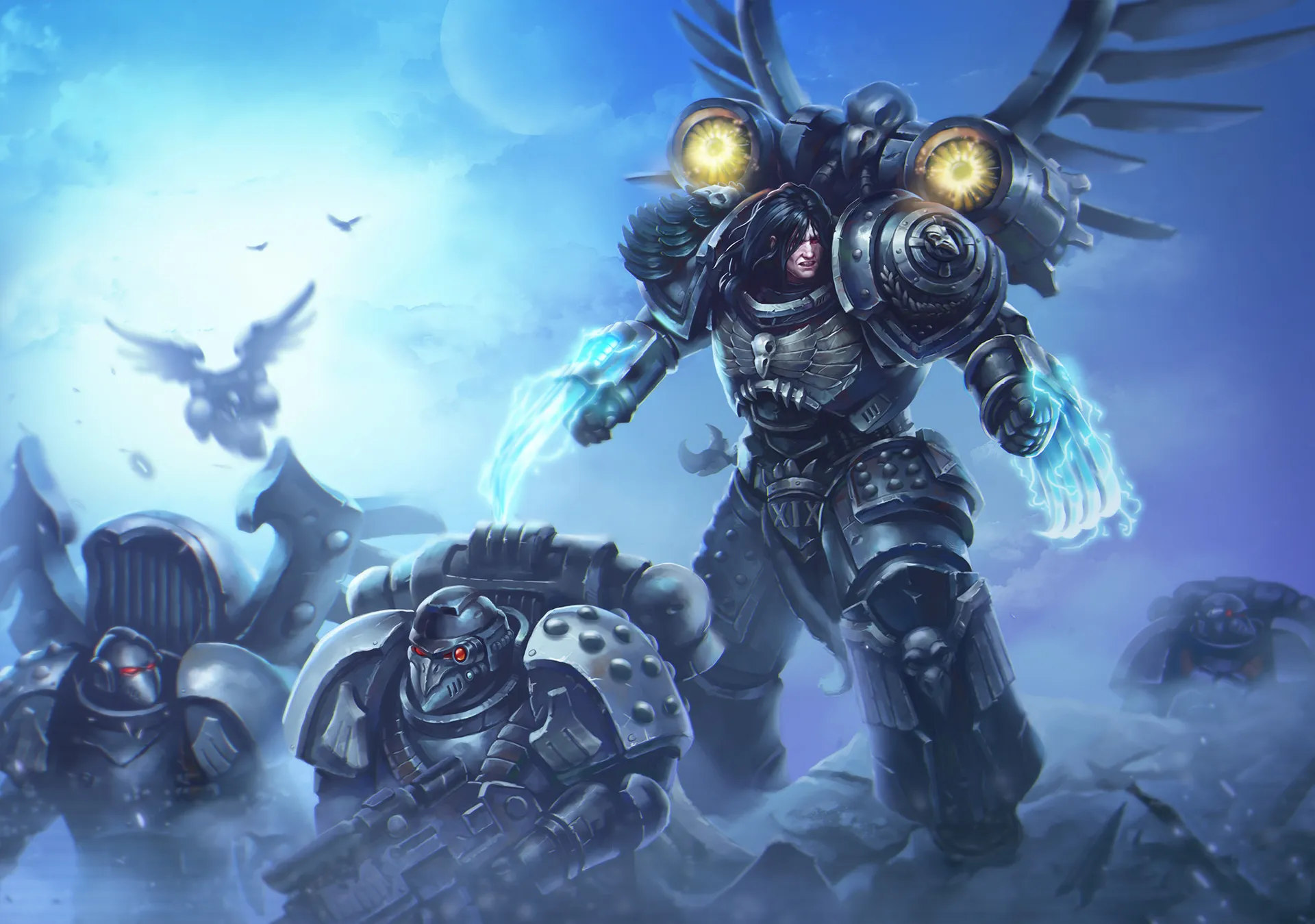
The Raven Guard do not win wars by standing in the open. They strike from shadow, at the moment the enemy is least prepared, and vanish before the counterattack can land. Clad in black armor marked with a white raven's head, they are the masters of infiltration, sabotage and the decapitating blow, a Chapter that treats stealth not as a trick but as a philosophy of war.
They are one of the First Founding Space Marine Chapters, descended directly from the XIX Legion and its Primarch, Corvus Corax. Their history is shaped by two moments above all: a prison revolt on a moon called Lycaeus, and a massacre on the black sands of Isstvan V that nearly wiped them from existence. This guide covers both, along with the Chapter's culture, organization, heroes, successors and how they feel to collect and play.
Raven Guard at a Glance
| Aspect | Detail |
|---|---|
| Legion | XIX Legion (First Founding) |
| Primarch | Corvus Corax, the Raven Lord (vanished into the Eye of Terror after the Heresy) |
| Homeworld | Deliverance, formerly the prison moon Lycaeus, orbiting the forge world Kiavahr |
| Fortress-Monastery | The Ravenspire on Deliverance |
| Chapter Master | Kayvaan Shrike, the Shadow's Wing |
| Colors | Black armor, white raven heraldry |
| Specialty | Infiltration, lightning raids, jump-pack assaults, decapitation strikes |
| Gene-seed Quirk | A flaw in the melanchrome organ leaves many battle-brothers pale-skinned with jet-black hair and eyes |
Corvus Corax and the Revolt on Lycaeus
When the infant Primarchs were scattered across the galaxy, the one who would become Corvus Corax landed on Lycaeus, a barren moon used as a mining prison by the tech-guilds of the nearby forge world Kiavahr. The child grew up among the inmates: pale, gaunt, unnaturally quiet, and possessed of an uncanny ability to move unseen. He learned the prison's secrets, organized the prisoners, and led them in a revolt that combined stealth, sabotage and careful timing.
The uprising succeeded. Corax and his followers seized Lycaeus, then took the war to Kiavahr itself and broke the power of the guilds. The moon was renamed Deliverance in honor of that liberation. When the Emperor arrived during the Great Crusade, He found a son who had already freed a people from tyranny, and gave him command of the XIX Legion. Corax's fierce hatred of oppression, and his distrust of grand gestures and open displays of power, would shape the Legion's character for ten thousand years.
Under Corax, the Legion became the Great Crusade's specialists in rapid, surgical warfare. Rather than grind a world down in a siege, the Raven Guard would locate its leaders, strike them in a single coordinated blow and let the enemy collapse on its own.
The Dropsite Massacre and the Rebuilding
When Horus rebelled, the Raven Guard were among the seven Legions sent to Isstvan V to crush him. They landed in the first wave alongside the Salamanders and the Iron Hands. Then the second wave, four Legions that had secretly sworn themselves to Horus, opened fire on their backs. The Dropsite Massacre shattered all three loyal Legions. Corax himself was gravely wounded and barely escaped with a remnant of his sons.
What followed is told mainly in Black Library's Horus Heresy novels, especially Gav Thorpe's Deliverance Lost. Desperate to rebuild his Legion quickly, Corax obtained gene-craft secrets from Terra and attempted to accelerate the creation of new legionaries. The experiment went wrong: many of the new recruits developed horrifying mutations, becoming twisted, bird-like warriors known as the Raptors. The same novels show the Alpha Legion infiltrating Deliverance and sabotaging the effort. Corax would carry the guilt of those mutations for the rest of his time in the Imperium.
After the Heresy, Corax withdrew from his Legion. Older lore tells that he shut himself away in the Ravenspire, then one day departed for the Eye of Terror to hunt the traitors, leaving behind a single word: "Nevermore." He has not been seen since, and unlike Roboute Guilliman or the Lion, he has not returned in the current setting.
Shadows and Silence: Identity and Culture
Everything about the Raven Guard flows from the guerrilla war on Lycaeus. They are patient, quiet and self-reliant. A Raven Guard strike force may spend days observing a target before committing to a single, devastating attack. Once the enemy commander is dead and the defenses have collapsed, the Raven Guard withdraw to find the next target. They have little interest in holding ground or glory for its own sake.
This makes them unusual among the Adeptus Astartes. Many Chapters prize honor won in open battle; the Raven Guard prize results. They are reserved, even aloof, with other Imperial forces, and they keep their own counsel. Their contempt for tyranny, inherited from Corax, also gives them a sympathy for the oppressed that sets them apart from more aristocratic Chapters.
Their gene-seed carries a visible mark. A flaw in the melanchrome organ, the implant that darkens a Space Marine's skin against radiation, causes many Raven Guard to become pallid, with black hair and dark eyes, gradually coming to resemble their Primarch. It is not dangerous in the way the Black Rage of the Blood Angels is, but it marks them as Corax's sons at a glance.
Organization of the Chapter
The Raven Guard follow the Codex Astartes in broad outline, with ten companies under a Chapter Master supported by Librarians, Chaplains, Techmarines and Apothecaries. In practice, they lean heavily on the parts of the Codex that suit their way of war.
- Shadow Captains is the traditional title for the Chapter's company commanders, reflecting their role as leaders of covert operations rather than battle-line officers.
- Scouts are central to their doctrine. Raven Guard Scouts are renowned for infiltration and reconnaissance, and they provide the information every strike depends on.
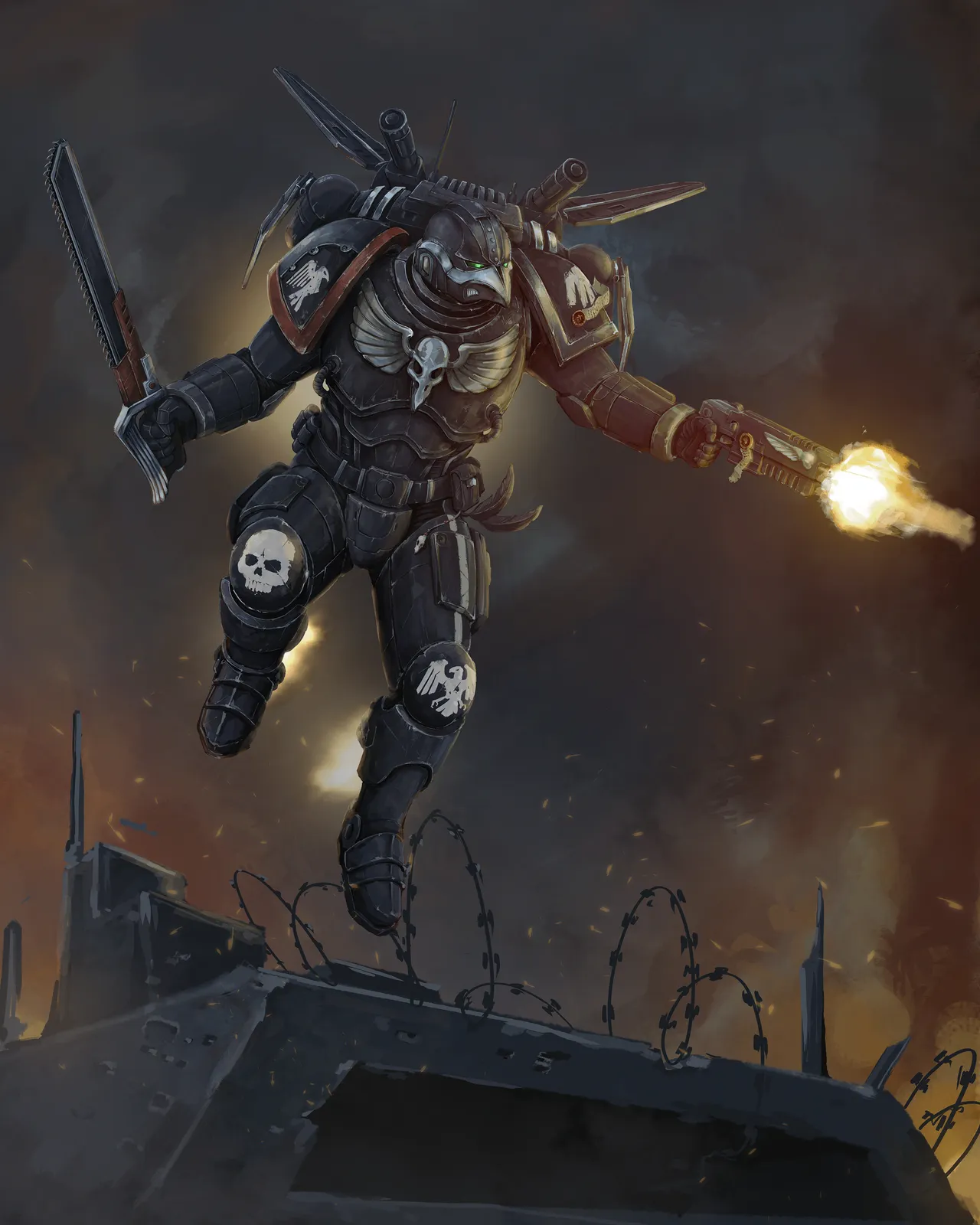
- Jump packs are used far more widely than in most Chapters. Assault squads, veterans and characters descend from the sky, strike and are gone.
- Vanguard and Phobos-armored Primaris Marines, such as Eliminators, Infiltrators and Reivers, slotted almost seamlessly into the Chapter after the Indomitus Crusade, since their whole battlefield role is built around stealth and terror.
Recruits are drawn from Deliverance and Kiavahr, worlds that remember the revolt as their founding myth. Aspirants are tested for patience and self-control as much as for strength. A warrior who cannot wait, hidden and silent, for the right moment to strike has no place in the Chapter.
Heroes of the Raven Guard
- Corvus Corax, the Raven Lord, is the Chapter's absent father. In Horus Heresy art and novels he is shown with great mechanical wings, the Raven's Talons lightning claws and an ability to vanish from sight even in the middle of battle.
- Kayvaan Shrike, the Shadow's Wing, is the current Chapter Master. As a Shadow Captain he led a long guerrilla campaign against an Ork invasion on the world of Targus, a war he waged with a handful of battle-brothers and local resistance fighters that made him a legend within the Chapter. He fights with a jump pack and lightning claws in the manner of his Primarch.
- Corvin Severax was Shrike's predecessor as Chapter Master in earlier editions' lore, leading the Chapter through the late 41st millennium before Shrike took up the mantle.
The Raven Guard have always fielded fewer named heroes than the larger and louder Chapters. That suits them: their greatest victories often happened where no one saw them.
Enemies and Notable Campaigns
Every traitor Legion is an enemy, but the Raven Guard hold particular grudges. The Dropsite Massacre left a hatred for the Legions that took part in it, and the Raven Guard often find themselves mirrored by the Night Lords, who also strike from darkness, but in order to spread terror rather than to liberate. Their Heresy-era war with the Alpha Legion, fought through deception and sabotage, is also central to their story.
In the 41st millennium, the Raven Guard have fought across the galaxy against Orks, Tyranids and the forces of Chaos, often deployed where a single blow against an enemy's leadership can stop a war before it truly begins. Shrike's war on Targus remains the defining example. Since the opening of the Great Rift, Primaris reinforcements have given the Chapter new strength, and its Phobos-armored warriors are some of the most natural recipients of Guilliman's new arsenal.
Successor Chapters
The XIX Legion's gene-seed has gone on to found a number of successor Chapters, which tend to share the Raven Guard's taste for stealth and speed.
- The Raptors are the best known: a camouflage-wearing Chapter of pragmatic, unsentimental warriors, led by Lias Issodon, with a reputation for patience and hunting tactics. Their name echoes the Heresy-era mutants, but they are a separate, loyal Chapter.
- The Black Guard and the Revilers are among the other Chapters often named as Raven Guard successors.
Some Chapters of uncertain origin have been rumored to carry Corax's gene-seed, but the Imperium's records are incomplete, and those claims are best treated as speculation.
How the Raven Guard Differ From Other Chapters
Compared with the wider Adeptus Astartes, the Raven Guard stand out in three ways. First, their way of war is defined by deception rather than firepower or zeal. Second, their gene-seed gives them a recognizable, almost ghostly appearance. Third, their Primarch is not dead, simply gone, which leaves the Chapter with an open question rather than a grief. Their closest cousins in temperament are the White Scars, who also prefer mobility to static warfare, though the Khan's sons ride into battle openly and at full speed while the Raven Guard prefer never to be seen.
How to Play and Collect the Raven Guard
On the tabletop the Raven Guard use the Space Marine range, plus their own character in Kayvaan Shrike. Their identity is easy to read:
- Identity: an army that wants to arrive where the enemy least expects it, using infiltrators, scouts, deep-striking jump troops and Phobos-armored units.
- Strengths: excellent board control in the early turns, the ability to threaten objectives and characters anywhere, and a natural fit for the Vanguard and Phobos units.
- Challenges: stealth troops are rarely the toughest, so the army rewards careful positioning and punishes careless trades.
- Best for: patient players who enjoy setting traps, and hobbyists who like a dark, moody palette of black armor with sharp white details.
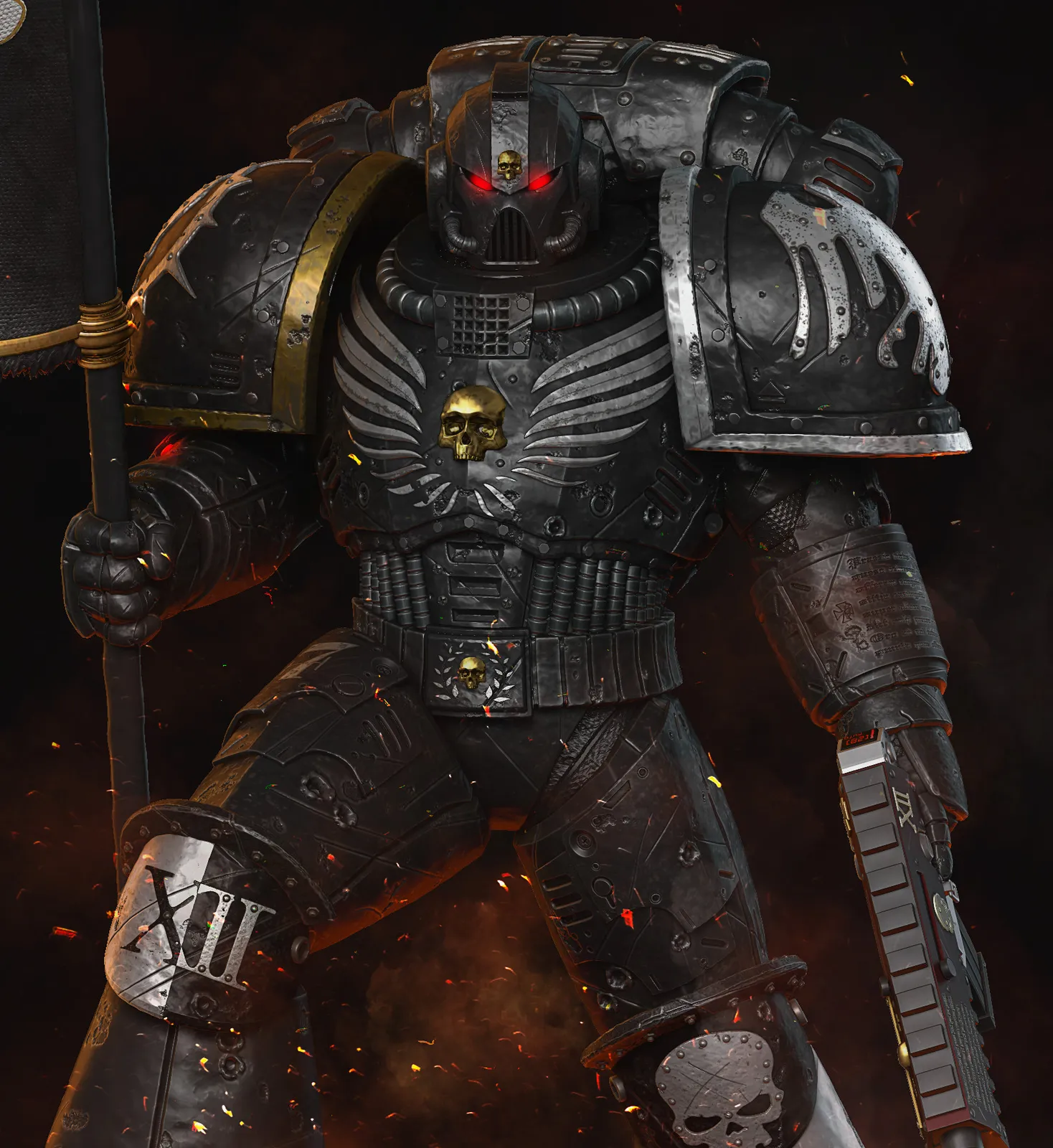
Painting black armor convincingly is the main hobby challenge: most painters use dark greys with blue or green highlights so the miniatures do not read as flat black on the table.
Raven Guard FAQ
Who is the Primarch of the Raven Guard?
Corvus Corax, Primarch of the XIX Legion. He grew up on the prison moon Lycaeus, led the revolt that freed it, and after the Horus Heresy departed into the Eye of Terror. He has not returned in the current setting.
Why are the Raven Guard so pale?
A flaw in their melanchrome organ causes many Raven Guard to lose skin pigmentation while their hair and eyes darken to black. Over time they come to resemble their gaunt, pale Primarch.
What happened to the Raven Guard at Isstvan V?
They were betrayed. Along with the Salamanders and Iron Hands, they attacked Horus's forces only to be fired upon by the four traitor Legions of the second wave. The Dropsite Massacre destroyed most of the Legion, and Corax barely escaped.
Who leads the Raven Guard today?
Kayvaan Shrike, called the Shadow's Wing, a former Shadow Captain famous for his guerrilla war against the Orks on Targus.
Are the Raven Guard and the Raptors the same?
No. The Raptors of the Heresy were mutated warriors produced by Corax's failed attempt to rebuild his Legion quickly. The Raptors Chapter of the 41st millennium is a separate, loyal successor Chapter of the Raven Guard.
Are the Raven Guard a good army for beginners?
They are a fine choice if you enjoy a tactical, positioning-heavy style. They use the full Space Marine range, so new players can build any balanced force and simply lean toward scouts, jump troops and Phobos units over time.
Continue Exploring
- Space Marines (Adeptus Astartes) — the Primarchs, gene-seed and the Codex Astartes behind every Chapter.
- Warhammer 40K factions guide — every army, its lore and how it plays.
- Salamanders — the fire-born sons of Vulkan, fellow survivors of Isstvan V.
- Iron Hands — the Medusan Chapter that lost its Primarch on the dropsite.
- White Scars — the lightning-fast sons of the Khan.
- Night Lords — the traitor Legion that also hunts from the shadows.
- Corvus Corax — Corvus Corax in depth
Browse every guide in the Warhammer 40K lore hub, or name your own Shadow Captain with the Space Marine name generator. To chronicle your own Chapter, Anima is free and runs in your browser with no account: a wiki, a timeline, and campaigns with a live DM screen.
Keep reading
More from this topic
Necrons: Warhammer 40K Lore Guide
The complete lore of the Necrons — the doomed Necrontyr, the C’tan star-gods, biotransference, the War in Heaven, and the deathless dynasties now waking to reclaim the galaxy.
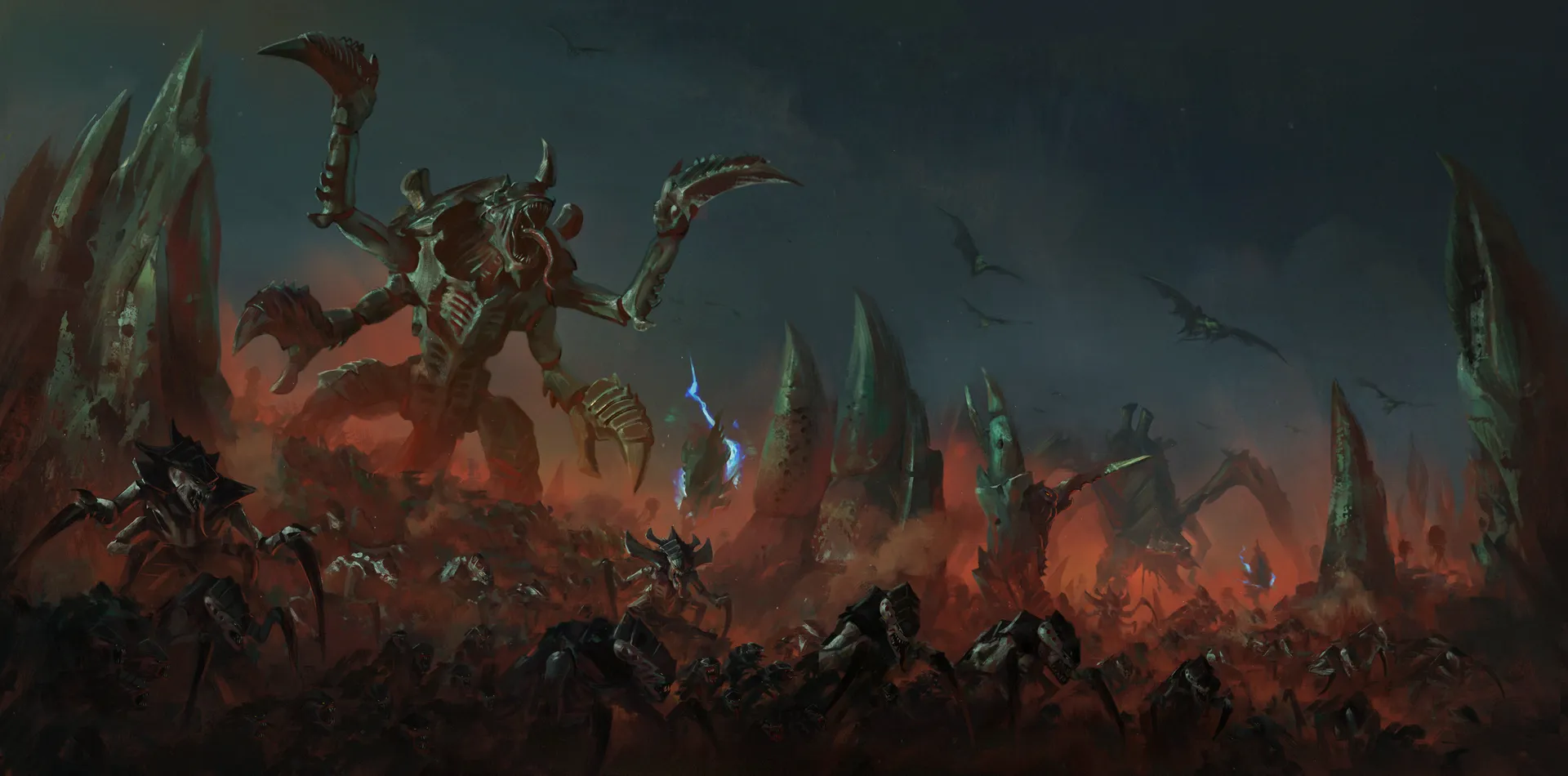
Tyranids: Warhammer 40K Lore Guide
The complete lore of the Tyranids — the Great Devourer, the Hive Mind, the Shadow in the Warp, the great Hive Fleets, Genestealer Cults, and the hunger that crossed the void between galaxies.
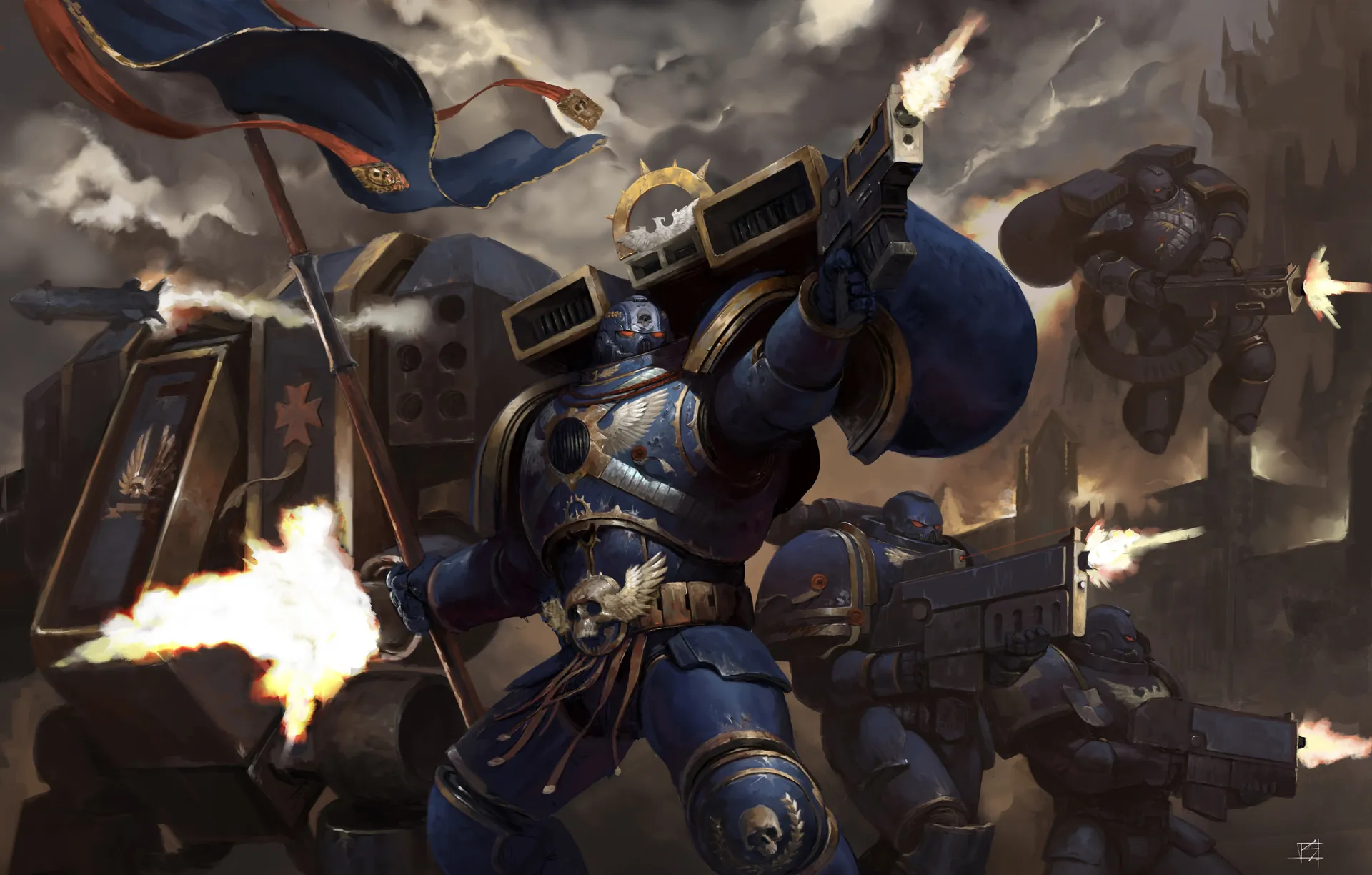
Space Marines (Adeptus Astartes): Warhammer 40K Lore Guide
The complete lore of the Space Marines — the Primarchs, gene-seed, the Horus Heresy, the Codex Astartes and the Chapters, the Primaris and Guilliman’s return, and the cost of the Angels of Death.
Start building your world today
A linked wiki, a timeline and a live DM screen — free, in your browser, no account needed.