Space Wolves: Warhammer 40K Lore Guide
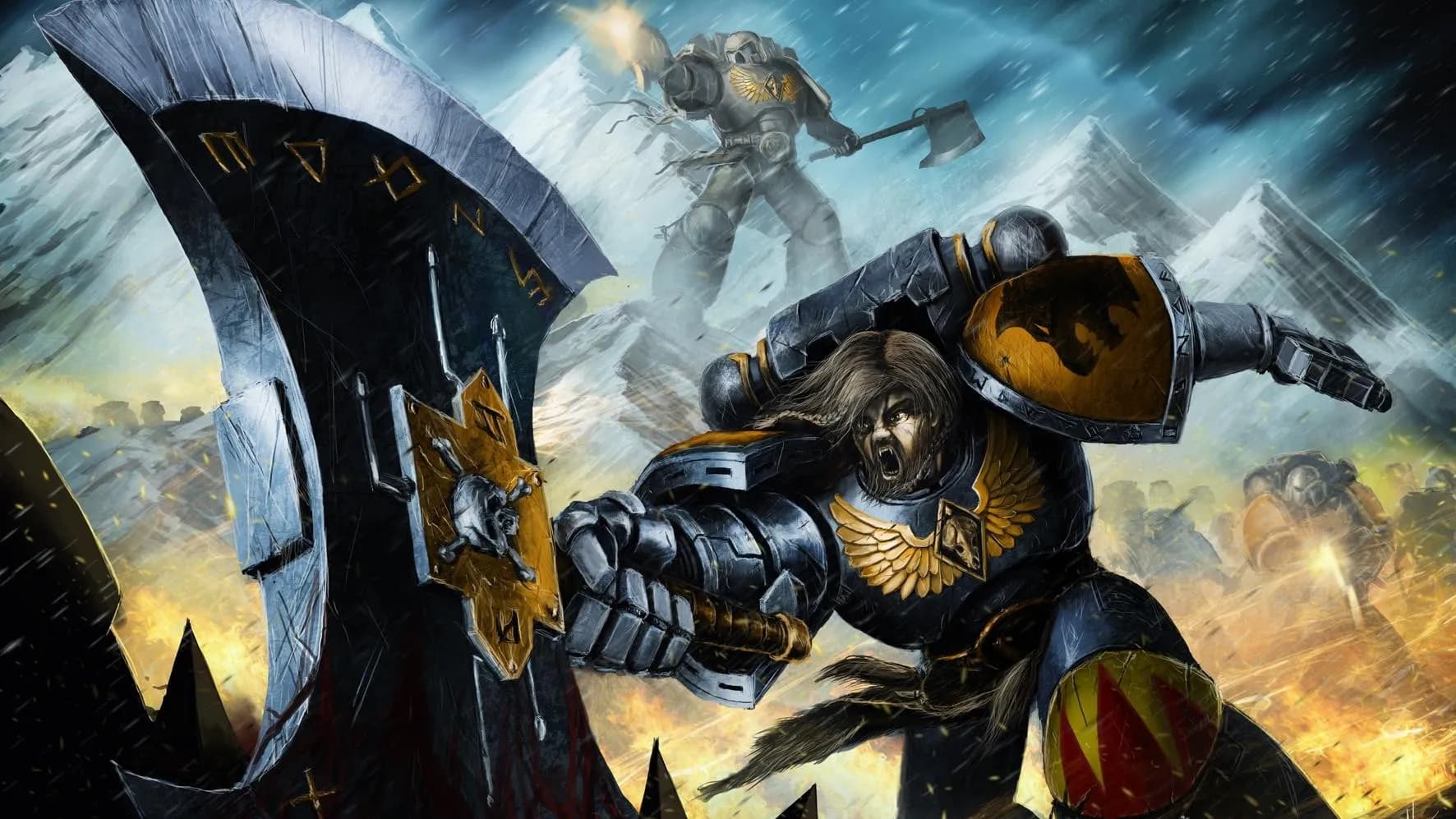
The Space Wolves do not march to war — they hunt. Born on the frozen death-world of Fenris and shaped by a gene-seed that gives them fangs, keen senses and a beast's ferocity, the sons of Leman Russ are less a regimented army than a saga-singing host of warrior-heroes. They drink, they boast, they brawl, and they fight with a savage joy that unsettles every other servant of the Imperium.
The Space Wolves are one of the most beloved Space Marine Chapters, a First Founding Chapter that openly ignores the Codex Astartes in favor of its own Fenrisian traditions. Behind the mead halls and battle-sagas, though, lies a darker inheritance — the Canis Helix and the Curse of the Wulfen. This guide covers Leman Russ and the VI Legion, the Burning of Prospero, Fenris and the Fang, the Great Companies, the Wolf Lords and legends who lead them, the Chapter's many feuds, and how the Space Wolves play on the tabletop.
Space Wolves at a Glance
| Aspect | Detail |
|---|---|
| Legion | VI Legion, known in the Great Crusade as the Emperor's executioners (First Founding) |
| Primarch | Leman Russ, the Wolf King — vanished into the Eye of Terror after the Heresy |
| Homeworld | Fenris, a frozen ocean death-world |
| Fortress-Monastery | The Fang, carved into the peak of a mountain on Asaheim |
| Chapter Master | Logan Grimnar, the Great Wolf |
| Colors | Wolf-grey armor, yellow and red markings, pelts, talismans and runes |
| Organization | Twelve Great Companies led by Wolf Lords (the lost Thirteenth Great Company returned as the Wulfen) |
| Gene-seed Flaw | The Canis Helix and the Curse of the Wulfen |
Leman Russ and the Wolves of Fenris
The Primarch Leman Russ came to rest on Fenris, a world of endless winter seas, scattered rocky islands and lethal predators. According to legend he was raised among the giant Fenrisian wolves before being taken in by a human tribe, and grew into a warrior-king who fought his way to rule. When the Emperor came to Fenris, Russ did not kneel at once. The sagas tell of contests between the two, with Russ submitting only when the Emperor bested him.
Given command of the VI Legion, Russ remade it in Fenris's image. Its warriors were drawn from the island tribes, and its culture became a fusion of Fenrisian saga and Astartes discipline. The Legion was trusted with the Imperium's darkest tasks: when a Legion or a world had to be punished, the Wolves were sent. That role made them feared even by their brothers, and it would set them on a collision course with the Thousand Sons.
Russ also earned a lasting rivalry with Lion El'Jonson of the Dark Angels. The two Primarchs clashed during the Great Crusade, and the grudge has been carried by their sons for ten thousand years — though the Chapters have fought side by side countless times since.
The Burning of Prospero and the Heresy
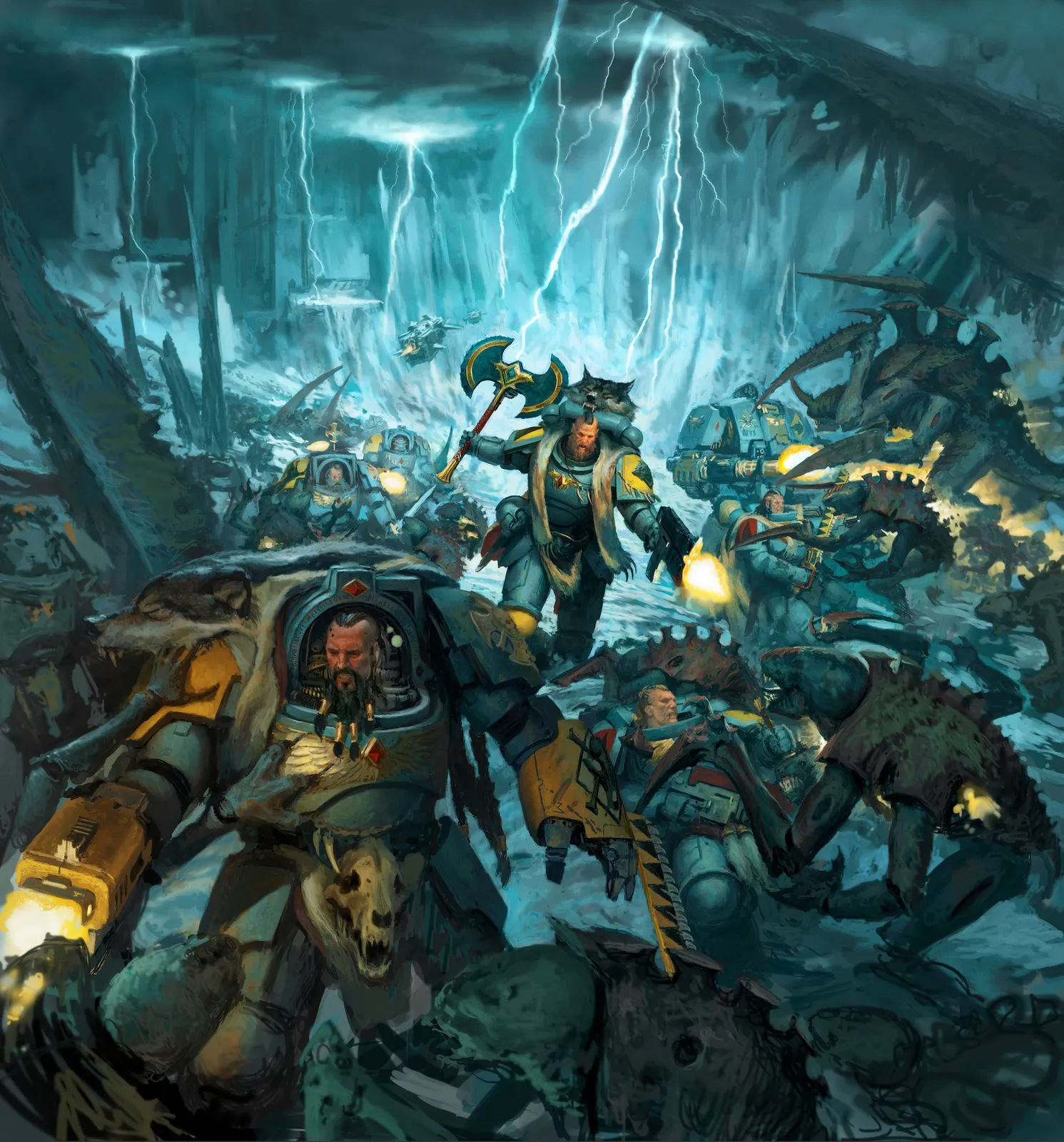
The defining event of the Space Wolves' Heresy was the Burning of Prospero. Magnus the Red, Primarch of the Thousand Sons, had broken the Emperor's edicts on sorcery, and Russ was ordered to bring him to Terra. Through the manipulations of Horus, that order became a command to destroy. The Space Wolves fell on Prospero, the Thousand Sons' homeworld, and burned its great cities. Magnus, broken by grief and rage, gave himself wholly to Tzeentch, and his Legion became the sorcerers we know today.
The Thousand Sons have never forgiven it. On the eve of the Great Rift, Magnus returned to strike at Fenris itself, and the war between Wolves and Sorcerers burns as hot today as it did ten millennia ago.
After the Heresy, Russ refused to break his Legion into many Chapters in the manner of the Codex. The Space Wolves remained one massive Chapter, and to this day they have notoriously few acknowledged successors. Russ then led a final expedition into the Eye of Terror and never returned. The Wolves believe he will come back at the Wolftime, the final battle at the end of days, and the Chapter's priests watch for its signs.
Fenris and the Fang
Fenris is one of the harshest worlds in the Imperium. Its seas freeze and thaw with a long, eccentric orbit; its islands crack and erupt; its predators include kraken, wolves and creatures far worse. The tribes who live there are warrior peoples whose sagas revere the Sky Warriors — the Space Wolves — who descend to claim the greatest heroes.
Above it all stands the Fang, a fortress carved into one of the mightiest peaks of Asaheim. Wolf Priests choose aspirants from among Fenris's bravest warriors — often men who have fallen heroically in battle. Those chosen undergo trials in the wilderness, and then the implantation of gene-seed, which carries the Chapter's unique organ: the Canis Helix. Many aspirants do not survive it.
The Canis Helix and the Curse of the Wulfen
The Canis Helix gives the Space Wolves their sharpened senses, elongated fangs and predatory instincts. It also carries a terrible risk. Some warriors who receive it never fully master the beast within, and degenerate into half-wolf monsters known as Wulfen. For centuries the Space Wolves kept this Curse of the Wulfen from the wider Imperium, fearing what the Inquisition would do with the knowledge.
The Curse took a new shape when the Wulfen of the long-lost Thirteenth Great Company reappeared, fighting daemons across the Imperium in the event Games Workshop called the Curse of the Wulfen. Those warriors had spent millennia in the Eye of Terror at war with the forces of Chaos Daemons. The Wolves welcomed them back, but their return forced the Chapter to confront its own nature in public view.
The Great Companies
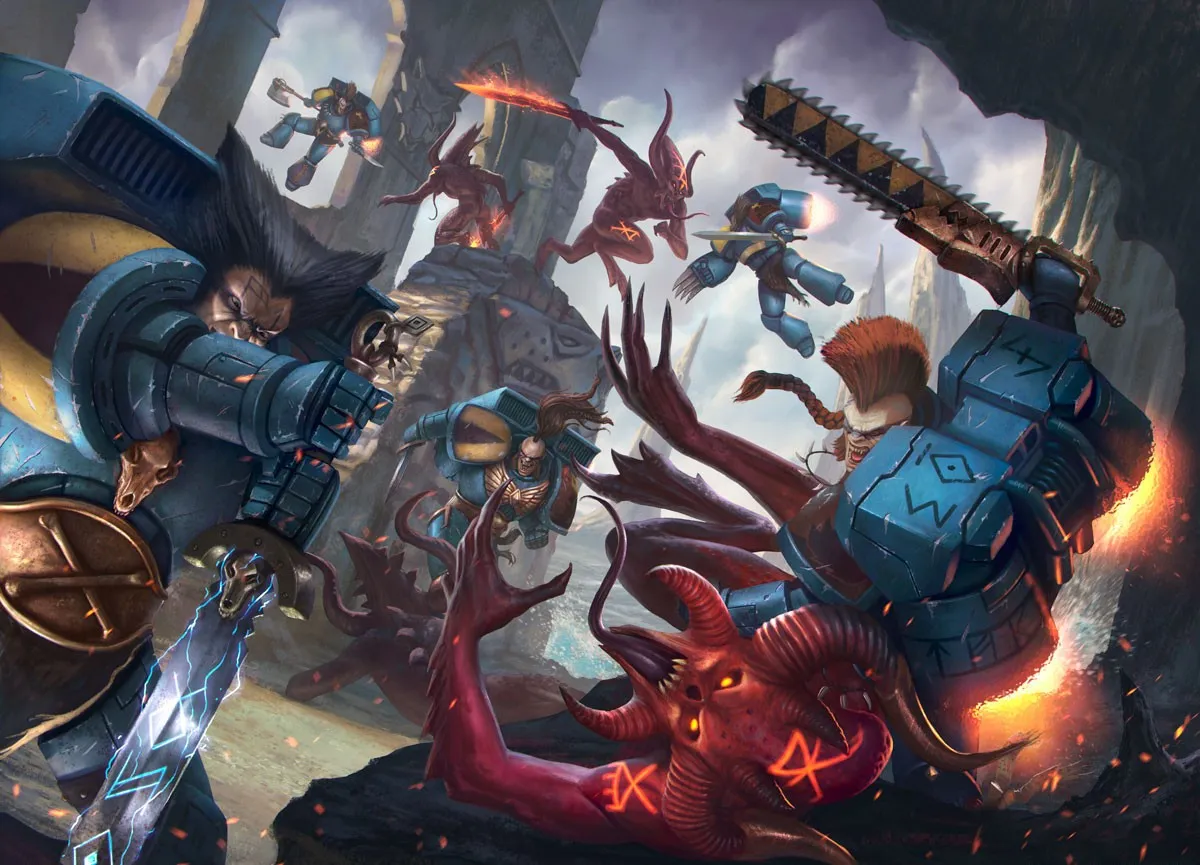
The Space Wolves do not follow the Codex Astartes. Instead, the Chapter is divided into twelve Great Companies, each a self-contained army led by a Wolf Lord with his own Wolf Guard, heraldry and character. The Great Wolf rules them all from the Fang. The ranks reflect a warrior's age and experience rather than Codex specialization:
- Blood Claws are the youngest warriors, hot-headed and eager to prove themselves in close combat.
- Grey Hunters are seasoned warriors who have tempered their rage with experience — the backbone of every Great Company.
- Long Fangs are the oldest veterans, whose patience makes them masters of heavy weapons.
- Wolf Guard are the bodyguards and champions of the Wolf Lords, often clad in Terminator armor.
- Thunderwolf Cavalry ride gigantic Fenrisian Thunderwolves into battle — one of the setting's most iconic images.
The Wolves' specialist priests are equally distinctive. Rune Priests are the Chapter's psykers, who refuse the name "Librarian." Wolf Priests combine the roles of Chaplain and Apothecary, recovering gene-seed and choosing new aspirants. Iron Priests tend the Chapter's wargear and its cybernetic wolves.
Heroes of the Space Wolves
- Logan Grimnar, the Great Wolf, has led the Chapter for centuries. Gruff, pragmatic and fiercely loyal, he often rides into battle on the sled-chariot Stormrider.
- Ragnar Blackmane, one of the youngest warriors ever to become a Wolf Lord, is famed for his reckless courage and ferocity in the charge.
- Njal Stormcaller, Chief Rune Priest, commands the storms of Fenris themselves.
- Ulrik the Slayer, Wolf High Priest, is one of the oldest warriors in the Chapter and the keeper of the Wolf Helm of Russ.
- Bjorn the Fell-Handed, entombed in a Dreadnought, fought alongside Leman Russ himself during the Great Crusade, and is revered as a living link to the Primarch.
- Arjac Rockfist, the Anvil of Fenris, serves as Grimnar's champion.
- Harald Deathwolf and Krom Dragongaze are among the Wolf Lords whose Great Companies feature most often in the sagas.
Culture: Sagas, Honor and the Hunt
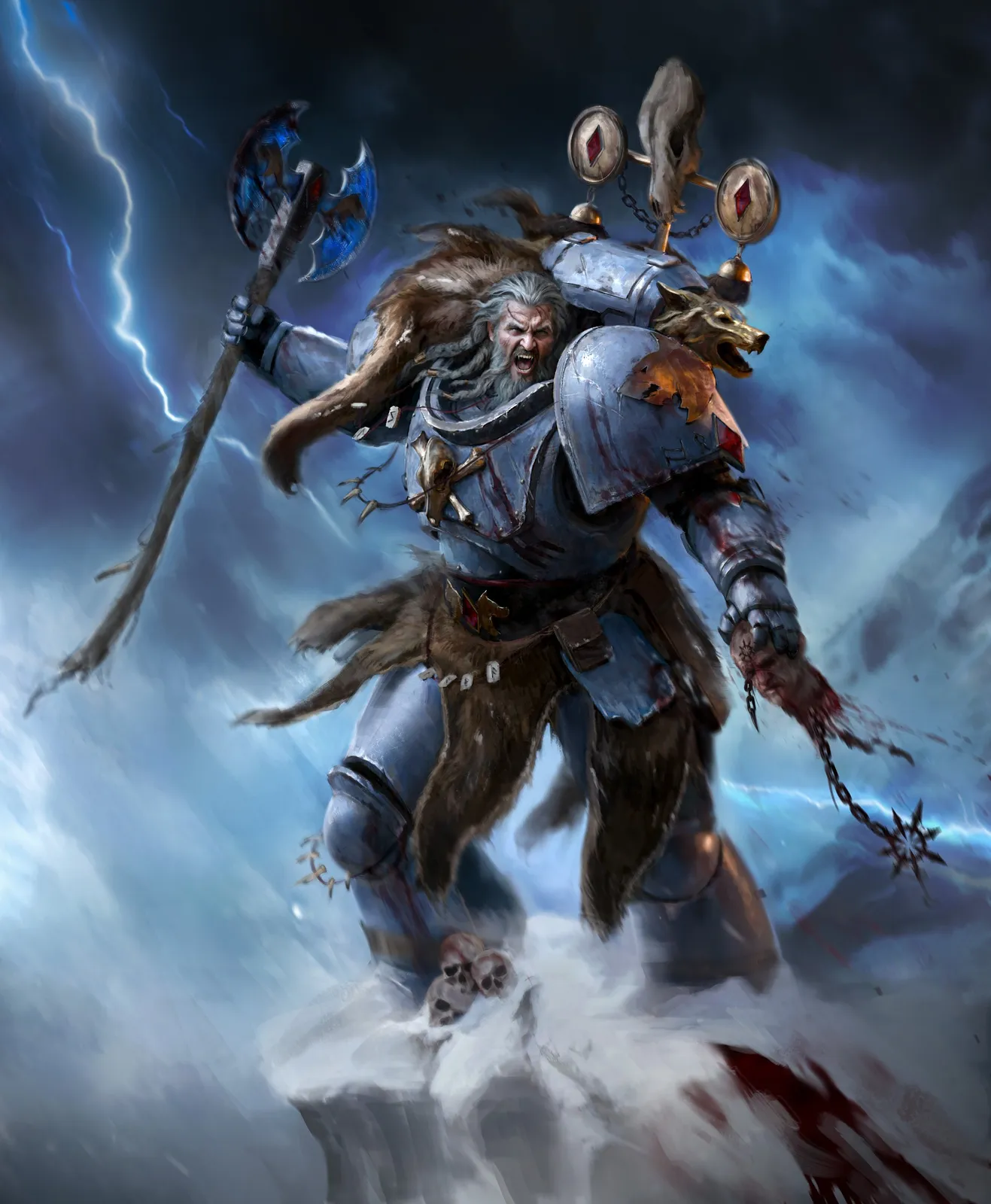
The Space Wolves are the least Codex-like of all the major Chapters in spirit as well as structure. Their culture is drawn from the tribes of Fenris, and the Fang feels more like a great hall than a monastery. Victories are celebrated with feasts and boasts, and warriors measure their worth by the sagas told about them. Skalds and Wolf Priests keep the Chapter's history alive in story rather than in dry archives, and a warrior's deeds are remembered in song long after he falls.
Their appearance reflects the same spirit. Space Wolves decorate their armor with wolf pelts, fangs, runes and talismans taken from defeated foes, and they wear their hair long and their beards untamed. Many keep Fenrisian wolves as hunting companions, and some ride the giant Thunderwolves into battle. Even their wargear has a Fenrisian touch: frost blades and frost axes are among the Chapter's most prized weapons.
Beneath the swagger lies a fierce code of honor. The Wolves despise treachery, cowardice and abandoning the weak, and they are quick to hold a grudge against anyone — friend or foe — who breaks faith with them. That code is why they are trusted by the common soldiers of the Imperium and mistrusted by many of its officials. It is also why the Wolves are such good material for roleplaying: every warrior is a hero in search of his saga.
Feuds and Allies
Few Chapters have collected as many grudges as the Space Wolves. Beyond the Thousand Sons and the Dark Angels, their most serious quarrel is with the Inquisition. After the First War for Armageddon, the Space Wolves violently objected to the Inquisition's decision to silence those who had witnessed the daemonic invasion, bringing them into open conflict with Inquisitorial forces including the Grey Knights. The episode left deep mistrust between the Chapter and the Imperial Agents of the Holy Ordos.
At the same time, the Wolves have a reputation as the protectors of ordinary humanity. They are known to defy orders to save a world's population, and they treat the soldiers of the Astra Militarum with a rough respect other Chapters rarely show. In the Dark Imperium, the Wolves fight on every front of the Indomitus era while keeping watch for the Wolftime. To compare them with every other army, see the Space Wolves in our Warhammer 40K factions guide.
How the Space Wolves Play on the Tabletop
The Space Wolves use the wider Space Marine range plus a large set of unique units: Thunderwolf Cavalry, Wulfen, Blood Claws, Wolf Guard, Fenrisian Wolves, Rune Priests and Wolf Priests, and characters such as Logan Grimnar, Ragnar Blackmane, Njal Stormcaller, Ulrik the Slayer, Bjorn the Fell-Handed and Arjac Rockfist.
- Identity: an aggressive, melee-leaning Space Marine army with strong characters and fast cavalry.
- Strengths: brutal close combat, unique units no other Chapter has, and enormous personality on the table.
- Challenges: it rewards getting stuck in, and can struggle if outshot at long range before it closes the distance.
- Best for: players who love Norse-inspired heroes, giant wolves, and painting pelts, runes and talismans.
Every Great Company has its own heraldry, so it is easy to invent your own Wolf Lord and saga. Give your warriors suitably Fenrisian names with the Space Marine name generator.
Space Wolves FAQ
Who is the Primarch of the Space Wolves?
Leman Russ, the Wolf King, Primarch of the VI Legion. After the Horus Heresy he led an expedition into the Eye of Terror and vanished. The Space Wolves believe he will return for the Wolftime, the final battle at the end of the age.
What are the Wulfen?
Wulfen are Space Wolves who have succumbed to the Canis Helix in their gene-seed, transforming into savage, half-wolf warriors. The Wulfen of the lost Thirteenth Great Company returned from the Eye of Terror and now fight alongside the Chapter.
Why do the Space Wolves hate the Thousand Sons?
Because of the Burning of Prospero. During the Horus Heresy, the Space Wolves destroyed the Thousand Sons' homeworld on orders twisted by Horus, driving Magnus the Red into the arms of Tzeentch. The two have been bitter enemies ever since.
Do the Space Wolves follow the Codex Astartes?
No. They are organized into twelve Great Companies led by Wolf Lords, with ranks such as Blood Claws, Grey Hunters and Long Fangs that reflect a warrior's age and experience. They also refuse Codex titles such as Librarian, using Rune Priest instead.
Who leads the Space Wolves?
Logan Grimnar, the Great Wolf, rules the Chapter from the Fang on Fenris. Under him, each Great Company is led by its own Wolf Lord, such as Ragnar Blackmane or Harald Deathwolf.
Do the Space Wolves have successor Chapters?
Very few. Leman Russ resisted dividing his Legion after the Heresy, and the Space Wolves have remained a single, oversized Chapter with notoriously few acknowledged successors.
Continue Exploring
- Warhammer 40K Factions: Complete Guide to All 29 Armies — every army, its lore and how it plays
- Space Marines (Adeptus Astartes) — the Legions, Primarchs and gene-seed behind every Chapter.
- Dark Angels — the sons of Lion El'Jonson, the Wolves' oldest rivals.
- Blood Angels — the sons of Sanguinius, cursed by the Red Thirst and the Black Rage.
- Black Templars — the endless crusade of Sigismund's heirs.
Browse every guide in the Warhammer 40K lore hub, or name your own Sky Warriors with the Space Marine name generator. To chronicle your own Great Company and its sagas, Anima is free and runs in your browser with no account: a wiki, a timeline, and campaigns with a live DM screen.
Keep reading
More from this topic
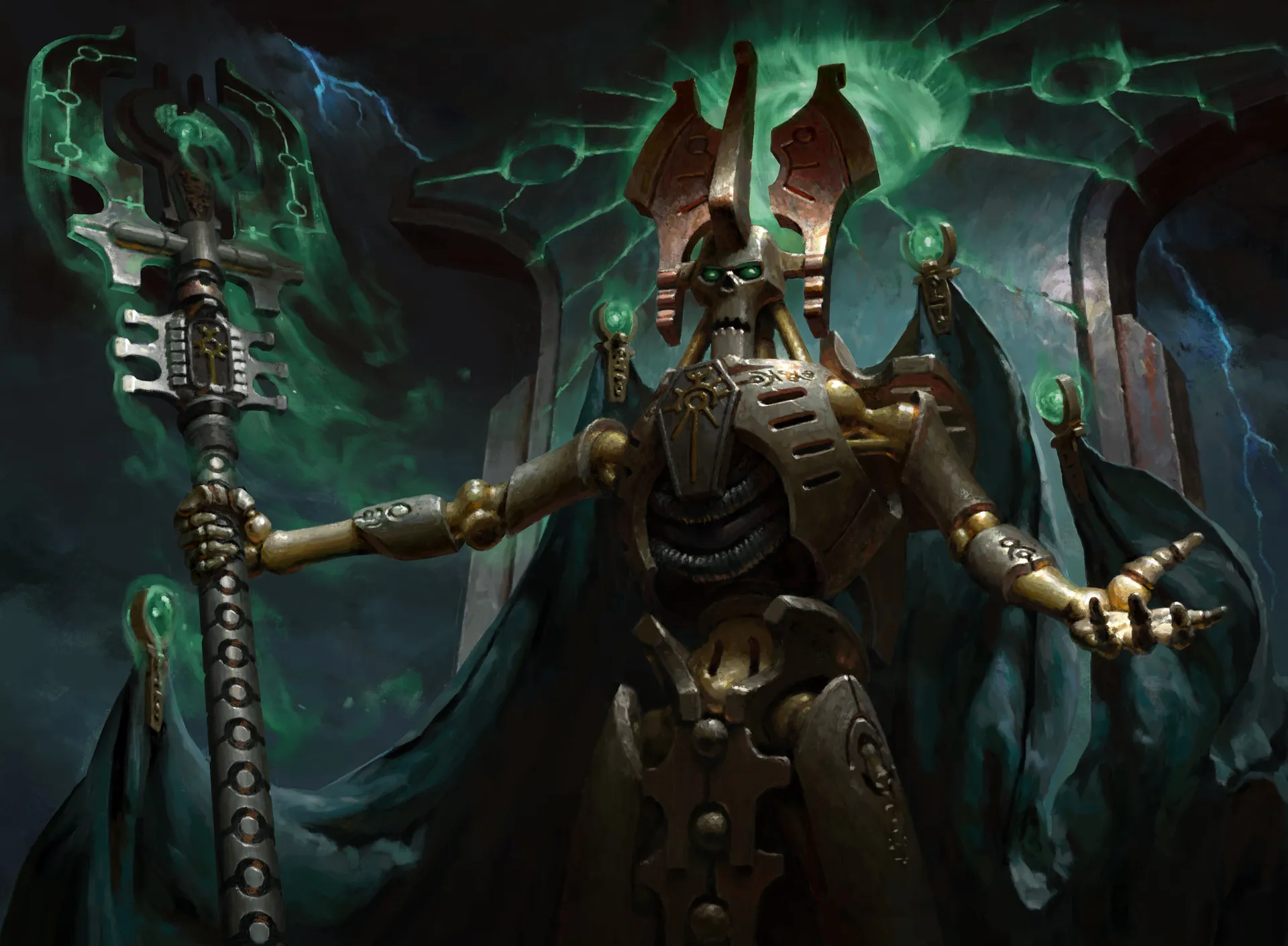
Necrons: Warhammer 40K Lore Guide
The complete lore of the Necrons — the doomed Necrontyr, the C’tan star-gods, biotransference, the War in Heaven, and the deathless dynasties now waking to reclaim the galaxy.
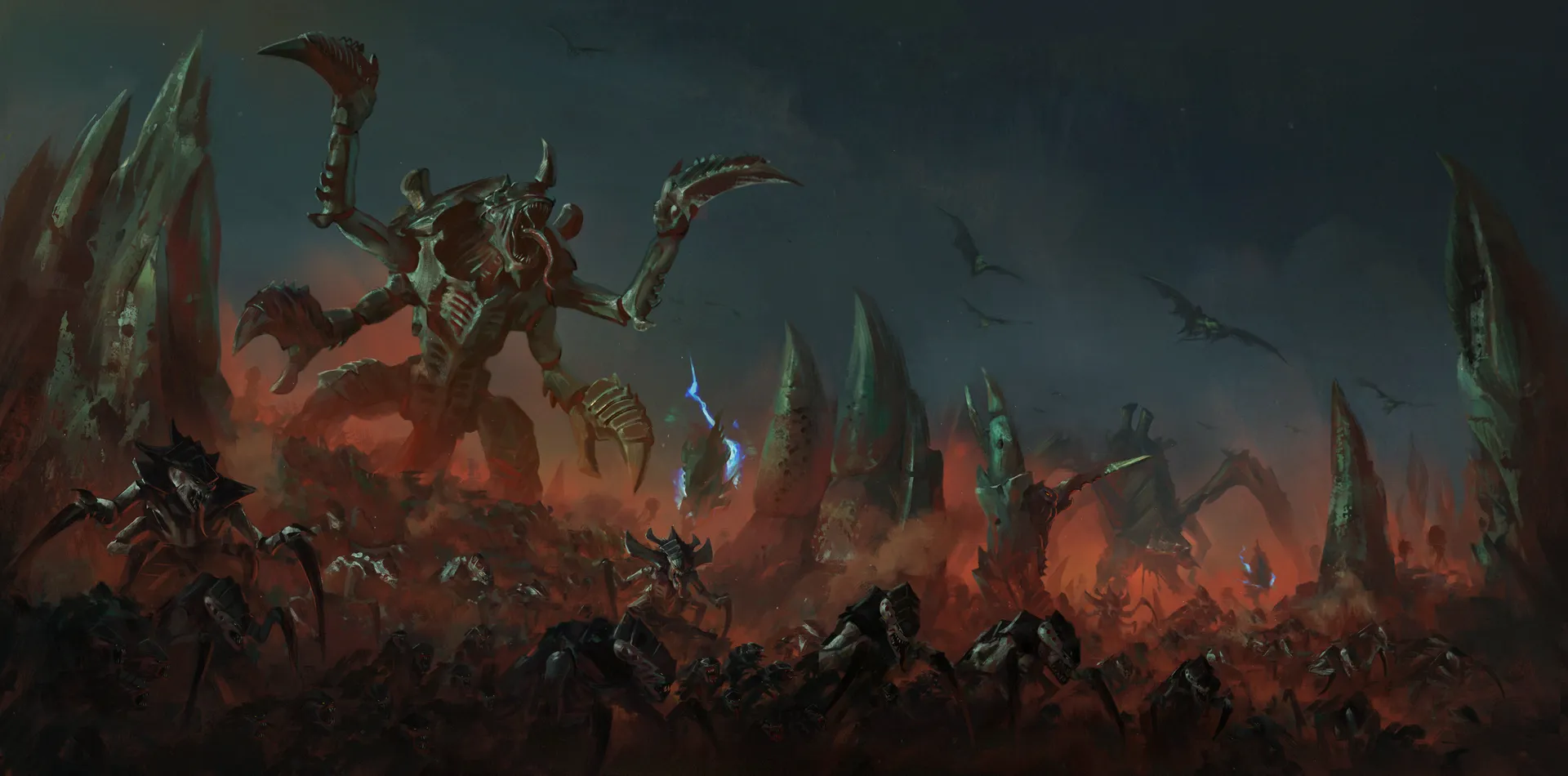
Tyranids: Warhammer 40K Lore Guide
The complete lore of the Tyranids — the Great Devourer, the Hive Mind, the Shadow in the Warp, the great Hive Fleets, Genestealer Cults, and the hunger that crossed the void between galaxies.
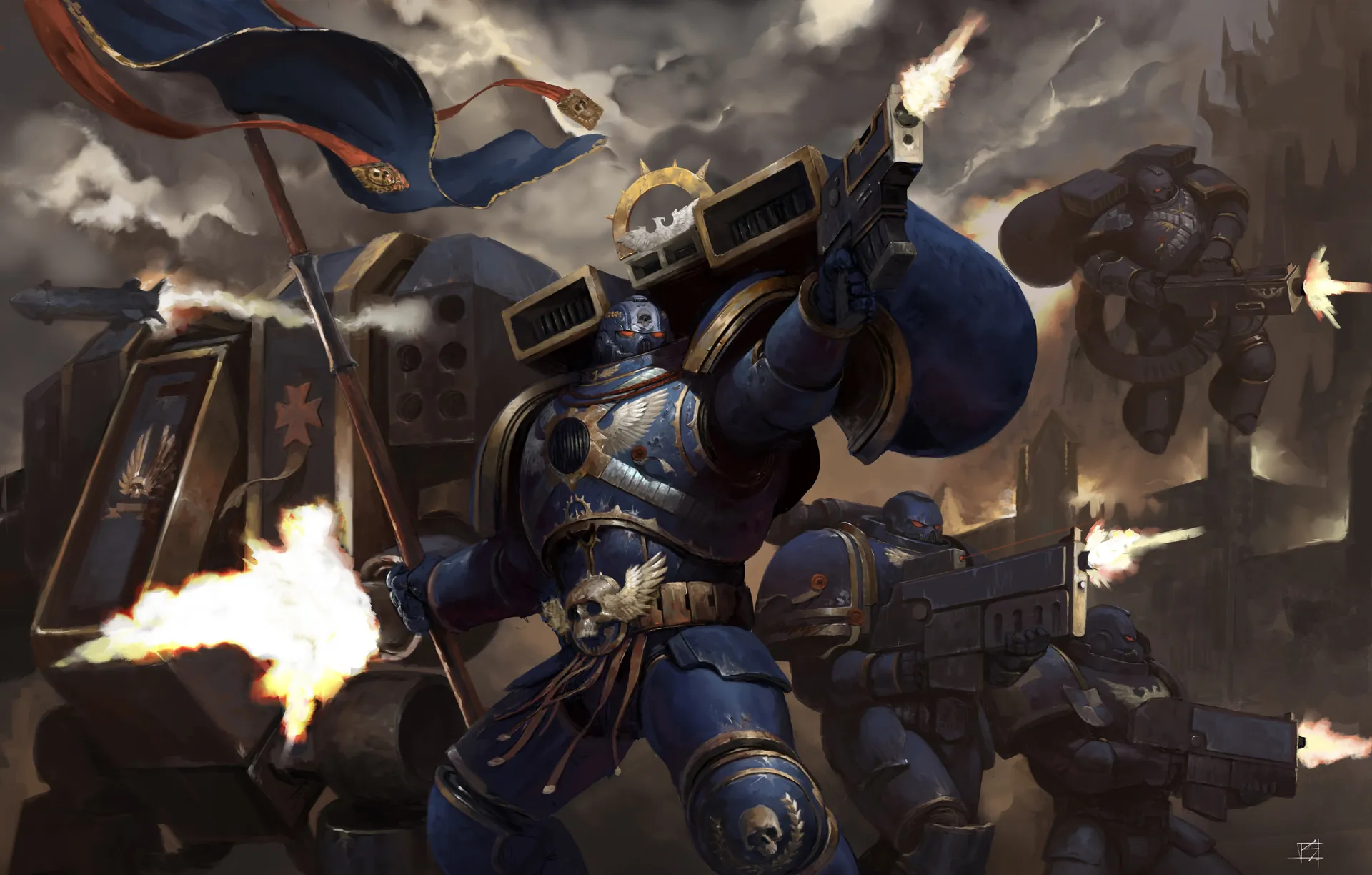
Space Marines (Adeptus Astartes): Warhammer 40K Lore Guide
The complete lore of the Space Marines — the Primarchs, gene-seed, the Horus Heresy, the Codex Astartes and the Chapters, the Primaris and Guilliman’s return, and the cost of the Angels of Death.
Start building your world today
A linked wiki, a timeline and a live DM screen — free, in your browser, no account needed.