Minotaurs: Warhammer 40K Lore Guide
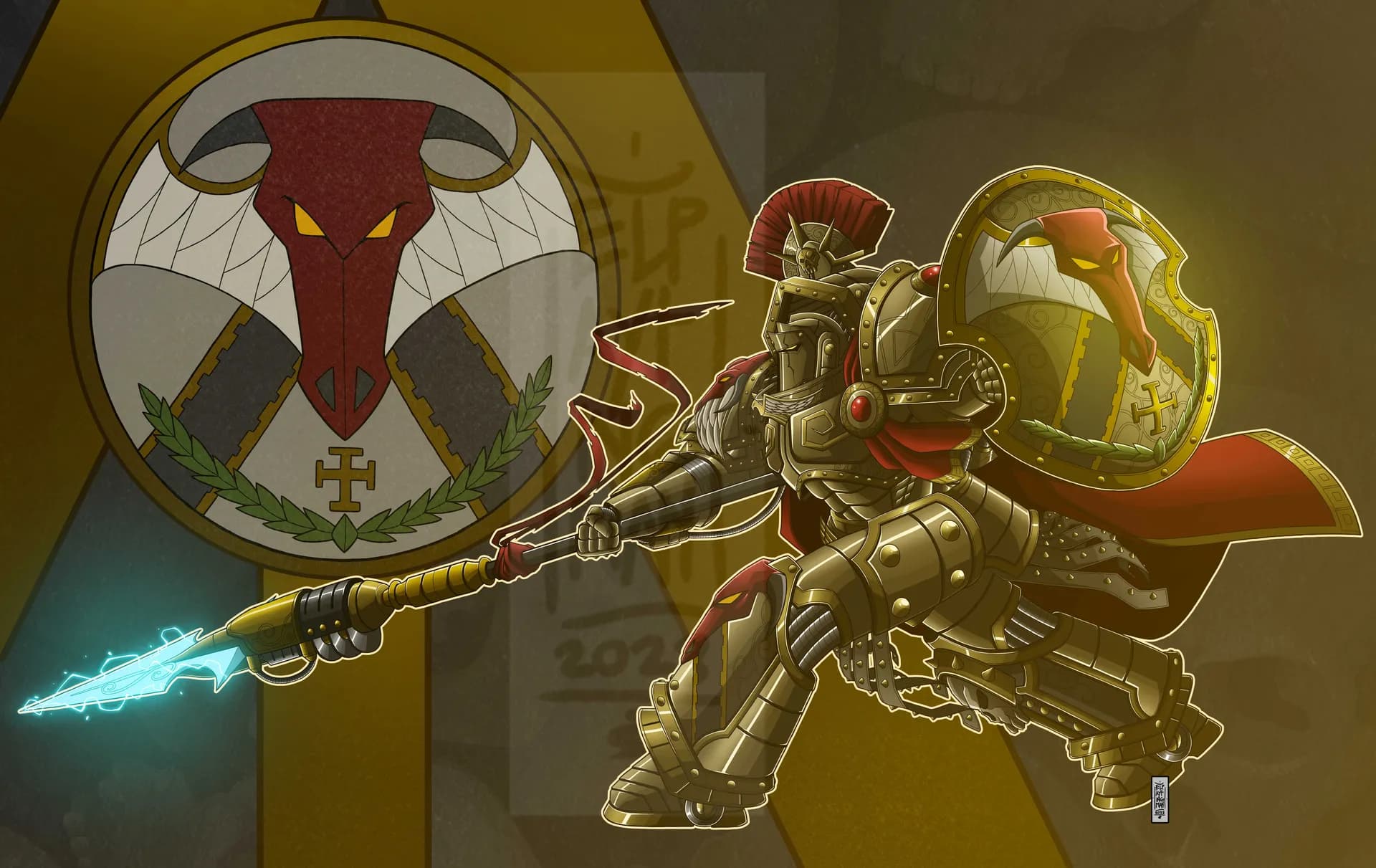
Most Space Marine Chapters are proud of where they came from. The Minotaurs are defined by the fact that nobody knows. Their founding is sealed, their gene-seed is officially unrecorded, and their history is a patchwork of contradictory files that even Inquisitors struggle to open. What the Imperium does know is what they do: when the High Lords of Terra want a rebellious world, a renegade Chapter or a wayward ally brought to heel, the bronze-armored Minotaurs arrive, and they do not leave until the job is done.
They are one of the most enigmatic Space Marine Chapters, a fleet-based force best known from Forge World's Imperial Armour books on the Badab War. This guide covers what is canon about their murky origins, their reputation as the High Lords' enforcers, their organization and characters, their campaigns, and how to collect them, while flagging clearly where the lore stops and speculation begins.
Minotaurs at a Glance
| Aspect | Detail |
|---|---|
| Founding | Unknown and classified; some records point to the Twenty-First "Cursed" Founding, others to a much earlier date |
| Gene-seed | Officially unrecorded; fragmentary records describe it as chimeric |
| Homeworld | None known; fleet-based, centered on the fortress-monastery Daedelos Krata |
| Chapter Master | Asterion Moloc |
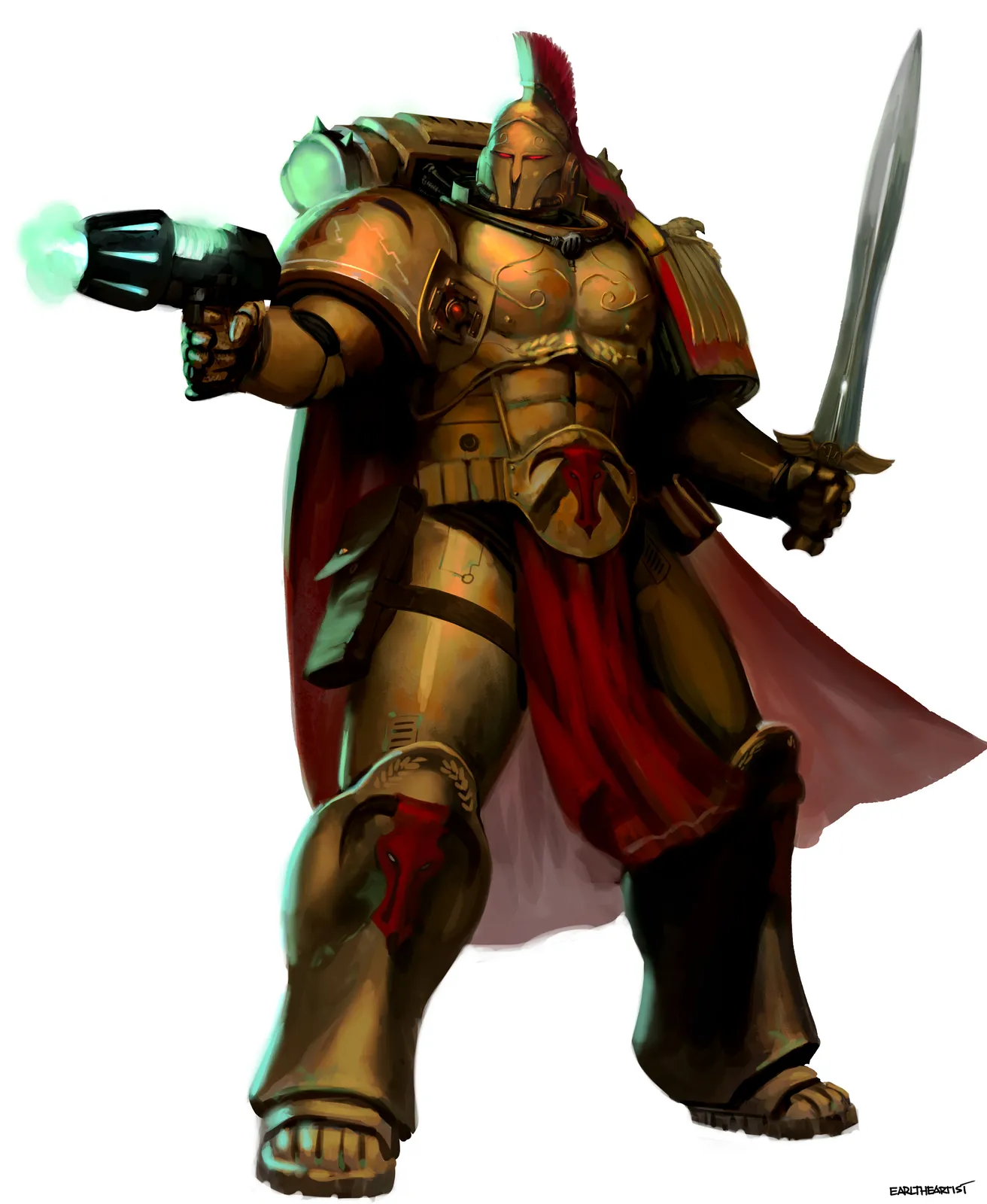
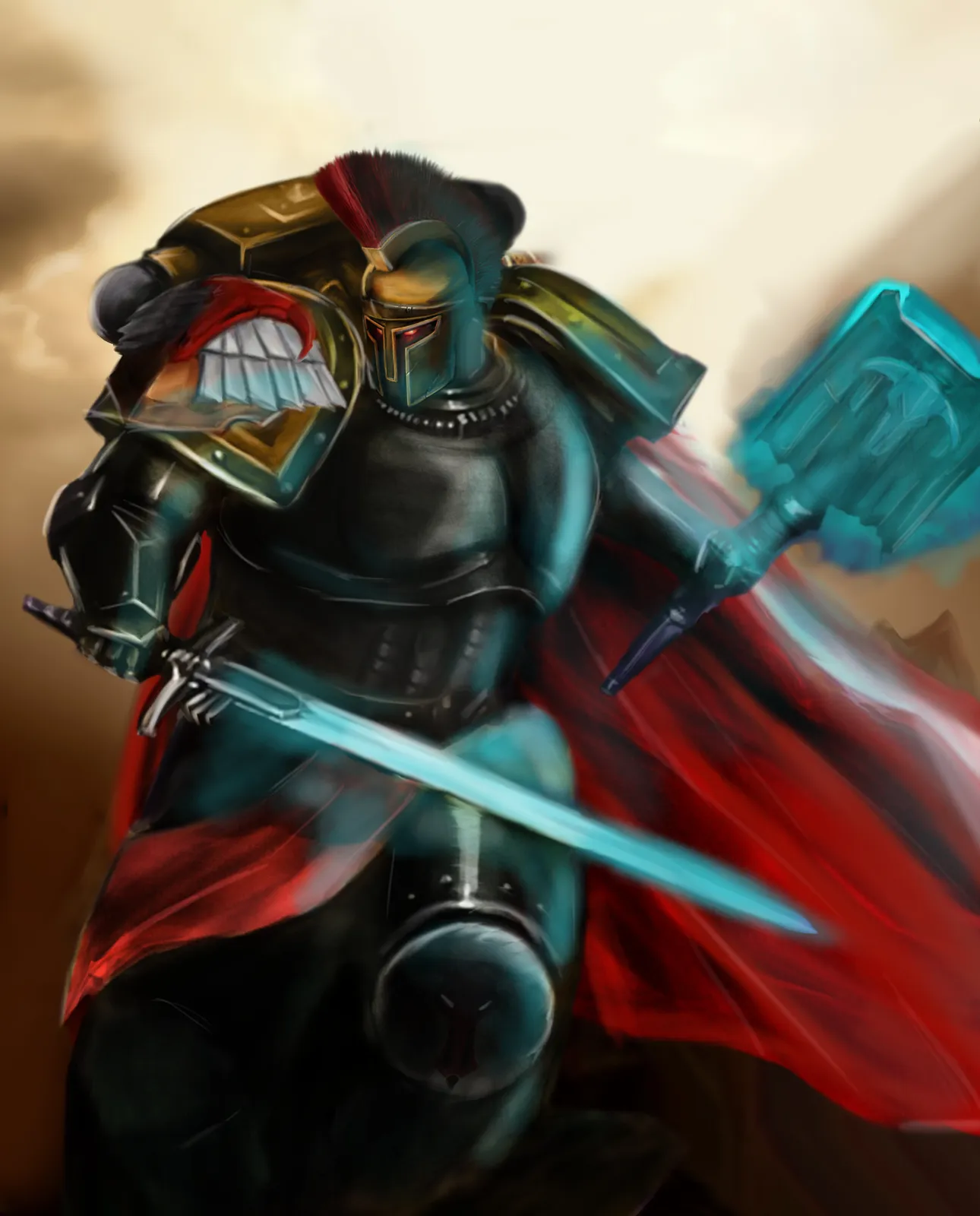
| Colors | Bronze and gold armor with red detailing; bull and labyrinth iconography |
| Allegiance | Rumored to answer directly to the High Lords of Terra |
| Famous For | Fighting for the loyalists in the Badab War; punishing other Imperial forces |
A Chapter Without a Past
The single most important thing to understand about the Minotaurs is that their origins are deliberately unknown. Games Workshop and Forge World have never stated their founding or their Primarch, and the in-universe records are contradictory by design.
- Some Imperial records describe a Chapter called the Minotaurs suppressing rebellion as early as the 32nd millennium.
- Other records list them among the Twenty-First Founding, the "Cursed Founding" of the 36th millennium that produced several Chapters with unstable gene-seed.
- Fragmentary data describes their gene-seed as chimeric, suggesting it may draw on more than one source. No document confirms which Primarch, or Primarchs, it comes from.
These gaps are so wide that it is not even certain that the Minotaurs mentioned in the 32nd, 36th and 41st millennia are the same Chapter. Fan communities have long debated whether they carry the gene-seed of the Imperial Fists, the Ultramarines or some other line, but none of those theories is canon. The honest answer is that nobody in the setting, and nobody outside it, knows.
Their Greco-Roman, Minoan-inspired aesthetic is equally uncommented: bronze armor, crested helmets, bull's-head heraldry, labyrinth motifs and names drawn from classical myth. Whether this reflects a lost homeworld culture or a tradition adopted later is another of the Chapter's mysteries.
The Hounds of the High Lords
The Minotaurs are rumored to have direct ties to the High Lords of Terra, the council that rules the Imperium in the Emperor's name. Instructions reach them without passing through the usual layers of bureaucracy, and they respond immediately and without question. Most of their records from beyond the last thousand years are locked away under seals so tight that even members of the Inquisition find them hard to open, and the Ordo Hereticus regards this arrangement with some unease.
In practice, this makes the Minotaurs the Imperium's enforcers against its own. They are sent when a governor rebels, when a world refuses its tithe, or when another Chapter of the Adeptus Astartes oversteps its bounds. They carry out those orders with complete thoroughness, which has earned them deep resentment among other Space Marines. Accounts tell of Minotaurs insulting Marneus Calgar of the Ultramarines and clashing with other Chapters in incidents that the High Lords never seem to punish.
The Badab War
The Minotaurs' defining campaign is the Badab War, told in Forge World's Imperial Armour volumes. The conflict began when Lufgt Huron, Chapter Master of the Astral Claws and self-styled Tyrant of Badab, refused to pay the gene-seed tithe and rallied several other Chapters to his side, among them the Lamenters, the Mantis Warriors and the Executioners.
At the request of the Inquisition, a loyalist coalition of Space Marine Chapters was assembled to crush the secession, and the Minotaurs became one of its most formidable members. They fought with fearsome efficiency, especially against the Lamenters, a successor Chapter of the Blood Angels who had joined Huron's cause. The Minotaurs' brutal campaign against them left the Lamenters shattered. At the war's end, Huron was gravely wounded and escaped with his surviving followers into the Maelstrom, where they became the pirates known as the Red Corsairs.
The Badab War cemented the Minotaurs' reputation. To the High Lords they were proof that loyal Astartes could be relied upon to police their own kind. To many other Chapters they became a byword for ruthlessness, and the bitterness of that war still colors how other Space Marines see them.
Other Campaigns and the Dark Imperium
Beyond Badab, the Minotaurs appear in a scattering of campaigns that reinforce their image as a blunt instrument. They are recorded fighting rebels and traitors throughout the Imperium's history, battling Orks, and joining the forces that retook Rynn's World, home of the Crimson Fists, after its devastation by the Orks.
The opening of the Great Rift brought them new trials. Recent lore describes a Death Guard attack on their fortress-monastery that left much of their gene-seed stock tainted, forcing the Chapter to seek pure gene-stock from Terra. They have since fought in the Indomitus Crusade and in the wars around the Nachmund Gauntlet, as dedicated as ever to the High Lords' will.
Organization and Way of War
Where many Chapters prize a balanced Codex force, the Minotaurs fight like a hammer. Their doctrine favors deploying in great strength, often at or near full Chapter strength, rather than in small detachments. They excel at siege warfare, attrition and shock assault, and they are particularly feared in close combat.
- Superb equipment. The Minotaurs are unusually well supplied, fielding large numbers of Terminators, Predator and Vindicator tanks, Spartan assault tanks, Storm Eagle gunships and rare relic armor patterns. The source of this abundance is never explained, which only deepens suspicion of their patrons.
- The Hecaton. The Chapter's ancient Contemptor-pattern Dreadnoughts are honored as Hecaton, entombed heroes who lead from the front.
- Relics of the defeated. The Minotaurs are known to keep wargear taken from Chapters they have fought, displaying their victories over fellow Astartes as trophies.
- Discipline under orders. Older accounts describe them as barely restrained berserkers who ignored command structures. In the 41st millennium they work within Imperial battle plans, though they remain aloof from allies.
Notable Characters
- Asterion Moloc is the Chapter Master, a towering warlord in ornate Terminator armor who carries a great spear and shield. He led the Minotaurs throughout the Badab War and is the face of the Chapter, appearing as a Forge World model.
- Ivanus Enkomi is the Chapter's Reclusiarch, its senior Chaplain, another figure drawn from the Imperial Armour lore.
- The Hecaton Aiakos is one of the Chapter's venerable Contemptor Dreadnoughts, a symbol of how the Minotaurs honor their ancient dead.
The Chapter's home is its fleet. With no homeworld on record, the Minotaurs operate from the Daedelos Krata, a mobile fortress-monastery that carries their armories and gene-seed stores from war to war. That lack of a fixed world gives them no local population to protect and no planetary politics to weigh, which may be exactly why the High Lords find them so useful.
Few other named Minotaurs are widely known, which fits a Chapter that lets its actions, not its biographies, speak for it.
How the Minotaurs Differ From Other Chapters
Most Chapters are shaped by a Primarch and a homeworld. The Minotaurs have neither on record. Their identity is instead defined by their loyalty to the High Lords, which places them outside the network of brotherhood and shared history that binds most of the Adeptus Astartes together. The Deathwatch or the Grey Knights also serve the Imperium in ways outside the normal chain of command, but they hunt xenos and daemons. The Minotaurs hunt the Imperium's own disobedient servants, and that makes them uniquely unloved.
How to Play and Collect the Minotaurs
On the tabletop the Minotaurs use the wider Space Marine range, and their character comes from model choice and painting rather than unique units. Asterion Moloc has existed as a Forge World model.
- Identity: a heavily armored, uncompromising force built around Terminators, tanks, Dreadnoughts and shock assaults.
- Strengths: resilient elite units and heavy armor that grind down an opponent; a strong narrative hook as the Imperium's internal police.
- Challenges: elite, heavy armies have few models and can struggle to cover the table.
- Best for: players who enjoy bronze and gold metallics, Greco-Roman conversions with crests and shields, and morally gray Imperial stories.
Because their lore is so thin, the Minotaurs are a favorite for players who want to write their own history. Every gap in the record is room for your own campaign.
Minotaurs FAQ
Who is the Primarch of the Minotaurs?
Officially, no one knows. Their founding and gene-seed are classified, and fragmentary records describe the gene-seed as chimeric. Any claim that they descend from a specific Primarch is fan speculation.
When were the Minotaurs founded?
Records conflict. Some place them in the Twenty-First "Cursed" Founding of the 36th millennium, while others mention a Chapter of that name in the 32nd millennium. It is not even certain these are the same Chapter.
Why do other Space Marines dislike the Minotaurs?
Because they answer to the High Lords of Terra and are sent to punish other Imperial forces, including fellow Chapters. Their brutal conduct in the Badab War, especially against the Lamenters, made them many enemies.
Who leads the Minotaurs?
Chapter Master Asterion Moloc, who led them through the Badab War.
What happened in the Badab War?
Lufgt Huron of the Astral Claws rebelled against the Imperium with several allied Chapters. The Minotaurs were at the forefront of the loyalist response. Huron was defeated and fled into the Maelstrom, where he founded the Red Corsairs.
Continue Exploring
- Space Marines (Adeptus Astartes) — the Primarchs, gene-seed and the Codex Astartes behind every Chapter.
- Warhammer 40K factions guide — every army, its lore and how it plays.
- Ultramarines — the Codex Chapter whose Master the Minotaurs once insulted.
- Crimson Fists — the Imperial Fists successors of Rynn's World.
- White Scars — the Khan's sons, whose Mantis Warriors fell in with the Tyrant of Badab.
- Red Corsairs — the renegades born from the Minotaurs' greatest victory.
Browse every guide in the Warhammer 40K lore hub, or name your own bronze-armored enforcers with the Space Marine name generator. To chronicle your own Chapter's hidden history, Anima is free and runs in your browser with no account: a wiki, a timeline, and campaigns with a live DM screen.
Keep reading
More from this topic
Necrons: Warhammer 40K Lore Guide
The complete lore of the Necrons — the doomed Necrontyr, the C’tan star-gods, biotransference, the War in Heaven, and the deathless dynasties now waking to reclaim the galaxy.
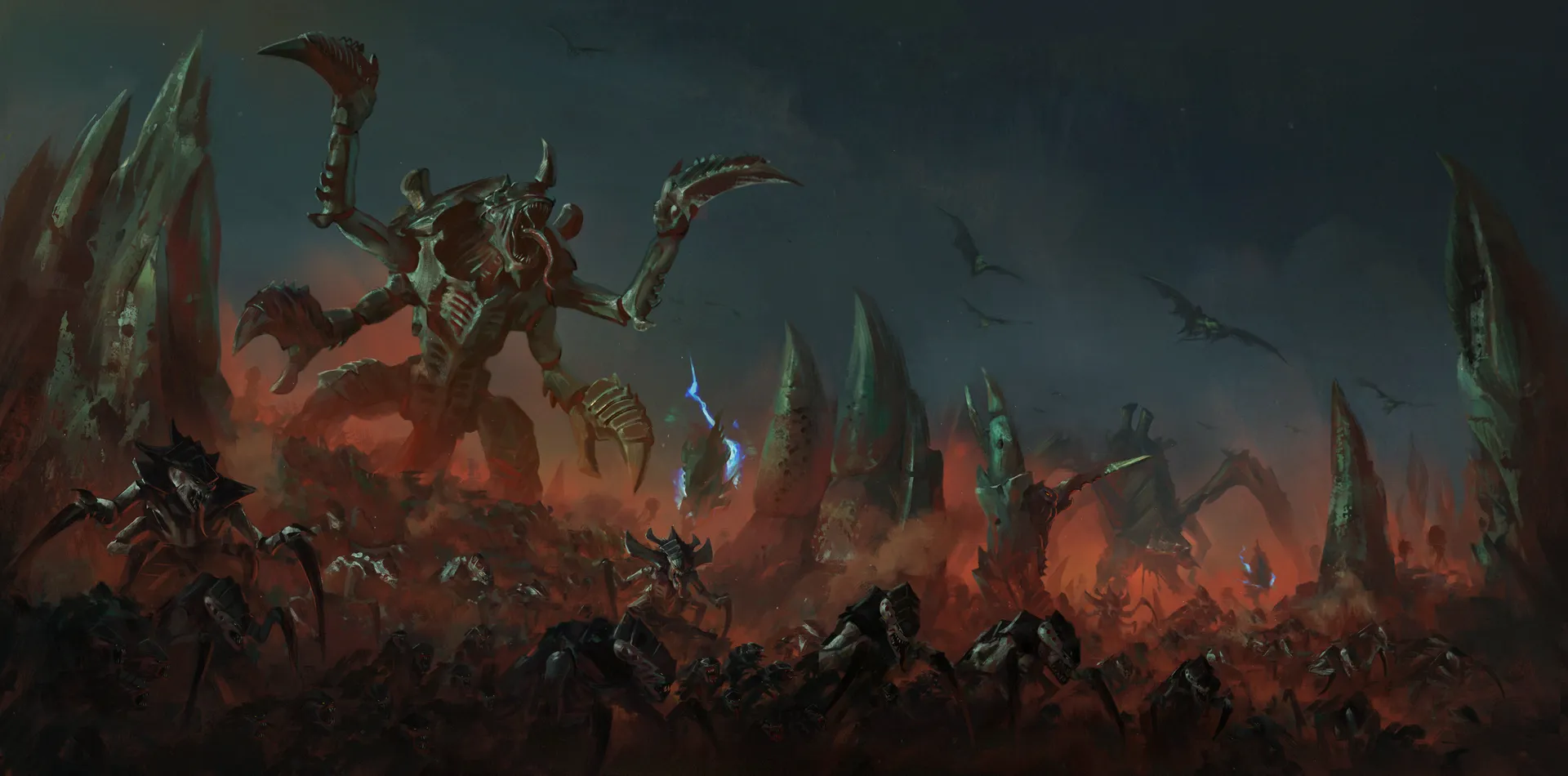
Tyranids: Warhammer 40K Lore Guide
The complete lore of the Tyranids — the Great Devourer, the Hive Mind, the Shadow in the Warp, the great Hive Fleets, Genestealer Cults, and the hunger that crossed the void between galaxies.
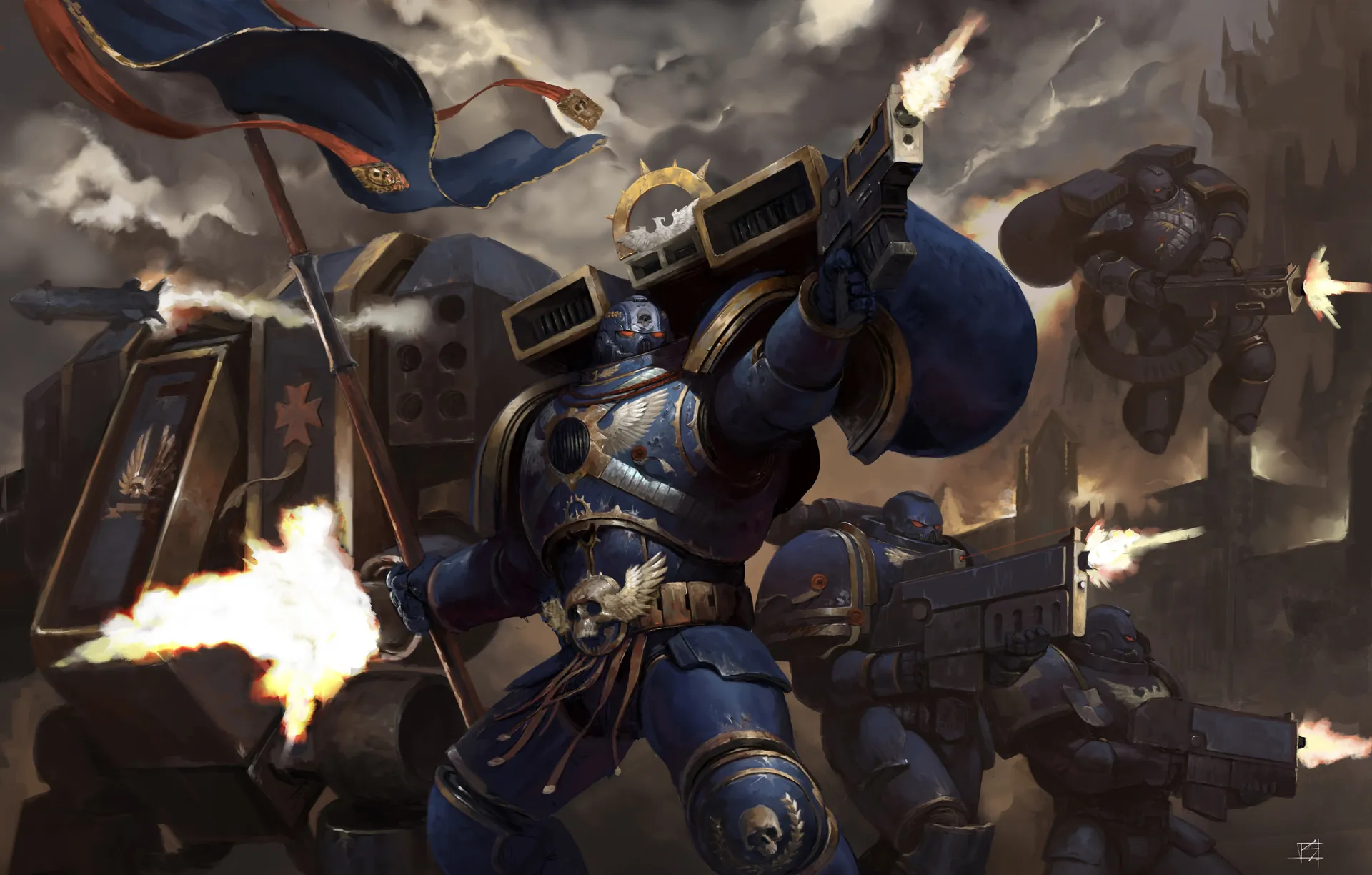
Space Marines (Adeptus Astartes): Warhammer 40K Lore Guide
The complete lore of the Space Marines — the Primarchs, gene-seed, the Horus Heresy, the Codex Astartes and the Chapters, the Primaris and Guilliman’s return, and the cost of the Angels of Death.
Start building your world today
A linked wiki, a timeline and a live DM screen — free, in your browser, no account needed.