Word Bearers: Warhammer 40K Lore Guide
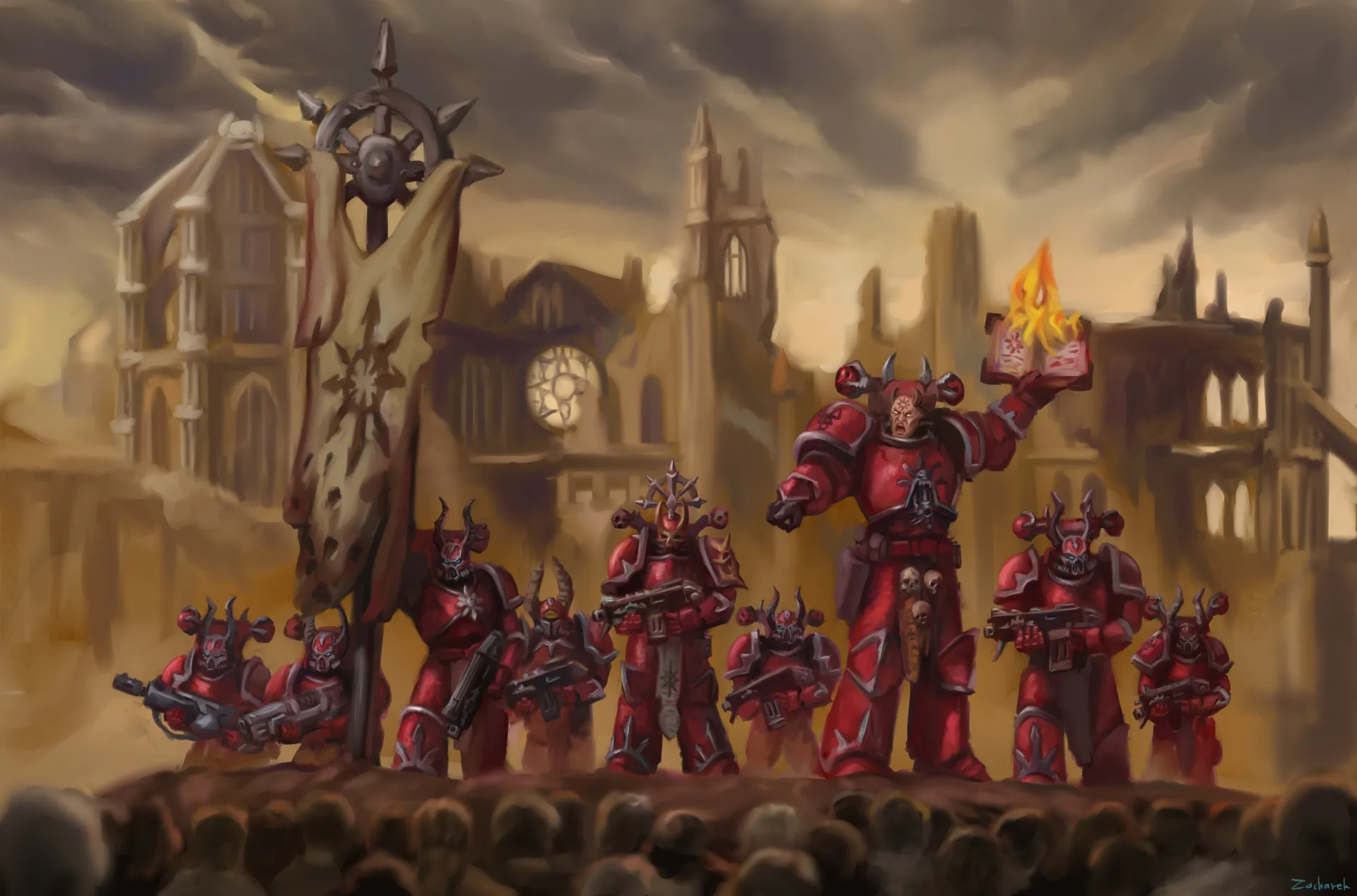
Every Traitor Legion has its excuse. The World Eaters had the Butcher's Nails, the Iron Warriors had their grievances, the Thousand Sons had a desperate bargain to save their own flesh. The Word Bearers had faith. Long before Horus was wounded on Davin, long before the first bolt was fired on Isstvan III, the XVII Legion was already kneeling before the gods of the Warp. They did not stumble into damnation. They went looking for it, found it, and then spent half a century preparing the galaxy for its arrival.
That makes the Word Bearers the first and most important of the Traitor Legions of the Chaos Space Marines: the architects of the Horus Heresy rather than its followers. Ten thousand years later they remain a church militant, led by Dark Apostles who preach the glory of Chaos from the pulpit and the battlefield alike. This guide covers their Primarch Lorgar, the schemer Erebus, their role in the Heresy, how their crusades are organized today, and what makes them different from every other warband of the Long War.
Word Bearers at a Glance
| Aspect | Detail |
|---|---|
| Legion Number | XVII |
| Primarch | Lorgar Aurelian, now a Daemon Prince of Chaos |
| Homeworld | Colchis, a theocratic desert world |
| Former Name | Imperial Heralds |
| Allegiance | Chaos Undivided: the whole pantheon, worshipped as one faith |
| Colors | Crimson power armor with black and brass trim, covered in scripture |
| Key Figures | Lorgar, Erebus, Kor Phaeron, Dark Apostles of the Legion's Hosts |
| Defining Trait | Zealots who spread the worship of Chaos with sermon, sacrifice and summoning |
Lorgar and the Faith of Colchis
Like every Primarch, Lorgar was scattered across the galaxy as an infant. He landed on Colchis, a world ruled by an ancient religious order called the Covenant, and was raised by one of its priests, Kor Phaeron. Lorgar was brilliant, gentle and hungry for meaning. He became a prophet, led a holy war that overthrew the Covenant, and united Colchis under a new faith built around visions of a golden god who would come from the stars.
When the Emperor arrived, Lorgar believed his prophecy had been fulfilled. He threw himself at his father's feet and took command of his gene-sons, the XVII Legion, then known as the Imperial Heralds. Under Lorgar they became the Word Bearers, and they waged the Great Crusade as a war of conversion. Worlds were not merely conquered but evangelized; cathedrals rose where they marched, and the Emperor was proclaimed a god.
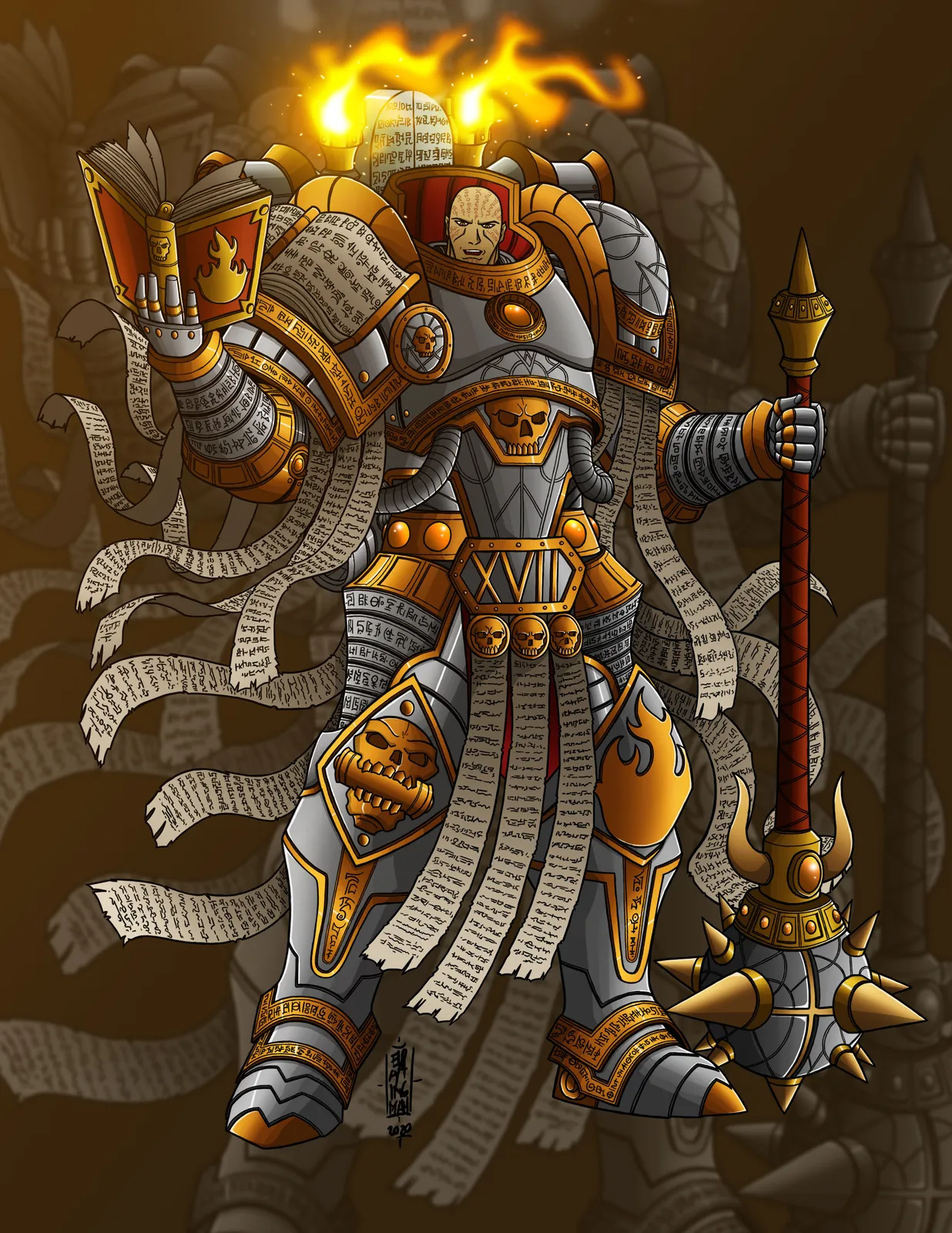
The Emperor did not want worship. The Imperial Truth was a doctrine of reason, and the Word Bearers' slow, devotional crusade was falling far behind the other Legions. The rebuke came at Monarchia, the "Perfect City" Lorgar had raised on the world of Khur in his father's honor. The Emperor ordered the Ultramarines to raze it to the ground, then forced the entire Word Bearers Legion to kneel in its ashes while he condemned their faith before them. Lorgar's universe had collapsed in a single day.
Erebus, Kor Phaeron and the Road to Heresy
Lorgar's need to worship did not die at Monarchia; it changed targets. Pushed by Kor Phaeron and the Legion's First Chaplain, Erebus, he went looking for gods that would answer. According to the Black Library novel The First Heretic, that search led a Word Bearers expedition to the edge of the Eye of Terror, where Lorgar was shown visions of the Warp and of the powers dwelling there. He came back a believer in the true gods, convinced that his father was a liar who had hidden the truth of the universe from humanity.
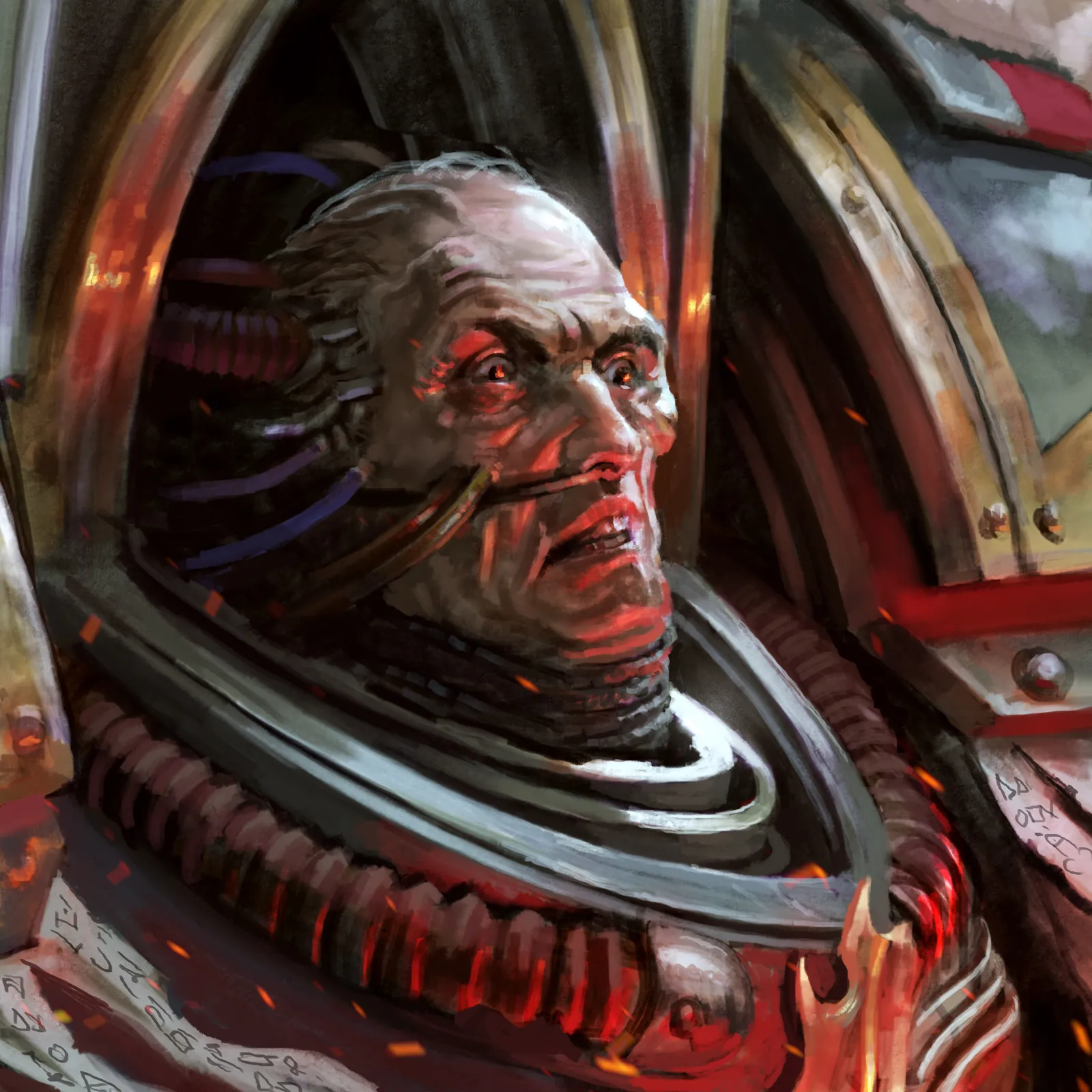
What followed was half a century of patient corruption. The Word Bearers seeded warrior lodges across the other Legions and quietly spread the new faith among their own Hosts. Erebus is the key name here: in the Horus Heresy novels he helps engineer the Warmaster's fall, from the poisoned anathame blade that wounded Horus on Davin to the lodge that brought him to a Chaos temple to be "healed." Horus woke from that experience already half-turned. The Heresy, in other words, was a Word Bearers plan with Horus as its figurehead.
Kor Phaeron, meanwhile, remained Lorgar's harshest voice: a bitter, fanatical priest who served as the Legion's First Captain and embodied the worst of Colchisian zealotry. Both men survived the Heresy, and both remain active villains in the 41st millennium.
The Word Bearers in the Horus Heresy
When the Heresy broke into open war, the Word Bearers were at the heart of its worst moments. At the Drop Site Massacre on Isstvan V, they were one of the "loyal" second-wave Legions that turned their guns on the Iron Hands, Salamanders and Raven Guard, who had expected reinforcement. The Iron Hands' Primarch Ferrus Manus died in that battle.
Their most infamous act came at Calth, a jewel of the Ultramarines' realm. Under the pretense of a joint muster, the Word Bearers fleet arrived alongside the Ultramarines and then struck without warning, crippling ships at anchor, poisoning Calth's star and summoning daemons onto the surface. The betrayal is told in Know No Fear and the wider Black Library series. The Ultramarines survived, barely, and the Underworld War that followed lasted for years in the caverns beneath the dying planet. The rite performed at Calth also helped raise the Ruinstorm, a vast warp tempest that cut Ultramar off from the rest of the Imperium.
Lorgar and his brother Angron of the World Eaters then led the Shadow Crusade, a campaign of destruction across Ultramar. Lorgar would later be raised to daemonhood by the gods he served. After the Siege of Terra and the death of Horus, the Legion withdrew to the Eye of Terror with the other traitors.
A Legion of Priests: Organization and Culture
Most Traitor Legions have shattered into feuding warbands. The Word Bearers remain unusually cohesive, because they are held together by doctrine rather than by any single warlord. Their structure is religious from top to bottom:
- Hosts: the Legion's main fighting formations, each led by a Dark Apostle. A Host is a crusade, a congregation and an army at the same time.
- Dark Apostles: warrior-priests who lead every Host into battle. They preach, lead prayers, perform sacrifices and channel the gods' favor with their sermons. Each wears a spiked icon on his back and carries an accursed crozius.
- Dark Disciples: acolytes who attend each Dark Apostle and assist in the rites, hoping to one day lead a Host of their own.
- The Coryphaus: the champion of a Host, the Dark Apostle's right hand on the battlefield and his likeliest rival.
- Cults and congregations: each Host drags enormous masses of mortal worshippers behind it. Converted populations become the cultists, slaves and sacrifices of the Legion.
Their armor tells their story. The crimson of the Legion replaced the grey of the Great Crusade era as a sign of their new faith, and it is covered with scripture, parchment, carved prayers and the eight-pointed star. Many warriors have verses tattooed across their skulls. Daemon summoning is central to their way of war: where other Legions treat daemons as dangerous allies, the Word Bearers treat their summoning as sacrament. Many Possessed fight in their ranks, and their priests can call whole hosts of daemons from the Warp. Our Chaos Daemons guide covers the beings they bring through.
Faith in the Whole Pantheon
The Word Bearers revere Chaos Undivided: the four great powers as a single, unified pantheon. They pray to Khorne, Nurgle, Tzeentch and Slaanesh, and they see the jealous rivalries between those gods as part of a greater design rather than a reason to choose a side. That makes them very different from the god-sworn Legions such as the Death Guard or the Thousand Sons. For the four powers themselves, see our complete guide to the Chaos Gods.
Theirs is also the most sincere form of Chaos worship among the Traitor Legions. Many Night Lords sneer at the gods, and many Black Legion warlords treat them as tools. The Word Bearers believe. They see themselves as the only true church in a galaxy of lies, and their crusades are missions: every world they burn is a world they claim to be saving from the false god on Terra.
Notable Word Bearers
- Lorgar Aurelian: the Primarch, now a Daemon Prince. He has long withdrawn into the Eye of Terror and plays little direct role in the Legion's wars, leaving his sons to carry his word.
- Erebus: the First Chaplain who set the Heresy in motion. A master manipulator and dark priest, he remains one of the most hated names in the Imperium and is still active in the current setting.
- Kor Phaeron: Lorgar's foster father and the Legion's Master of Faith, a cruel fanatic who survived the Heresy and remains a power within the Legion.
- Jarulek and Marduk: a Dark Apostle and the ambitious First Acolyte who usurps him, the leads of Anthony Reynolds' Black Library Dark Apostle trilogy. Their story is one of the best introductions to the Legion's culture of faith and betrayal.
- Zardu Layak: the Crimson Apostle, a Dark Apostle tied to the Word Bearers' Heresy-era schemes and the subject of his own Black Library novel.
The Word Bearers Today
In the era of the Great Rift, the Word Bearers have never been stronger. The opening of the Cicatrix Maledictum flooded half the galaxy with the Warp, and the Legion's Hosts have poured out of the Eye of Terror to preach to terrified Imperial worlds cut off from the Astronomican. Where faith in the Emperor falters, the Dark Apostles arrive with an answer.
They are sometimes allies of the Warmaster Abaddon and his Black Crusades, and sometimes rivals; either way, their goal is not loot or revenge but conversion. A Word Bearers attack typically begins long before their ships arrive, with cults seeded in the underhives and prayers whispered in factories. By the time the crimson armor makes planetfall, half the population may already be waiting to welcome them. Their old enemies the Ultramarines, led once again by a living Guilliman, are never far from their thoughts.
How the Word Bearers Differ From Other Chaos Space Marines
- Faith over fury: they fight as a church, not a pirate band or a mob of berserkers. Every battle is a ritual.
- Daemons as sacrament: summoning and possession are central, not occasional.
- Cohesion: they remain one of the most unified Legions, organized in Hosts under Dark Apostles rather than scattered warbands.
- Mortal masses: converted cultists fight beside them in great numbers.
- Undivided worship: all four gods are honored together, without favoring one.
Playing and Collecting the Word Bearers
On the tabletop, Word Bearers are played as part of the Chaos Space Marines army, and their identity is about leaders and congregations. A Dark Apostle at the head of a Host, flanked by Dark Disciples, fits the lore perfectly. Possessed, summoned daemons, Chaos Terminators and masses of cultists all suit a Legion that sees every battle as a ceremony. They reward players who enjoy buffing characters, rituals and a mix of elite warriors and expendable worshippers.
For hobbyists, the crimson palette is striking and forgiving, and the Legion offers endless conversion opportunities: parchment, books, icons, censers, sacrificial altars and verses painted on every armor plate. If you love the idea of a warband that is equal parts army and cult, this is the Legion for you.
Word Bearers FAQ
Who is the Primarch of the Word Bearers?
Lorgar Aurelian, raised on the world of Colchis by the priest Kor Phaeron. After the Emperor rebuked him at Monarchia, he turned to the Chaos Gods and was later raised to daemonhood.
Why did the Word Bearers turn to Chaos?
Because they needed a god to worship. When the Emperor destroyed the city of Monarchia and condemned Lorgar's faith in him, Lorgar sought gods that would welcome worship, and found the Chaos powers. He embraced them decades before the open Heresy began.
Were the Word Bearers the first Legion to fall to Chaos?
Yes. They are generally regarded as the first Legion to turn to Chaos, and their agents, Erebus above all, helped corrupt Horus himself.
What god do the Word Bearers worship?
All of them. The Word Bearers worship Chaos Undivided, honoring Khorne, Nurgle, Tzeentch and Slaanesh together as one pantheon.
What happened at Calth?
The Word Bearers launched a surprise attack on the Ultramarines muster at Calth during the Horus Heresy. They devastated the fleet and the planet, summoned daemons, and started a brutal war beneath the surface. It sealed the hatred between the two Legions forever.
Is Erebus still alive in Warhammer 40K?
Yes. Erebus survived the Heresy and remains an active and much-feared figure in the 41st and 42nd millennia.
Continue Exploring
- Chaos Space Marines — the Traitor Legions, the Long War and every renegade warband.
- Warhammer 40K Factions: Complete Guide to All 29 Armies — every army, its lore and how it plays
- Black Legion — Abaddon's Legion and the Black Crusades.
- Night Lords — Konrad Curze's masters of terror.
- Iron Warriors — Perturabo's siege-masters.
- Alpha Legion — the hydra's infiltrators and saboteurs.
- Warhammer Chaos Gods — Khorne, Nurgle, Tzeentch and Slaanesh, the pantheon the Word Bearers worship.
- Lorgar — Lorgar in depth
For the rest of the setting, browse every guide in the Warhammer 40K lore hub, and name your own Dark Apostle with the Chaos Space Marine name generator. To chronicle your Host's crusade, Anima is free and runs in your browser with no account: a wiki, a timeline, and campaigns with a live DM screen.
Keep reading
More from this topic
Necrons: Warhammer 40K Lore Guide
The complete lore of the Necrons — the doomed Necrontyr, the C’tan star-gods, biotransference, the War in Heaven, and the deathless dynasties now waking to reclaim the galaxy.
Tyranids: Warhammer 40K Lore Guide
The complete lore of the Tyranids — the Great Devourer, the Hive Mind, the Shadow in the Warp, the great Hive Fleets, Genestealer Cults, and the hunger that crossed the void between galaxies.
Space Marines (Adeptus Astartes): Warhammer 40K Lore Guide
The complete lore of the Space Marines — the Primarchs, gene-seed, the Horus Heresy, the Codex Astartes and the Chapters, the Primaris and Guilliman’s return, and the cost of the Angels of Death.
Start building your world today
A linked wiki, a timeline and a live DM screen — free, in your browser, no account needed.